Father Pitt

Category: Downtown

  • 801 Liberty Avenue

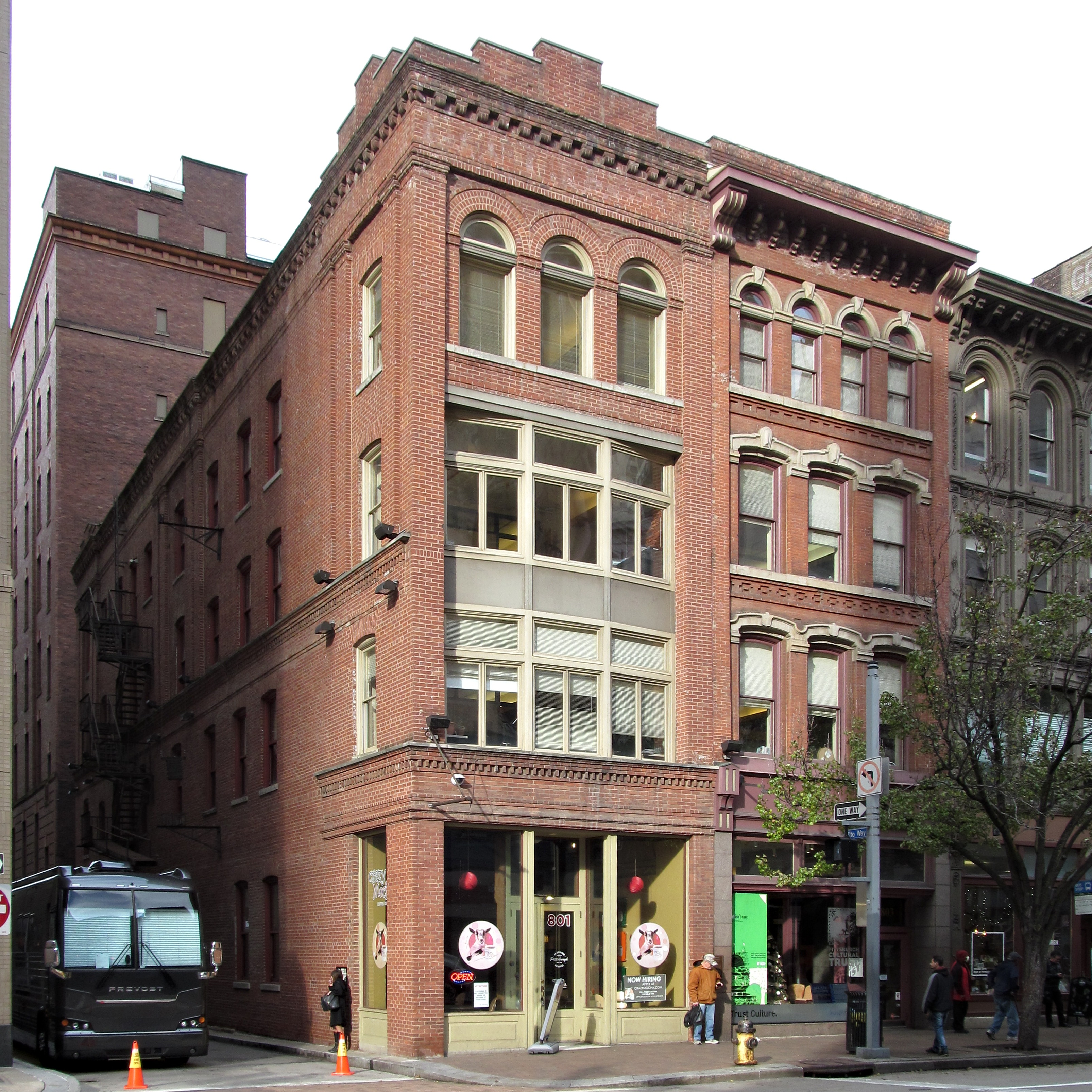
    801 Liberty Avenue

    This meticulously restored storefront probably had workshops of some sort on the second and third floors: look how the windows are arranged to maximize the penetration of natural light as far back into the building as possible. In fact the current tenants on the second floor apparently find it too penetrating, to judge by the effort they have put into blocking it. In our age of ubiquitous electrical illumination, we forget what a problem lighting was in the old days. Gas lighting was dimmer than electric, and it produced much more heat even than incandescent lighting, which was a serious disadvantage in the summer. Thus free sunlight—or, in Pittsburgh, attenuated smog light—was zealously hoarded.

  • 411 Wood Street

    411 Wood Street

    This well-preserved pile of Victorian eclecticism dates from the Centennial year, as we can see by the date stone at the top. By that time Pittsburgh had grown into a large city and was rapidly becoming an industrial behemoth, and its prosperous merchants were eager to have buildings in the most up-to-date modern style.

    Date stone
  • Westinghouse Building

    Westinghouse Building

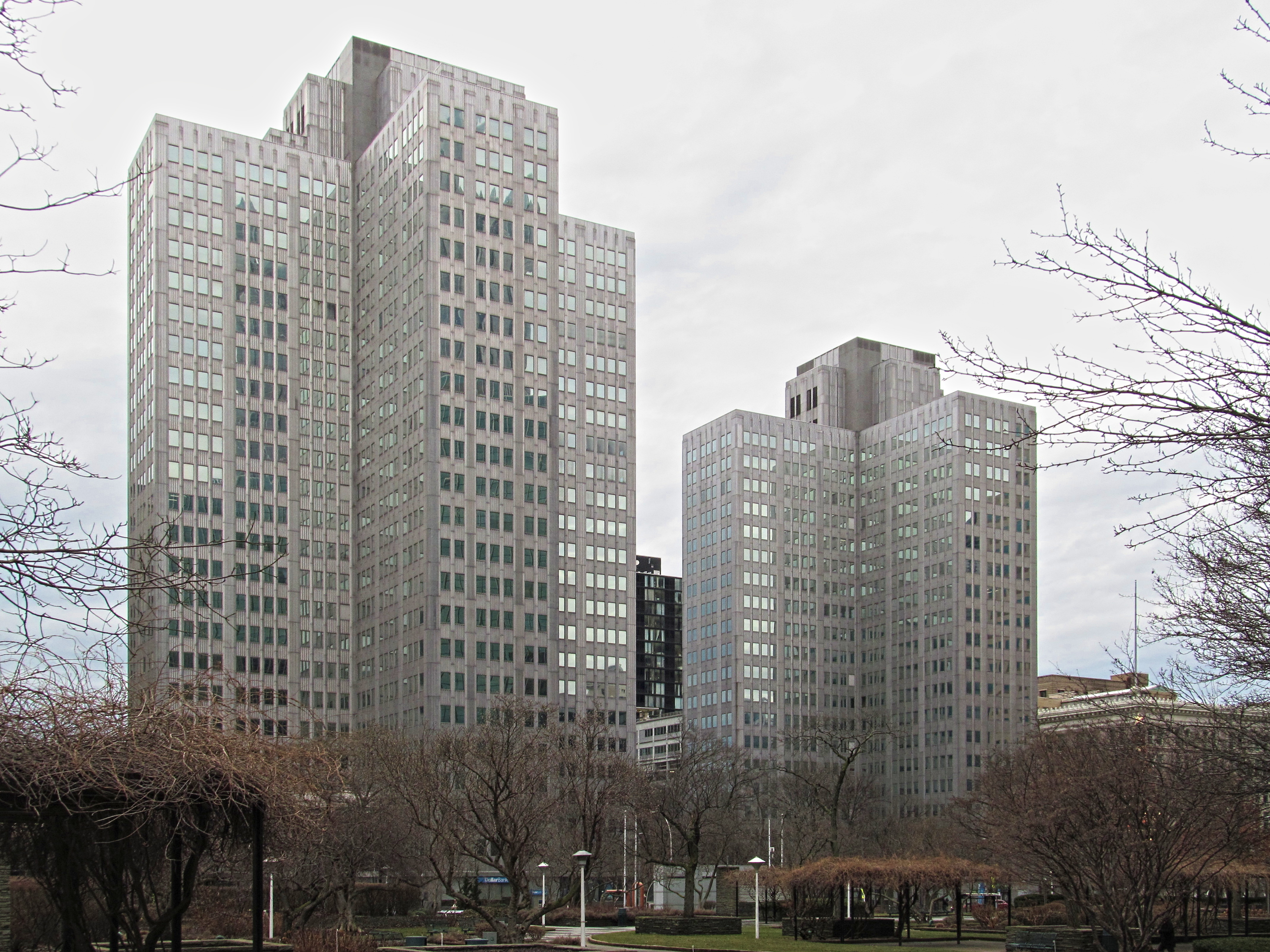
    Designed by Harrison & Abramowitz, who also gave us the markedly similar U. S. Steel Building, this is now known as 11 Stanwix Street. Above, from Gateway Center Park; below, from Mount Washington.

    11 Stanwix
  • 20 Stanwix Street

    Not one of our most spectacular buildings, but this 22-storey minor skyscraper, opened in 1982, was designed by a firm with a history of breaking records. Skidmore, Owings & Merrill designed the Sears Tower (now Willis Tower), which was the tallest building in the world for quite a while; they also designed One World Trade Center, currently the tallest building in America, and the Burj Khalifa, currently the tallest building on earth. It is a huge firm with offices all over the globe, and Father Pitt does not imagine that this project got the same project leader as the Sears Tower.

    Addendum: Skidmore, Owings & Merrill was also the firm responsible for Two PNC Plaza, formerly the Equibank Building. The lead architect on that project was Natalie de Blois, and when the building went up in 1974 it was the largest in the world designed by a woman. Another record!

  • Three and Two Gateway Center

  • Steel Plaza Subway Station

    Steel Plaza

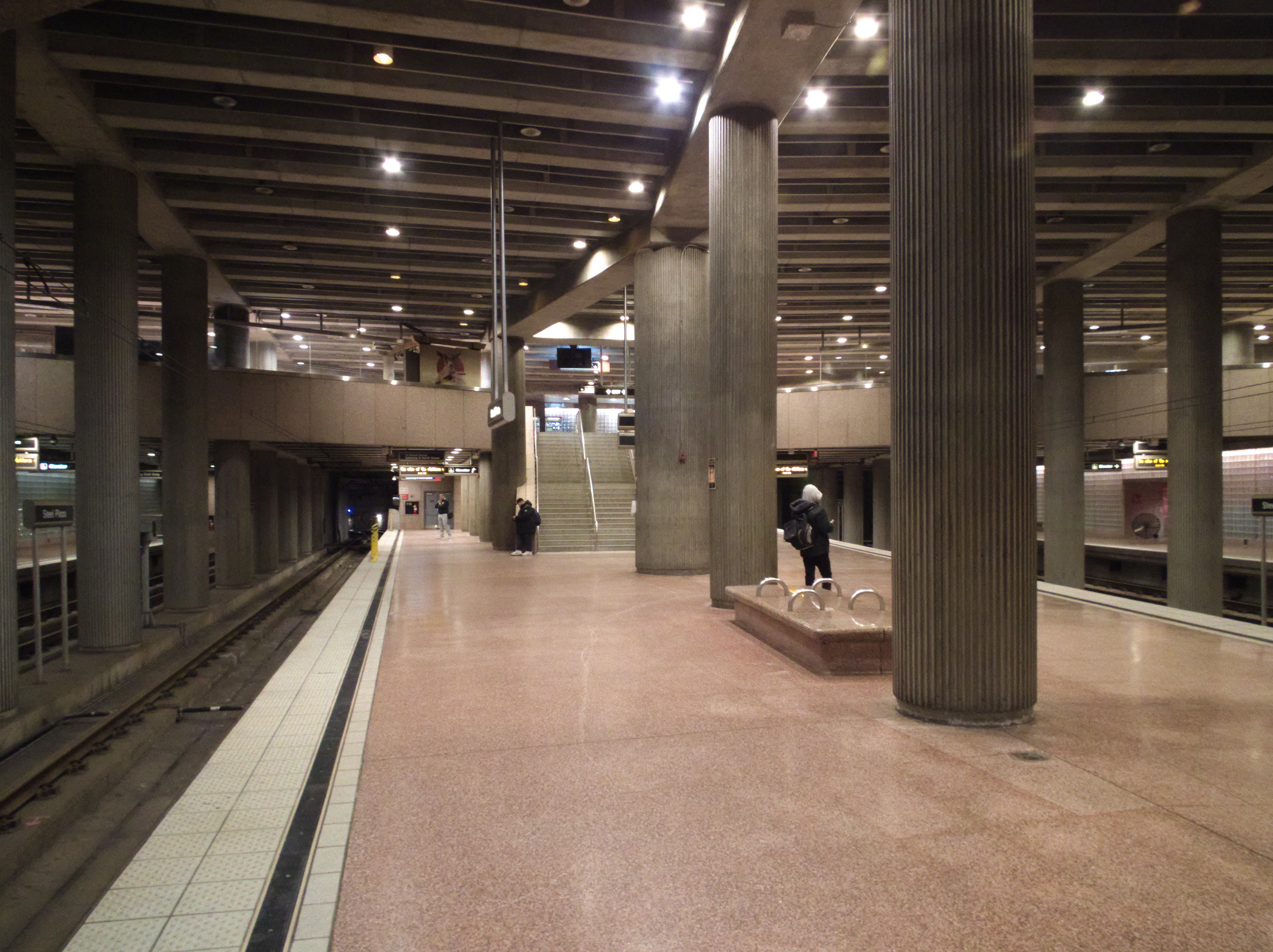
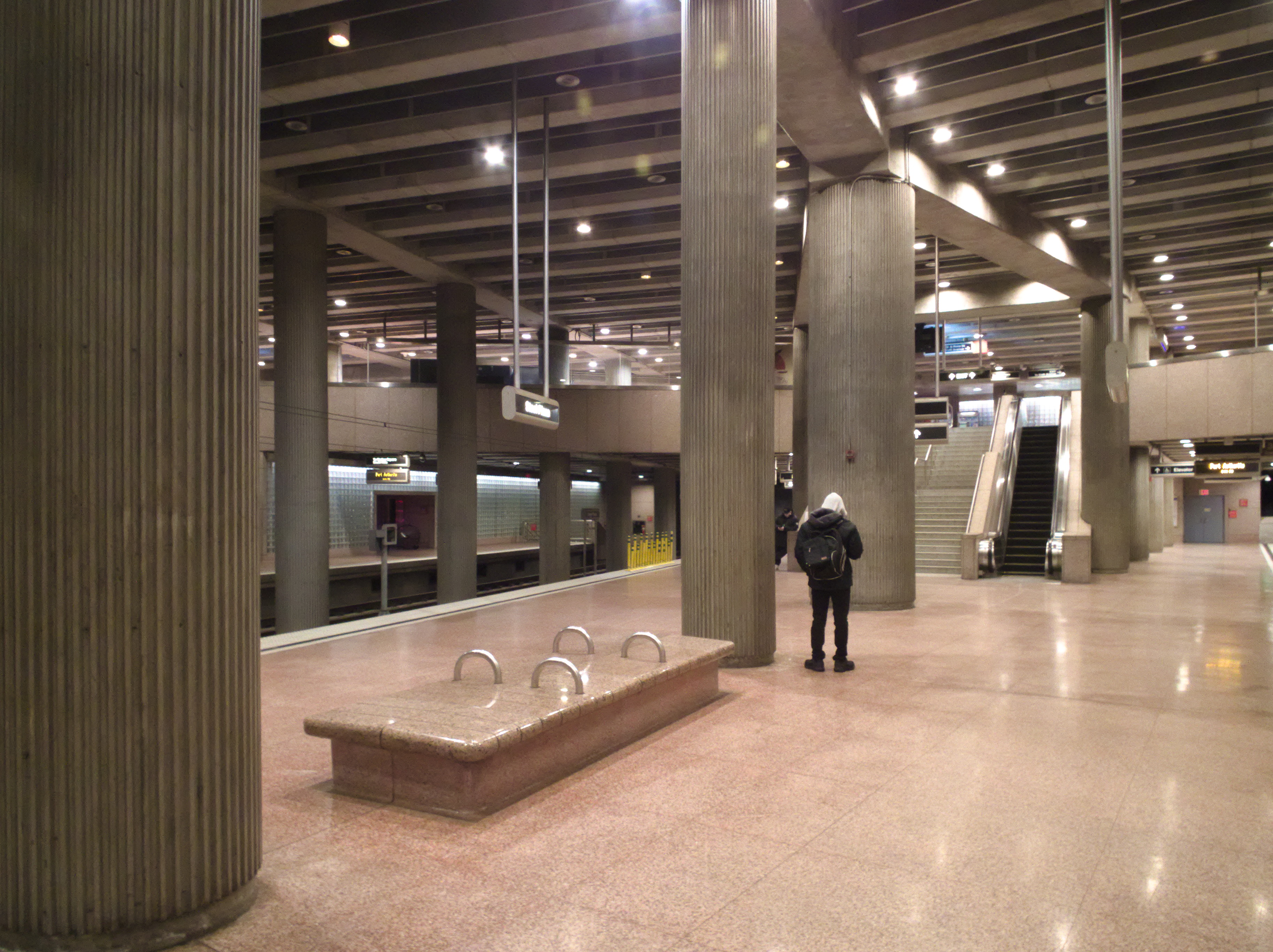
    Steel Plaza was designed in the 1980s, and its architecture is an interesting combination of Brutalist and Postmodern styles—the two most prominent materials are raw concrete and polished granite. It was built as a junction station, where the main subway line met the spur to Penn Station, which is not in regular service these days. In the picture below, the main line is on the left, and the spur is on the right.

    Middle platform
    Looking across the main line
    A wider view
    Outbound platform from inbound platform
  • Bridge of Sighs

    Bridge of Sighs with bus

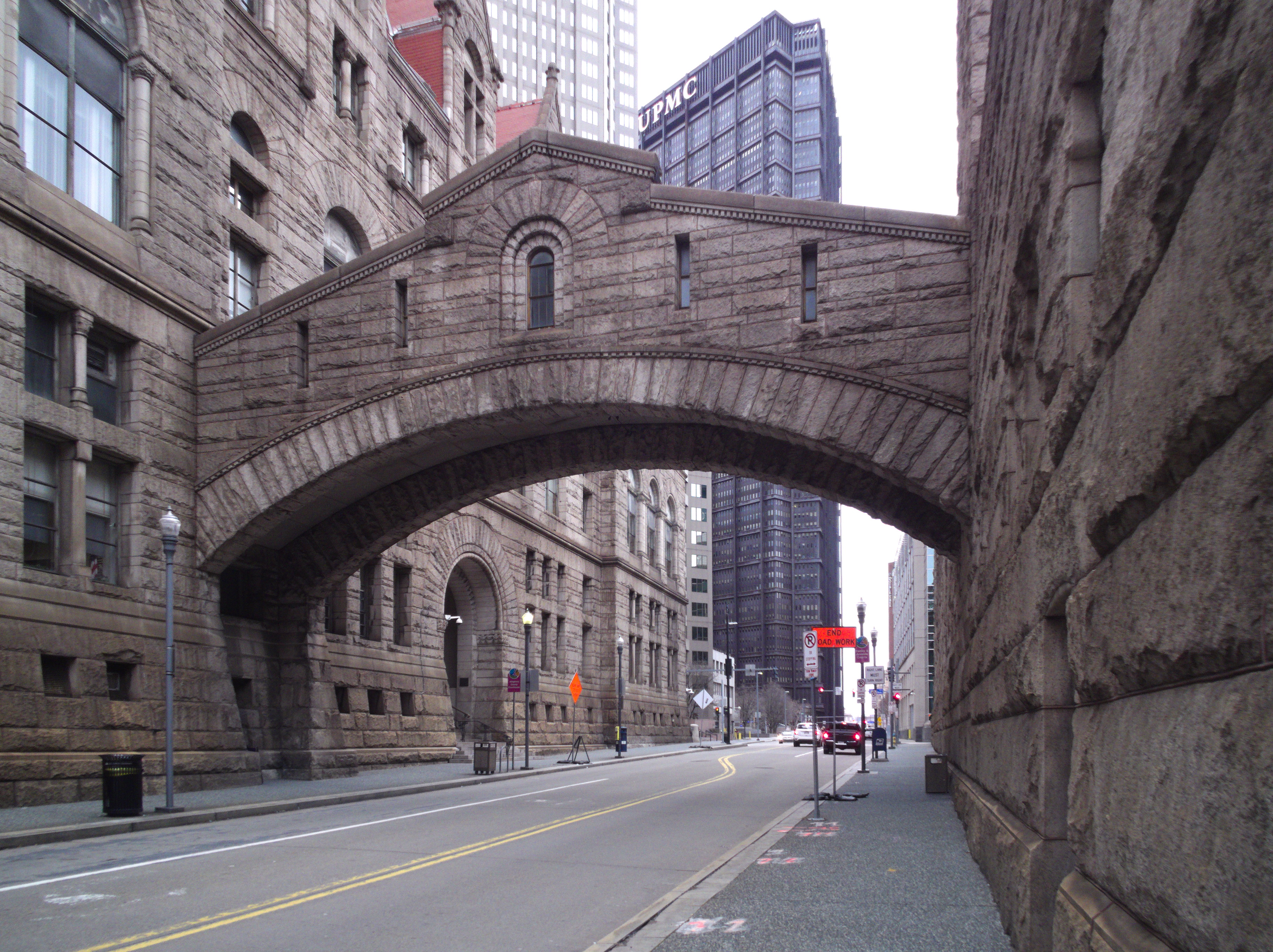
    The Bridge of Sighs connected the Allegheny County Courthouse with the jail across Ross Street. Now it connects the bureaucracy in the courthouse with more bureaucracy in the repurposed jail building, so that the name is just as appropriate. In the picture above, for a bit of a change of pace, old Pa Pitt gives you a bus driving away from you, which gives us a good sense of scale.

    Bridge of Sighs from the other side
    From a little farther away
  • Wood Street Building (300 Sixth Avenue Building)

    Wood Street Building

    A Daniel Burnham design built for the McCreery & Company department store, this building opened in 1904. It originally had a classical base with a pair of arched entrances on Wood Street, but beginning in 1939 it had various alterations, so that nothing remains of the original Burnham design below the fourth floor. This was one of Burnham’s more minimalistic designs; in it we see how thin the wall can be between classicism and modernism.

    Below, an abstract composition with elements of this building reflected in Two PNC Plaza across the street.

    Reflections
  • Top of the Benedum-Trees Building

    Top of the Benedum-Trees Building

    The ornate cap of the Benedum-Trees Building, with the PPG Place Christmas tree poking its head into the picture. Enlarge the images to appreciate the wealth of carved detail.

    Benedum-Trees Building
  • United Steelworkers Building (IBM Building)

    United Steelworkers Building

    The diamond grid is not an ornamental facing: it holds up the building, along with a central core. “Diagrid construction” is a little more common today, but still fairly unusual; perhaps the most famous or notorious example of it is the Gherkin in London. This was a very early example. It was finished in 1964, and although it was originally built for IBM, it fits its current owner very well: its steel grid is a good demonstration of what steelworkers are capable of. The architects were the New Orleans firm of Curtis and Davis.

    Formerly the IBM Building