Father Pitt

Category: Downtown

  • One Oliver Plaza

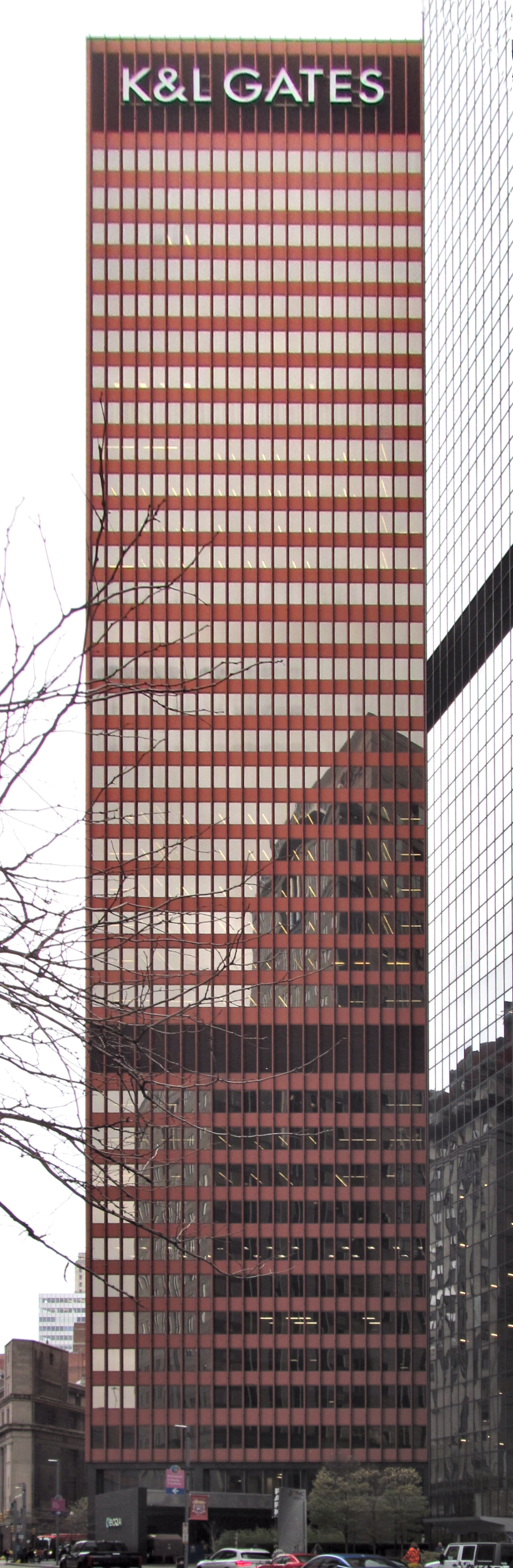
    This is not Father Pitt’s favorite building downtown, but it was one of the last works of a distinguished modern architect: William Lescaze, who died in 1969, the year after One Oliver Plaza was built. The building has had several names since then; it now goes by the name K&L Gates Center. Old Pa Pitt’s friend Dr. Boli has remarked that the names at the tops of the skyscrapers are a good index of who is most ruthlessly exploiting the masses at the moment. K&L Gates is a gigantic law firm.

  • Art Deco Christmas in the Koppers Building

    Christmas tree in the Koppers Building lobby

    The lobby of the Koppers Building is one of our richest Art Deco interiors, and here it is decorated for Christmas.

    Clock
    Lobby
    Window
    Balconies
  • Allegheny County Courthouse and Frick Building

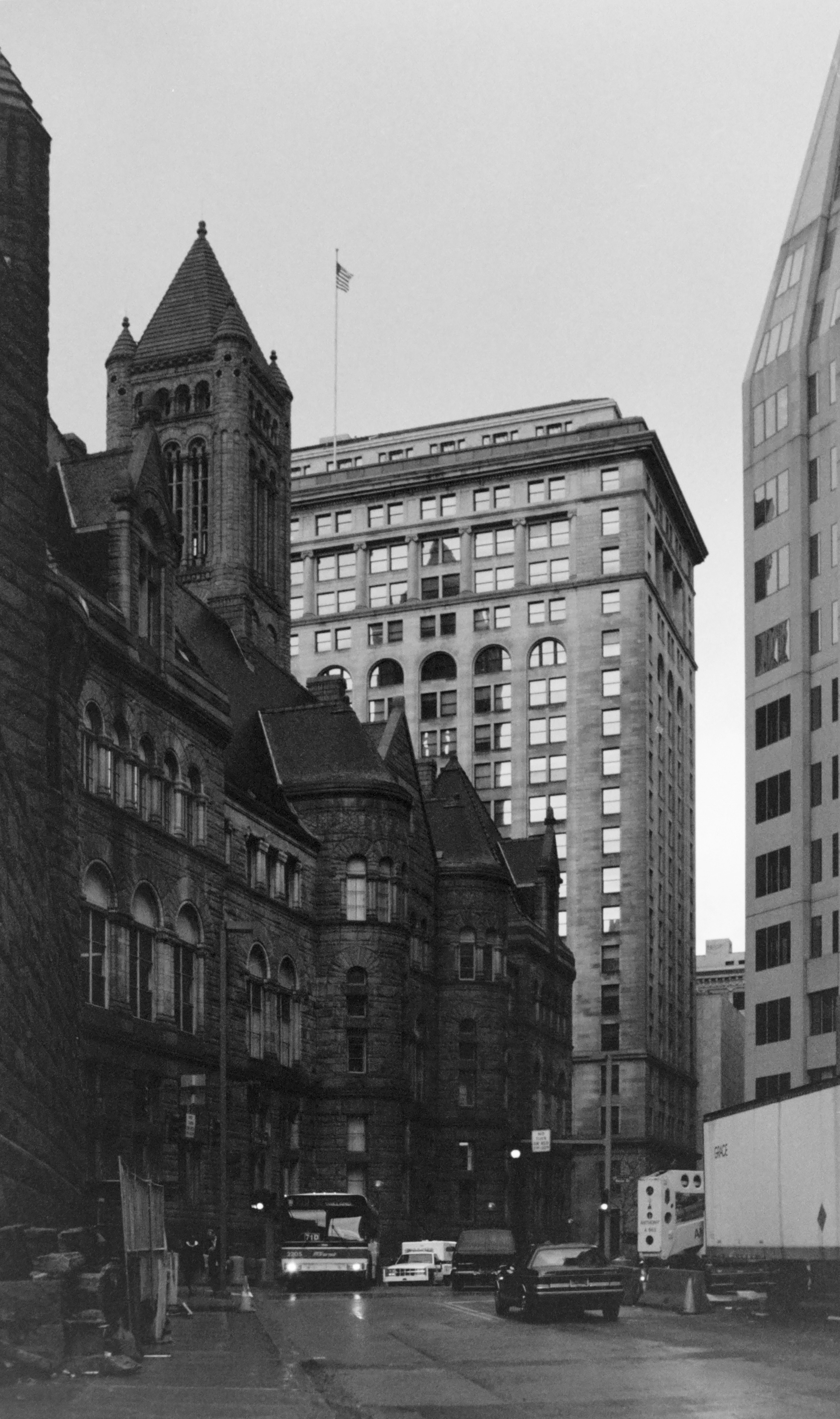
    Courthouse and Frick Building

    Taken on film in 1999. Note the bus coming toward you; apparently old Pa Pitt has been taking bus-coming-toward-you pictures for at least twenty-three years.

  • Maginn Building

    Maginn Building

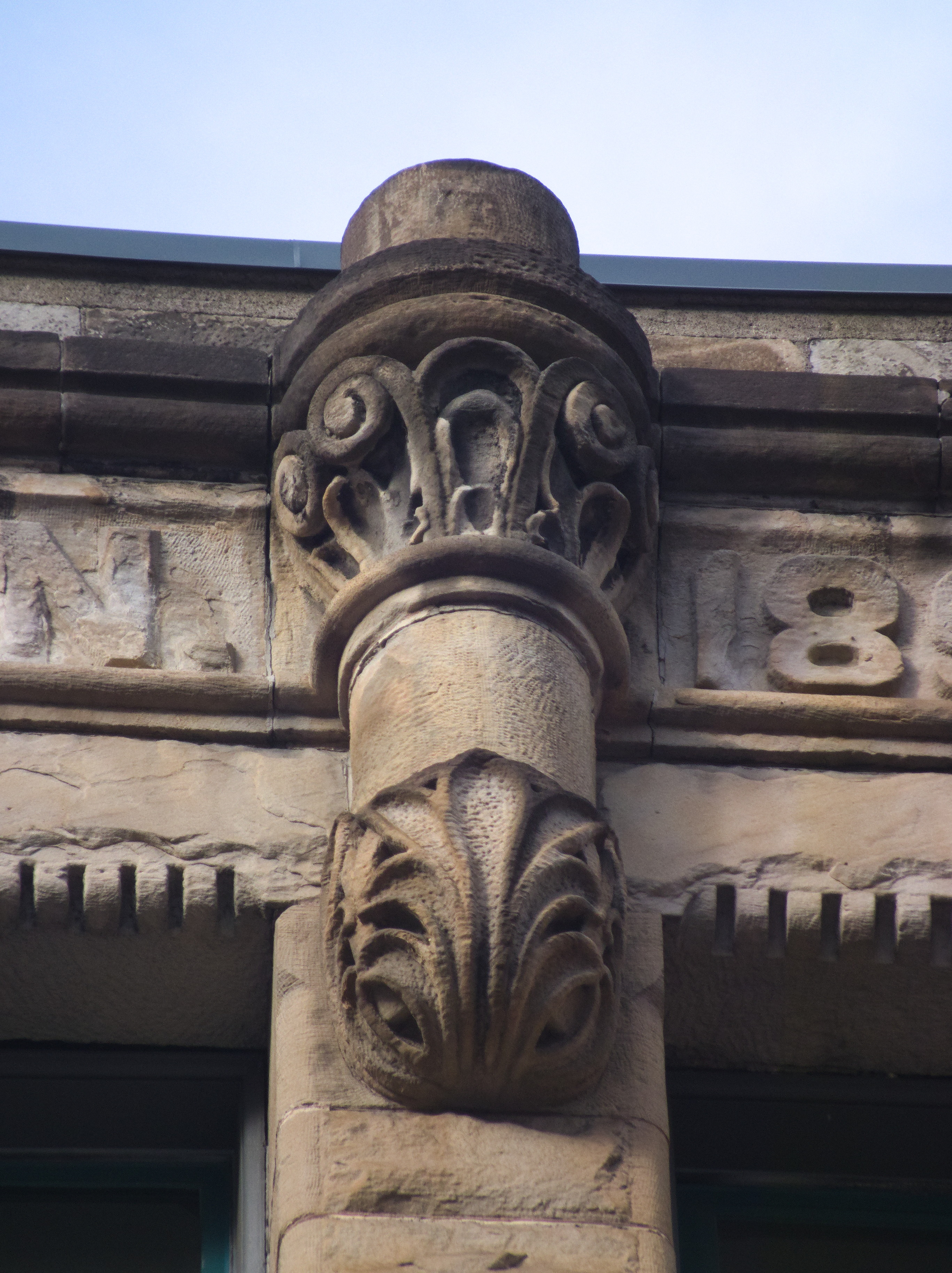
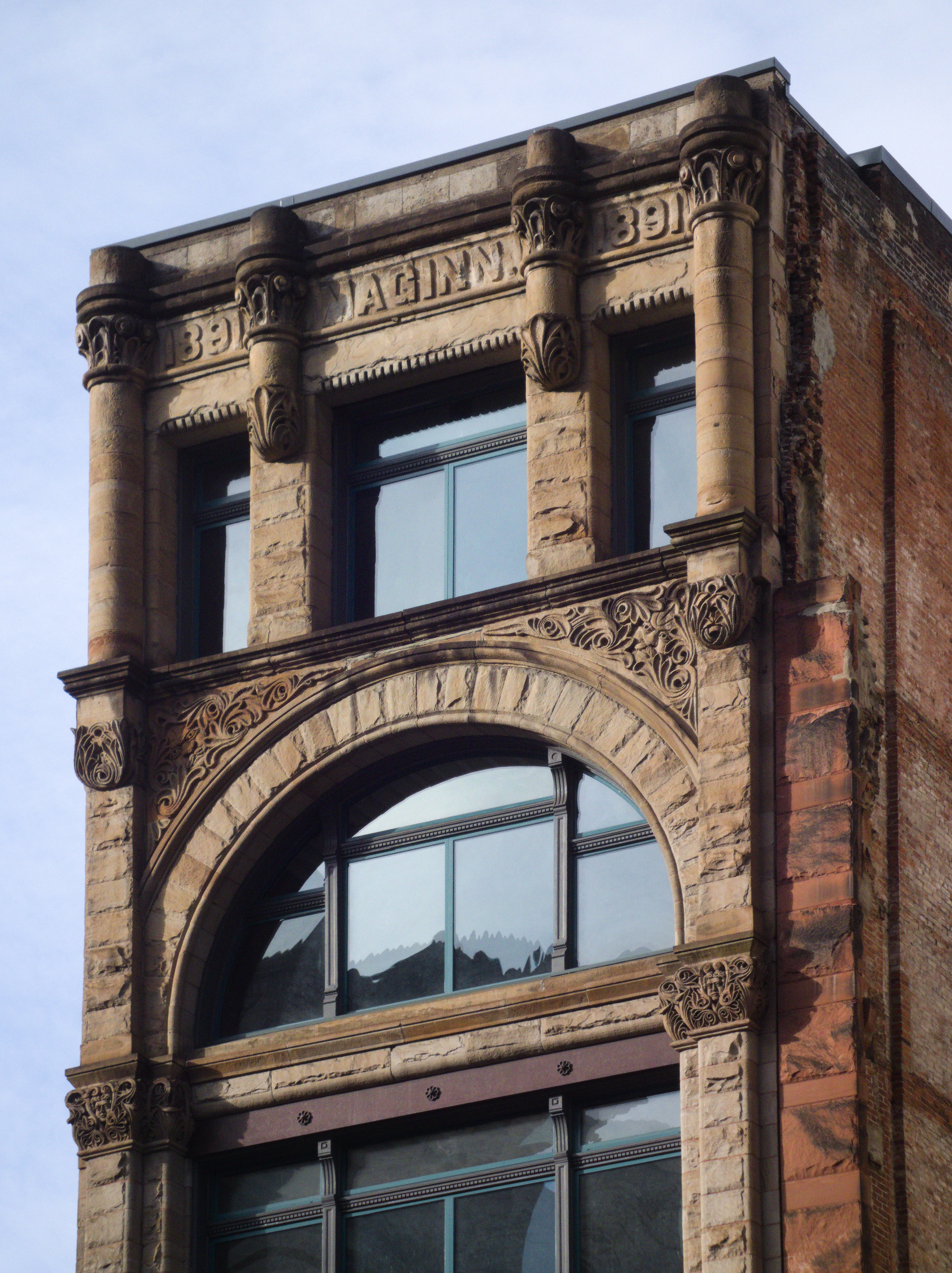
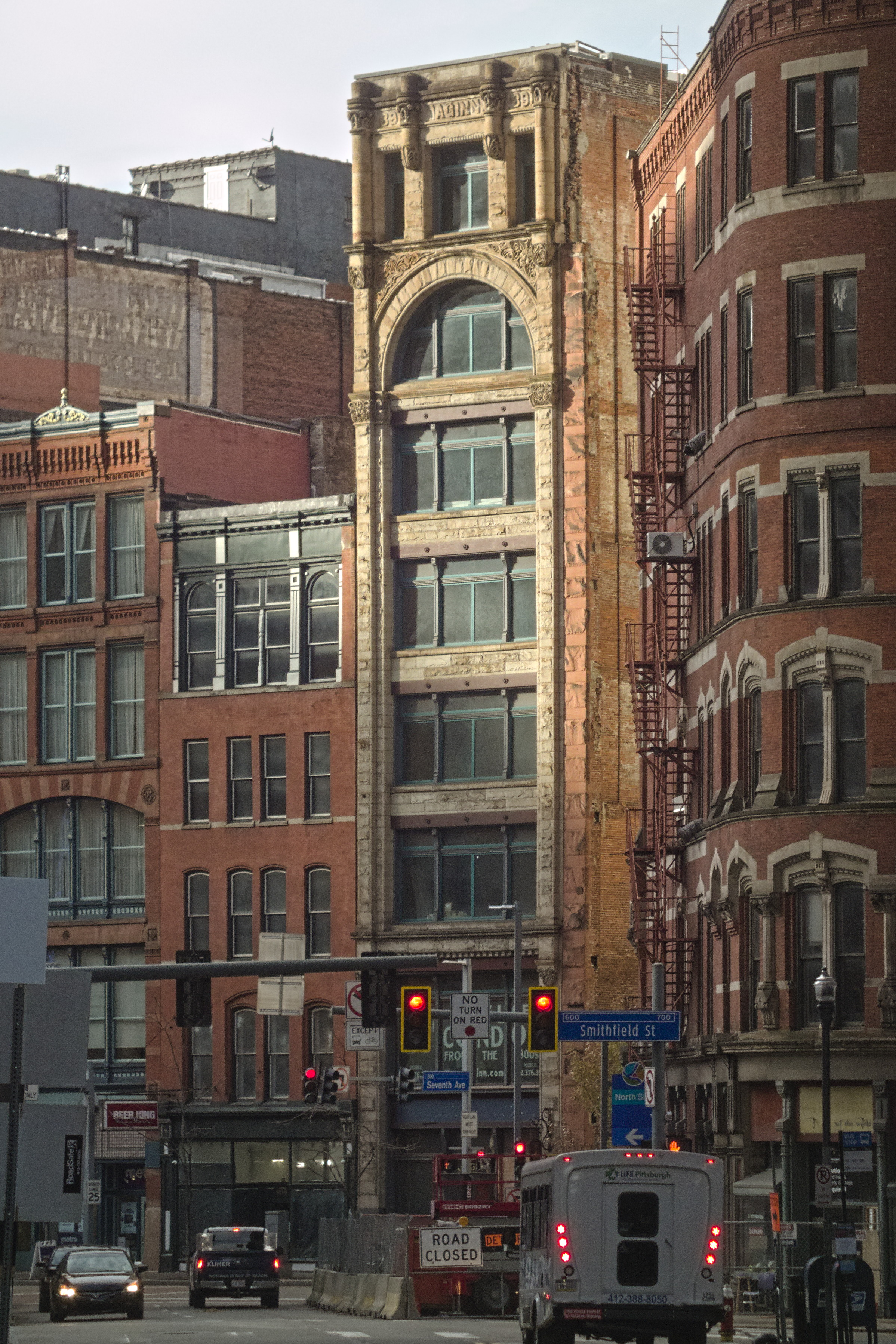
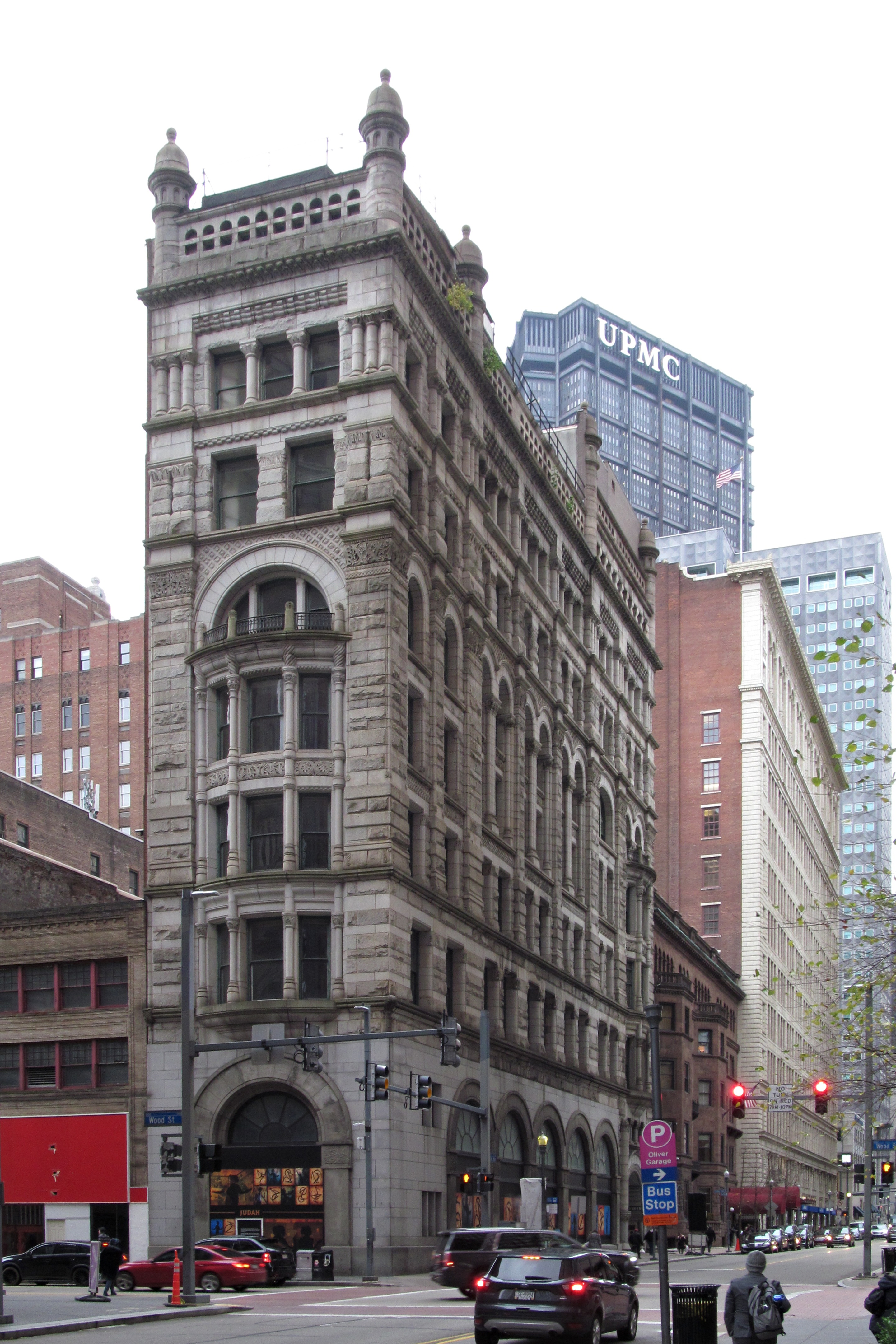
    The Maginn Building was put up in 1891, just three years after H. H. Richardson’s Allegheny County Courthouse opened. Even before the courthouse was finished, it had already created a mania for the “Richardsonian Romanesque” style in Pittsburgh, and the versatile Charles Bickel was happy to come through for any client who wanted an impressively Romanesque building.

    Foliage
    Decoration
    Top of the building
    From Seventh Avenue
  • The View from Federal Street

    View of Pittsburgh from Federal Street

    Low clouds and rays of sunshine make an atmospheric picture, as seen from Lafayette Hilltop.

  • Elevator Door in the Koppers Building

  • Hoffstot Building

    811 Liberty Avenue

    This building was put up in 1886, and in 1892 a sixth floor was added. It appears that the pediment was from the original construction, moved up one level in 1892; the ornamental scrolls on the fifth floor would have accented the pediment very nicely.

    Pediment

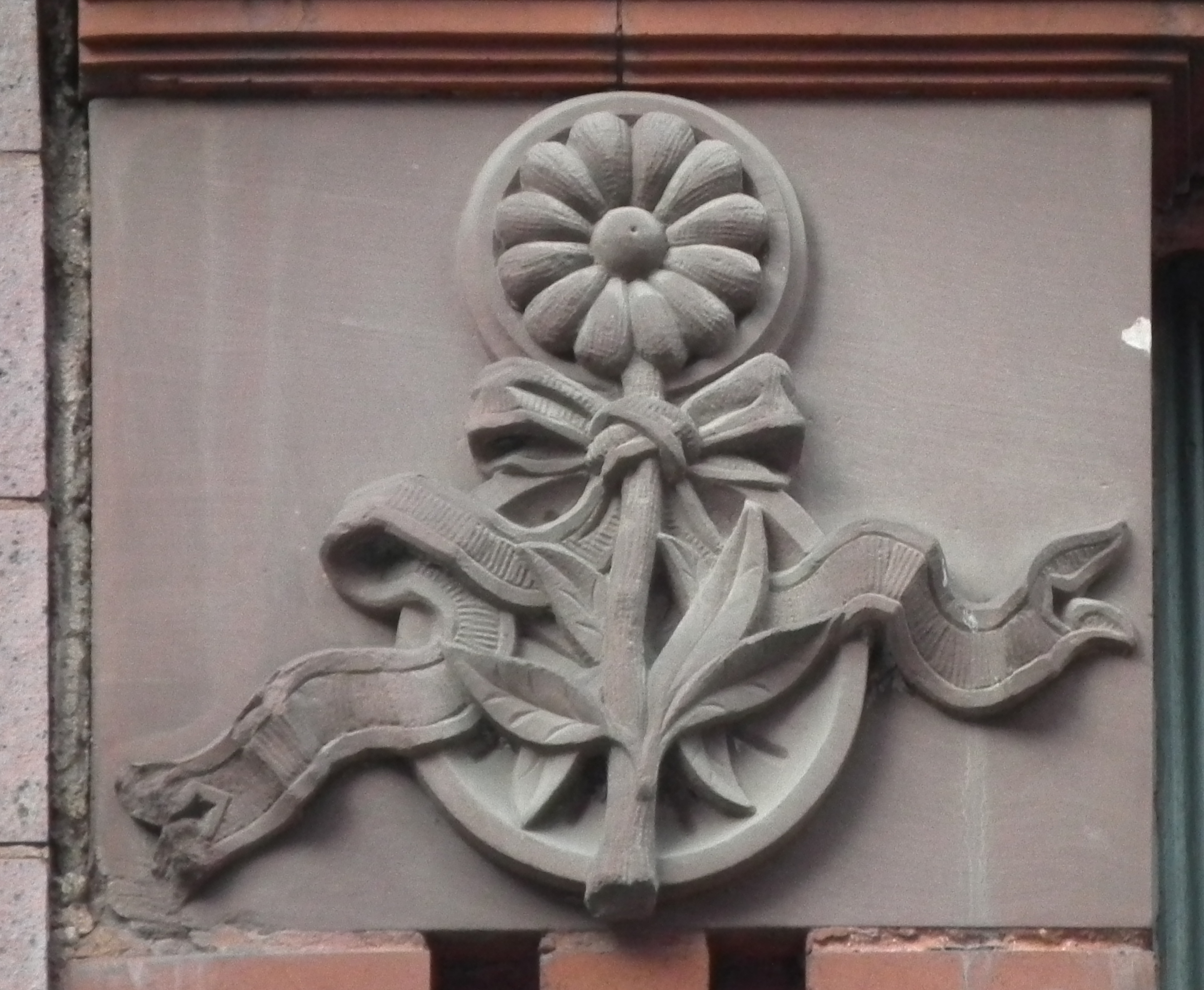
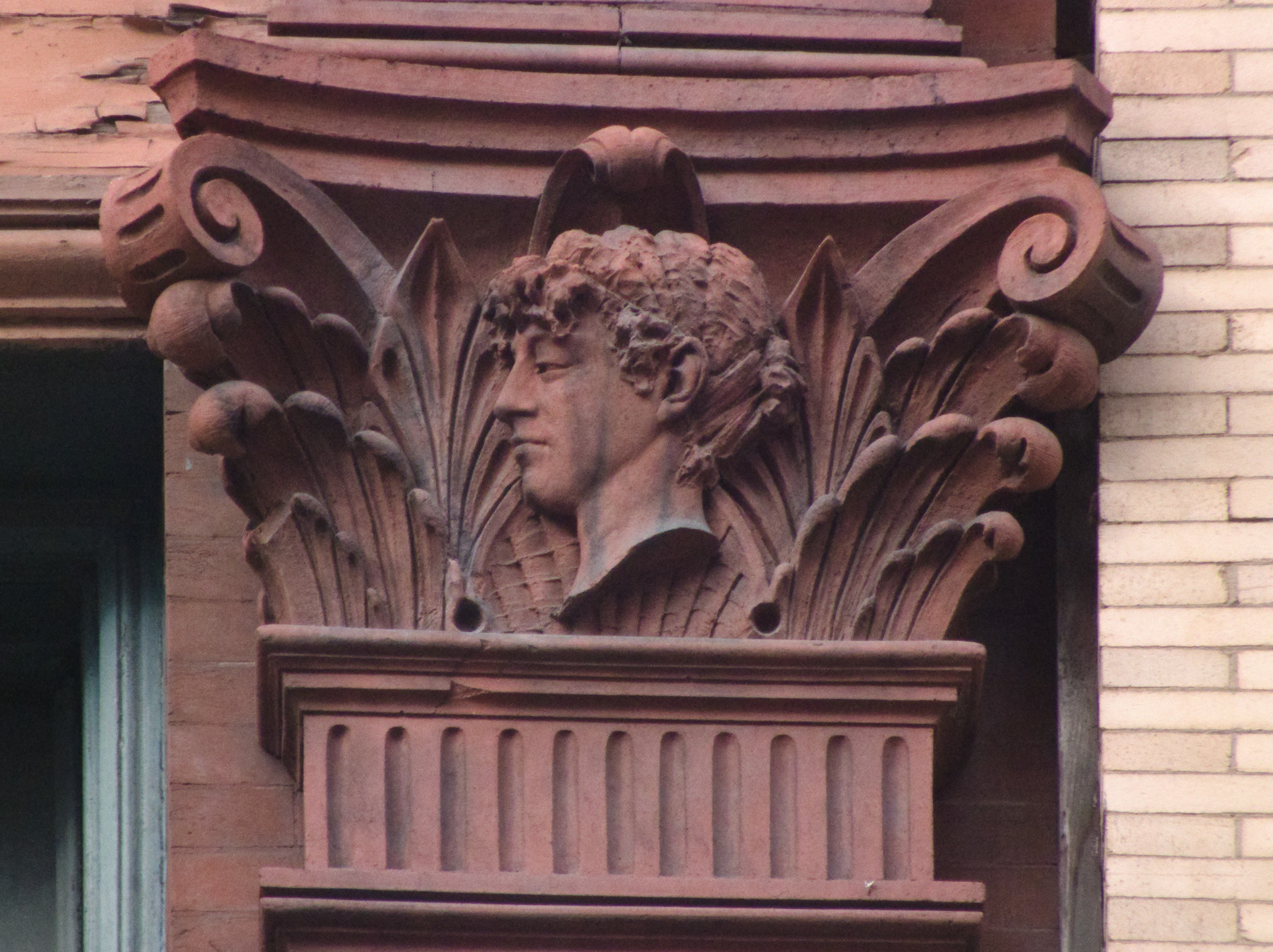
    As we often see in Victorian commercial buildings, what might appear to eyes trained on modernism as a cacophonous racket of detail turns out to be carefully organized, more a fugue than a racket. There are some interesting little outbreaks of randomness, however. Here are some of the delightful details you can pick out if you stand across the street from the building.

    Flower
    Profile facing right
    Profile facing left
    Flower and foliage
    Scroll
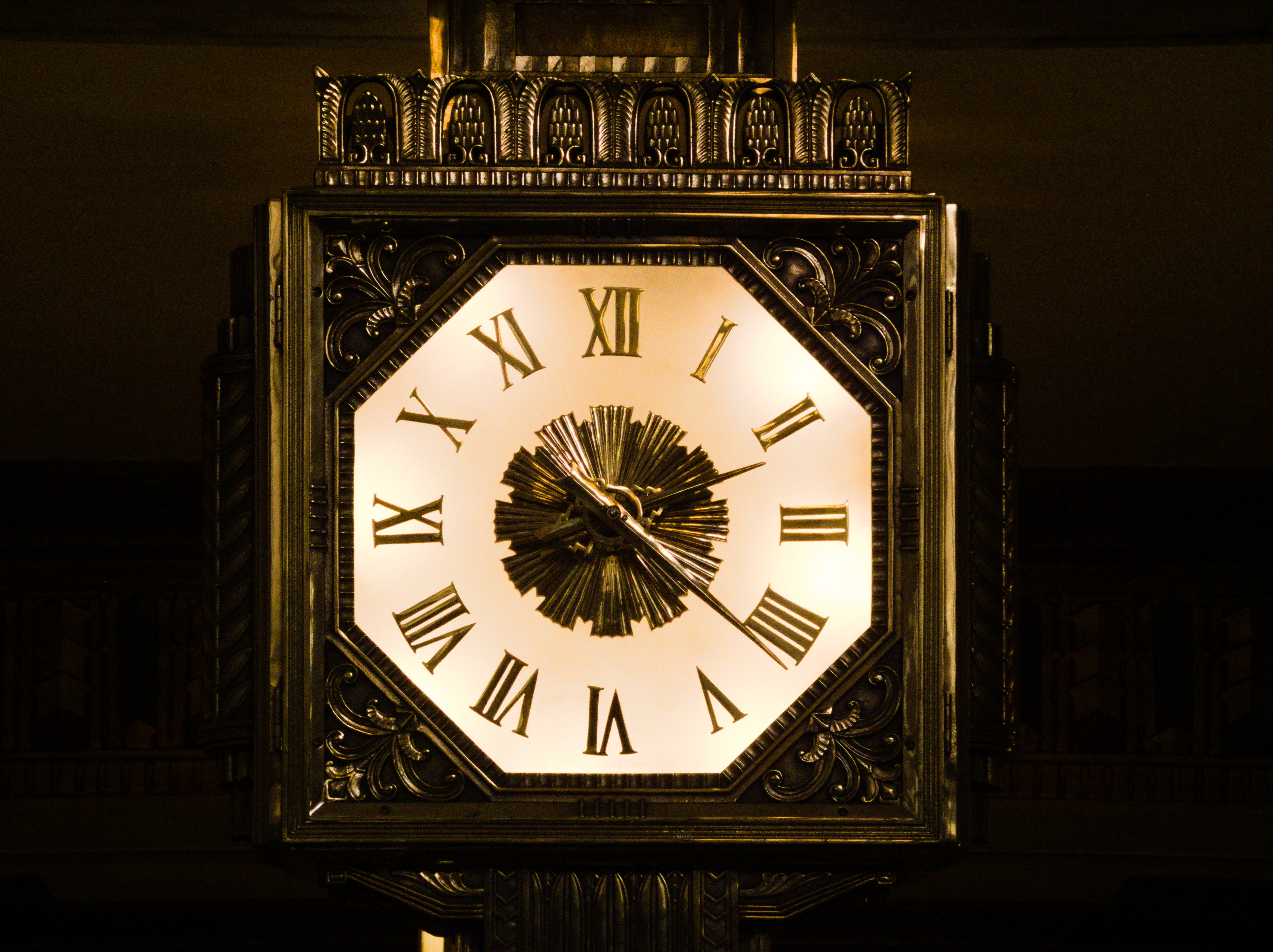
  • Art Deco Clock in the Koppers Building

  • Letterbox in the Koppers Building

    Letterbox in the Koppers Building

    The brass letterbox in the lobby of the Koppers Building (now called Koppers Tower, because every Building became a Tower while you weren’t looking) is a stylized model of the Koppers Building itself.

  • Granite Building

    The German National Bank Building, which later took on the name “Granite Building,” was designed by Charles Bickel. It opened in 1890 as one of the wave of Romanesque buildings that followed H. H. Richardson’s County Courthouse. Mr. Bickel pulled out all the stops and used every texture of which stone is capable. To modern eyes it may almost look random, but after one’s eye has been trained to the Victorian Romanesque, the care with which the elements are balanced becomes apparent.