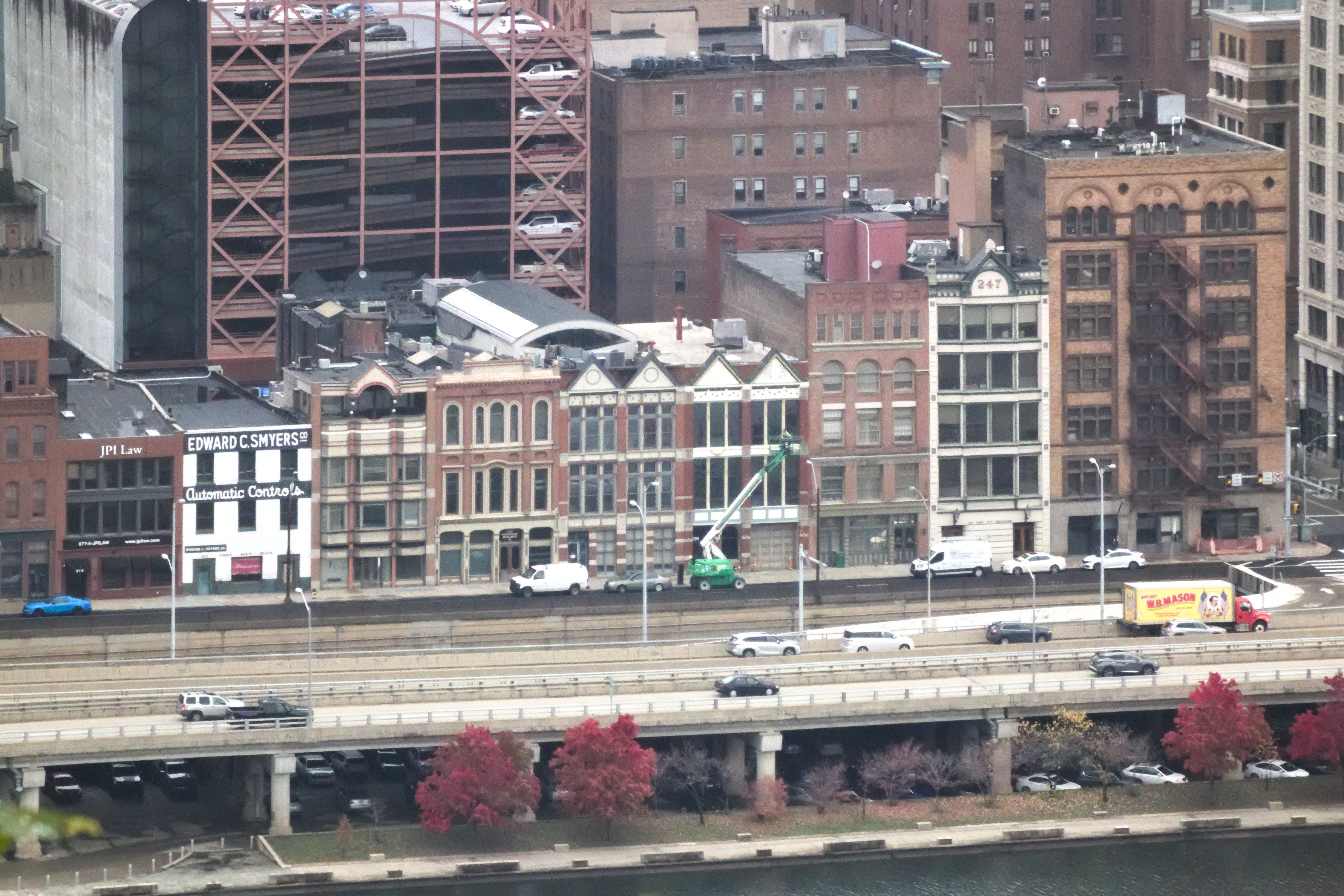
The exceptionally ornate front of this building is marred only by the modernist excrescence on the ground floor, which until recently was a McDonald’s restaurant. Something more tasteful could be done with that storefront fairly easily. The rhythm of the upper floors is just about perfect, and the carved and incised details are worth stopping to appreciate. (The upper floors are a bit blurry in this picture, which is attributable to low light on a drab day.)
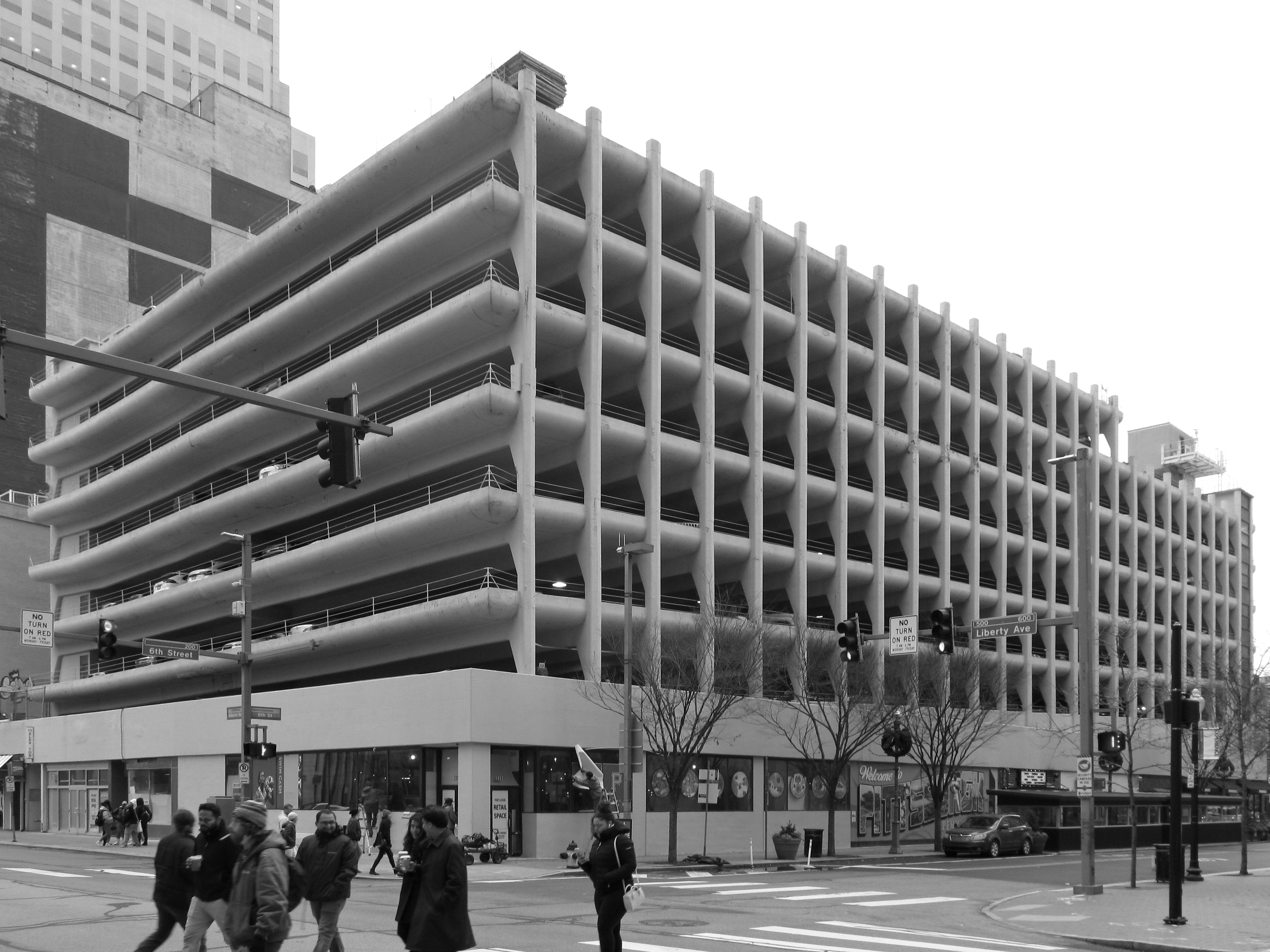
Connoisseurs of brutalism in architecture regard this as a remarkably fine example of the style. (Father Pitt could not find the architect with a short search, and he was not willing to do a long one.) “Brutalism” is the modernist school that makes its aesthetic statements through exposed raw concrete. The “raw” part is very important here: the architectural world blew a collective gasket when, in Washington, D.C., the Metro authorities responded to the increasing grubbiness of 1970s Brutalist subway stations by painting over the grime, which was blasphemy. Old Pa Pitt is not a great lover of brutalism (except for the Metro stations in Washington, which are like modernist cathedrals), but he can appreciate the care that went into making the most of concrete as a material in this building—the curved surfaces, the geometric forms, the play of light and shadow. It is also notable that, instead of killing the whole block, the builder put storefronts on the ground floor, so that some life could remain on the streets below the garage.
Now called just 606 Liberty Avenue, this was once a high-class department store. The odd-shaped building was designed by MacClure & Spahr, who gave us many distinguished buildings downtown. The odd shape was forced on this one by the oblique angle of the intersection of Liberty and Oliver Avenues. That last block of Oliver Avenue was later filled in to make PNC Plaza, but this building memorializes the intersection that used to be.
The front on both streets is covered—perhaps the appropriate word is festooned—with terra-cotta decorations. The style is a kind of fantasy Jacobean Renaissance, with wide arches coming to a very shallow not-quite point. Old James I only wished he could have buildings like this in his realm.