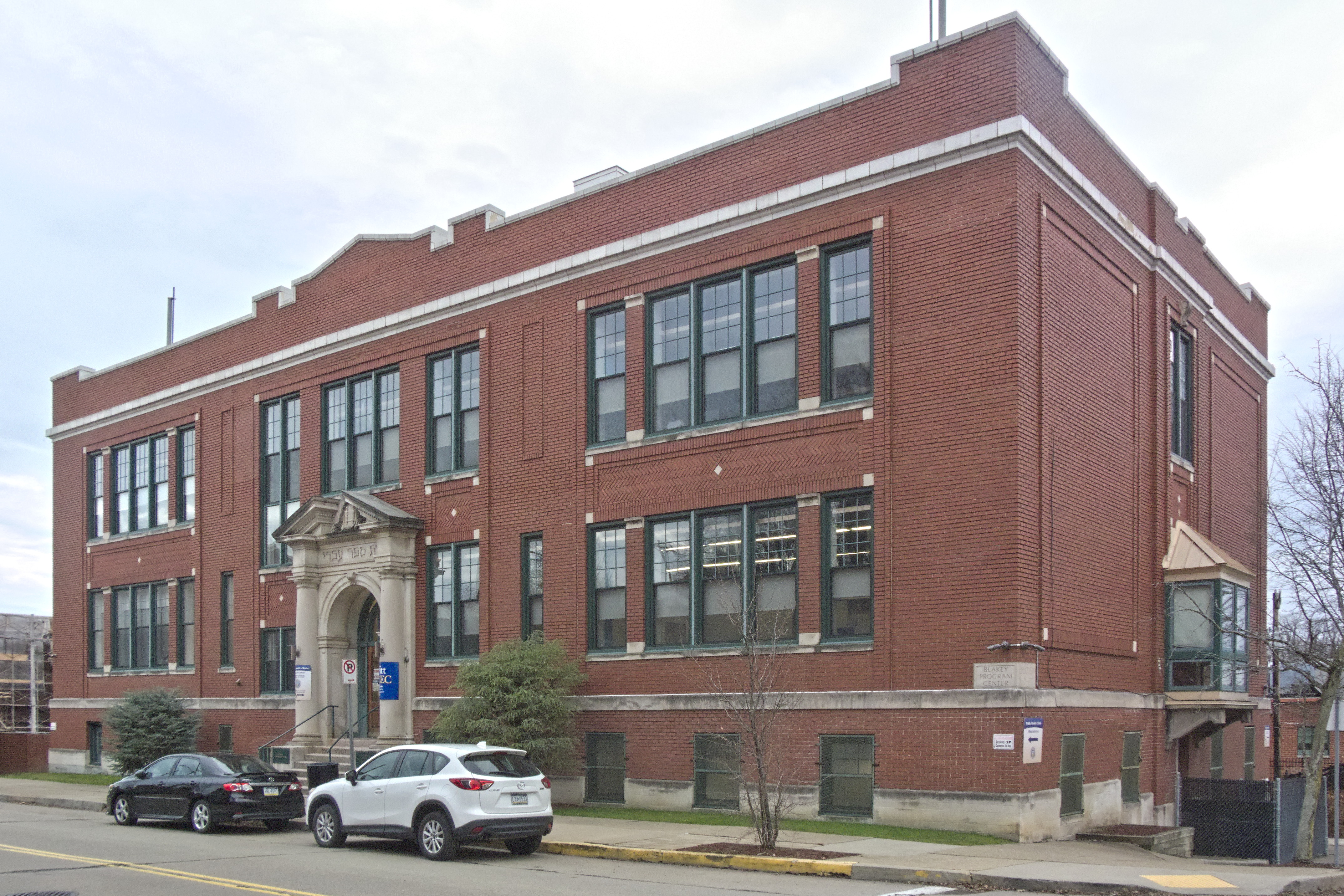
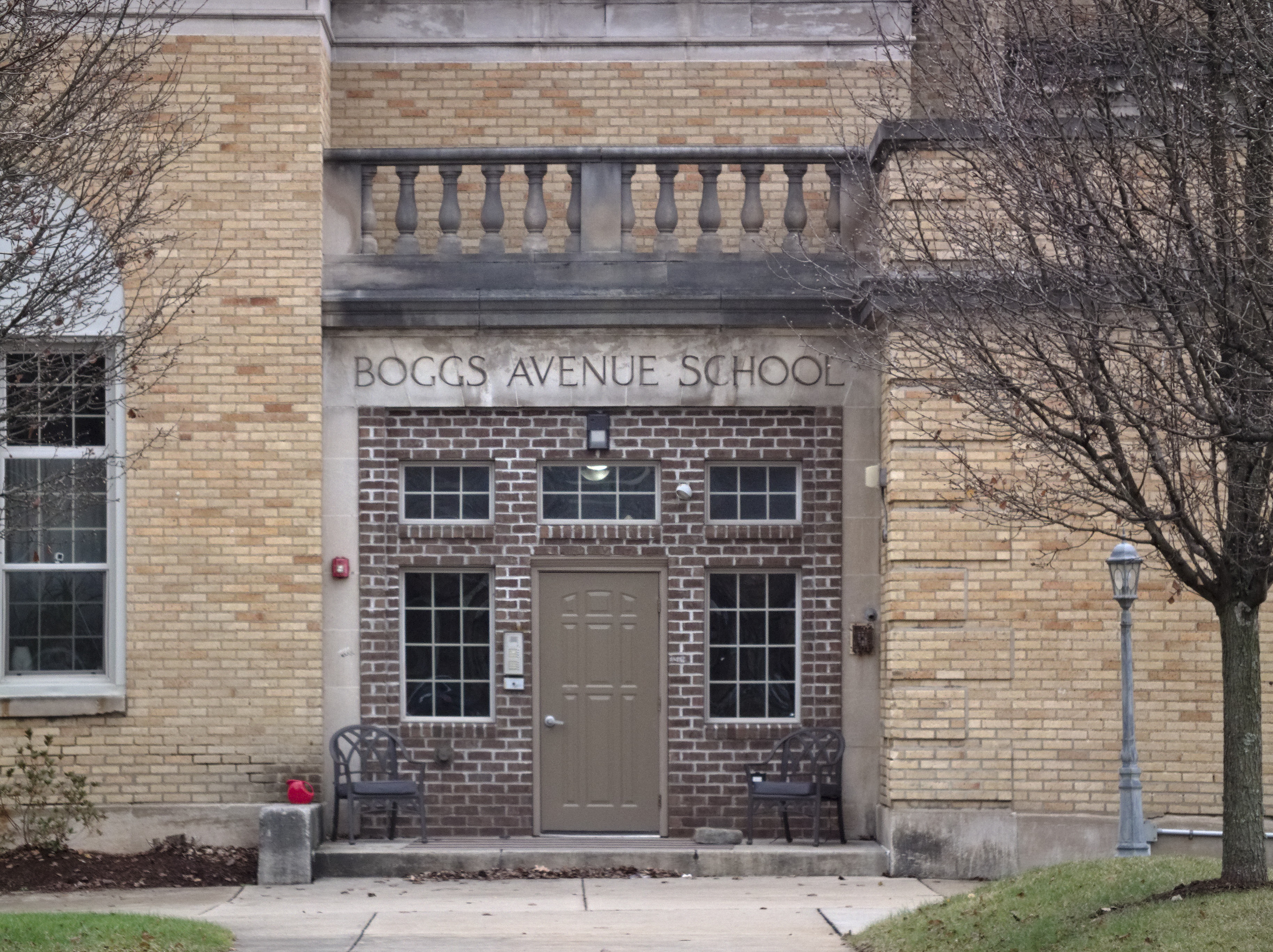
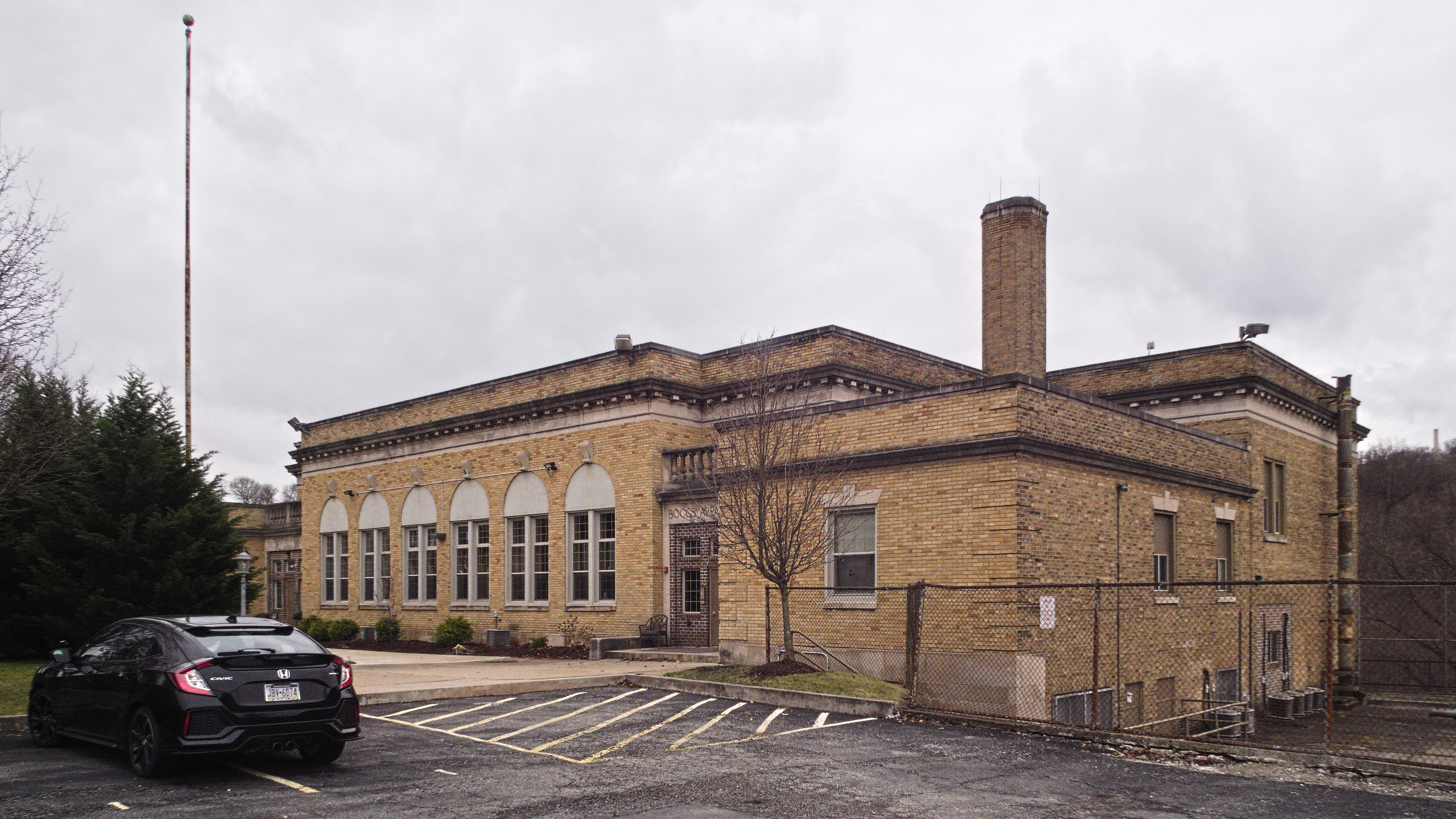
A. F. Link designed this Romanesque school in 1912, a little more than a decade before he designed the magnificent church beside it. This design already shows Link’s trademark habit of abstracting and modernizing historic forms: here he combines a hint of Romanesque with some very Jugendstil abstract patterns in the brickwork.
Fortunately the building has been sold to Yeshiva Schools, so it will not be abandoned to rot the way so many Catholic schools have been.
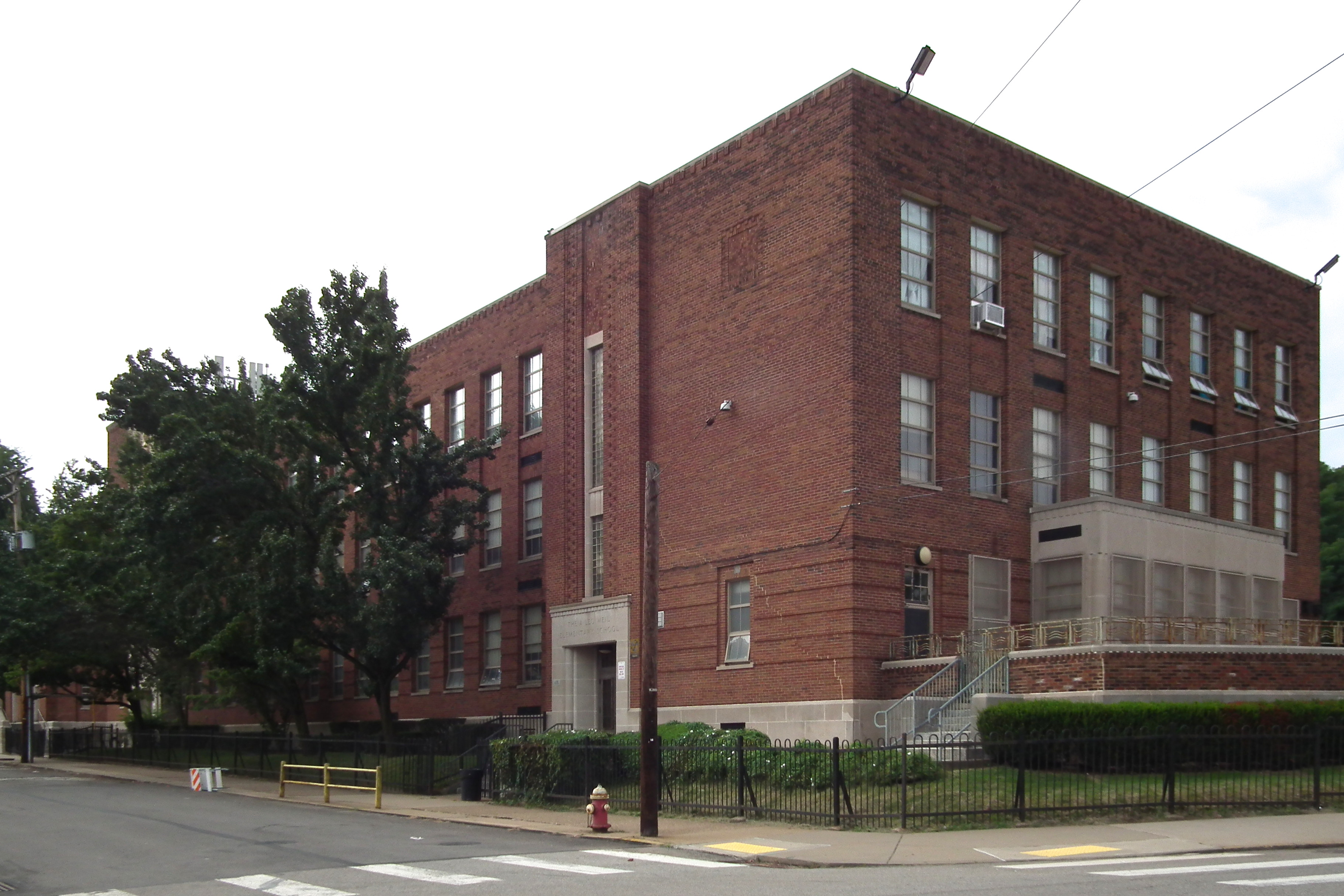
Marion Steen was staff architect for the Pittsburgh Board of Public Education for two decades, from 1935 to 1954, and in that time he gave us some striking Art Deco schools. One of the most striking things about them was how different each of them was. Someday soon old Pa Pitt will take a tour of Mount Lebanon to photograph Ingham & Boyd’s schools there, and when he does, you will see that they all have a certain Ingham & Boyd sameness to them—which is not a bad thing: they are good variations on a good theme. But Marion Steen was like a jazz musician who could never play the same solo twice.
The most striking thing about the 1942 Weil School, which is still in use as a charter school, is the four-storey vertical that marks off the main entrance.
Old Pa Pitt does not know who is responsible for the strongly Deco allegorical figure pouring out floral treasures for the delighted children below. But he is certain that education is supposed to look something like this.
The auditorium is an exercise in Deco classicism. Note the textures in the brickwork.
We hope someone will put some effort into preserving the wavy Art Deco metalwork in the railings at the Centre Avenue end of the building.
Although we don’t find it listed among his works, Father Pitt suspects that this school may have been designed by John T. Comès. The polychrome brickwork and crenellations remind us of some of his more famous churches, and the fact that the parish hired his disciple Leo McMullen to design the main church after Comès was dead may be suggestive. If anyone at the parish knows who designed this building, Father Pitt would greatly appreciate a comment.
Obviously the parish was getting ready for a festival when old Pa Pitt stopped by a few weeks ago.
The Springfield Public School, built in 1871, closed as a school in 1934, which was 89 years ago as Father Pitt is writing. It was preserved because it was useful as a warehouse in the increasingly industrializing Strip. Later it became loft apartments, and is now being sold as luxury condos.
The architect was T. D. Evans, about whom old Pa Pitt knows nothing except that he designed the very similar (though more elaborate) Morse School on the South Side. Compare the two buildings: the Morse School is a little larger, but built on almost exactly the same plan.
Springfield Public School.
Morse School. Father Pitt guesses that the tower in the center of both buildings was a belfry.
If you buy an apartment in the Springfield Public School, you don’t have to walk far to find delicious Asian food of all sorts.
Ulysses L. Peoples was the architect of this school, which opened in 1902 and even then was something unique.
The building itself is a tasteful but not extraordinary example of Romanesque style with Renaissance overtones—something we might call Rundbogenstil, because we like to say the word “Rundbogenstil.” It is a little bedraggled-looking now, because it closed in 2005. The more modern addition (by the time it was added this was known as the Madison Elementary School) has been adapted for the Pittsburgh Playwrights Theatre Company, but nobody seems to know what to do with the original section.
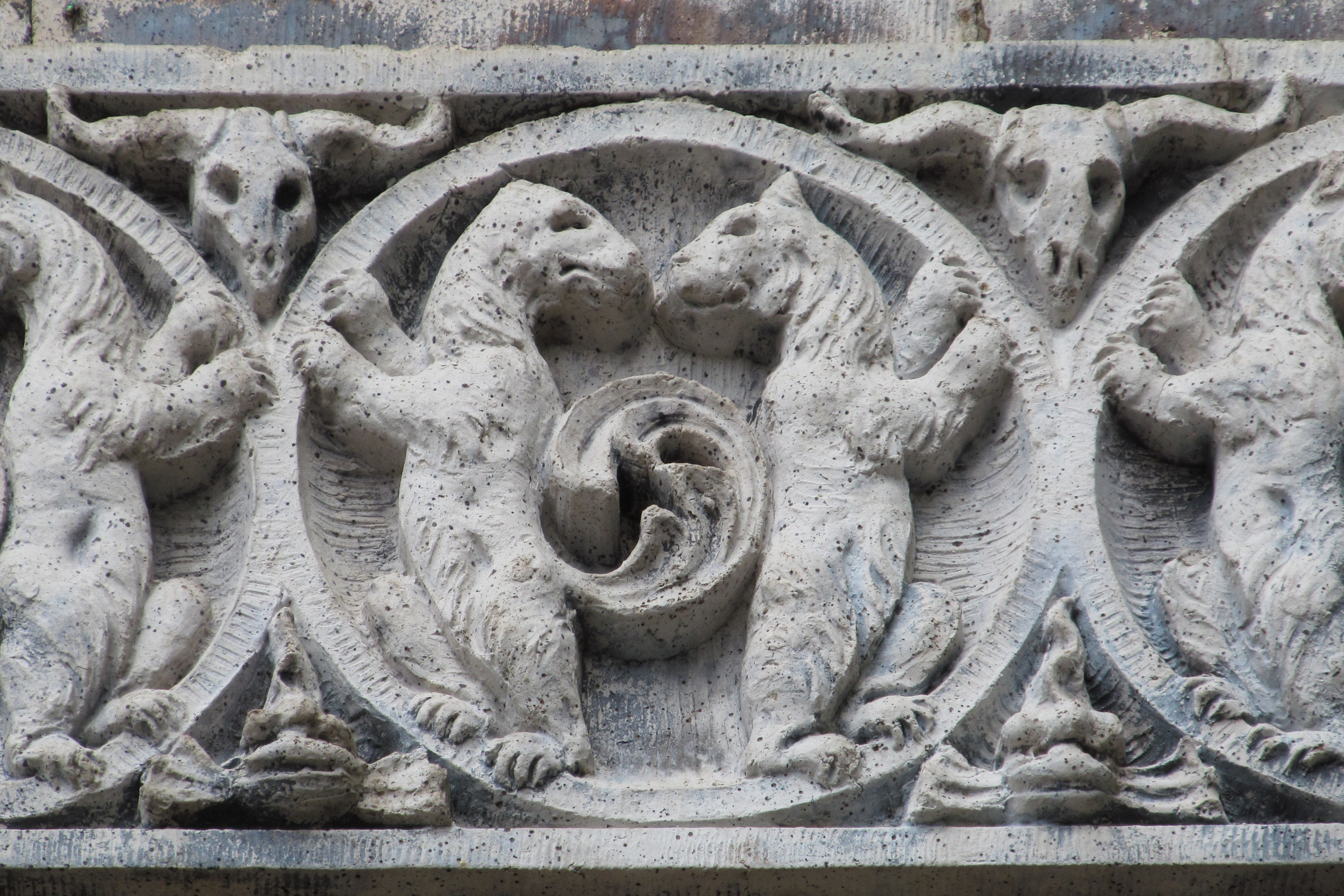
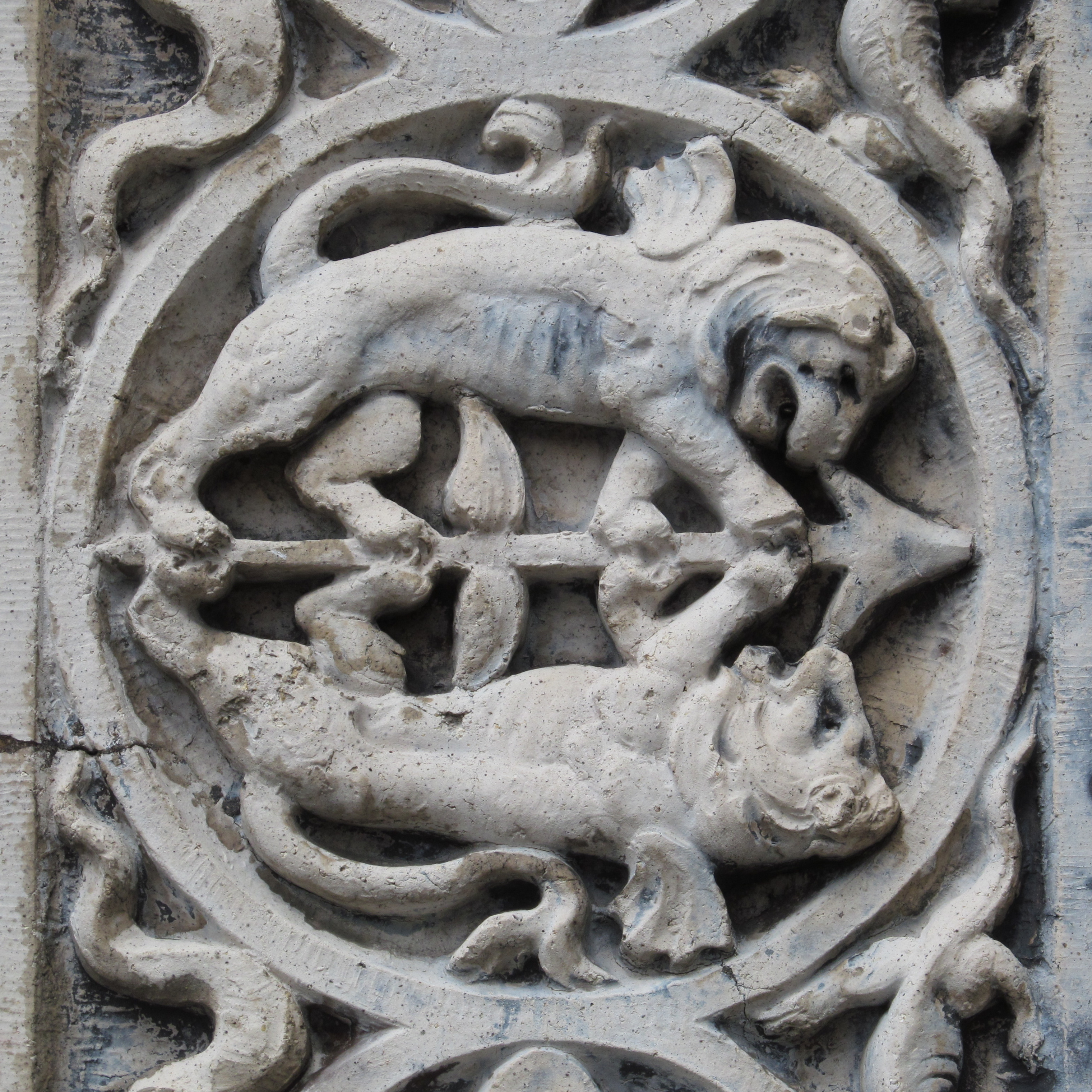
A fine piece of work for a small school, like many another Romanesque school in Pittsburgh. But the carved decorations around the entrances are like nothing else in the city, or possibly on earth.
It seems as though the architect and the artist had conceived the curious notion that children should find school delightful, and that the entrance should convey the message that here is a place where we are going to have fun.
The side and rear of the building. The rear, facing an alley, is done in less expensive brick.
The later addition, from 1929, is by Pringle & Robling in quite a different style, a lightly Deco form of modernism.
The South Vocational High School was designed by Marion M. Steen, who gave us many impressive schools around here. His father, James T. Steen, was a distinguished architect as well; Marion followed in his father’s classicist footsteps, but gradually adopted more and more Moderne mannerisms until he became one of our leading Art Deco architects. This school was a kind of vocational annex for the South High School across the street. Construction began in 1939, and it opened in 1940, just in time to be adapted to round-the-clock wartime training for mechanical trades.
This is Steen’s most aggressively modern design. He seems to have imagined a building that would look like a cross between school and factory.
This composite picture is huge: if you click on it, expect more than 18 megabytes of data.
Here is the Sarah Street front. As in all Steen’s other schools, the decorative details are imaginative and appropriate. These suggest a new world of technological wonder.
Now let’s walk around to the Tenth Street entrance, where we’ll find a remarkable decorative aluminum panel in the transom.
We have many public buildings with inscriptions in Latin. But is this the only school in North America with a cuneiform inscription over the entrance? Father Pitt would love to have any others pointed out to him.
Do not suppose, by the way, that old Pa Pitt is fluent in Akkadian, much as he would like to be able to read the adventures of Gilgamesh without a translation. It was, however, easy to trace the character and feed it into an image search, and although Google did not come up with the exact character at the top of the list, it took only a bit of scrolling to find the character we were looking for. Father Pitt wishes he could say he had thought of that solution to the problem himself, but, having recognized that this was a cuneiform character, he got no further until a cleverer friend suggested the way forward.
The building is in use as the Pittsburgh Online Academy (which needs a building for some reason; perhaps our school board has only a fuzzy notion of what “online” means), so for the moment it is well kept and externally in original condition.
When a new generation of architects feels utter contempt for the work of the previous generation, this is the result. Fortunately, the contempt extended to ignoring the details of the original building, which are therefore preserved, except for the loss of the cornice. Like several other previously abandoned buildings in the historic center of Homestead, this one has now found another use.
The school was named for Charles M. Schwab, who was superintendent of the Homestead Works and later the first president of United States Steel.
Now part of the Conroy Early Childhood Center, this old school hovers between classical and Romanesque styles, which means that perhaps the best term for it is Rundbogenstil, the word old Pa Pitt most likes to pronounce in public.
Since it has been made an annex of a larger building, it no longer requires its main entrance, which leads to this architectural dissonance: