




Some time ago old Pa Pitt took a picture of this silent-era neighborhood movie theater in the middle of its recent renovation. It is pleasing to see it now nicely finished and home to a video-production company. It has had an eventful and oddly circular history. It was built before 1914, since it appears in a 1914 guide to Pittsburgh (which describes Beechview as “beyond the South Hills,” showing how the definition of “South Hills” has moved with the expansion of the suburbs). After some decades as a theater, it was turned into an American Legion post. Then for a while it became a nursing home. Finally it was renovated as you see it now and brought back to its roots in the movie business.
An update: According to a 1923 map, this was called the Olympic Theater. There were at least three theaters in Beechview in 1923.
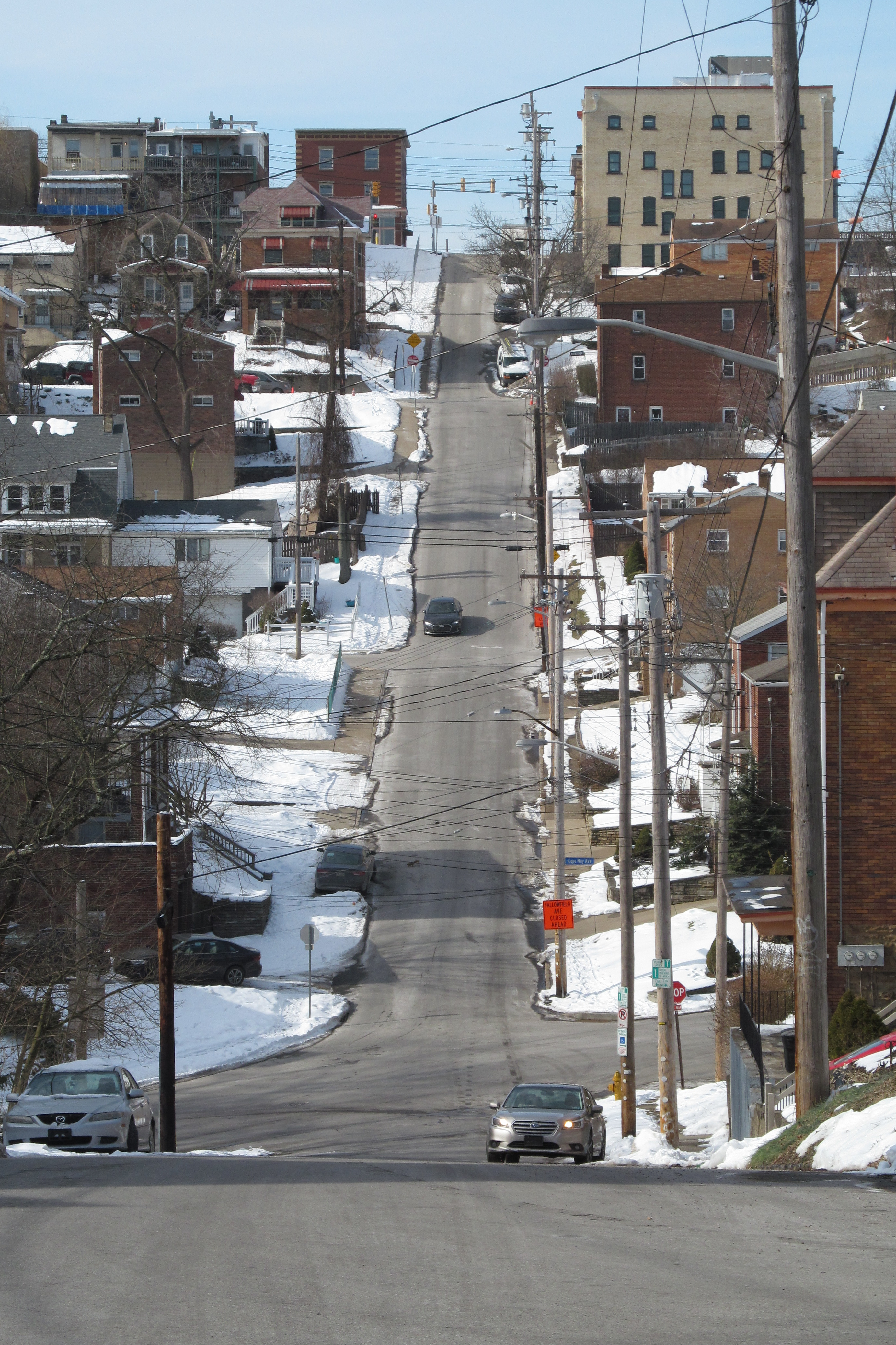
Father Pitt is convinced that the developers who laid out the streets in Beechview had never visited the site. Just draw lines north-south and east-west on a map, and you have your streets. Hills? Oh, they can’t be that bad, can they?
Here is Hampshire Avenue viewed from the Red Line streetcar crossing, with Broadway—where the Red Line crosses Hampshire again—at the top of the next hill.

Now converted to luxury apartments as “The Carlyle,” this classical Fourth Avenue bank tower was designed by the firm of MacClure and Spahr. Benno Janssen, who was working at the firm, is said to have had a large part in the design. It opened in 1906. Curiously, the building behind it, the Commonwealth Bank Building, was built at the same time and reached exactly the same height, 300 feet.

An outbound Red Line car on Broadway in Beechview passes Hampshire Avenue.


A wintry view across the Diamond or Market Square, with the Pittsburgh National Bank Building (One PNC Plaza), the U. S. Steel Tower, the Tower at PNC Plaza, and Tower Two-Sixty looming behind the square.

A view eastward on Fourth Avenue, one of the most architecturally interesting streetscapes in the world.
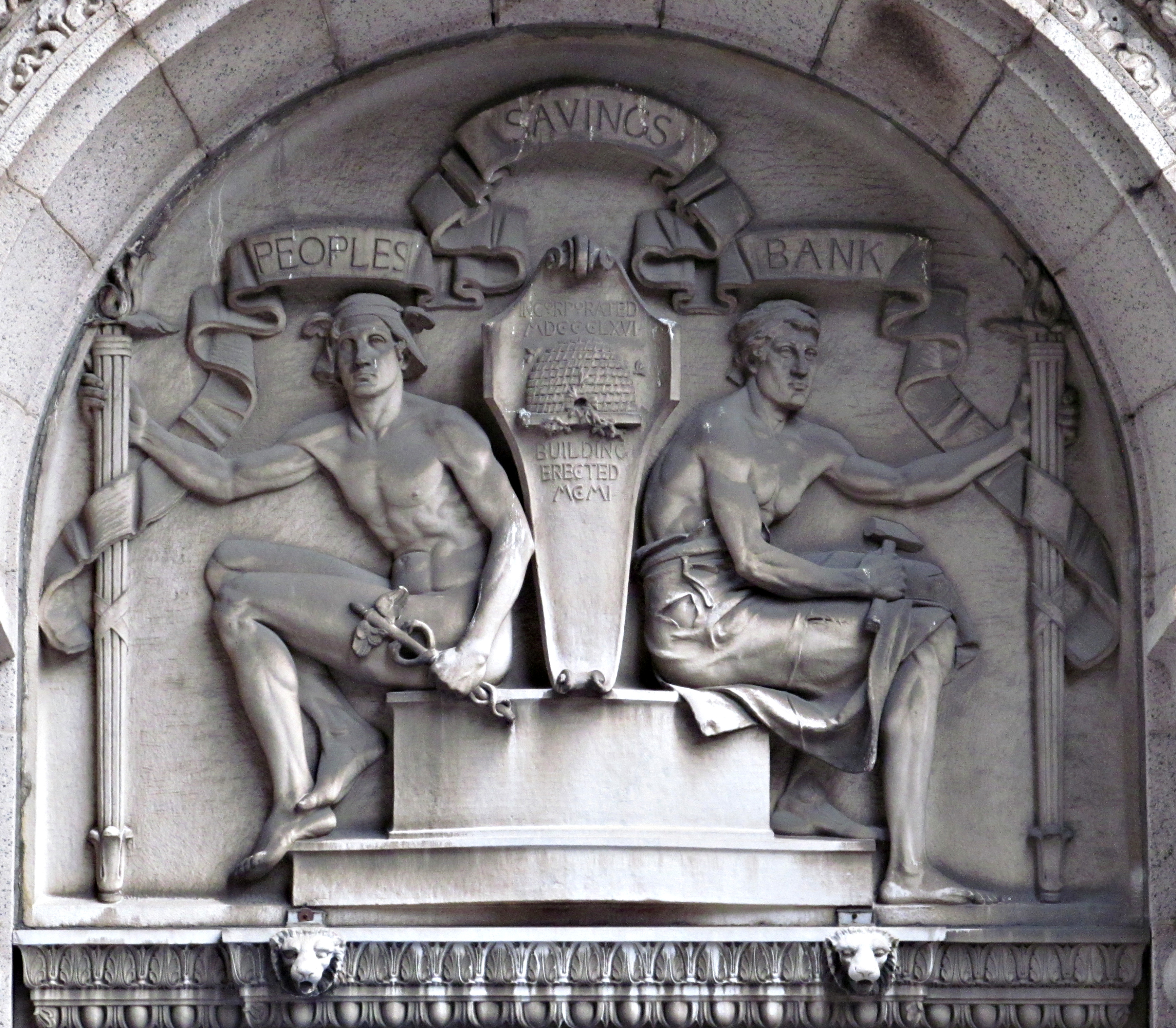
John Massey Rhind was Andrew Carnegie’s favorite sculptor; he gave us the Noble Quartet in front of the Carnegie Institute and the statue of Robert Burns outside Phipps Conservatory. Here he gives us some allegorical figures to adorn the entrances to the People’s Savings Bank’s splendid tower at Fourth Avenue and Wood Street. Not altogether coincidentally, the building itself was designed by Alden & Harlow, Carnegie’s favorite architects, whose firm (with their earlier partner Longfellow) was also responsible for the Carnegie Institute. Above, the Wood Street side; below, the Fourth Avenue side.


