
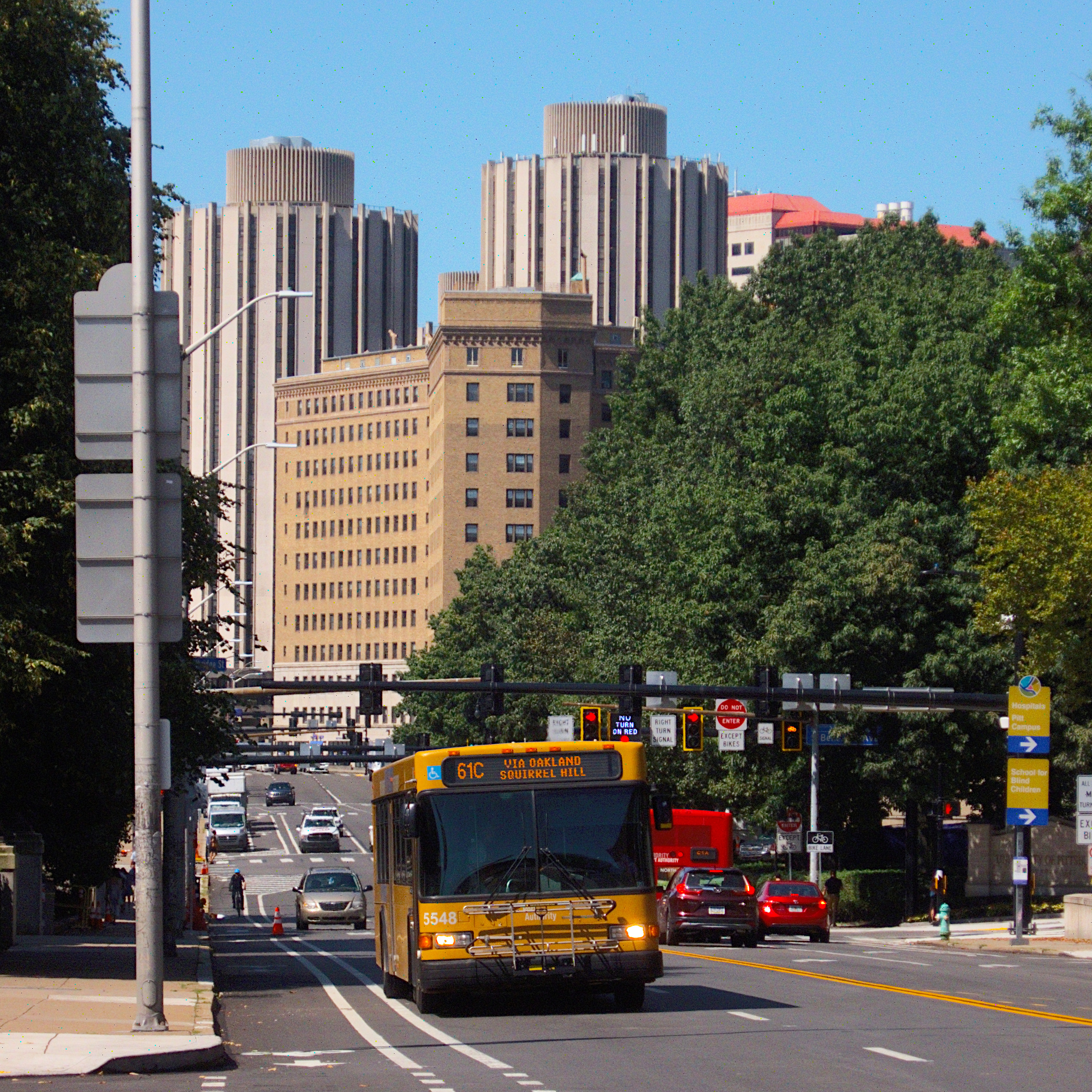
A 61C bus comes eastbound on Forbes Avenue toward the stop in front of the Carnegie Museum of Art. In the background we can see central Oakland, with two of the three Litchfield Towers, the distinctive cylindrical skyscraper dormitories.
A 61C bus comes eastbound on Forbes Avenue toward the stop in front of the Carnegie Museum of Art. In the background we can see central Oakland, with two of the three Litchfield Towers, the distinctive cylindrical skyscraper dormitories.

Central Oakland as seen from St. Michael’s Cemetery in the South Side Slopes.


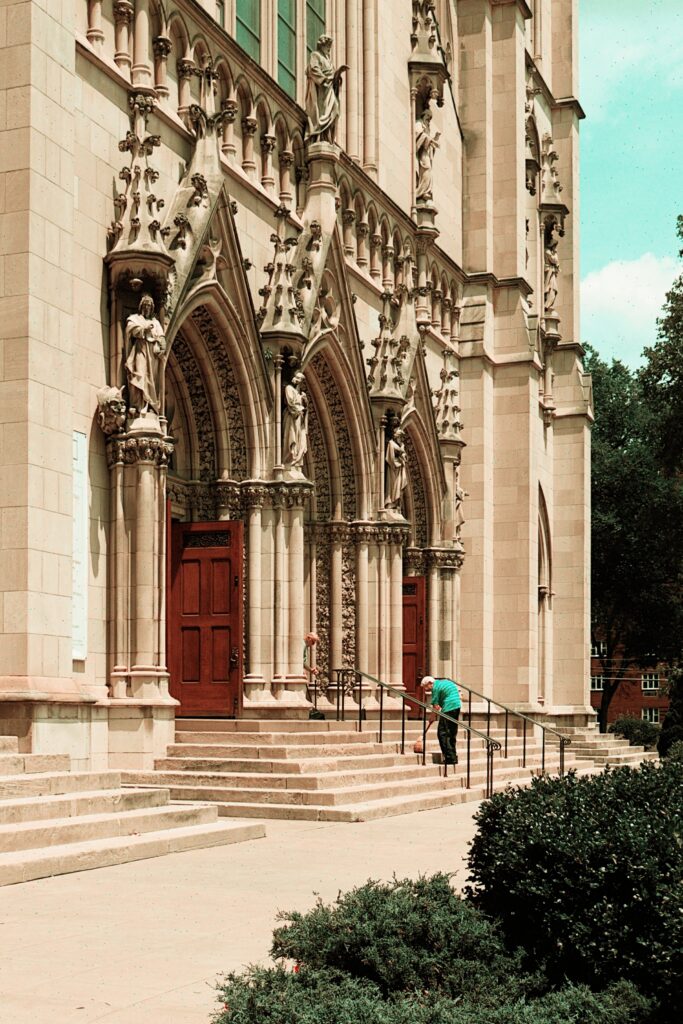
In old-postcard colors, a view of the front steps of St. Paul Cathedral in Oakland.

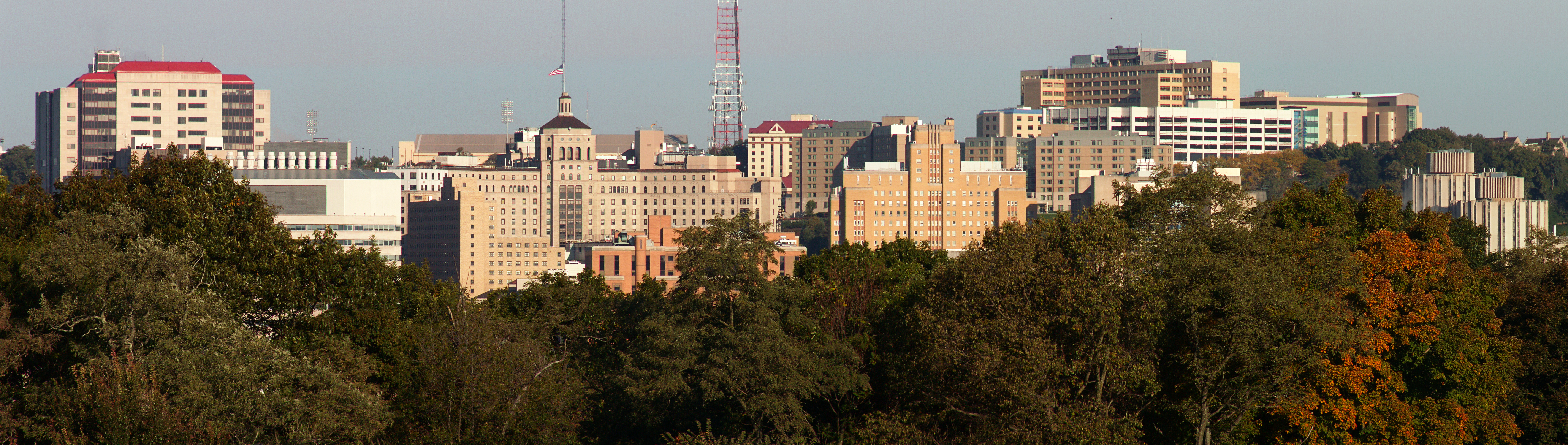
Two panoramas of the Oakland medical-intellectual district. Above, from Panther Hollow Bridge; below, from Schenley Park near the Oval. They are very large if you click on them.

This is not the largest but one of the most splendid apartment buildings in the North Oakland apartment district. It is a curious trapezoidal shape, crammed into a lot that is not quite rectangular and using up every inch of it.
There are some stitching errors in this very large composite photograph, and old Pa Pitt is too lazy to fix them.

Presbyterian Hospital was built in 1938 as a splendid Art Deco skyscraper with wings. The original design is impossible to appreciate from nearby, since other buildings have grown up to obscure it. But if we take a long view of it from Schenley Park, we can get some idea of how the architect intended it to be seen.
The central tower is topped by yet another imitation of the Mausoleum at Halicarnassus, joining Allegheny General and the Gulf Tower in the style old Pa Pitt likes to call Mausoleum-on-a-Stick.

The columns of the Mellon Institute building in Oakland are the largest monolithic columns in the world, each made from one gigantic cylinder of stone. This picture was taken on film a few years ago, but nothing much has changed.
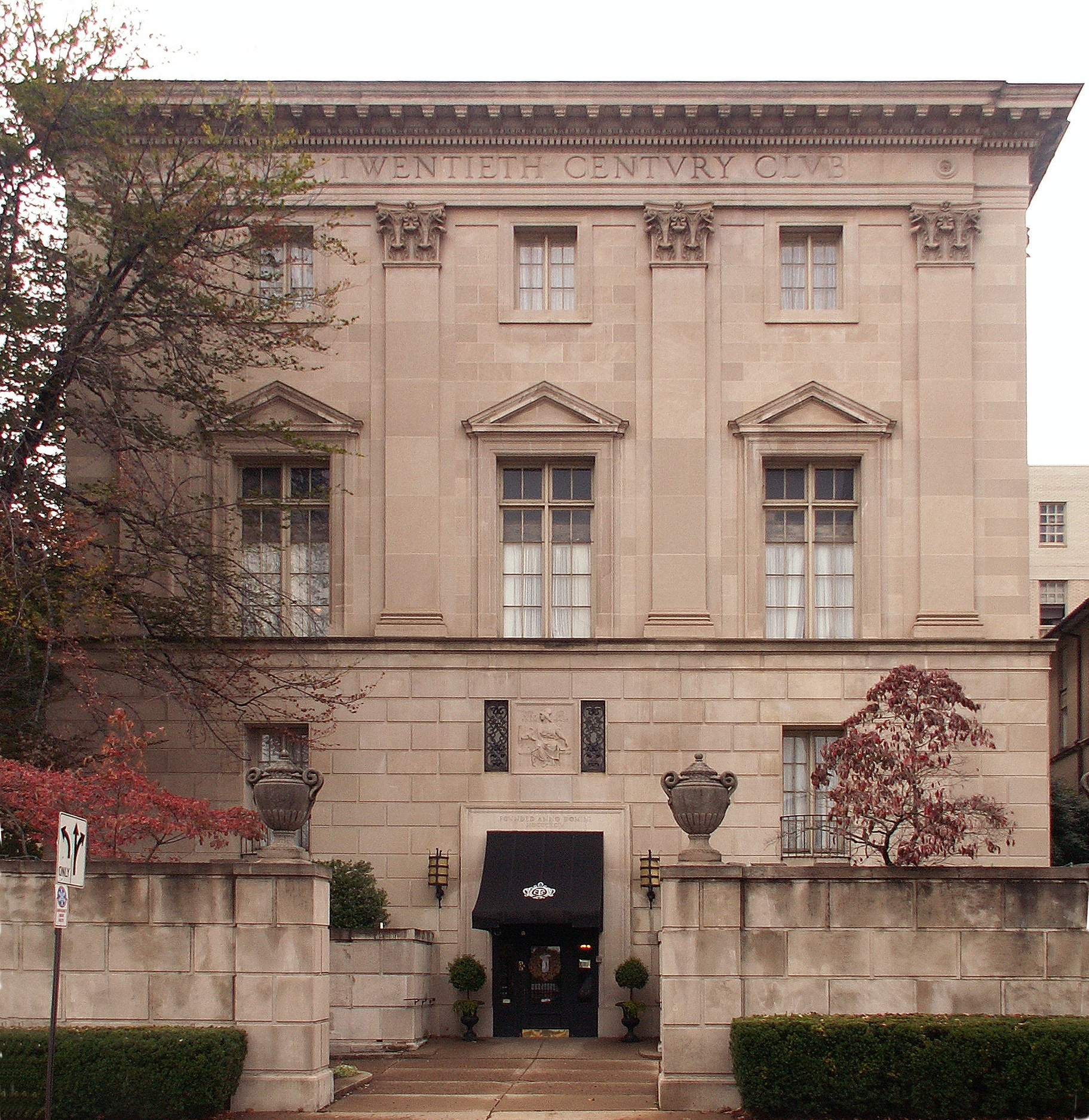
The Oakland neighborhood of Pittsburgh once was filled with elite clubs. Many of the buildings have been absorbed by the ever-expanding University of Pittsburgh, but the Twentieth Century Club—a name that sounded dashing and futuristic when the club was founded in 1894—remains, still a private women’s club. The building is larger than it looks, and the Opera Theater of Pittsburgh has been staging its summer season here for the past few years.
Every so often, Father Pitt rifles through his archives and finds perfectly good pictures that, for one reason or another, he never got around to publishing. This one was taken in October of 2013.

The entrance to the main Carnegie Library in Oakland. This is a picture Father Pitt took a few years ago, but nothing important has changed. The building was designed by Longfellow, Alden & Harlow, Andrew Carnegie’s favorite architects; they, or Alden & Harlow without Longfellow, also designed many of the neighborhood branch libraries.

