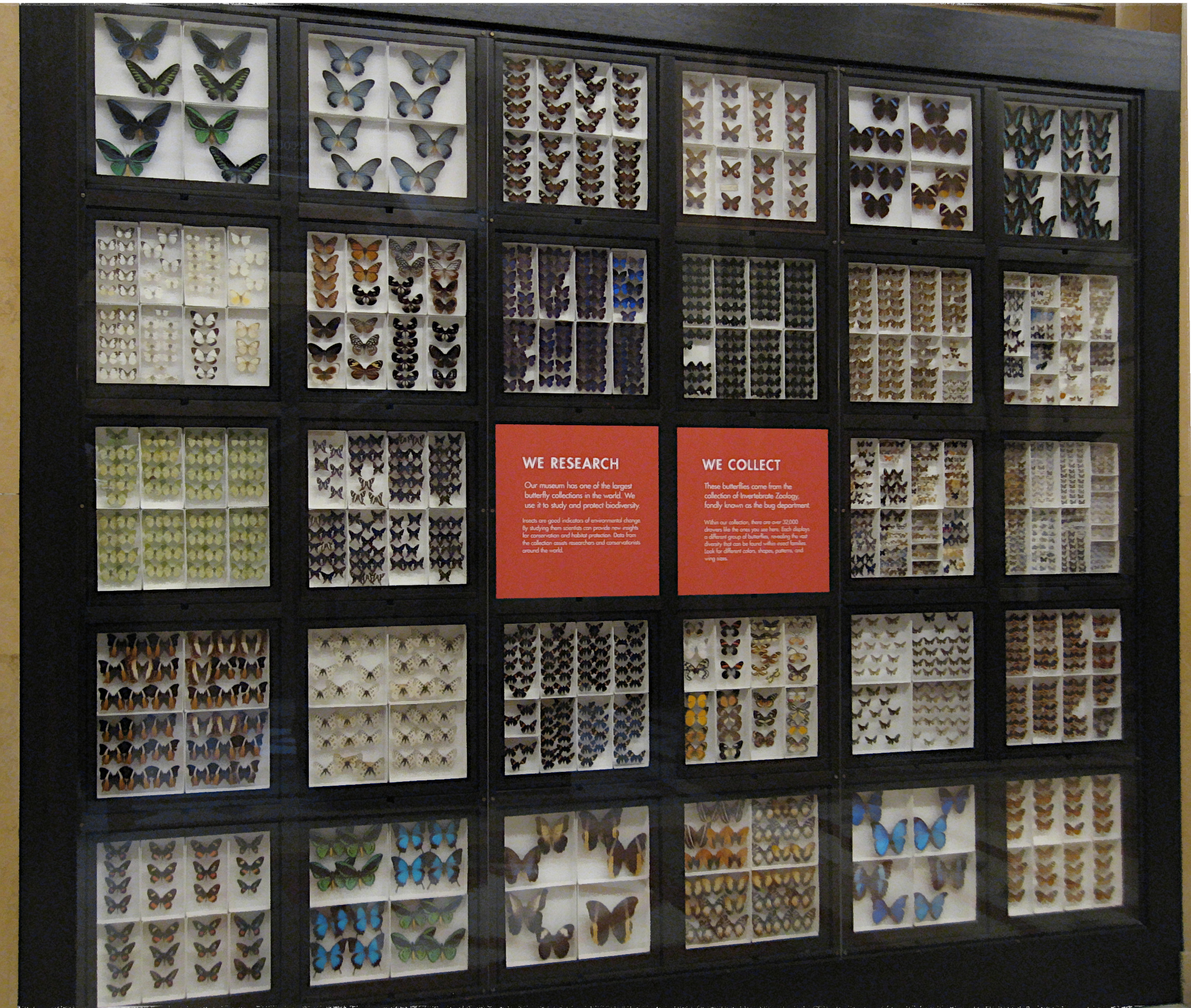

Thousands of drawers like these are in the Carnegie, one of the world’s top natural-history museums. Every once in a while the curators take out a few drawers from the bug collection and display them on the wall near the Grand Staircase.

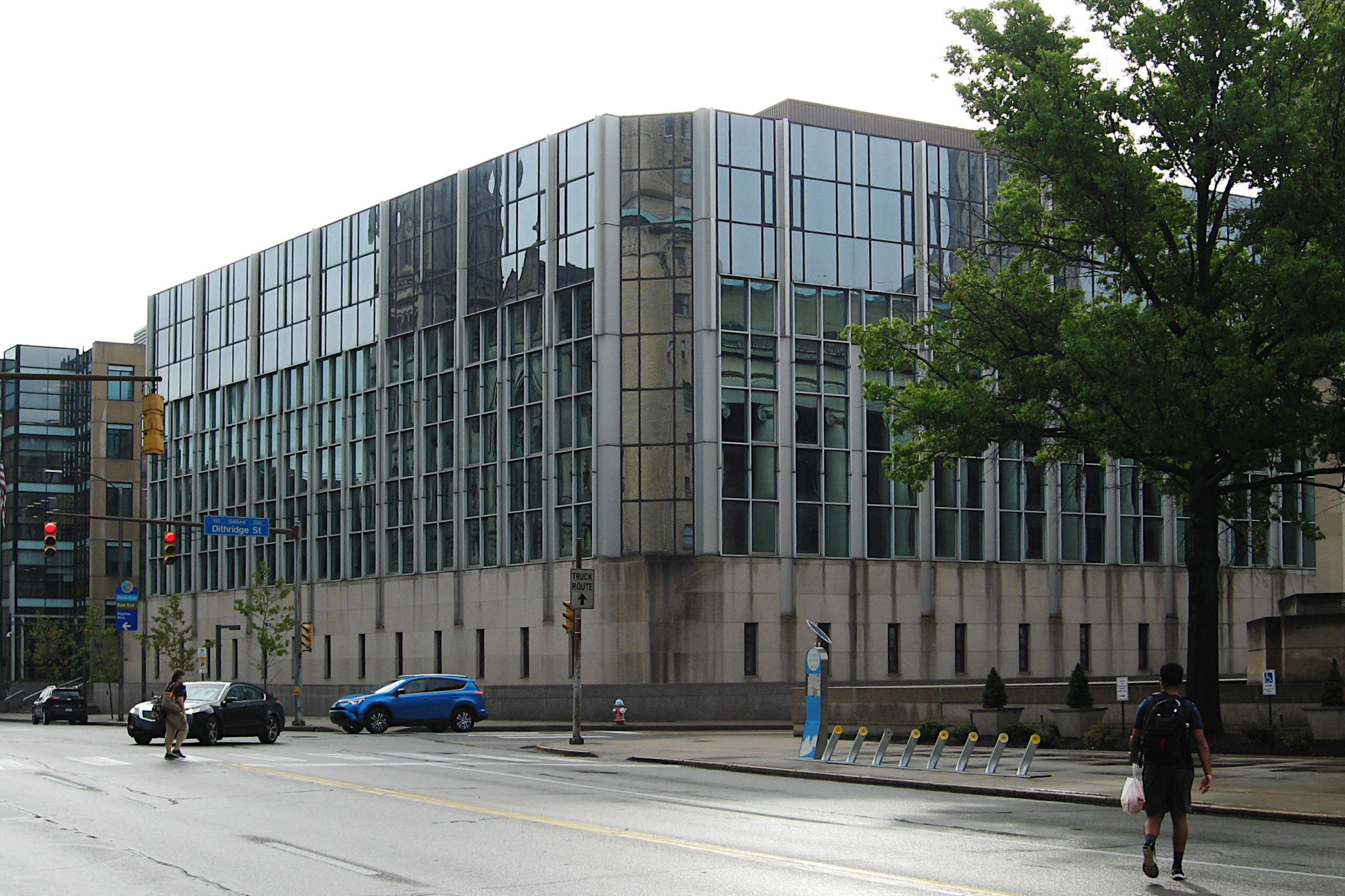
Three landmark buildings reflected in a corner of the Software Engineering Institute on Fifth Avenue: St. Paul’s Cathedral, Webster Hall, and the Mellon Institute.

Built in 1884, this was originally a mansion designed by the prolific and always tasteful firm of Longfellow, Alden & Harlow. It was a gift from his wife to the pastor of the Bellefield Presbyterian Church across the street. It pays to marry a millionaire’s daughter.

Benno Janssen, whose many designs helped define the Oakland Civic Center, created perhaps his most monumental work here. The huge columns are cut from single pieces of stone—the largest monolithic columns in the history of the world. And Father Pitt, through the magic of computer stitching software, brings you perhaps the only complete face-on photo of the block-long Fifth Avenue façade on the entire Internet. Below, a picture from the corner of Bellefield and Fifth.

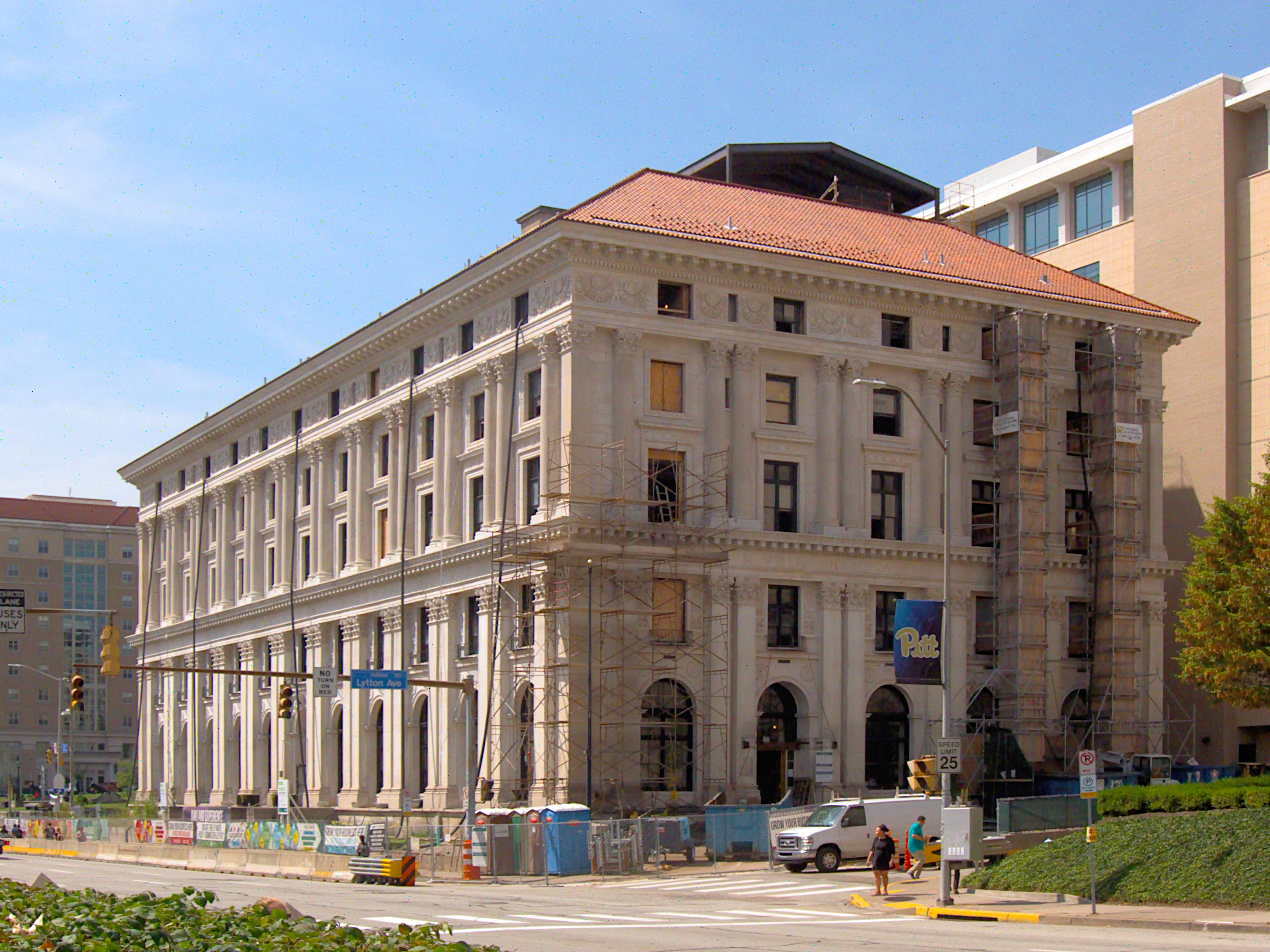
The Pittsburgh Athletic Association, built in 1911, is Pittsburgh’s grandest clubhouse. (Not the richest, of course: that honor belongs to the Duquesne Club, the focus of all money and power in the city.) The architect was Benno Janssen, who was quite successful in Pittsburgh in the early 1900s. The club itself went bankrupt in 2017, but was able to make a deal to sell the building to investors who will allow them to occupy part of it. Now the building is getting a renovation.

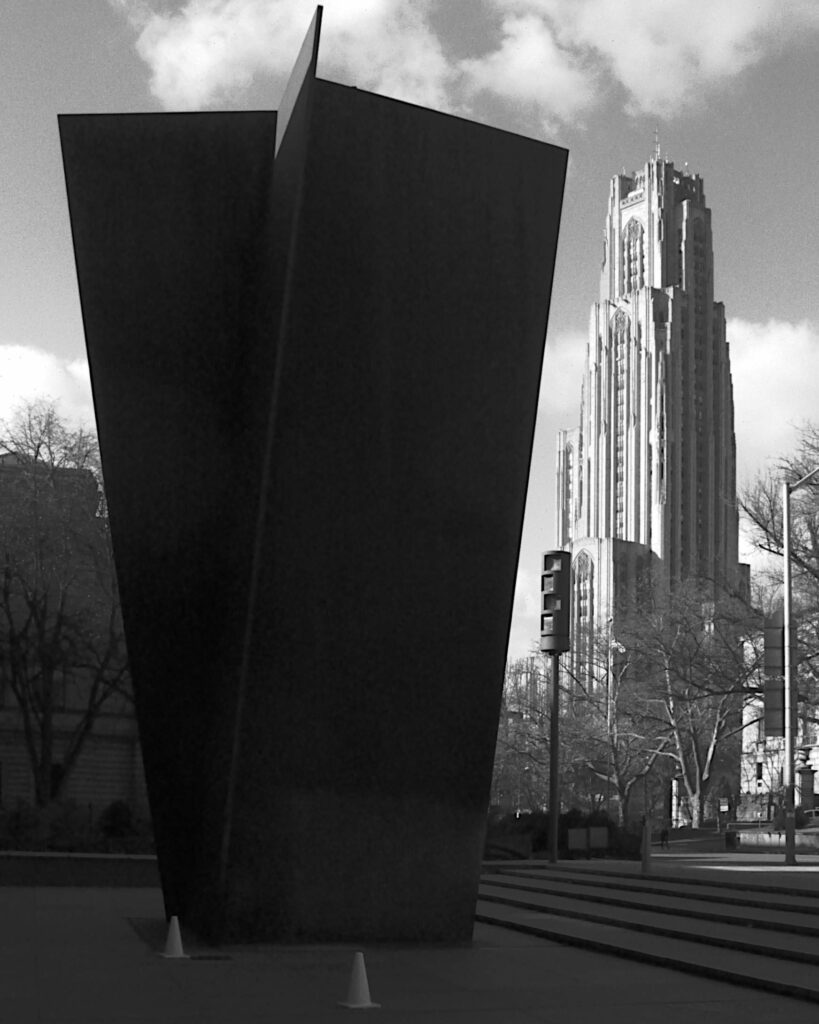
This curious combination of structures always reminds old Pa Pitt of a corner in some European city ravaged by the Second World War: the tower is all that remains of the Gothic church that once stood here, and the rest has been replaced by an office building that has no architectural connection with it whatsoever, but is just gracious enough to make reluctant room for it.
The old Bellefield Presbyterian Church actually predated the Oakland neighborhood. It was built in 1889 in Bellefield, a rural town that had grown into a suburb or exurb of Pittsburgh. Bellefield’s name is remembered in Bellefield Avenue, though almost all remnants of the place have been obliterated by the one force more destructive to old buildings than war, which is prosperity.
Here is a long article (PDF format) on the church and its neighborhood by James D. Van Trump, the architectural historian to whom we owe the preservation of much of what we have succeeded in preserving. The article includes a picture of the church in 1890; note the cable-car tracks on the street in front of it.
The article was written while the church was still standing. “What the Bellefield Church has meant to the Oakland area during the last one hundred years we have seen,” it concludes. “The history of Bellefield’s future has yet to be written. Its congregation feels that if the contribution of the Bellefield Church to the Oakland area is commensurate with that of the past its future would seem to be assured.”
Well, it’s sort of still there. The congregation was merged in 1967 with First United Presbyterian a short distance down Fifth, and the merged church was renamed Bellefield Presbyterian. In 1985 the old building was sold and demolished for the current undistinguished occupant of the site.