Category: Beechview

  • Broadway and Beechview Avenue, Beechview

    Broadway in Beechview

    Beechview is something unique in Pittsburgh and very rare in the United States: an early-twentieth-century streetcar suburb where the streetcars still run down the main street as they did when the neighborhood was first laid out. The central business district has had its ups and downs; right now it is a good place to find interesting little ethnic restaurants and groceries. Most of the neighborhood is laid out as a grid in spite of the precipitous hills, but Broadway, the street with the car line, follows the top of the ridge. Beechview Avenue (below) continues the straight line of the business district as Broadway curves off toward the Fallowfield streetcar viaduct and abruptly ends at Fallowfield Avenue, leaving the streetcars to continue on their own right-of-way.

    Storefronts on Beechview Avenue

    Following the ancient tradition that the street with the tracks belongs to the streetcar company, the Port Authority is responsible for maintaining Broadway.

    Streetcar service in Beechview is interrupted right now because the Saw Mill Run viaduct has been closed for emergency repairs. The Red Line will roll up Broadway again as soon as the bridge reopens.

  • Red Line Car Crossing Alton Avenue, Beechview

    Red Line car crossing Alton Avenue

    This picture was taken a little more than a week ago. Beechview now finds itself suddenly without streetcar service. Some shifting was detected in the Saw Mill Run rail and busway viaduct, and Pittsburghers are in a mood to take defects in bridges very seriously. Until the bridge can be repaired, rail service on the Red Line runs only between Overbrook Junction and Potomac, with shuttle buses covering the rest of the route.

  • Slopes of Beechview from the Fallowfield Viaduct

    Back streets of Beechview from the Fallowfield Viaduct

    The Fallowfield viaduct is one of many engineering works necessary to get the Red Line as far as central Beechview. Its walkway is also a vital pedestrian link—vital enough that a few years ago, when the walkway was closed for repairs, the Port Authority gave free rides between Westfield and Fallowfield.

    In addition to taking us from here to there, the walkway gives us interesting treetop-level views of the hilly back streets of this part of Beechview.

  • Beechview Theater

    Beechview Theater

    Some time ago old Pa Pitt took a picture of this silent-era neighborhood movie theater in the middle of its recent renovation. It is pleasing to see it now nicely finished and home to a video-production company. It has had an eventful and oddly circular history. It was built before 1914, since it appears in a 1914 guide to Pittsburgh (which describes Beechview as “beyond the South Hills,” showing how the definition of “South Hills” has moved with the expansion of the suburbs). After some decades as a theater, it was turned into an American Legion post. Then for a while it became a nursing home. Finally it was renovated as you see it now and brought back to its roots in the movie business.

    An update: According to a 1923 map, this was called the Olympic Theater. There were at least three theaters in Beechview in 1923.

  • Hampshire Avenue, Beechview

    Hampshire avenue

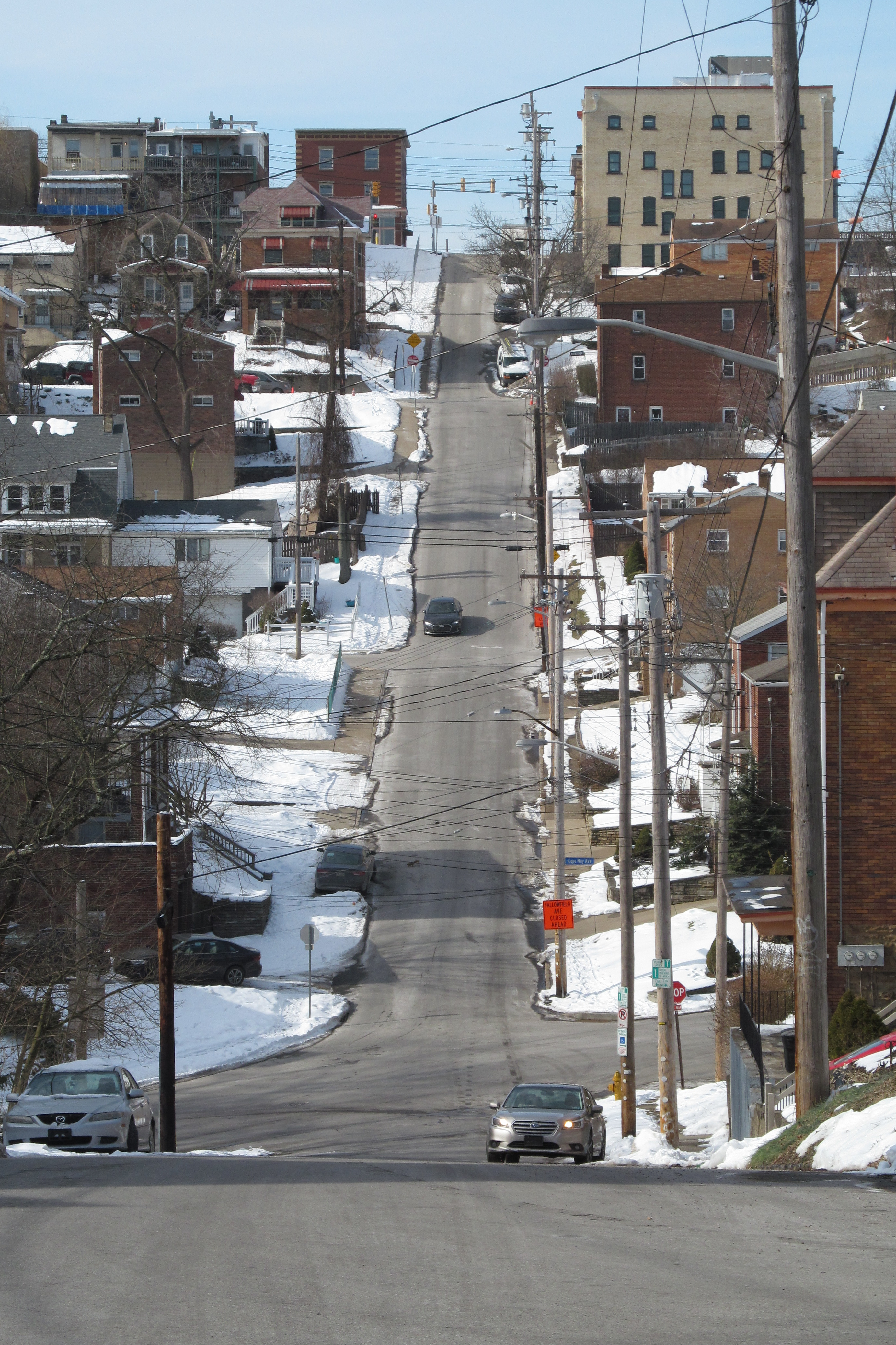
    Father Pitt is convinced that the developers who laid out the streets in Beechview had never visited the site. Just draw lines north-south and east-west on a map, and you have your streets. Hills? Oh, they can’t be that bad, can they?

    Here is Hampshire Avenue viewed from the Red Line streetcar crossing, with Broadway—where the Red Line crosses Hampshire again—at the top of the next hill.

  • Streetcar Coming Up Broadway

    Streetcar on Broadway, Beechview

    An outbound Red Line car on Broadway in Beechview passes Hampshire Avenue.

  • War Memorial Park in Beechview

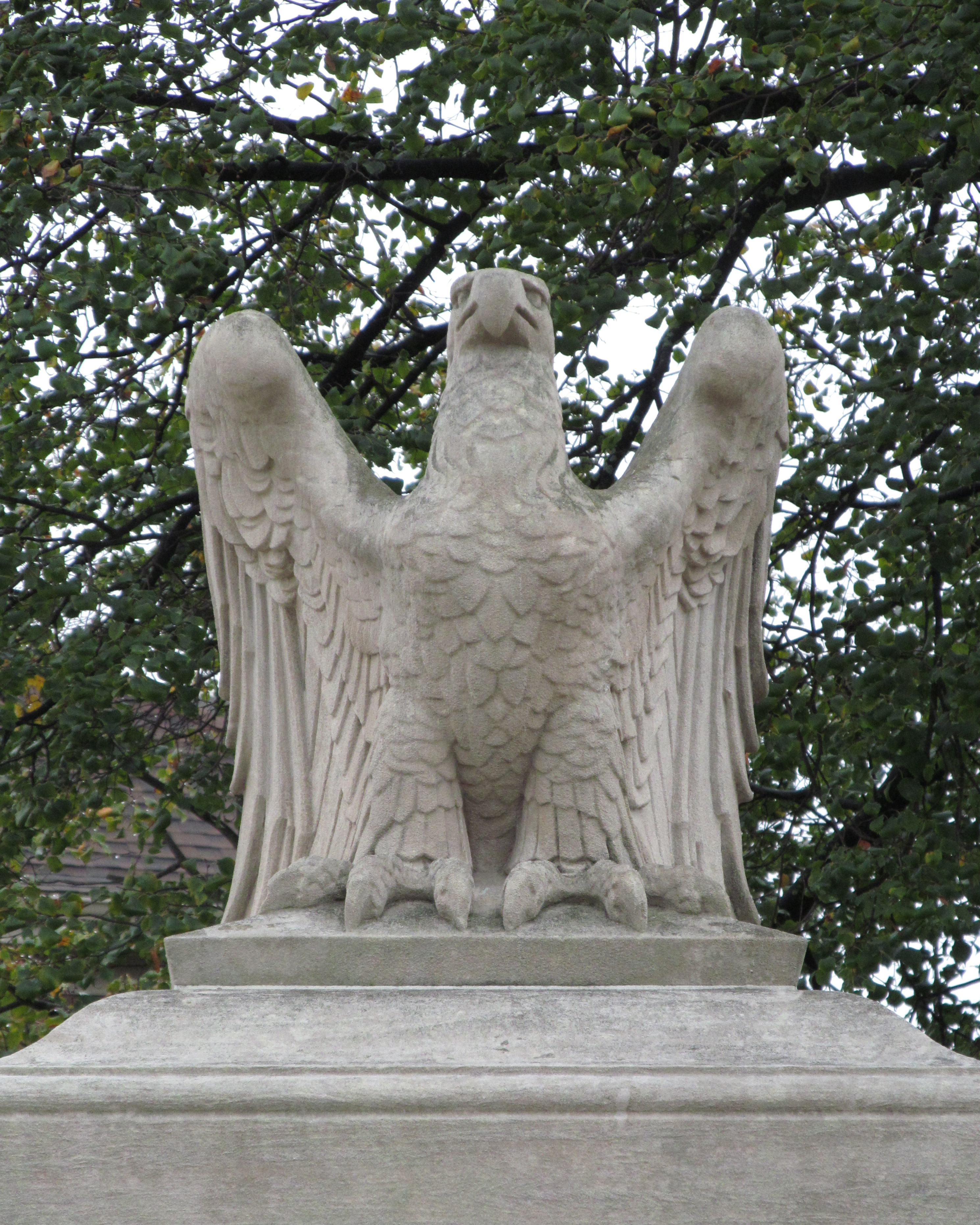
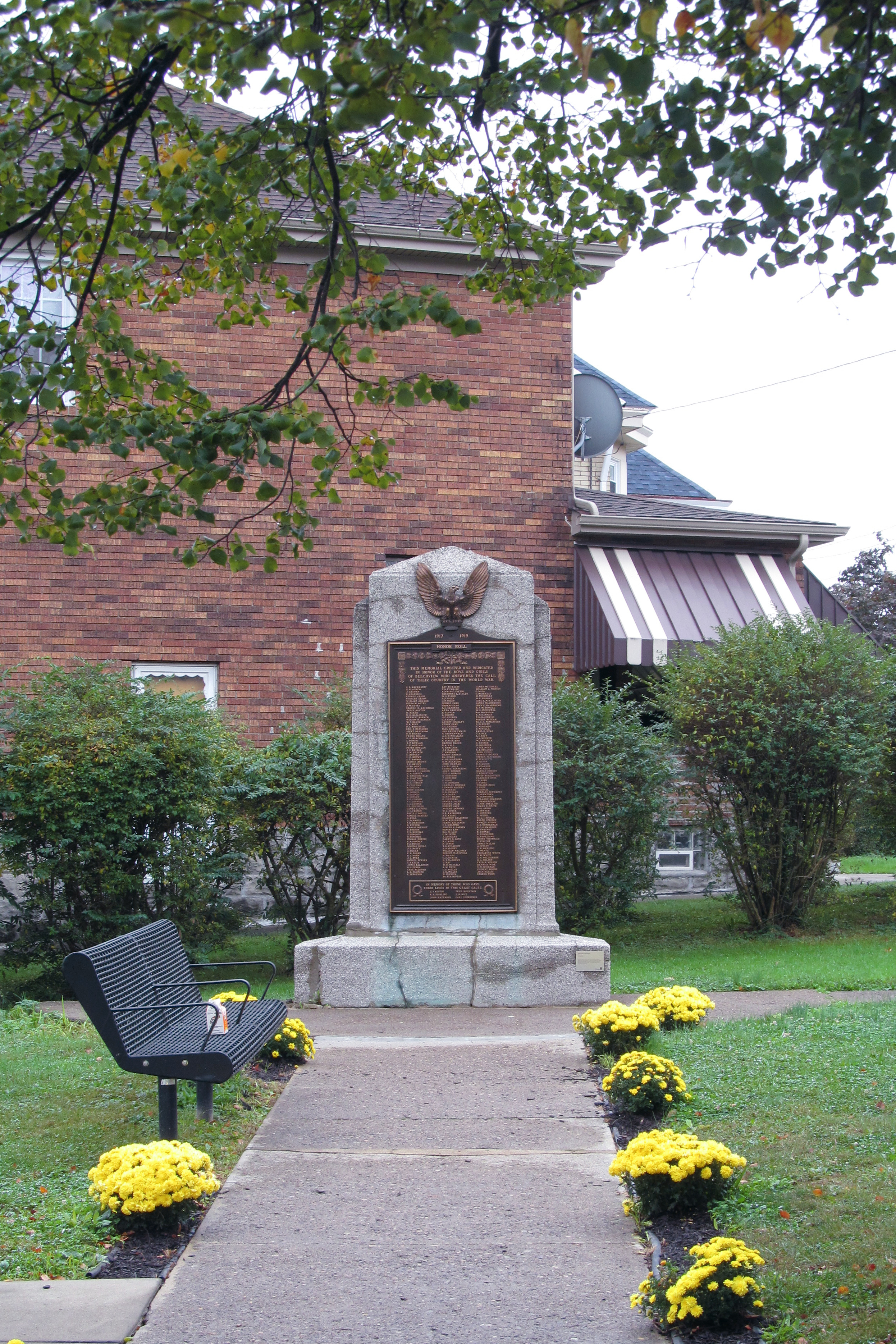
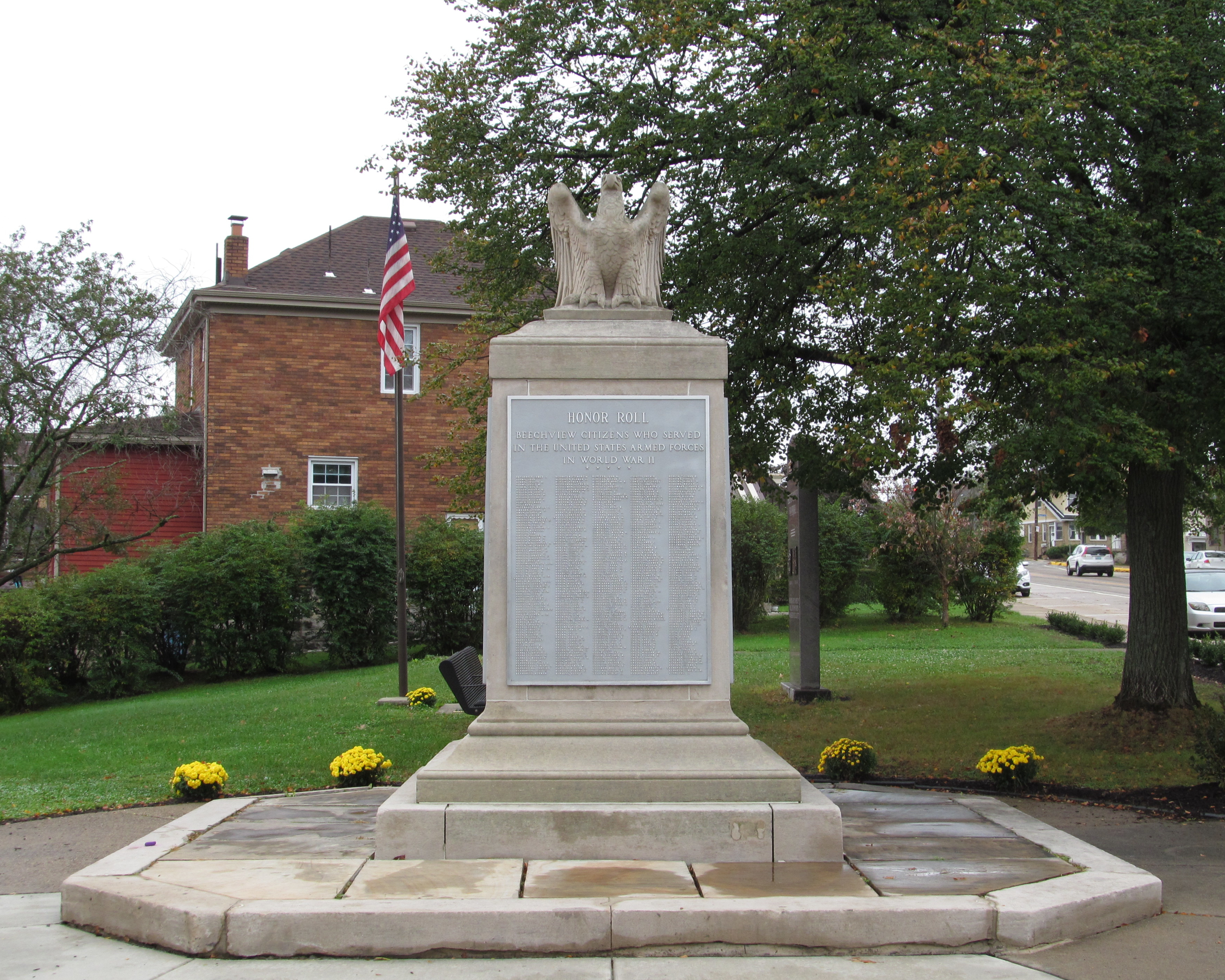
    The little triangular park at Broadway, Shiras Avenue, and Bensonia Avenue is cluttered with monuments. There’s one for the First World War, one for the Second, one for Vietnam and Korea, and one for wars since then and “going forward,” as the city’s Twitter account put it when it was announced. The eagle above sits on the World War II memorial, the largest of the lot.

    The latest memorial, for everything after Vietnam.

    The World War I memorial.

    The World War II memorial.

  • Beechview United Presbyterian Church

    This unassuming little church, like most of the Protestant churches in Beechview, is easy to miss: it sits on the main business street in the middle of the main business district, and it is not much larger than the small storefronts along Broadway. But it seems, if old Pa Pitt’s research is correct, to have been the work of a distinguished architect: Thomas Hannah, who designed the Keenan Building, St. Nicholas Greek Orthodox Cathedral (formerly a Congregational church), and the Western Theological Seminary (now West Hall of the Community College of Allegheny County), along with many other smaller projects like this one.

  • Hampshire Safety Island, Beechview

    The angle is not exaggerated in this photograph: Pittsburgh streetcars really do have to climb absurd grades like this. This is one of the small number of remaining streetcar safety islands in the city. Behind it is a tiny Central American restaurant with a reputation for excellent food; it inhabits a little building in the Spanish Mission style, which seems appropriate.

  • Beechview Community Center

    A commercial building like a thousand others in the city, but nicely restored, with attractively varied brickwork and a subtle polychrome scheme to pick out the details of the trim. Because old Pa Pitt happened to be out for a walk in the neighborhood, we get to see it from all angles.

    Addendum: The building was put up in about 1911, and the architect was the extremely local William J. Gray,1 whose address was almost directly across the street. When this building was finished, however, Gray moved his office into it.

    In most cities you can ask how many floors a building is and get a reasonable answer. In Pittsburgh, that’s a complicated question.

    A 1930 picture of the building shows the upper floor being used for pool, bowling, and basketball.

    1. Source: “New Business Block in Beechview,” Pittsburg Press, December 4, 1910. ↩︎