For trolley geeks, here is a 4100 series Siemens car picking up passengers at the Hampshire stop on Route 42 in Beechview in 2001. This is the livery these cars were originally issued when they were put in service in the middle 1980s. Route 42 is now the Red Line, and the 4100 series cars were rebuilt as the 4200 series, with a new livery to match the newer CAF cars.
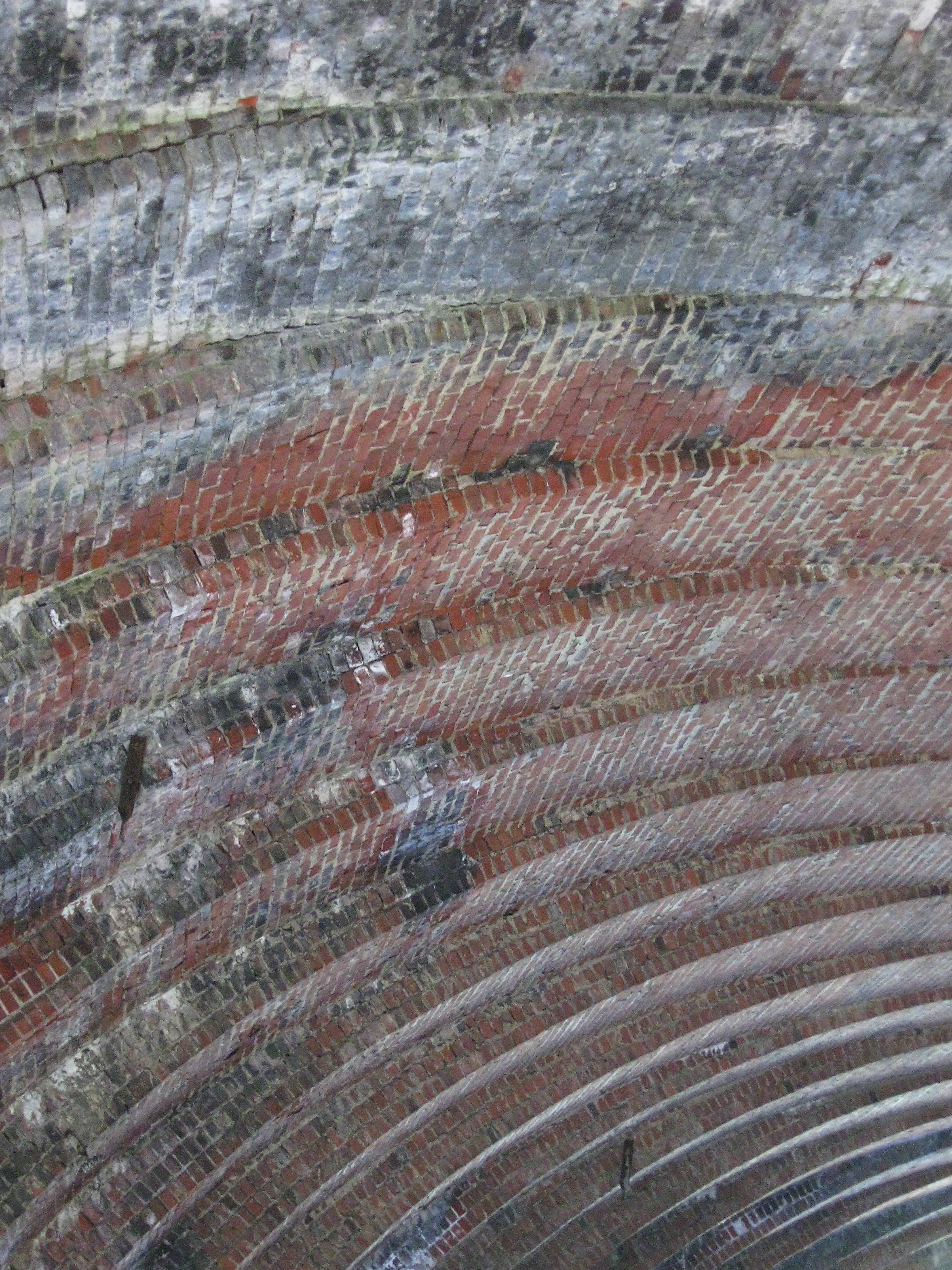
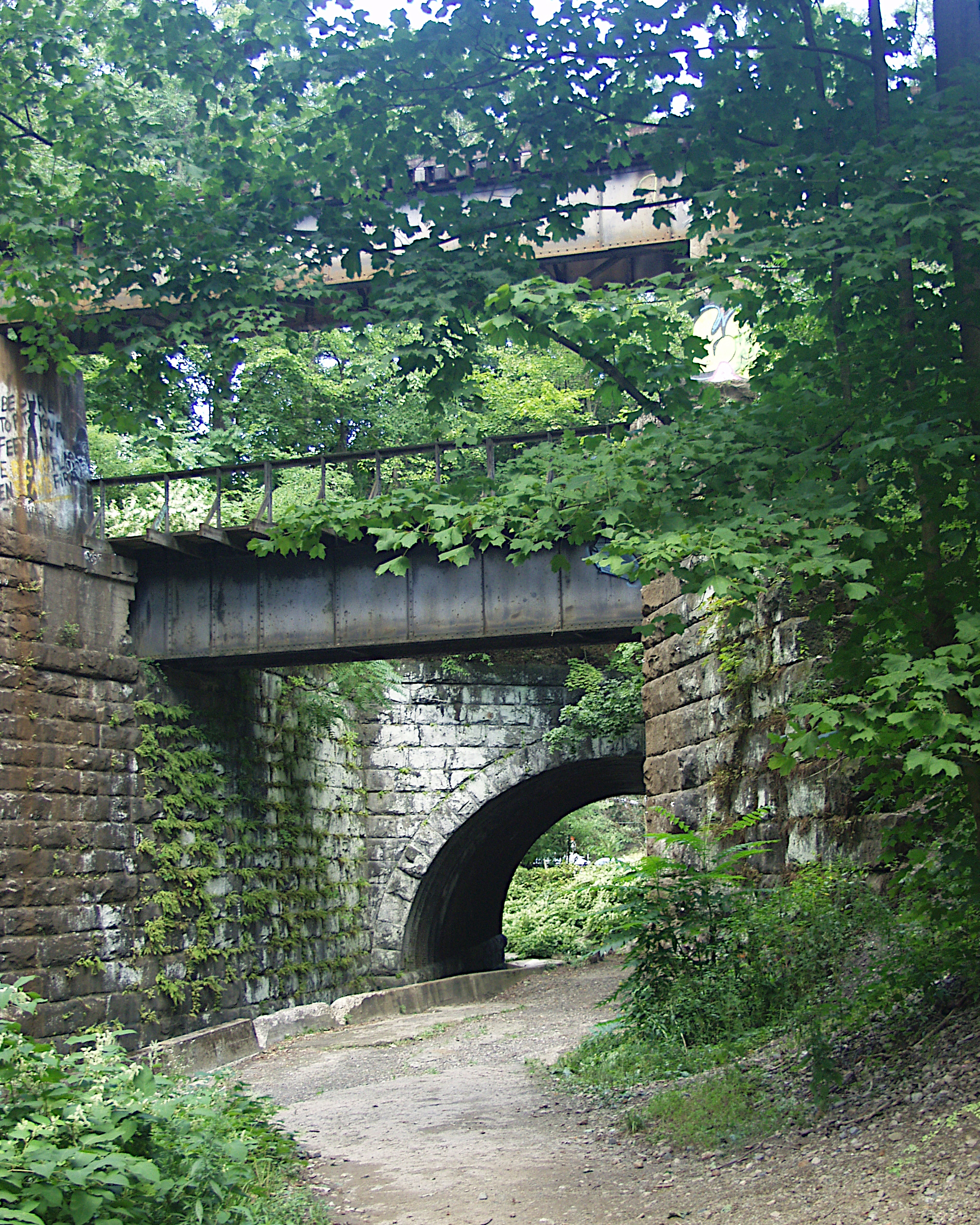
This fine arched tunnel, stone faced with a brick interior, was built as part of the great Wabash Pittsburgh Terminal Railway boondoggle, one of the boondoggliest boondoggles in a city known for boondoggles.
Just off Saw Mill Run Boulevard is a little parking lot. You have to look for it: it’s on the turnoff to Woodruff Street, and it’s almost invisible till you’re right there. From there you can reach the arch, which is well worth a visit for its own sake. The interior in particular is more interesting than interiors of tunnels usually are. The engineers had fun with this one.
If you walk through the tunnel into the green world beyond, you’ll find that you’re walking on a broad path of gravel and occasional asphalt. This was Watkins Lane, the only way into a little farm village called Seldom Seen, or Shalerville before that. Like a surprising number of isolated bits of the city of Pittsburgh, it remained a farming village, with farming, even into the twentieth century. It was abandoned by some time in the 1960s, and the forest has reclaimed it. We’ll see more of Seldom Seen in the future.
Stream valleys in the Pittsburgh area are valuable as being the only nearly level routes through the landscape, and you will never find a major stream valley without railroad tracks in it. But as we can see here, the Saw Mill Run valley has had three railroads in it at once, one of which is still active.
In the spring Saw Mill Run is often a raging torrent, but it is much more placid in the summer.
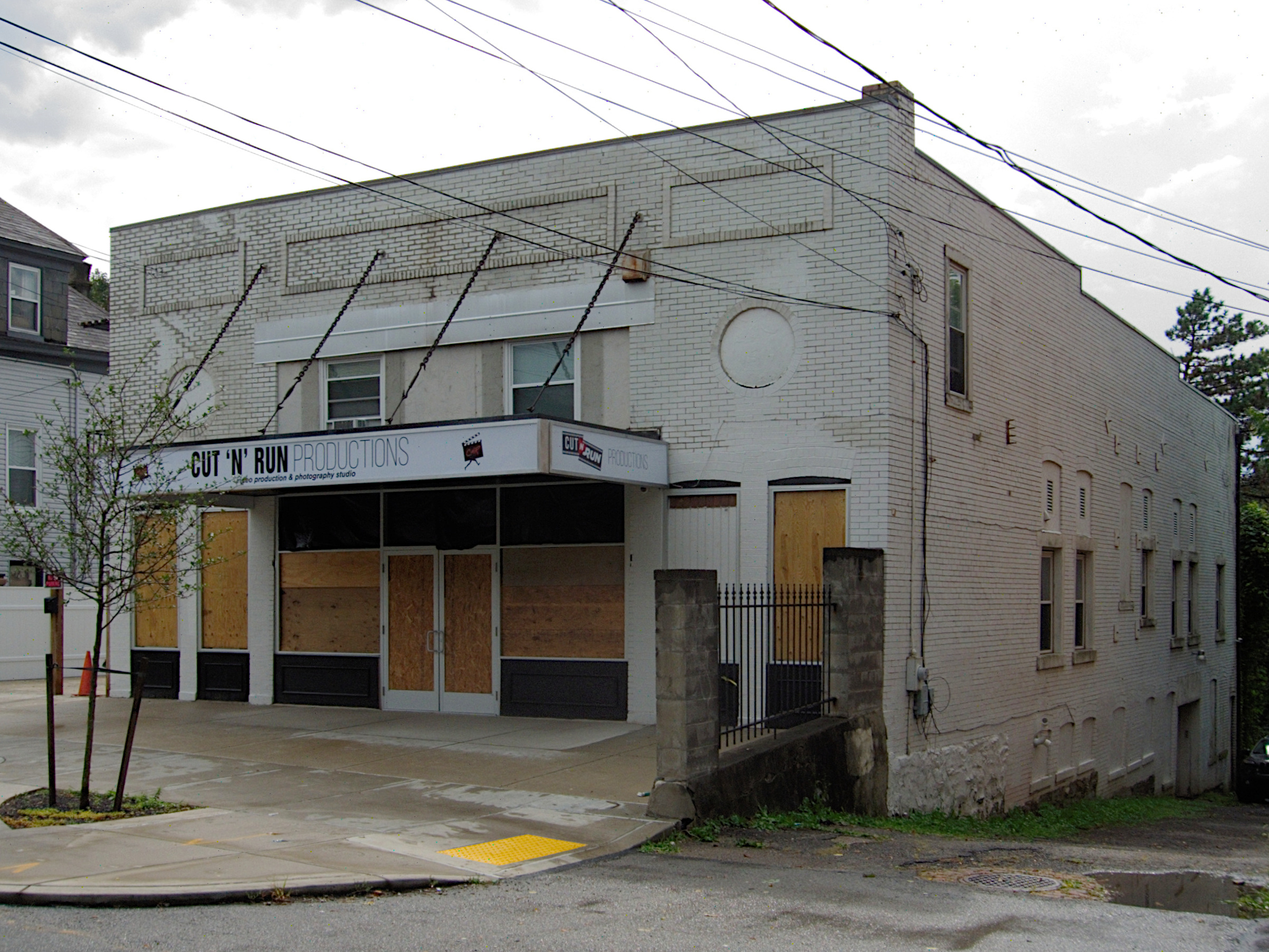
A videography and photography company that has been in business for some years is renovating the old Beechview Theater. This was a silent-movie house built before 1914 (since it appears in a guide to Pittsburgh published that year, in which Beechview is described as “beyond the South Hills”); after its movie days, it spent a long time as an American Legion post, and then for a while it was a nursing home. Old Pa Pitt hopes it will be loved in its new career that brings it back very close to its roots.
An update: According to a 1923 map, this was called the Olympic Theater. There were at least three theaters in Beechview in 1923. See the theater in its restored state here.
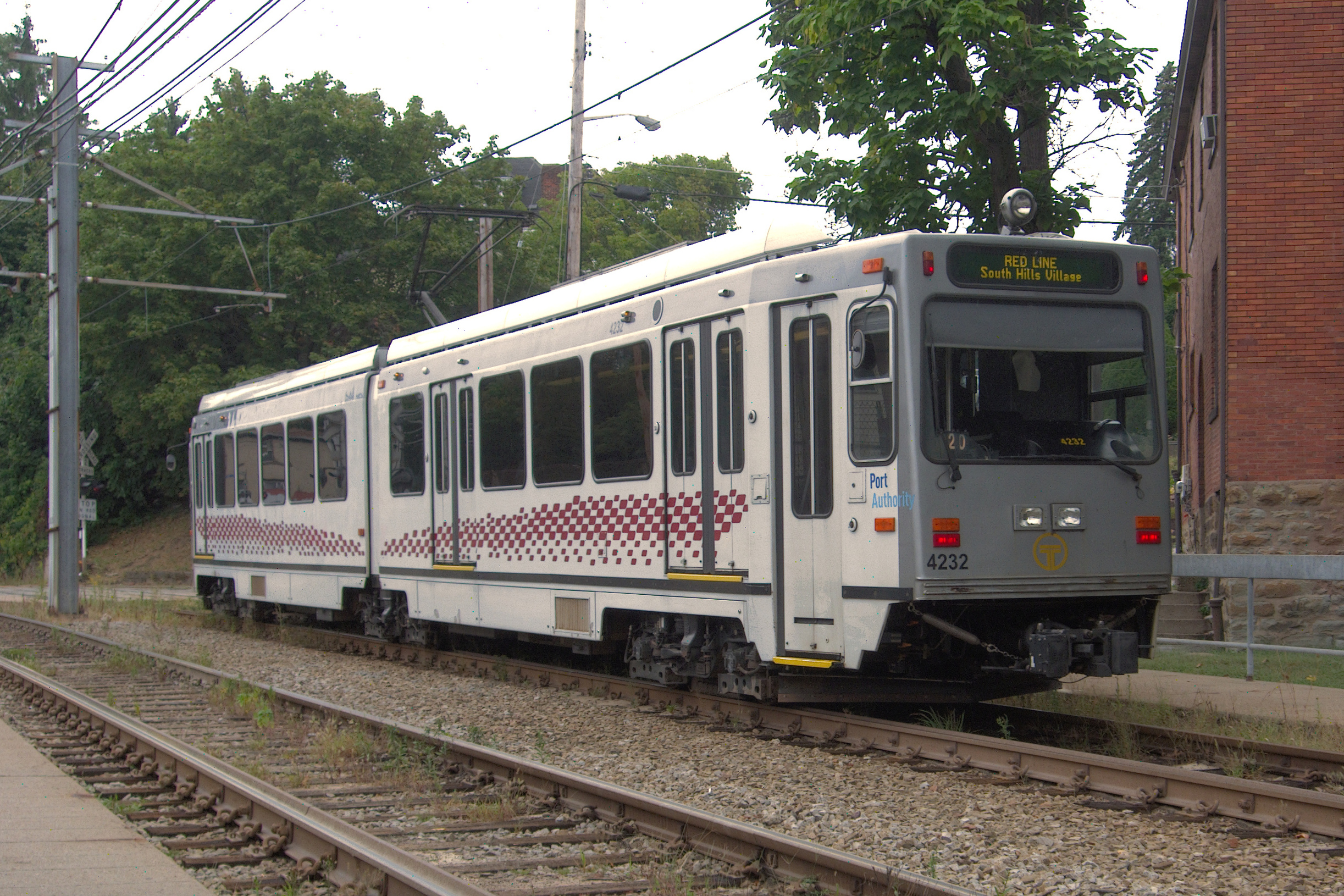
Here are two pictures especially for trolley geeks. These 4200-series Siemens cars (this one is number 4232) were bought in the 1980s and completely rebuilt in the 2000s. They make up about two-thirds of the fleet. They are very similar to the later CAF cars, but easily distinguished by the two headlights in the center (rather than at the sides) and the “cyclops eye” high beam mounted on the roof. Of course, they are also easily distinguished by being numbered in the 4200 series; the CAF cars make up the 4300 series. This car is southbound on the Red Line, heading for central Beechview.
The picture above gives us a good look at what old Pa Pitt calls the “Pittsburgh door,” the extra street-level doors that have to be added to all Pittsburgh trolleys to deal with our odd combination of platform-level stations and street-level stops.
Little glimpses of the downtown skyline pop up unexpectedly in hilltop neighborhoods. Here, from a back street in Beechview, we see Mount Washington, with the U. S. Steel Tower and the BNY Mellon Center poking their heads up behind the hill.