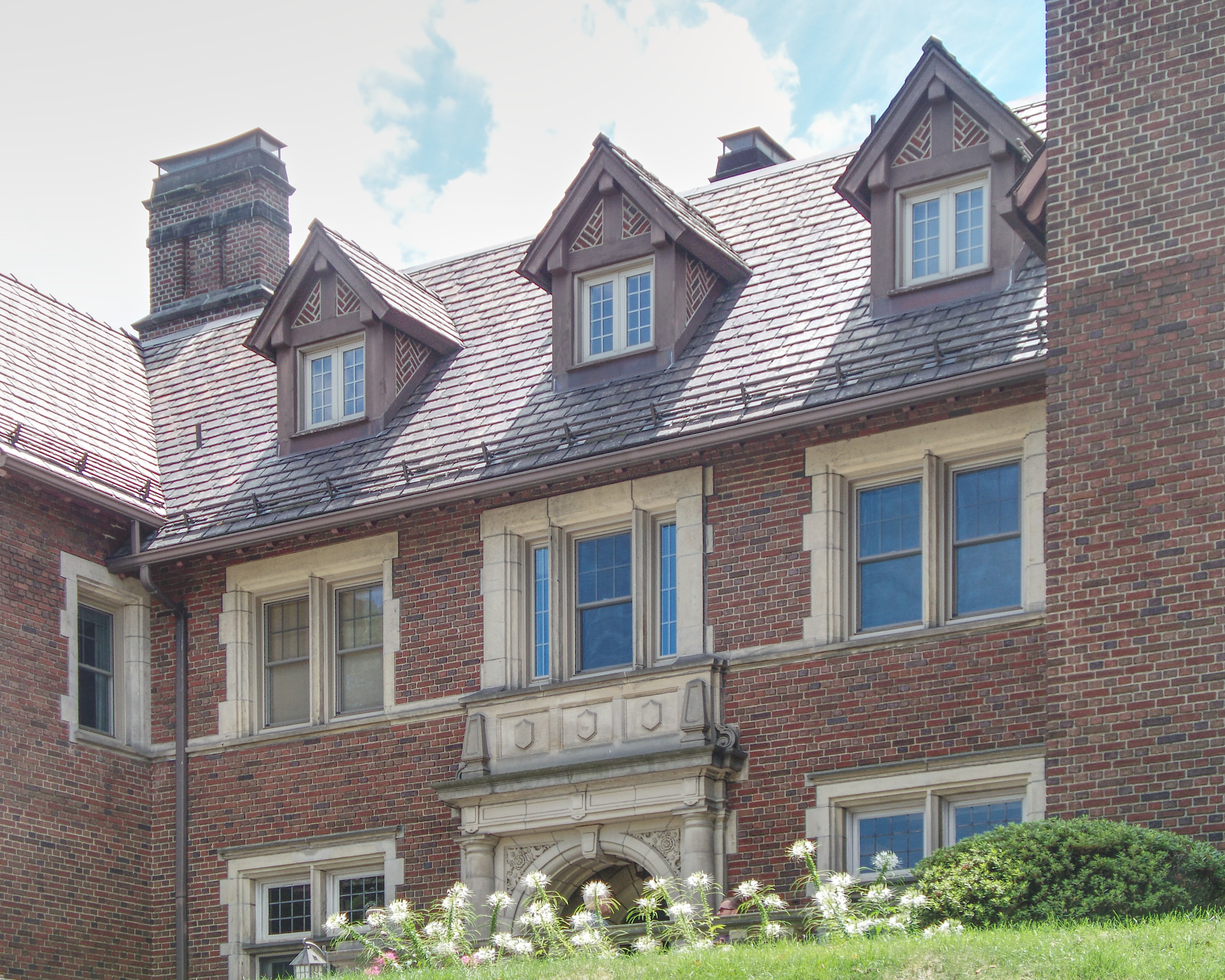
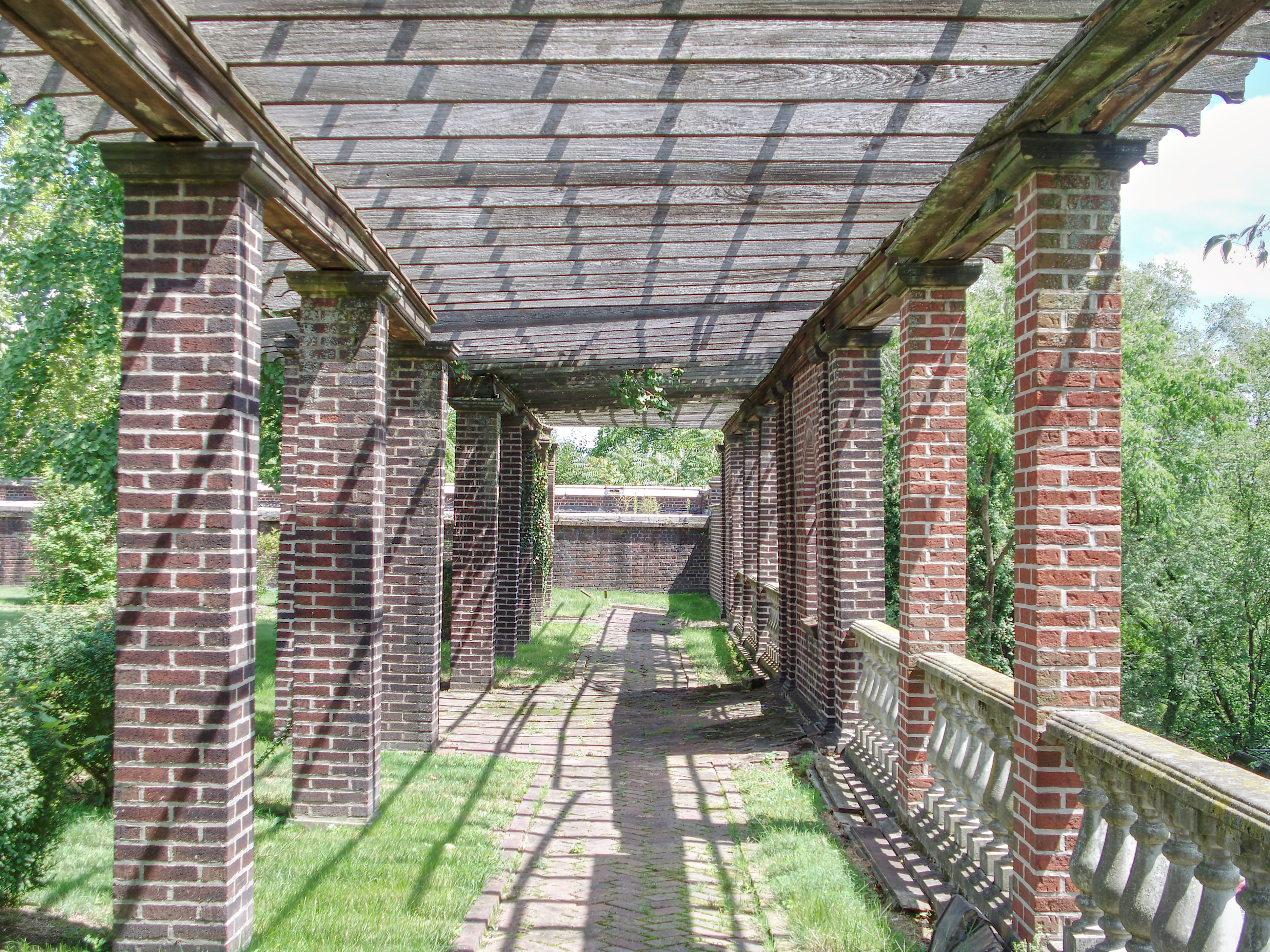
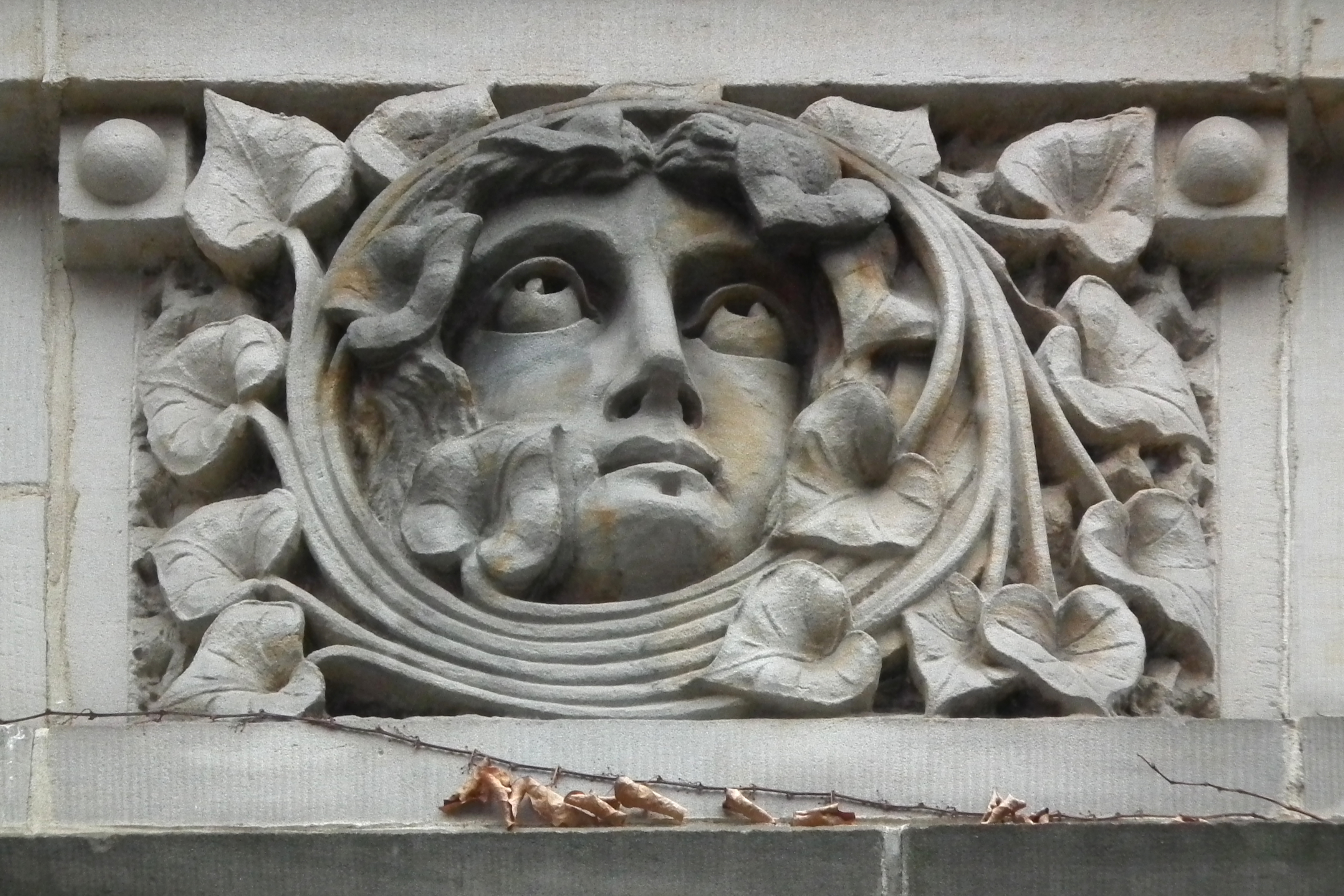
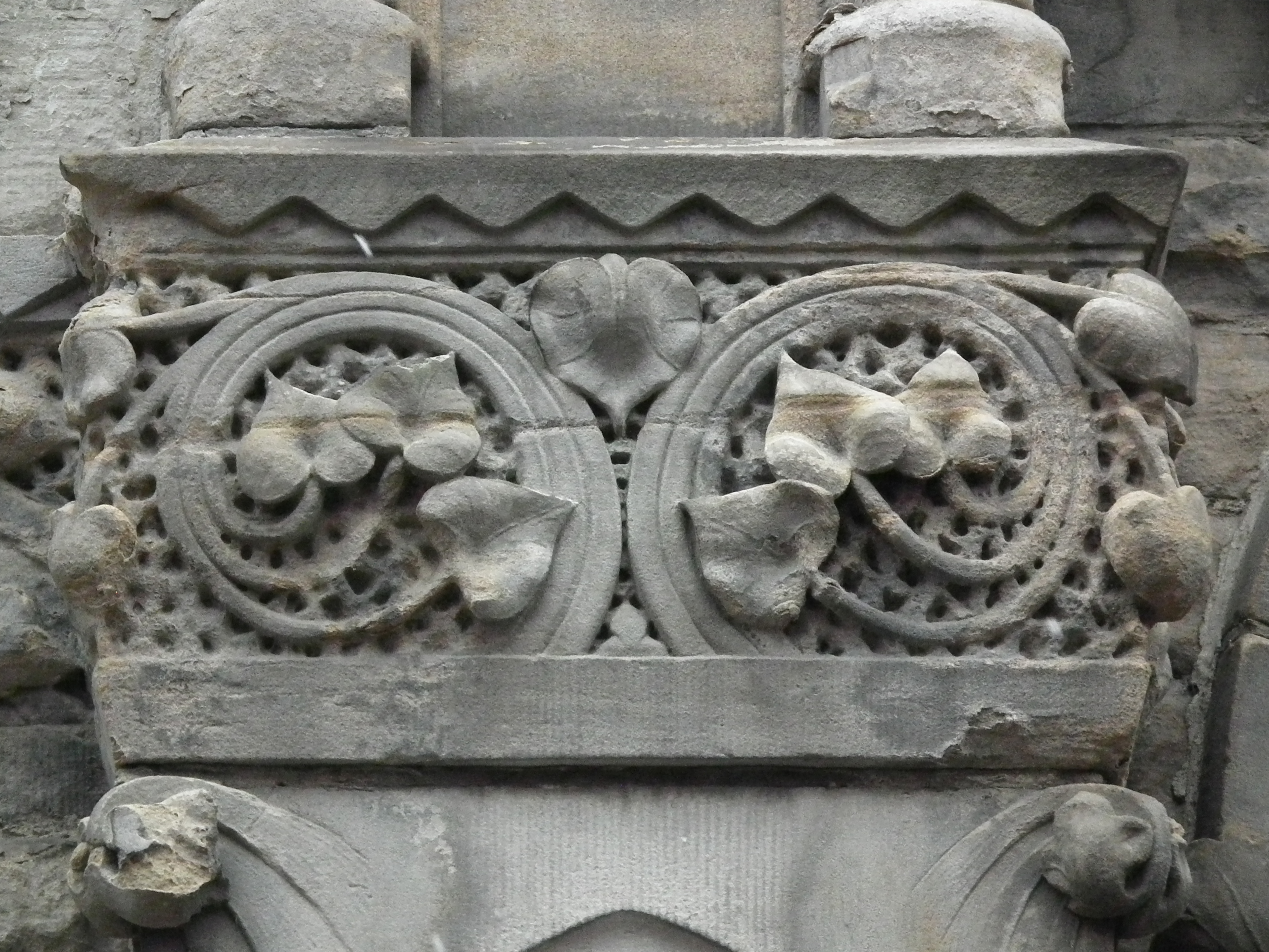
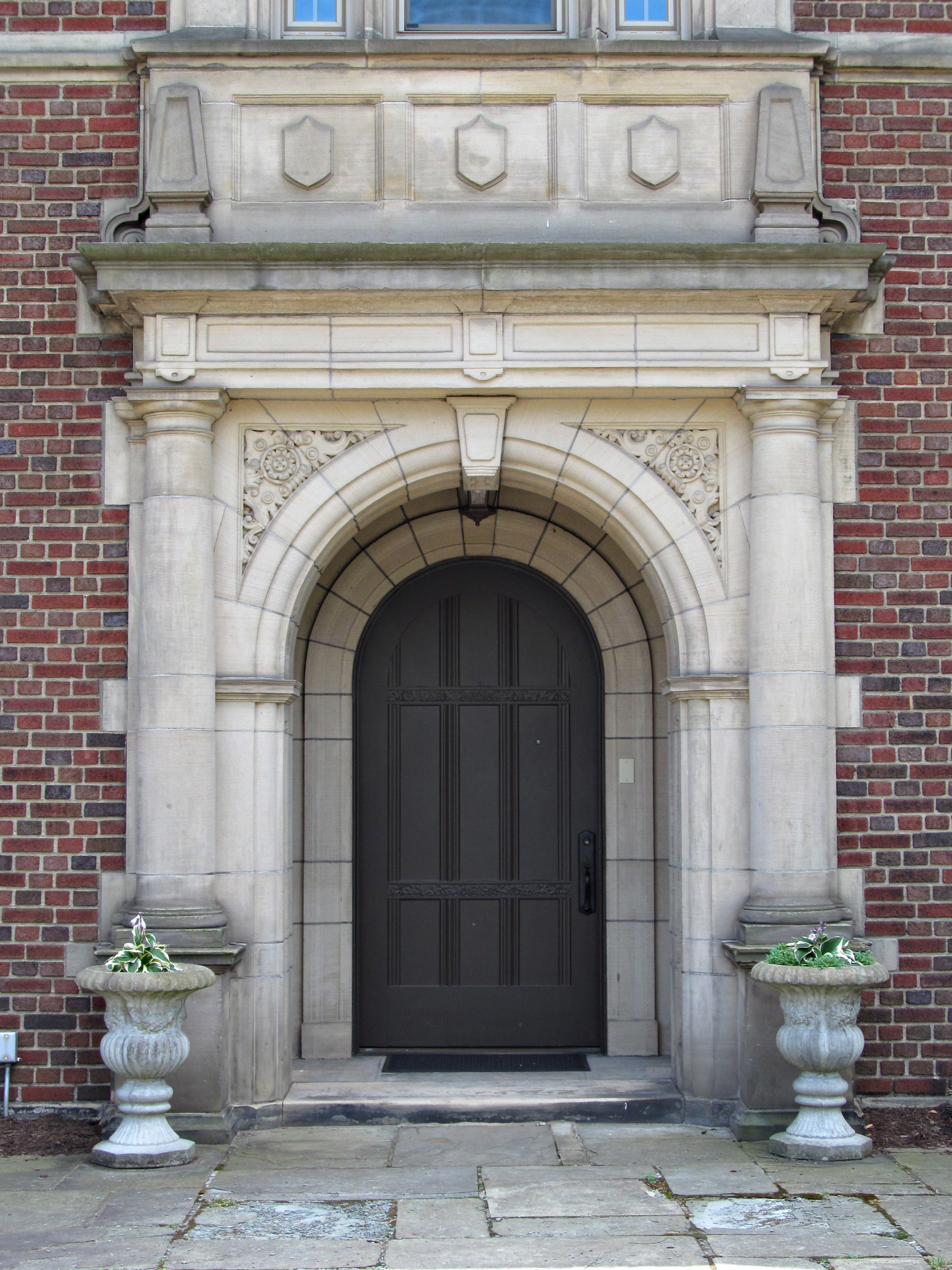
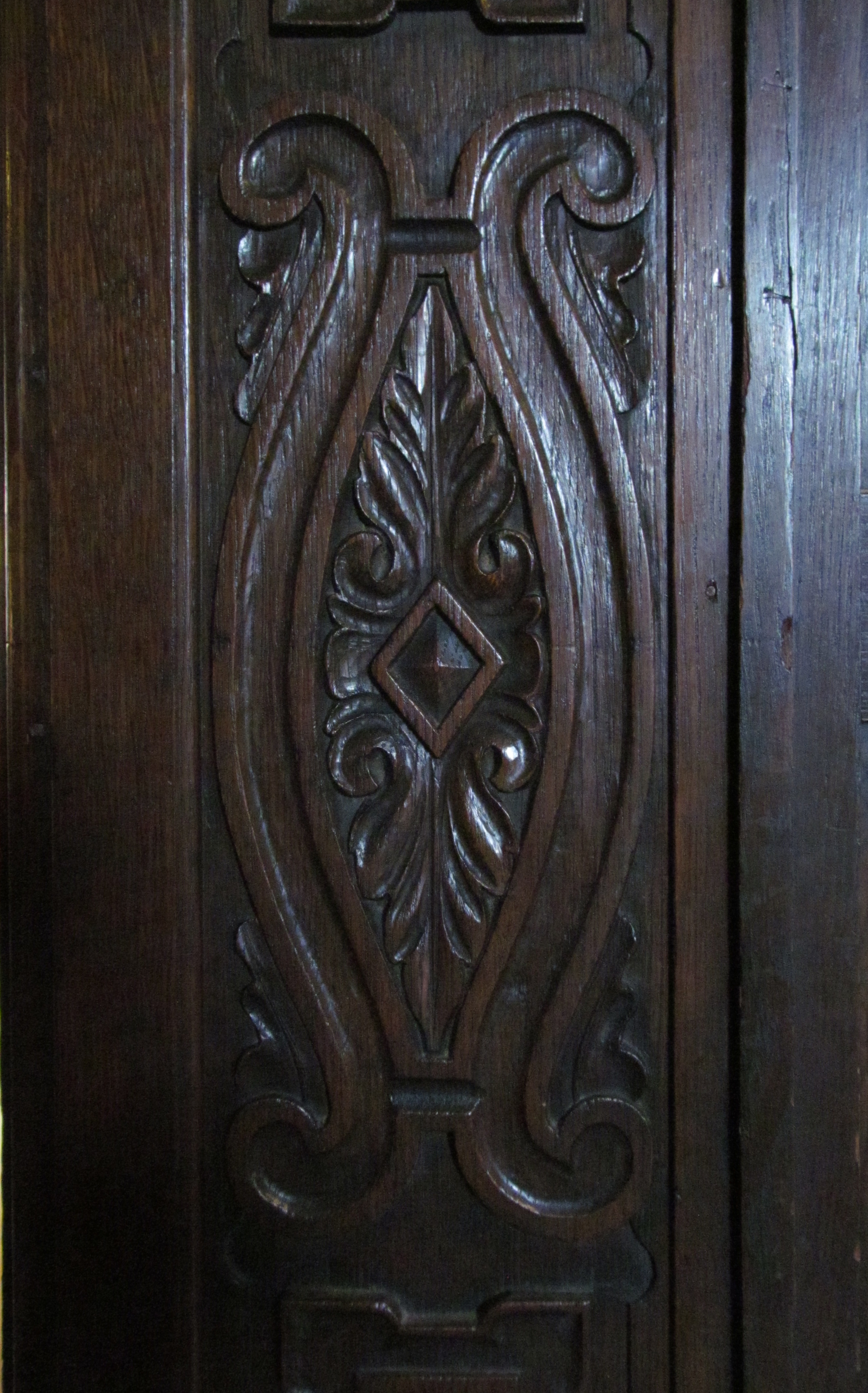
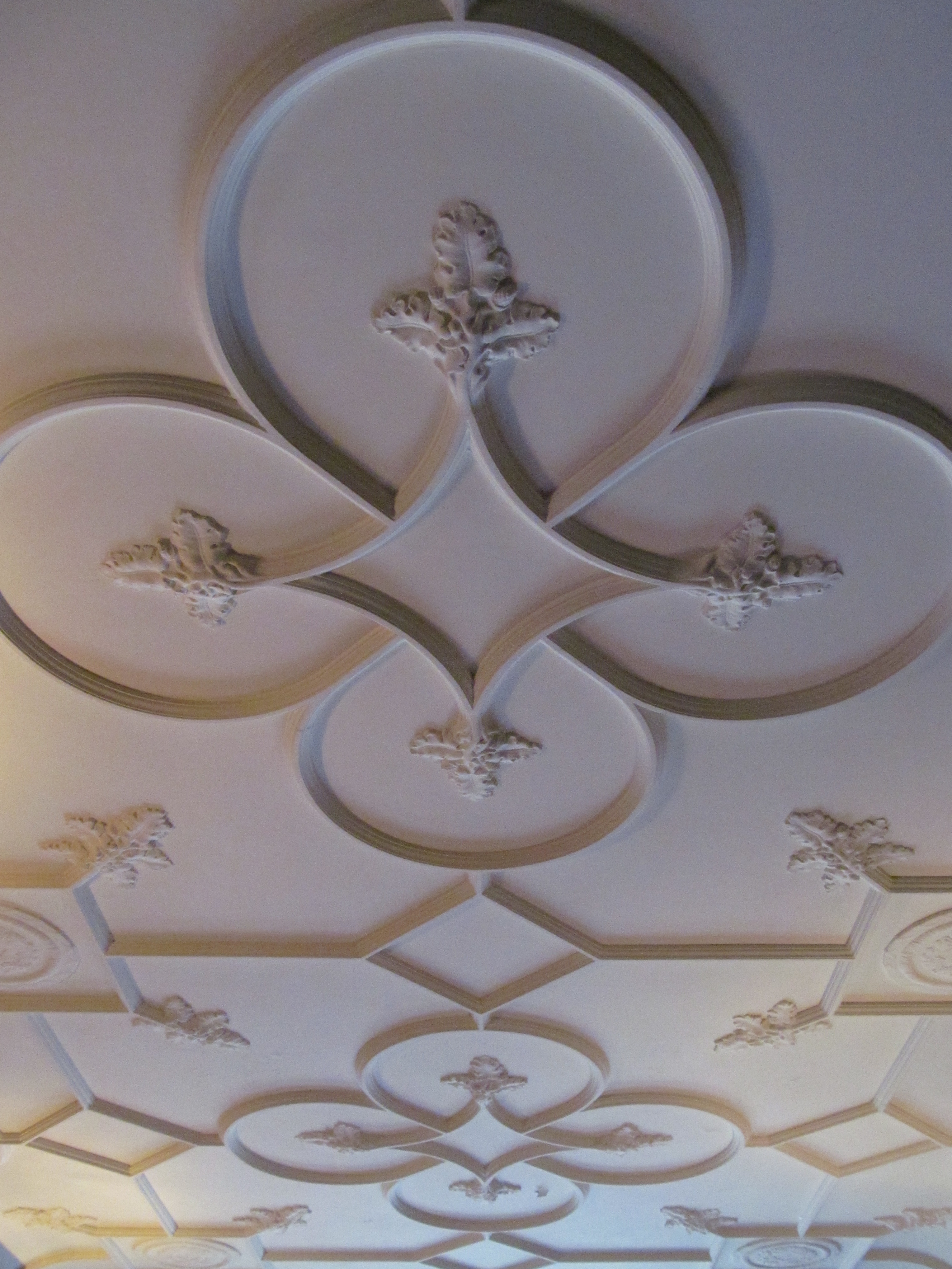
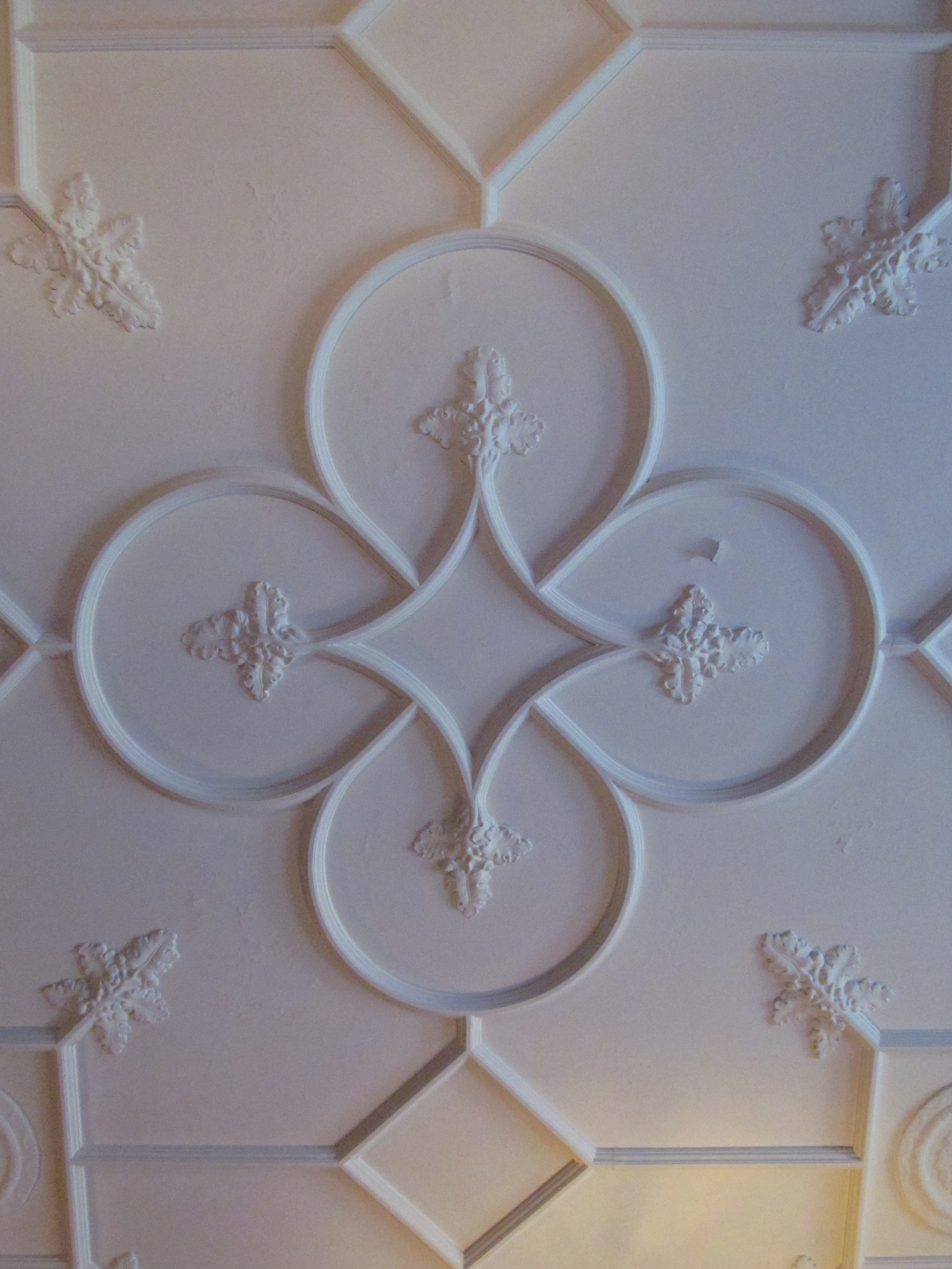
Warwick House was built in 1910 for Howard Heinz, son of the ketchup king H. J. Heinz. The architects were Vrydaugh & Wolfe, who designed several other millionaires’ mansions around here, as well as a number of fine churches. The house now belongs to the Catholic Diocese of Pittsburgh, and it is rented to Opus Dei for a dollar a year, under the condition that the tenants undertake the maintenance, which is enormous.
Once a year the residents throw a big open house, which gave us a chance to get a few pictures. We would have got more, but we were having too much fun.
A French door in the back leading out into the garden.
The rear of the ballroom, an addition built in about 1929. It is now a chapel.
An arbor with some splendid ironwork runs along the back of the garden.
As we mentioned before, we are attempting to photograph every house in the residential part of Schenley Farms. Here is a big album of houses on Bigelow Boulevard, which becomes a residential street as it winds through the neighborhood. Above, Ledge House, the strikingly different home of A. A. Hamerschlag, the first director of Carnegie Tech (now Carnegie Mellon University). It was designed by Henry Hornbostel, who designed the Carnegie Tech campus and taught at Carnegie Tech. It has recently been cleaned of a century’s worth of industrial soot and restored to its original appearance.
Above and below, the D. Herbert Hostetter, Jr., house, architects Janssen and Abbott. Benno Janssen and his partner abstracted the salient details of the Tudor or “English half-timber” style and reduced it to the essentials, creating a richly Tudory design with no wasted lines.
Because we have so many pictures, we’ll put the rest below the metaphorical fold to avoid weighing down the front page here.
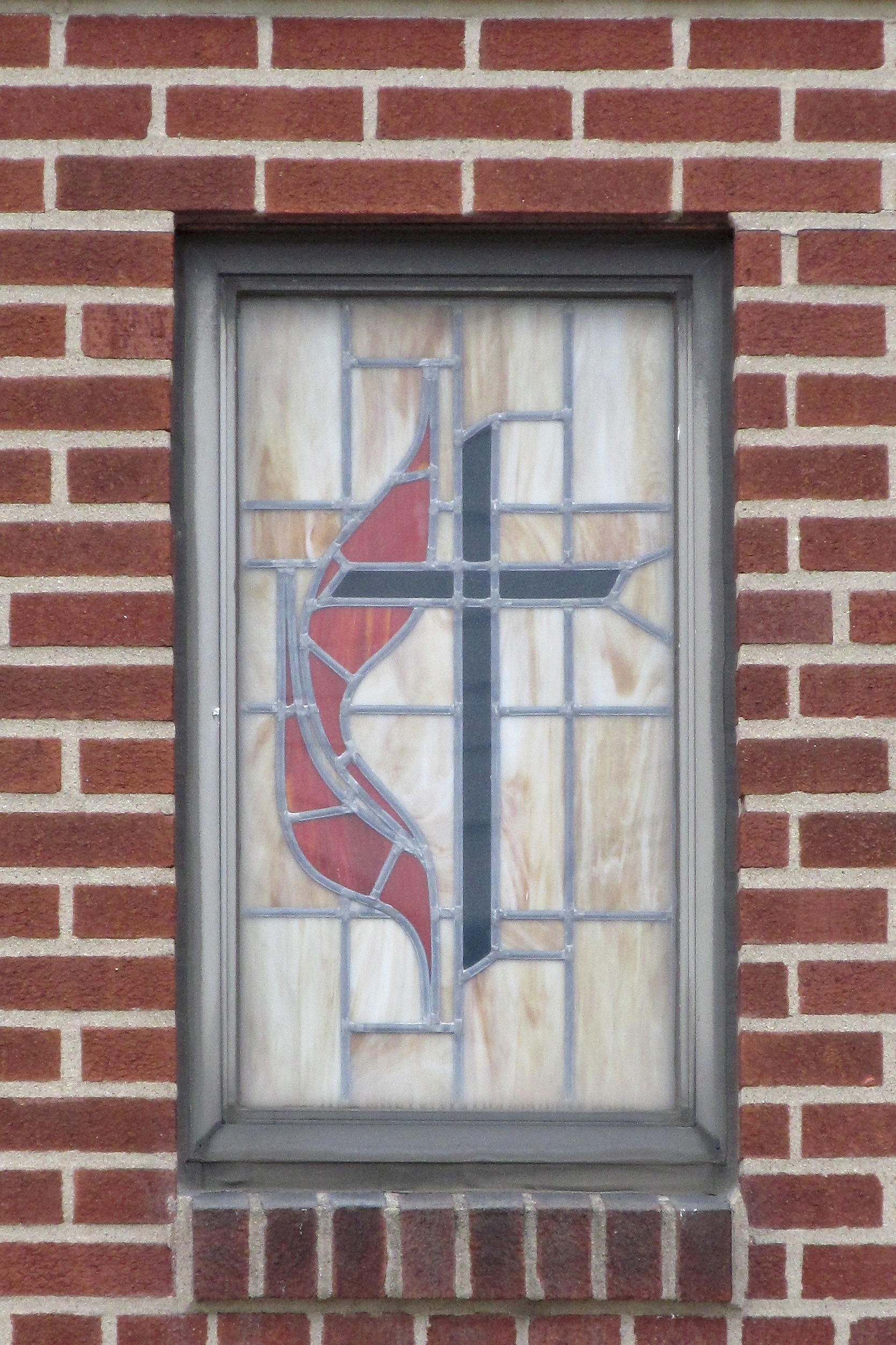
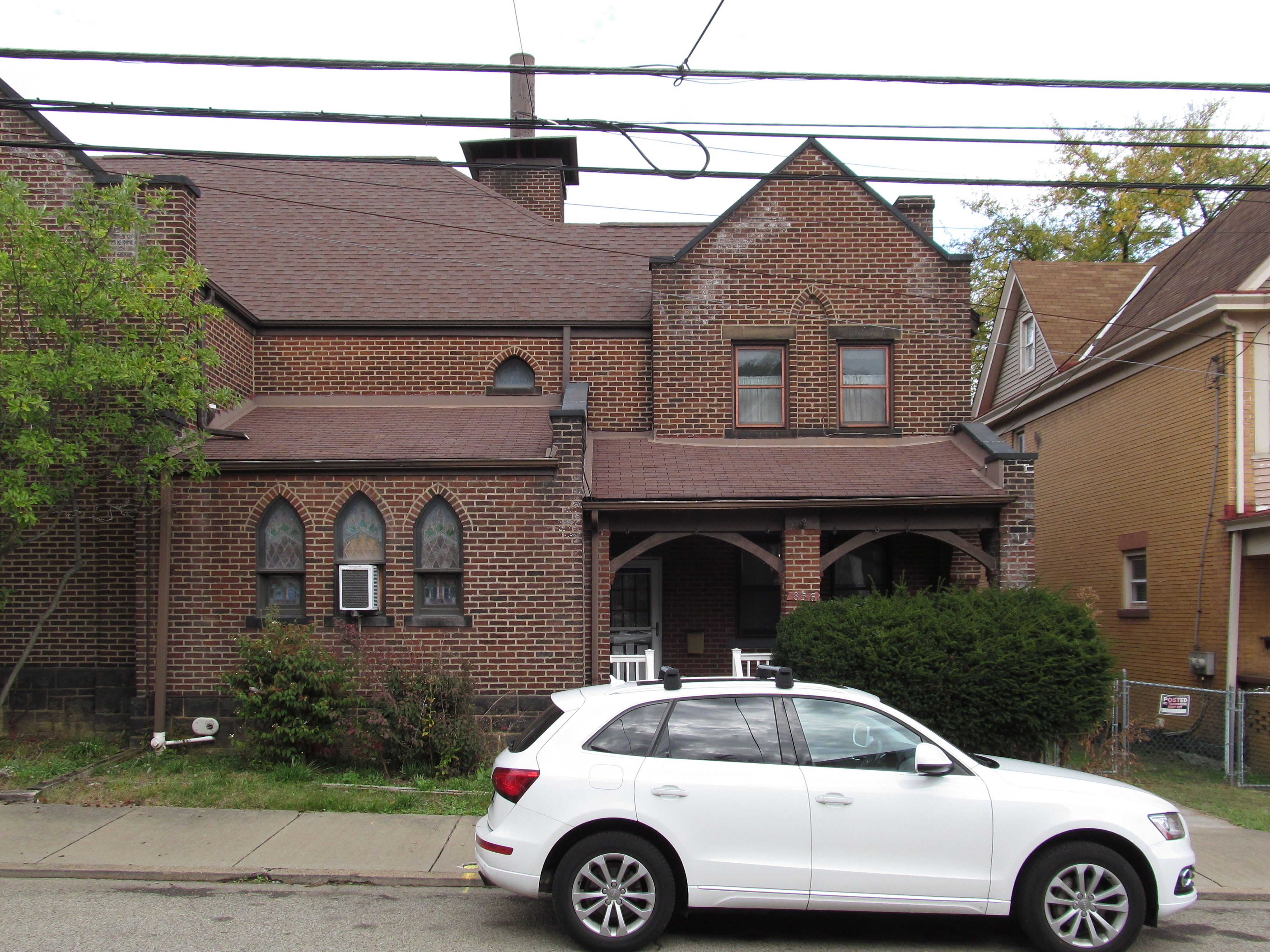
If you were on a budget of only $20,000, which was fairly modest for a church, you could still get yourselves some distinguished architects to make the most of your money. Vrydaugh & Wolfe designed some huge millionaires’ mansions and a number of glorious stone churches, but they put their usual care into this little project as well, using inexpensive materials to the best effect.1 It was built as Emanuel Evangelical Church; later it became Emanuel United Methodist Church, and now it is New Destiny Christian Methodist Episcopal Church.
A small addition filled in one corner at some time when the church was a United Methodist congregation.
The attached parsonage is small but in perfect taste, neither too ostentatious nor unduly plain.
The budget may have ended up being less than $20,000. As originally conceived, it would have been a stone-veneer building; perhaps the bricks were a later decision to shave some money off the cost. From the Construction Record, February 3, 1912: “Plans are being prepared by Architect Vrydaugh & Wolf, 347 Fifth avenue, for a one-story stone veneer church building for the Emanuel Evangelical Congregation, Crucible and Lorenza [sic] avenues. The building will be 85×100 feet and will cost $20,000.” ↩︎
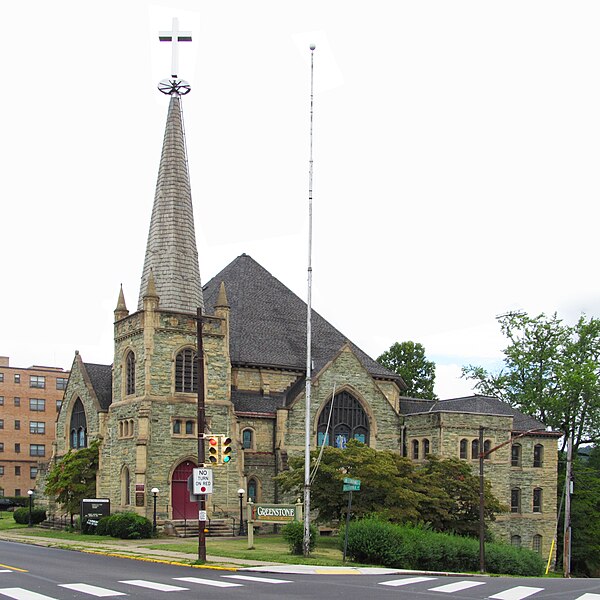
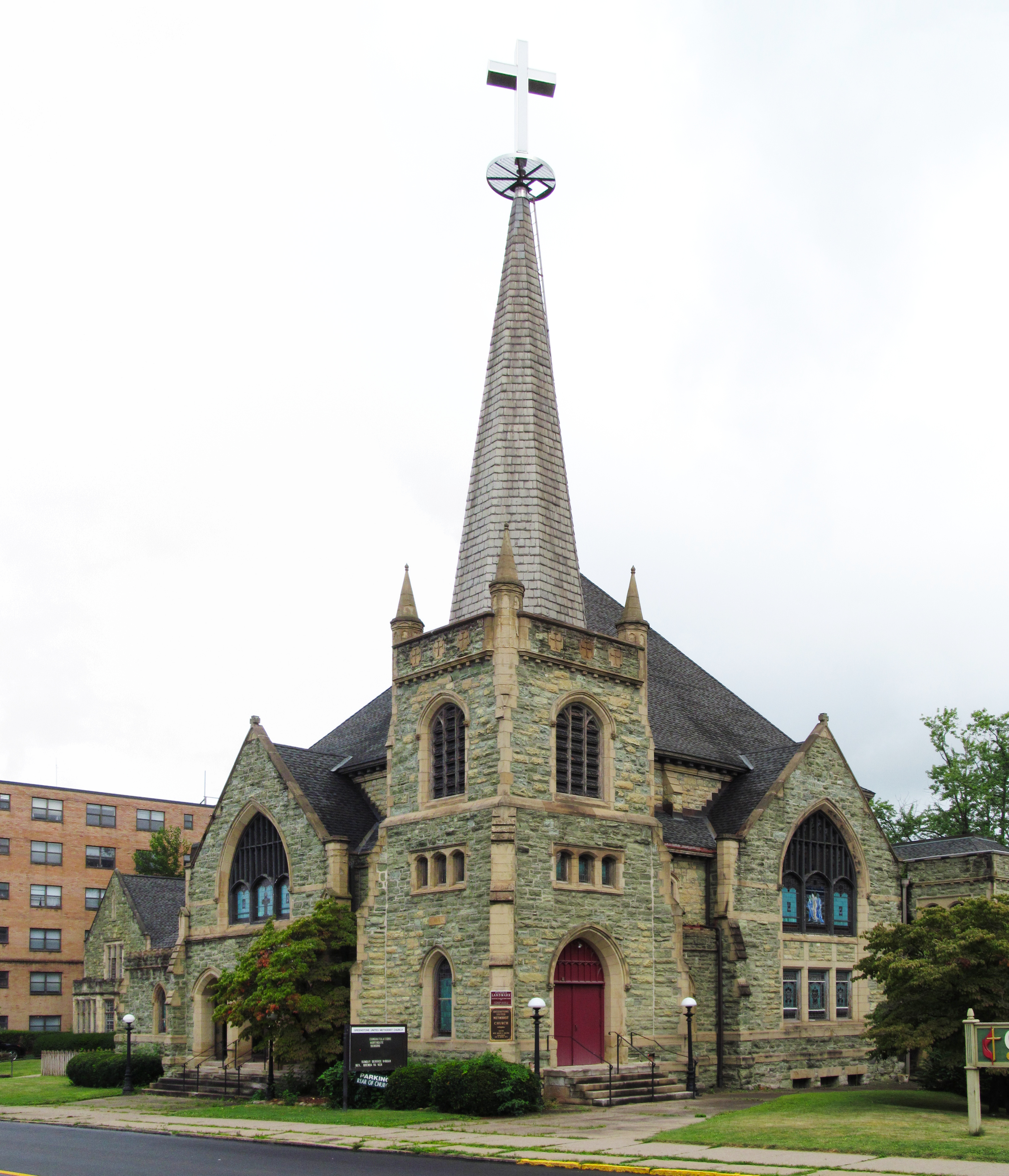
This church was built in 1906; the Pittsburgh History and Landmarks Foundation was unable to identify the architect, and so far Father Pitt has had no better luck. (Update: The architects are now identified as Vrydaugh & Wolfe; see the end of this article.) It used to be called the Bellevue Methodist Church—Methodist Episcopal, as opposed to Methodist Protestant, since there was one of those, too. This one is in Avalon, which used to be called West Bellevue, and its striking green stone gave it the name by which everybody called it. In 1982, the congregation bowed to the popular will and renamed the church Greenstone.
This is one of the relatively few churches of this type that have kept their spires.
The picture above is one of those rare pictures where old Pa Pitt decided to remove all the fat ugly utility cables, because they were just too distracting.
The composite picture above shows some of the matching Sunday-school wing. The stitching worked perfectly for the building, but it made a noticeable break in the car parked on the street, which you can see if you enlarge the picture. Father Pitt left a note on the windshield.
Addendum: Perhaps unsurprisingly, given the style—and especially that low tower with four corner pinnacles—this church was designed by Vrydaugh & Wolfe.1 This means that Vrydaugh & Wolfe had two of the four corners of this intersection covered: diagonally across from this church is their Church of the Epiphany.
Source: The American Architect and Building News, July 23, 1904: “Architects Vrydaugh & Wolfe will be ready for bids in a few days on the Methodist Episcopal Church, of Bellevue. The building will be erected at Lincoln and Home Aves., at an approximate cost of $60,000.” ↩︎
This church sits right across the line from Bellevue in Avalon, but it is often listed as the Church of the Epiphany of Bellevue. It was built in 1912–1913, and the architects were Vrydaugh and Wolfe, who also designed Warwick House and (as Vrydaugh and Shepherd with T. B. Wolfe) Calvary Methodist in Allegheny West. This is one of our increasingly rare black-stone churches; every stone church in Pittsburgh used to look like this.
Though it is no longer active as a church, everything but the sign seems well kept and loved.
Addendum: Just this month (August 2023), this building was awarded a plaque by the Pittsburgh History and Landmarks Foundation.
Now Calvary United Methodist Church, this church is known for its stained glass by the Tiffany Studios. It was built in 1892–1895; the architects were Vrydaugh & Shepherd and T. B. Wolfe. The exterior is a feast of elaborate and often playful Gothic detail.
Warwick House was built in 1910 for Howard Heinz, son of the ketchup king H. J. Heinz. The architects were Vrydaugh and Wolfe, and the construction budget was $75,000. After the Heinzes it passed through the Hillmans, and now it belongs to the Catholic Diocese of Pittsburgh, from which it is rented by Opus Dei, the Catholic organization famed for its albino assassins. But the organization seldom sends the assassins out against anyone but renowned curators; the rest of us are quite safe. At an open house this summer, old Pa Pitt was graciously allowed to take a few pictures of the beautifully maintained Jacobean interior. Above, the window in the grand staircase.
This picture of the front is not the best; the light was from the wrong direction. It means we will have to return soon at a different time of day.
The front door.
The front hall; the door to the library is on the right, the grand staircase on the left.
A little bit of the decorative woodwork in the front hall.
The grand staircase.
Modern American houses forget about the ceiling, as if people never looked up. Warwick House does not make that mistake. This is the decorated ceiling in a side hall.
The former ballroom was converted into a chapel by the late Henry Menzies, an ecclesiastical architect whose specialty was refurbishing modernist churches of the 1960s and 1970s to make them suitable for liturgical worship. He liked to use a baldacchino to give proper emphasis to the altar. (The ballroom was added to the house later, probably in 1929 according to the current residents.)