The part of Dutchtown south of East Ohio Street is a tiny but densely packed treasury of Victorian styles. Old Pa Pitt took a walk on Avery Street the other evening, when the sun had moved far enough around in the sky to paint the houses on the southeast side of the street.
Is this the most beautiful breezeway in Pittsburgh? It’s certainly in the running.
A row of identical houses put up in 1884 for Joseph Klee, a successful manufacturer of shoes and one of the founders of the Rodef Shalom congregation. The word “Klee” means “clover” in German, so, of course…
…all the dormers have clover ornaments.
Note the basement-level breezeway between houses, which is very unusual in Pittsburgh.
Built in about 1865, this grand house on North Lincoln Avenue is decorated in the highest Victorian manner, and the current owners have put much thought into the color scheme for painting the elaborate wood trim.
Though it is hidden in the shadows between houses most of the day, this oriel is nevertheless festooned with decorative woodwork, including these ornate brackets:
Beech Avenue may be old Pa Pitt’s favorite residential street in the city. It is an eclectic mix of Victorian styles lined up on brick sidewalks, and something about it makes first-time visitors think, “I want to stay here forever.”
Formerly a storefront with apartments above, but the storefront—as with many backstreet stores—has been converted to another apartment. The well-preserved Victorian details are picked out with a colorful but tasteful paint scheme.
It looks as though this commercial block in Sharpsburg was built in two stages. The date stone would have been in the center of the original building, making a neatly symmetrical composition; it might have had some eruption of ornament behind it where the blank spot is in the cornice. Later, the building was extended by two bays to the right, nearly identical in design, but breaking the symmetry, and without the terra-cotta ornaments between the second and third floors. It also appears that the bricks are very slightly different in color, perhaps from a different source.
The date stone would have told us when the original building was put up, but at some point a new owner decided to obliterate the evidence of the old one.
At least the terra-cotta decorations remain.
Sharpsburg has a shortage of street names. There is Main Street, and North Main Street, and South Main Street; and North Canal Street and South Canal Street and Short Canal Street. The town is crammed into a tiny narrow strip along the Allegheny, but it is still easy to get lost.
As the business district along Penn Avenue becomes a more and more desirable place for artsy shops and galleries, it has been cheering to see many old buildings cleaned up and given new life in Garfield. Here is one of the finest. Old Pa Pitt knows nothing about it other than that its name is Butler.
Addendum: The architect was Samuel A. Hall. Source: Pittsburgh Post, July 30, 1903. “Architect S. A. Hall is preparing plans for a business block to be erected in Penn avenue, near Grove street, for P. H. Butler, to cost $20,000.” “Gross” is a mistake for Grove. Thanks to David Schwing for the information.
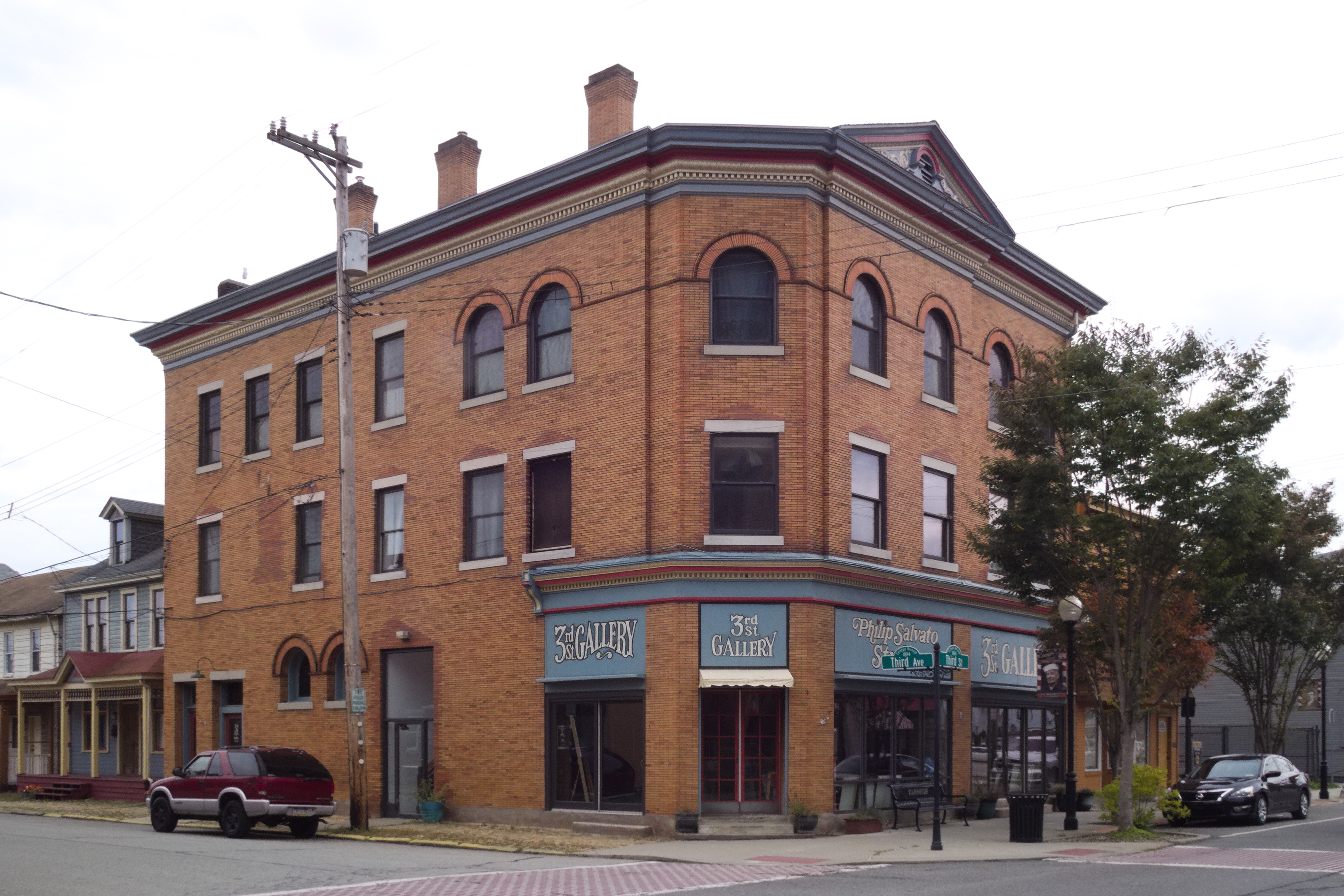
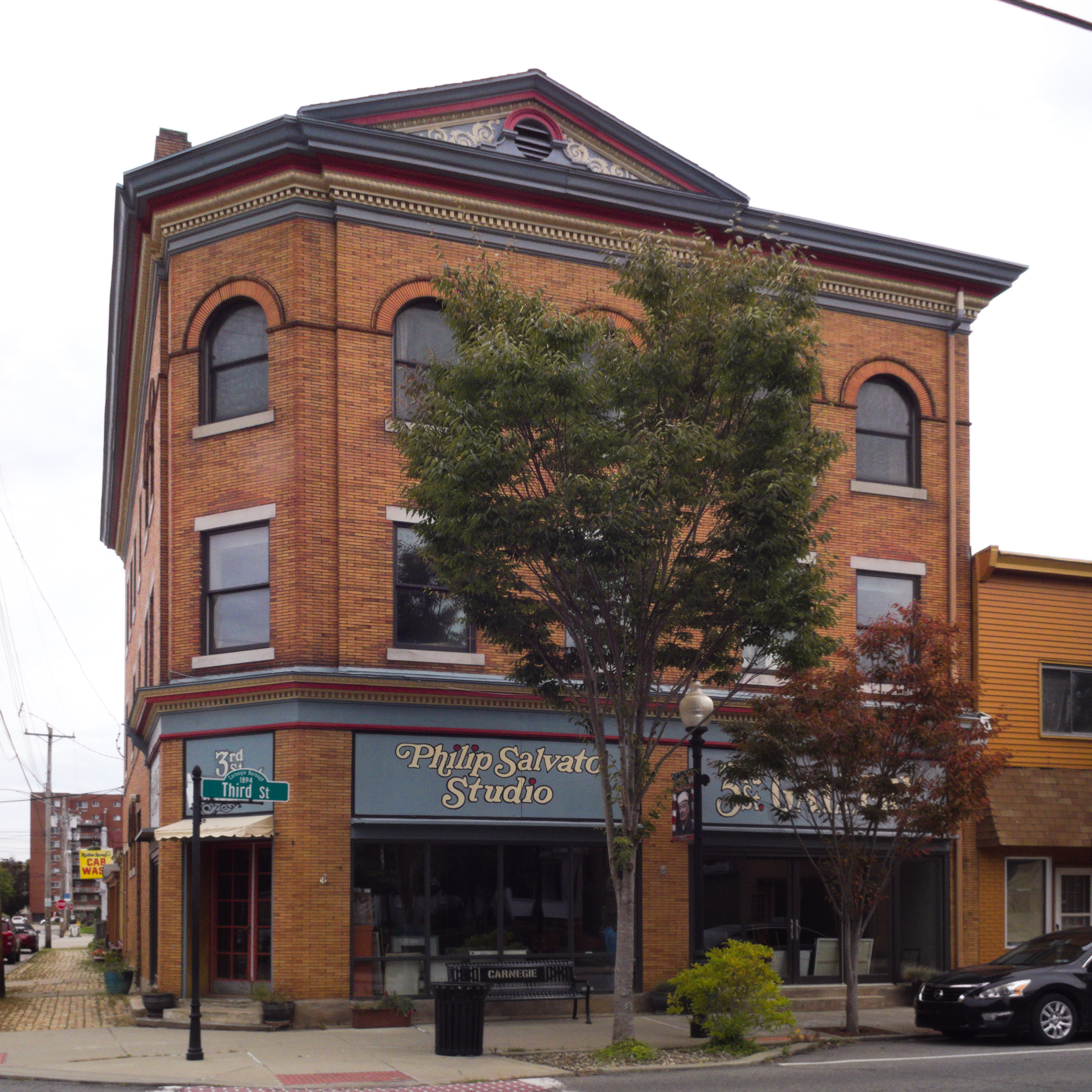
Father Pitt took these pictures more than a year ago, but for some reason he never published them until now. This Rundbogenstil building at Third Street and Third Avenue takes full advantage of its corner site, and the details of the pediment and cornice have been lovingly picked out in tastefully balanced colors.
We have seen these beautiful storefronts before, but only obliquely. Here they are again, because we can never see them too often. This is one of the best Victorian cast-iron fronts in the city. Note that whoever designed the building has tried very hard to make you perceive it as symmetrical, though in fact the section on the right is significantly wider than the other two.