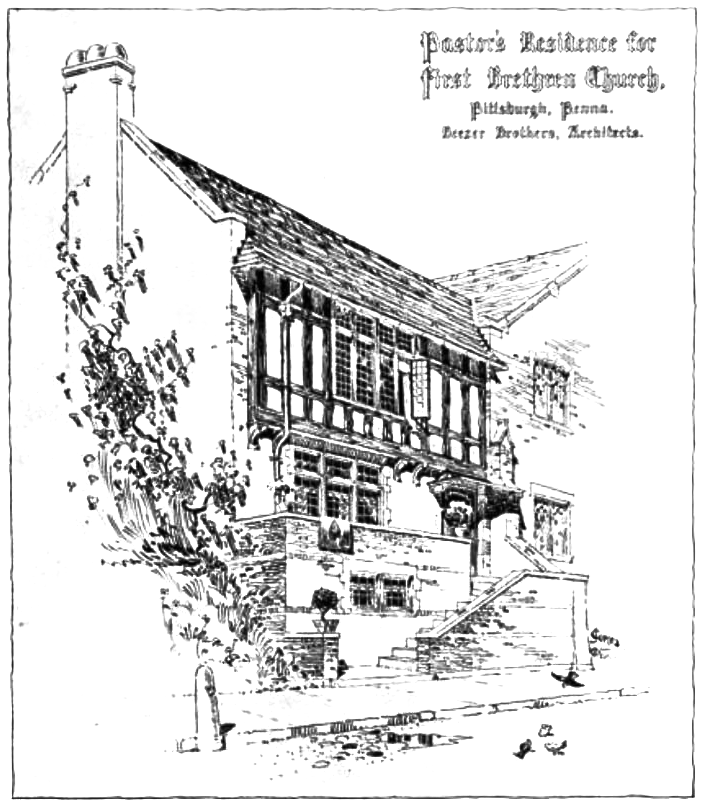


Today we have the privilege of peeking into one of those fine Tudor houses in Schenley Farms, through the courtesy of the gracious owners. The architects of this one, built in 1907, were the twin Beezer Brothers, who gave us a number of fine houses and a few distinguished public buildings before moving out west to prosper even more. In Pittsburgh architectural history, they’re mentioned most often as the employers of John T. Comès when he designed the church of St. John the Baptist (now the Church Brew Works) in Lawrenceville, which shows that they had an eye for rare talent. This house shows that the brothers also had a keen eye for detail and meticulous craftsmanship.
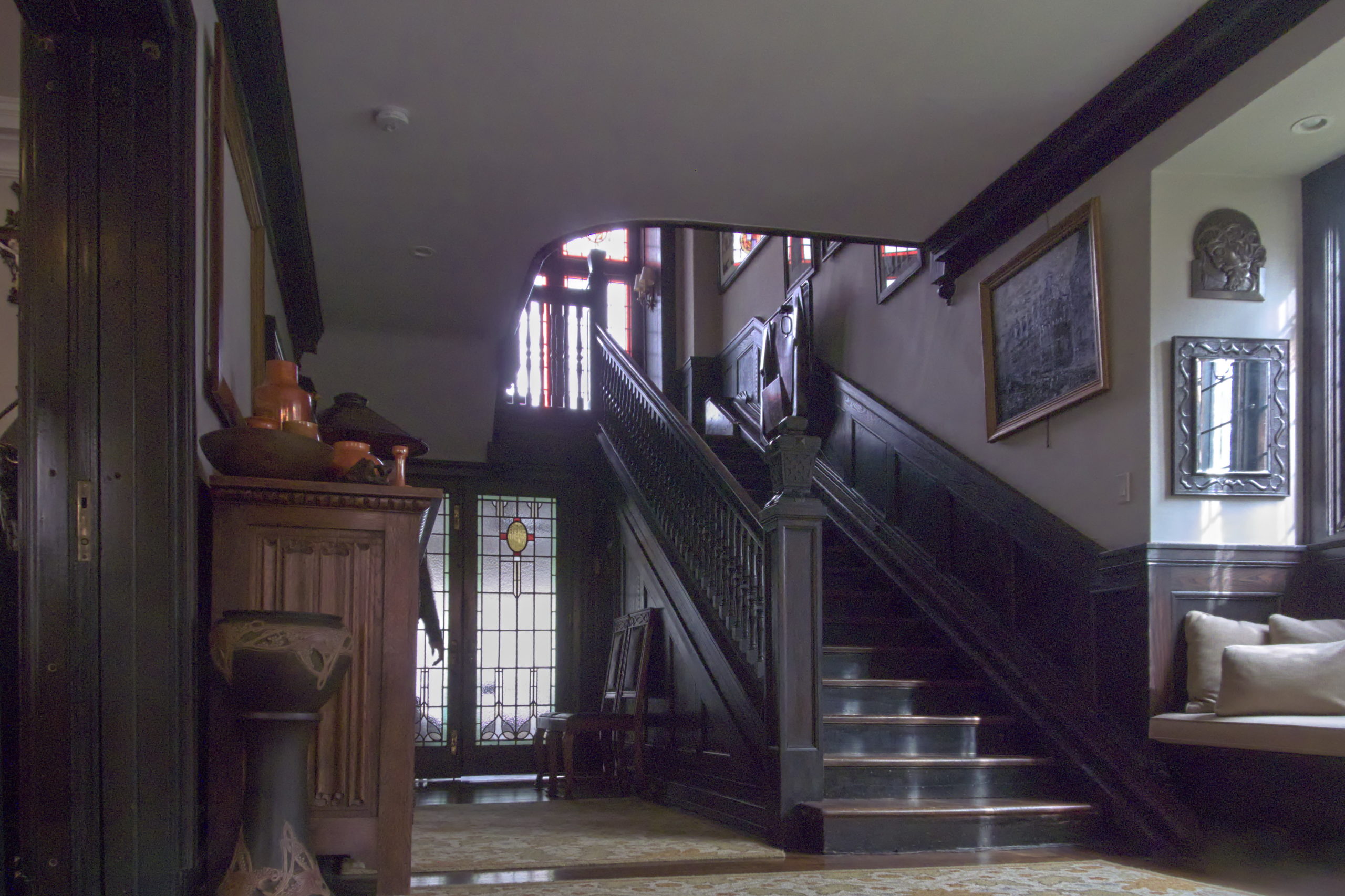
The entry is a good introduction to the house, with its dark woodwork and art glass everywhere. Tudor Revival architecture uses dark wood extensively; in the best Tudor Revival houses, it creates a sense of shelter from the inhospitable elements outside.
If you look closely toward the top of the staircase, you may notice one of the unusual additions to this house: a stair lift that is probably ninety years old or more.

The staircase leads up to a landing with a huge window in the best Tudor Revival style. Light pours in through the window, but the much-divided glass keeps the strong sense of being inside and comfortably protected.

The escutcheons in glass suggest a family tradition of immemorial antiquity, which must be a comforting feeling if you are a former shop clerk who has just made his pile in sewer pipes or corsets.
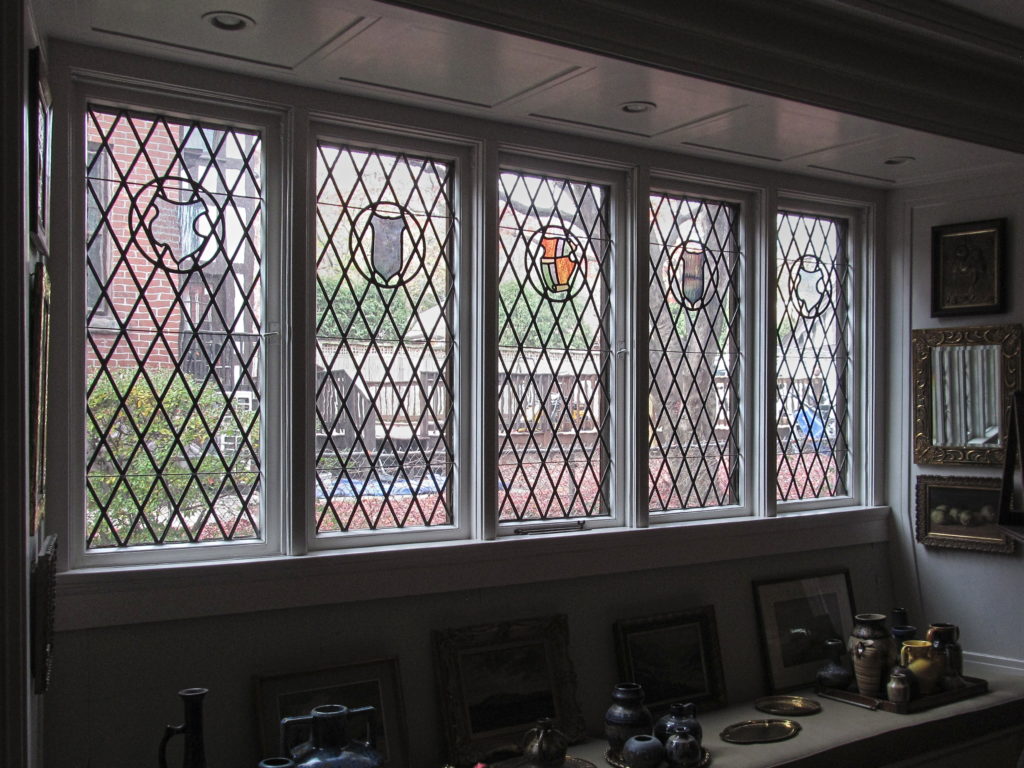
The dining room is illuminated by windows that permit a view of the world outside (and the back yard next door), but filter it through artistic glass.

The entry is separated from the rooms behind by more glass.

The front entrance is surrounded by glass, which lights up the entry without making it oppressively bright.

The front porch is covered by a roof whose exposed timbers give it a Tudor atmosphere while once again adding to the sense of shelter.

The windows of the front entrance, like several of the other windows in the house, permit a view of the outside world through artistically arranged glass. In effect they Tudorize the great world beyond the house, making it seem more inviting and less threatening. It is almost a disappointment to walk out and find no beruffed nobles on horseback or elegant court ladies waving handkerchiefs.
What houses like this gave their residents was a sense of permanence in a world that might otherwise seem to be running away from them. Living here, you were part of the best traditions of the old world, while enjoying all the comforts modern technology could provide you. The design created spaces that were distinct and sheltering, each adapted perfectly to its purpose, but harmonized into a whole that conveys a consistent impression of comfort and prosperity. The joy of a Tudor house by the Beezer Brothers, or any of the dozens of similarly accomplished architects who were working in Pittsburgh at the same time, is not the joy of seeing old forms burst apart and wonderful new shapes burbling out of the artist’s imagination. They are not free verse by Whitman; they are sonnets by Shakespeare or Spenser or Wordsworth or Millay, in which each artist uses the traditional form, but the pleasure is in how the form brings out the distinct personality of the artist.