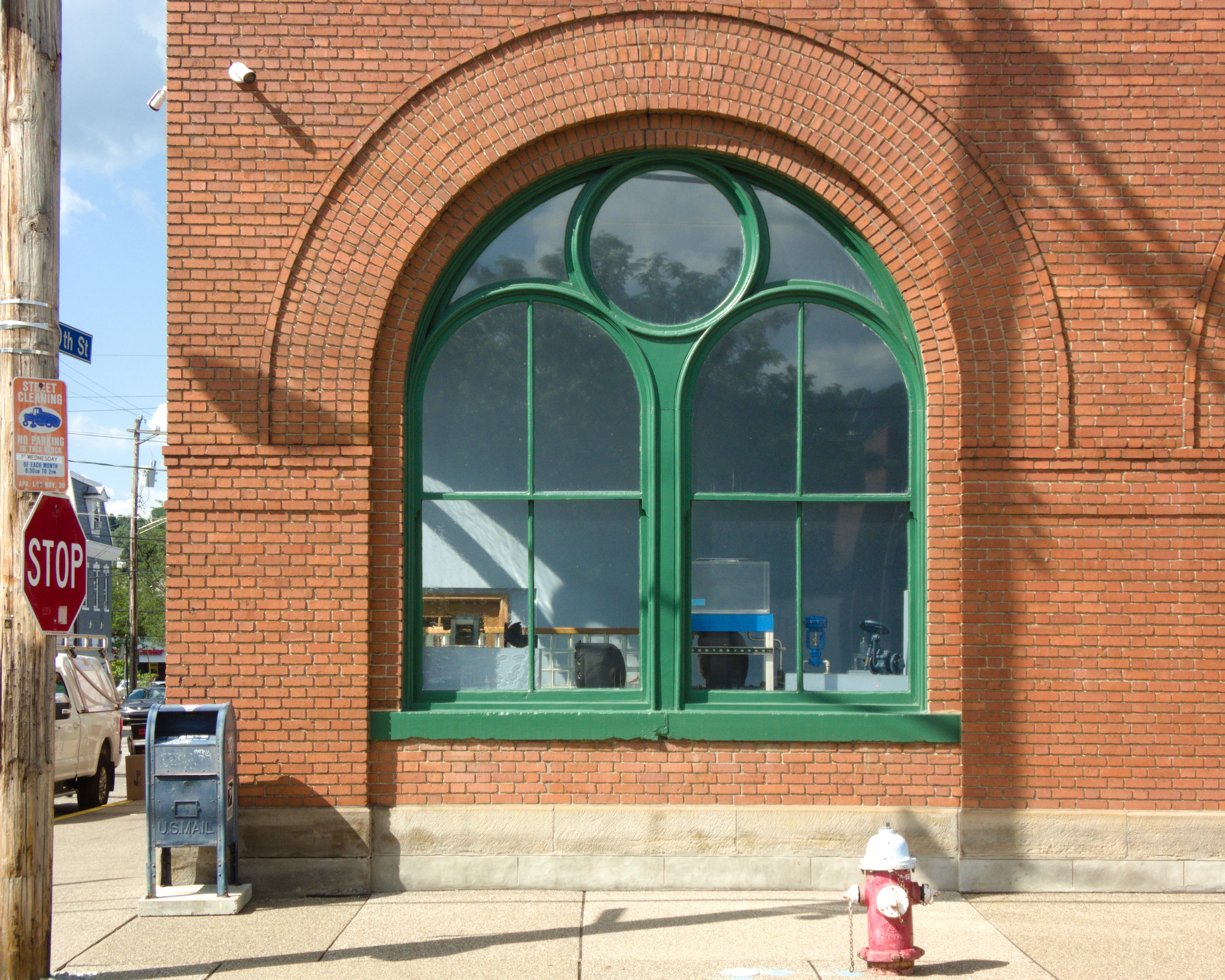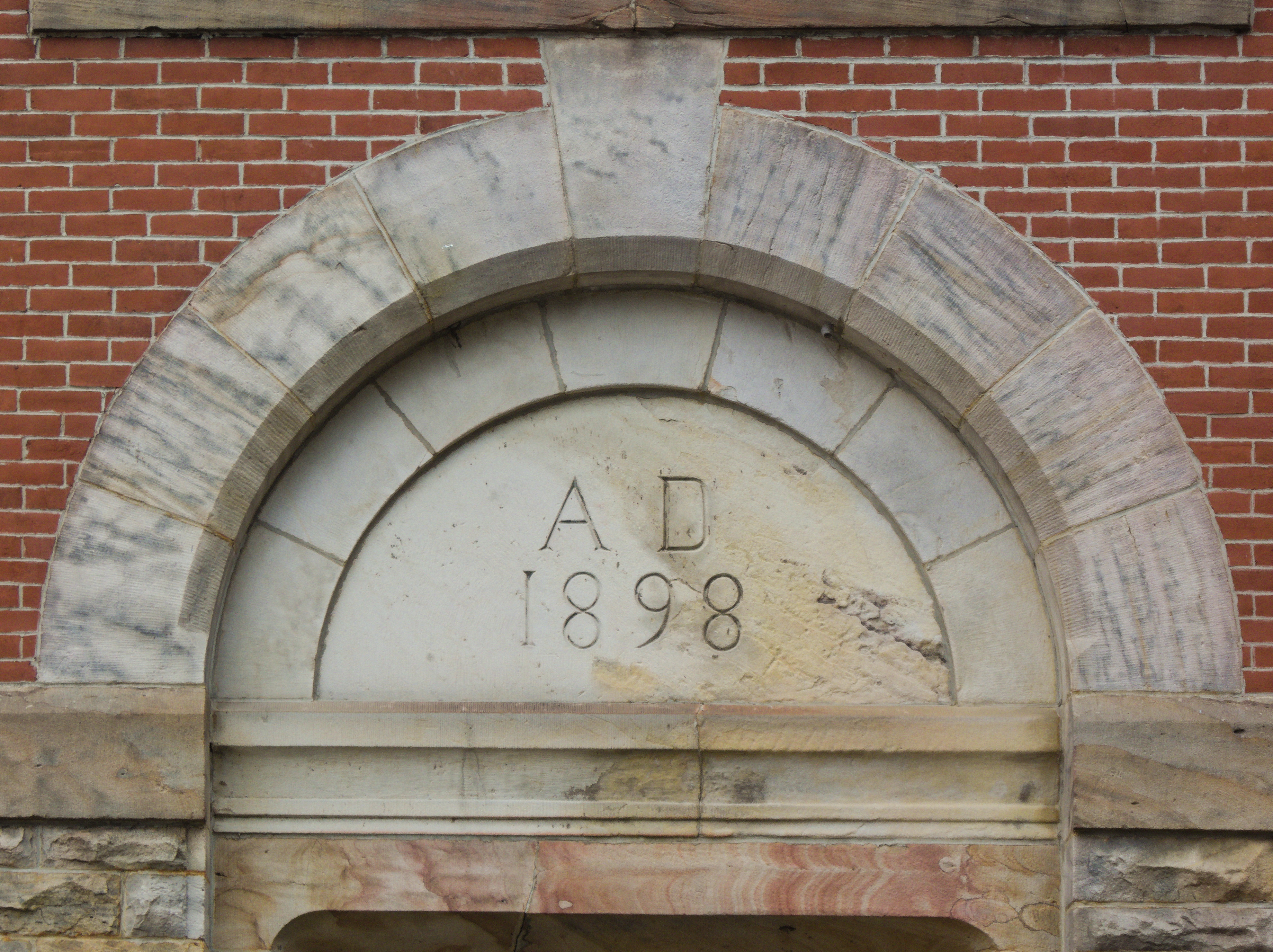
The double arch inside a single arch, with a circle to fill in the gap, is characteristic of the style of classically influenced Romanesque the Germans called Rundbogenstil, the round-arch style. It may not be exclusive to the Rundbogenstil, but Father Pitt likes to say the word “Rundbogenstil.” The B. M. Kramer and Co. building on the South Side, built as a beer warehouse, is one of the masterpieces of industrial architecture in Pittsburgh.
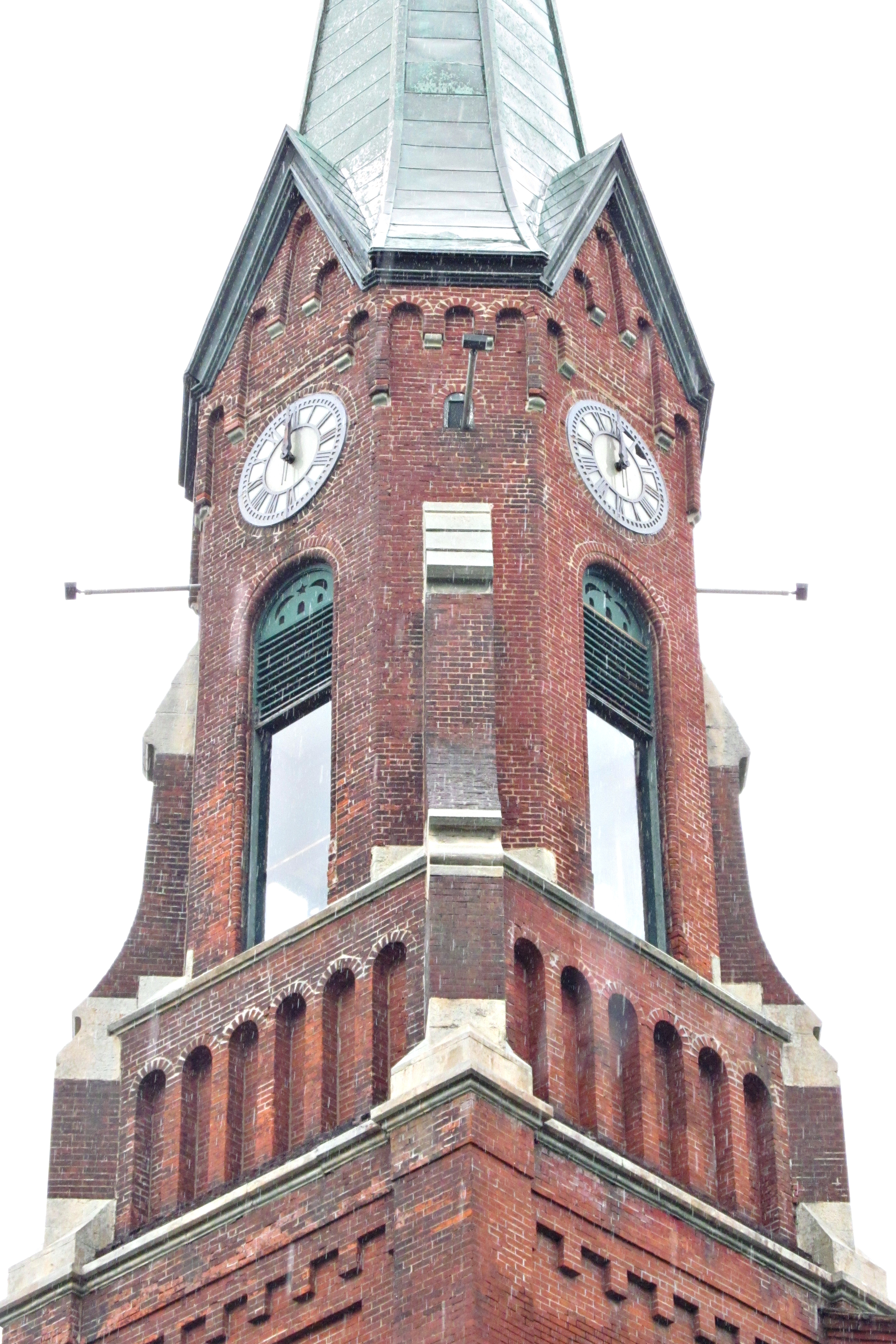
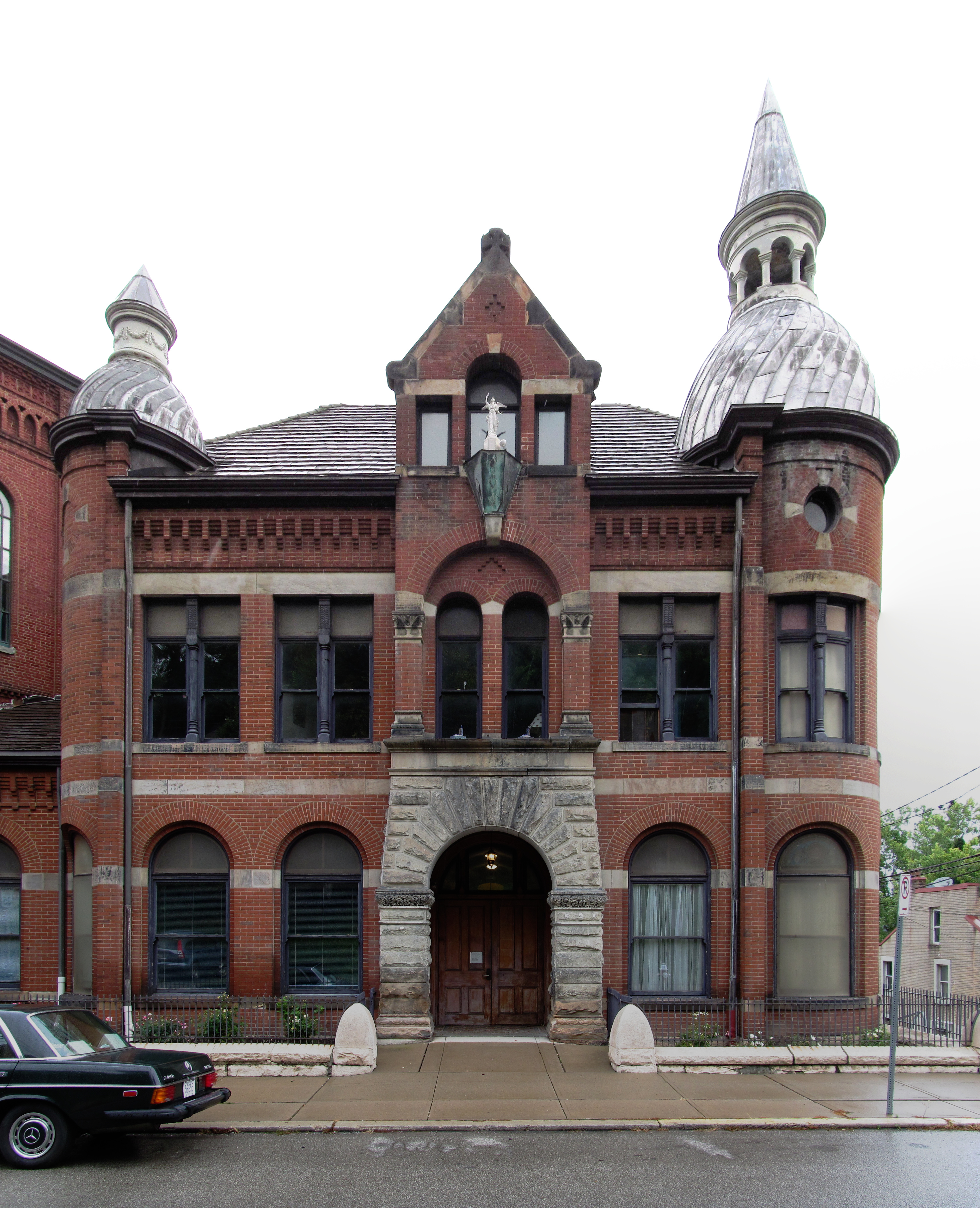
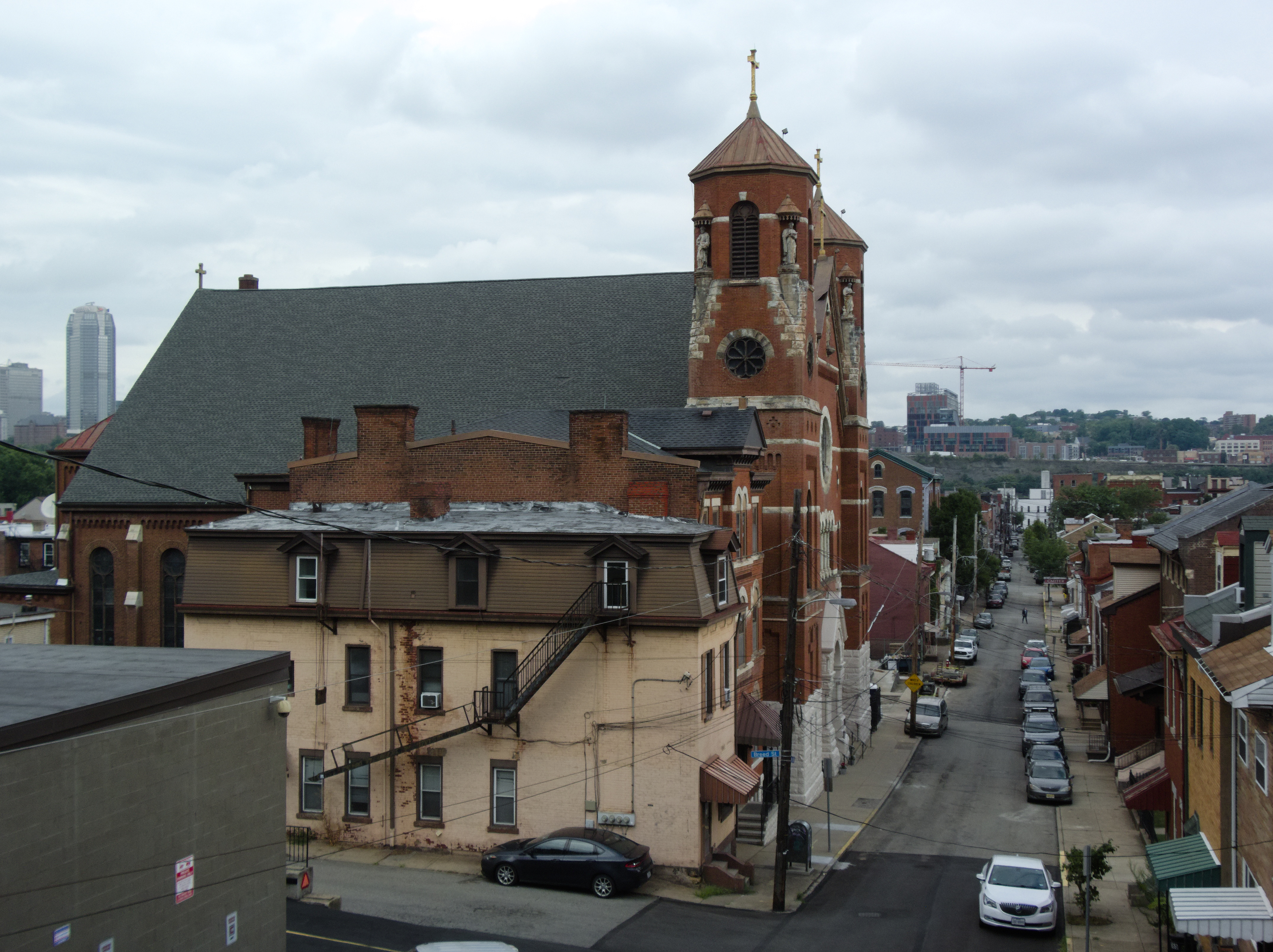
Except for the inevitable distortion of the towers, this is a very accurate rendition of the front of St. Adalbert’s on the South Side. (The distortion is the result of using many photographs to construct what amounts to an impossibly wide-angled rectilinear lens to get the whole front across a very narrow street.) Built in 1889, this church served generations of Polish Catholics, and still serves the congregation of Mary, Queen of Peace parish. The architect does not seem to be known, but old Pa Pitt would be delighted to be informed if anyone does know who it was.
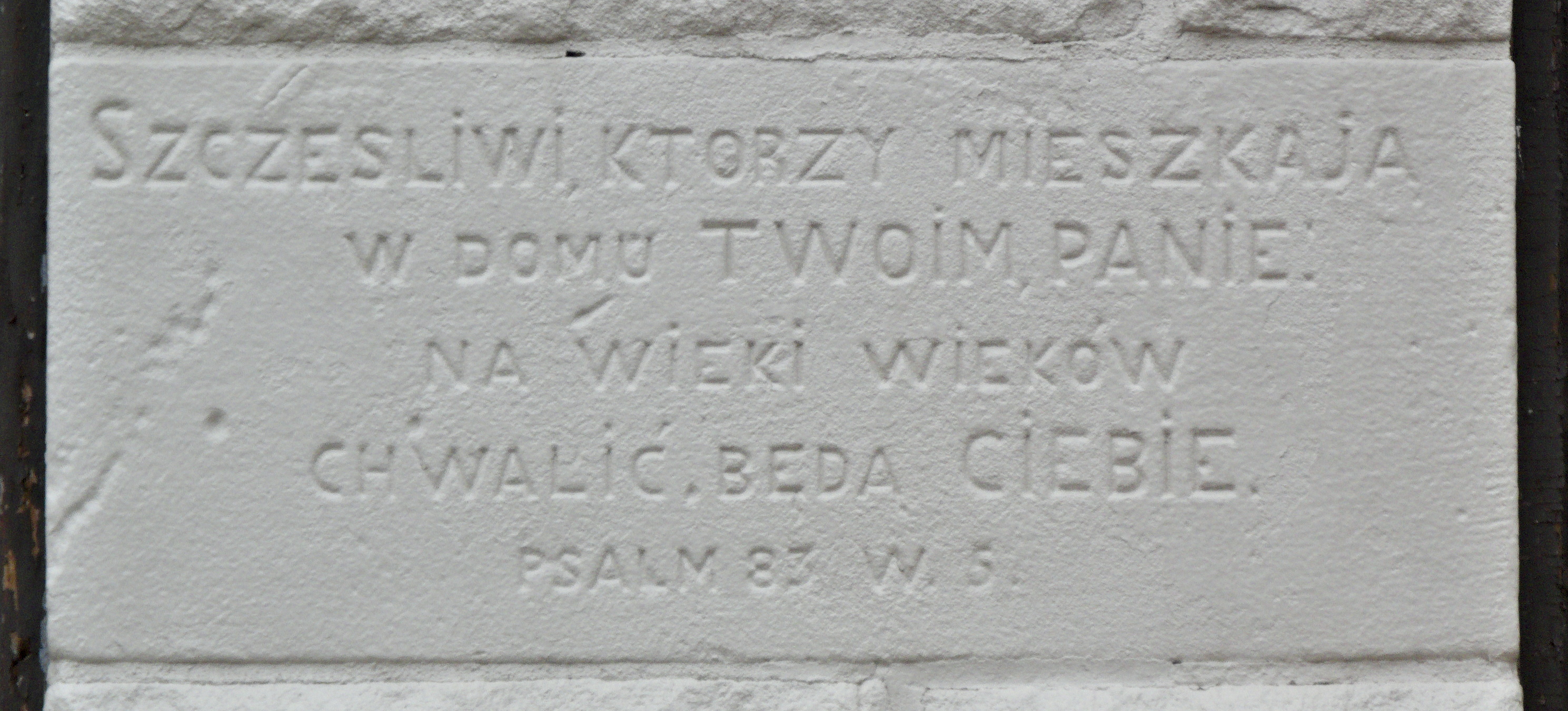
Psalm 83:5 in the Vulgate numbering (Psalm 84:4 in Protestant and more recent Catholic versions): “Blessed are they that dwell in thy house, O Lord: they shall praise thee for ever and ever.”
Father Pitt does not know much Polish, but this inscription honors the efforts of Fr. Wladislaw Miskiewicz, parish priest.
The church dominates the back end of 15th Street, one of those absurdly narrow streets in old Birmingham. This is the view from the steps up to the 15th Street pedestrian overpass that leads across the railroad tracks to the Slopes. This end of 15th Street was a whole village of Polish Catholic institutions.
St. Adalbert’s convent.
The rectory.
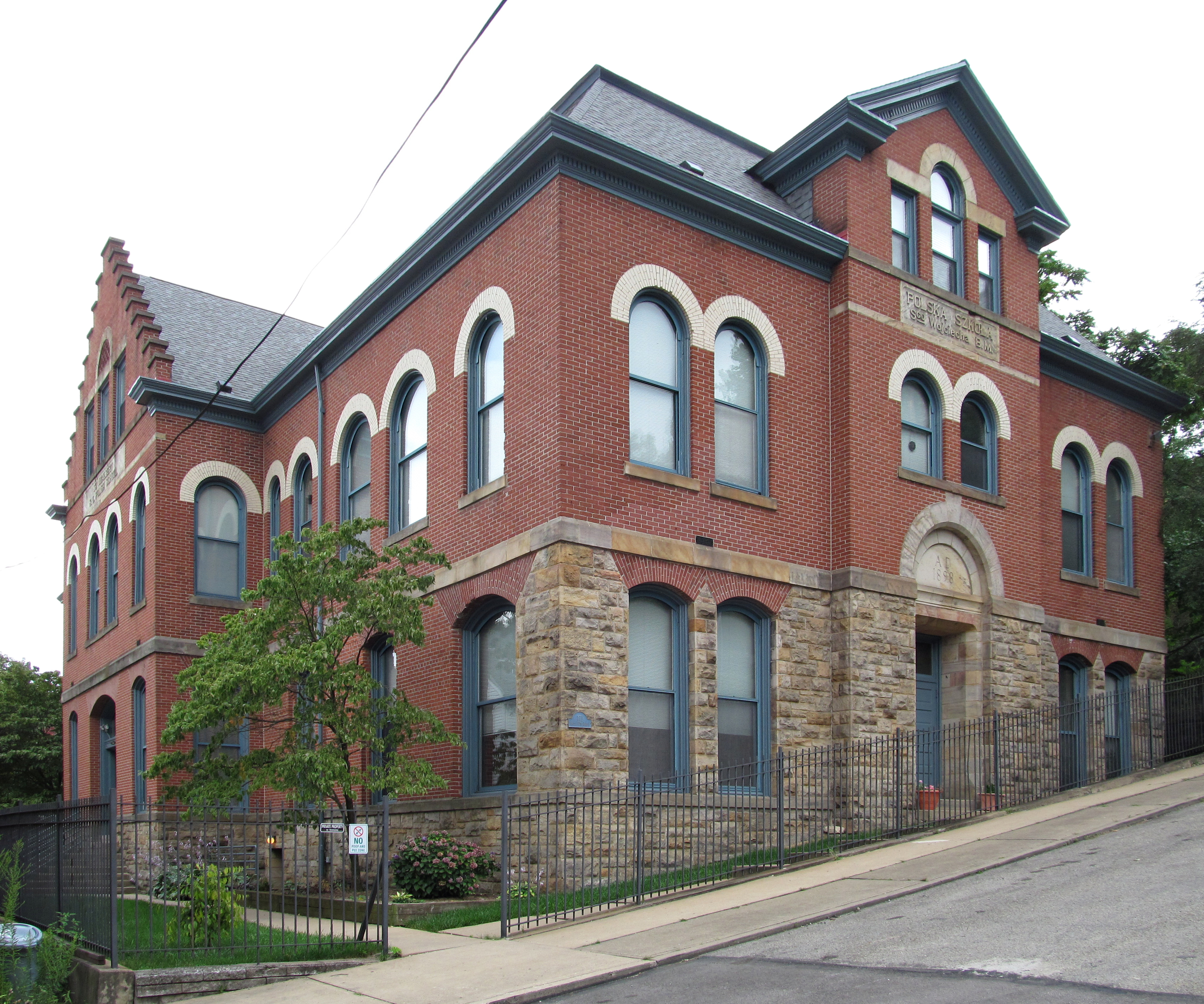
The Polish school.
We also saw the mid-twentieth-century auditorium, now being turned into condominiums.
German influence was strong in the German neighborhoods of Pittsburgh, and the particular German variant of Romanesque called the Rundbogenstil—round-arch style—can be discerned in many of our buildings. Few offer it in as ostentatiously German a form as this one, which was the convent for St. George’s parish school in Allentown. It seems to old Pa Pitt that the rhythm of the front is just about perfect, and the three elaborate double arches place the proper emphasis on the upstairs chapel.
The side was not really meant to be seen, so it is almost completely undecorated.
Addendum: The convent was built in about 1915; the architect was Herman J. Lang, who was also the architect of the church.