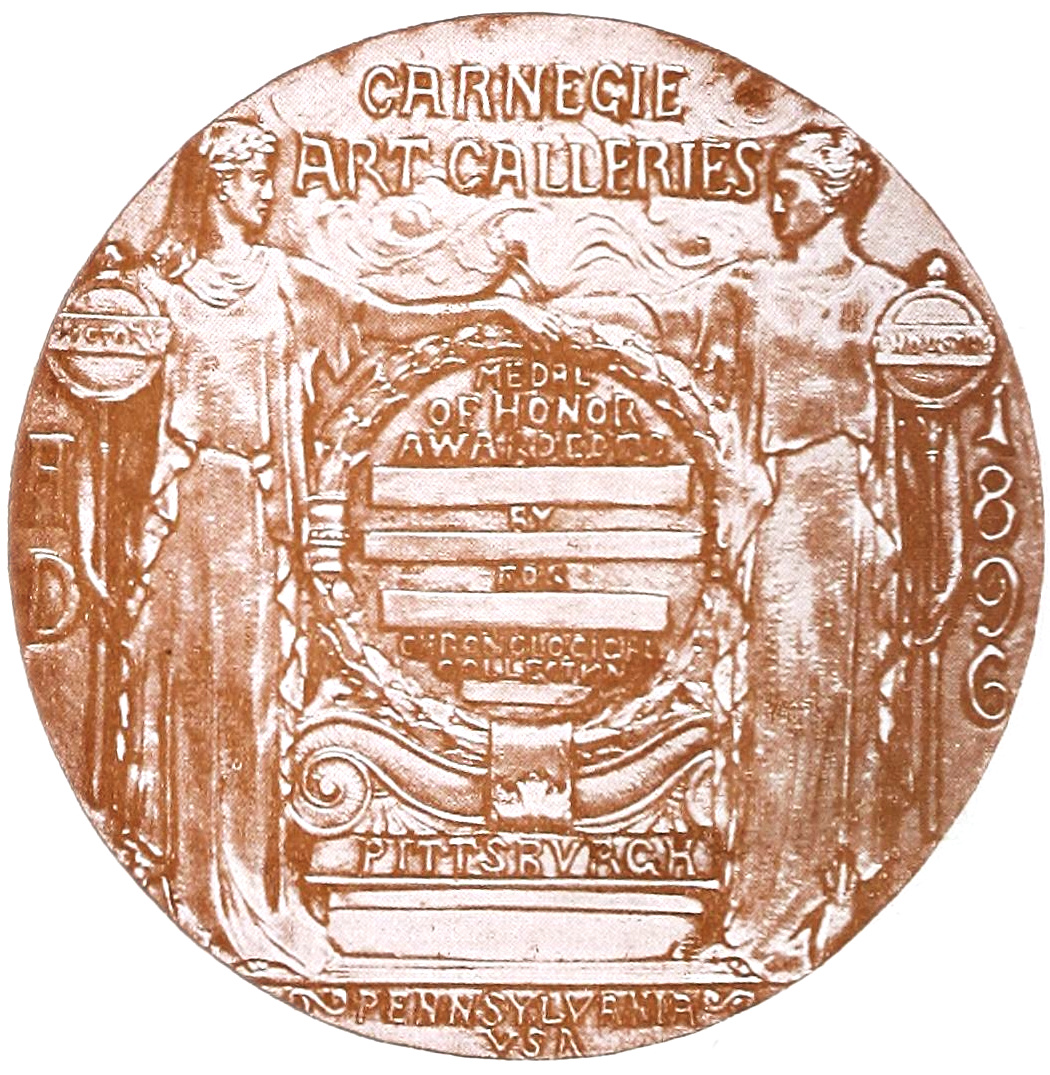
The first Carnegie International was held in 1896, and it immediately became one of the most important exhibitions of modern art in the world. Andrew Carnegie believed in encouraging artists by collecting the old masters of tomorrow, and many priceless works have been acquired for the Carnegie’s collection from International exhibitions.
This Medal of Honor was designed for the Carnegie by Tiffany & Co. It was reproduced in the catalogue of the 1899 International, which is a beautiful publication from the golden age of American printing.
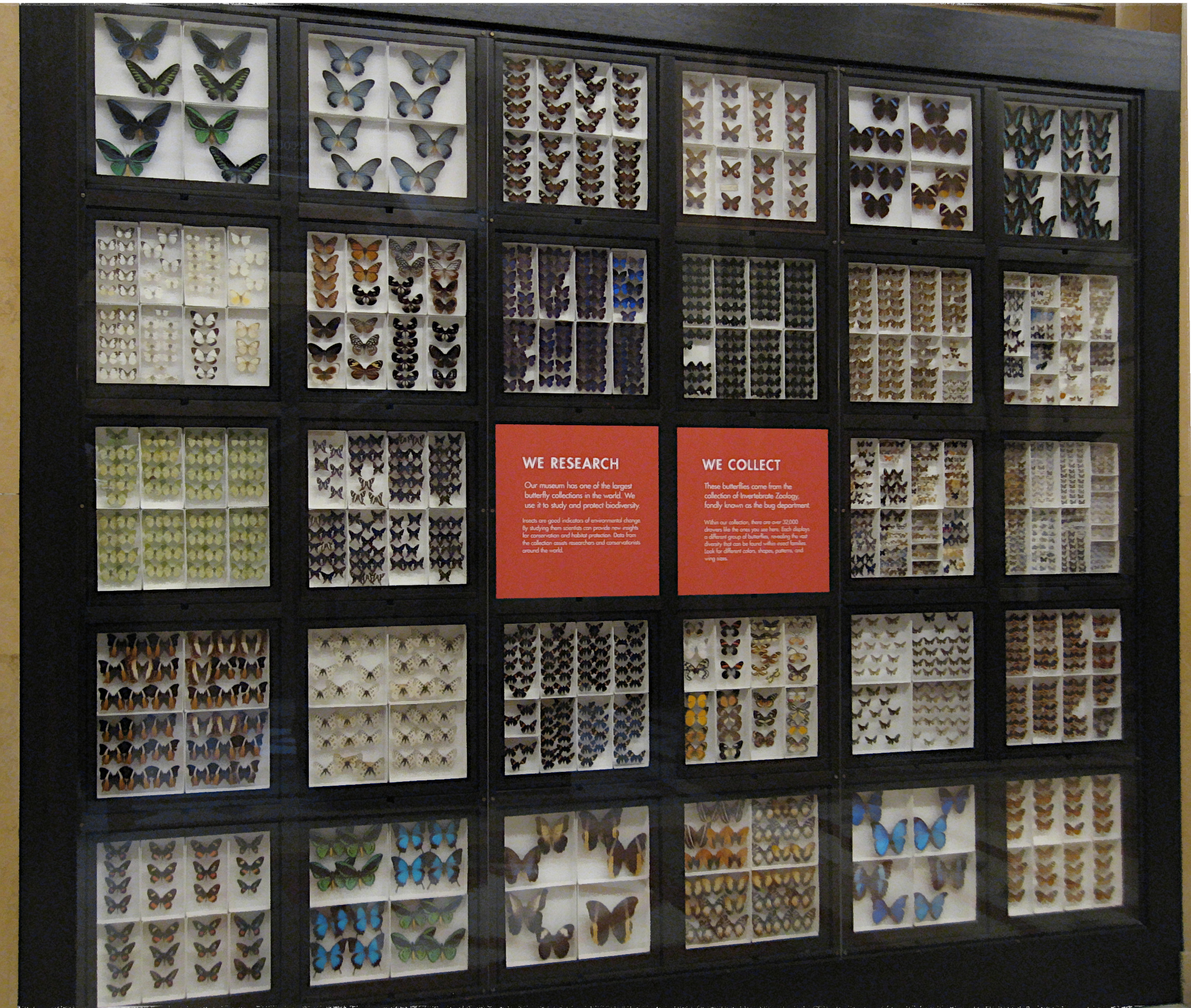
Thousands of drawers like these are in the Carnegie, one of the world’s top natural-history museums. Every once in a while the curators take out a few drawers from the bug collection and display them on the wall near the Grand Staircase.
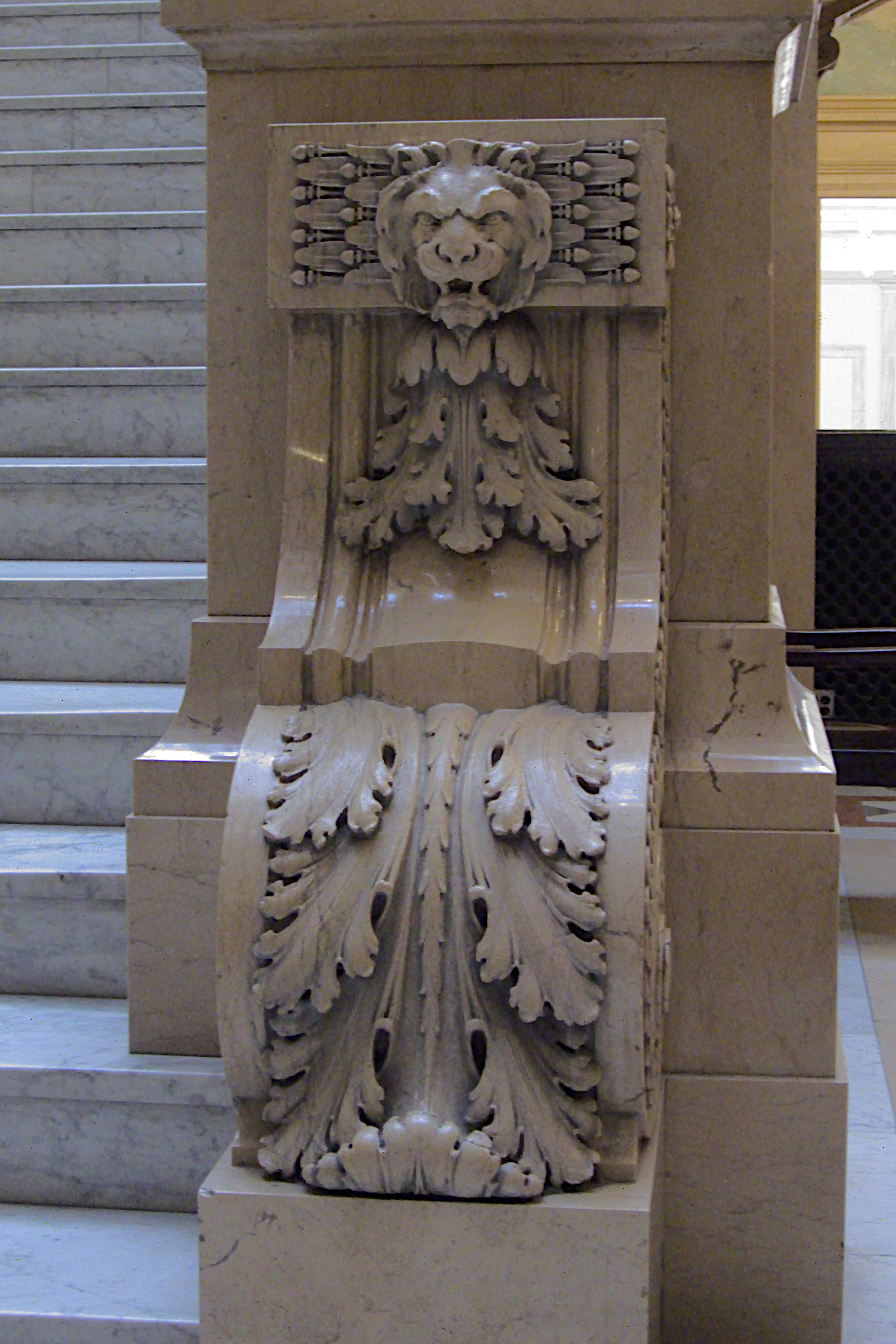
The Grand Staircase is the heart of the old Carnegie Institute building, and no expense was spared in making it lavishly artistic. The murals are by John White Alexander, a Pittsburgh native who was in his day almost as well regarded as John Singer Sargent.
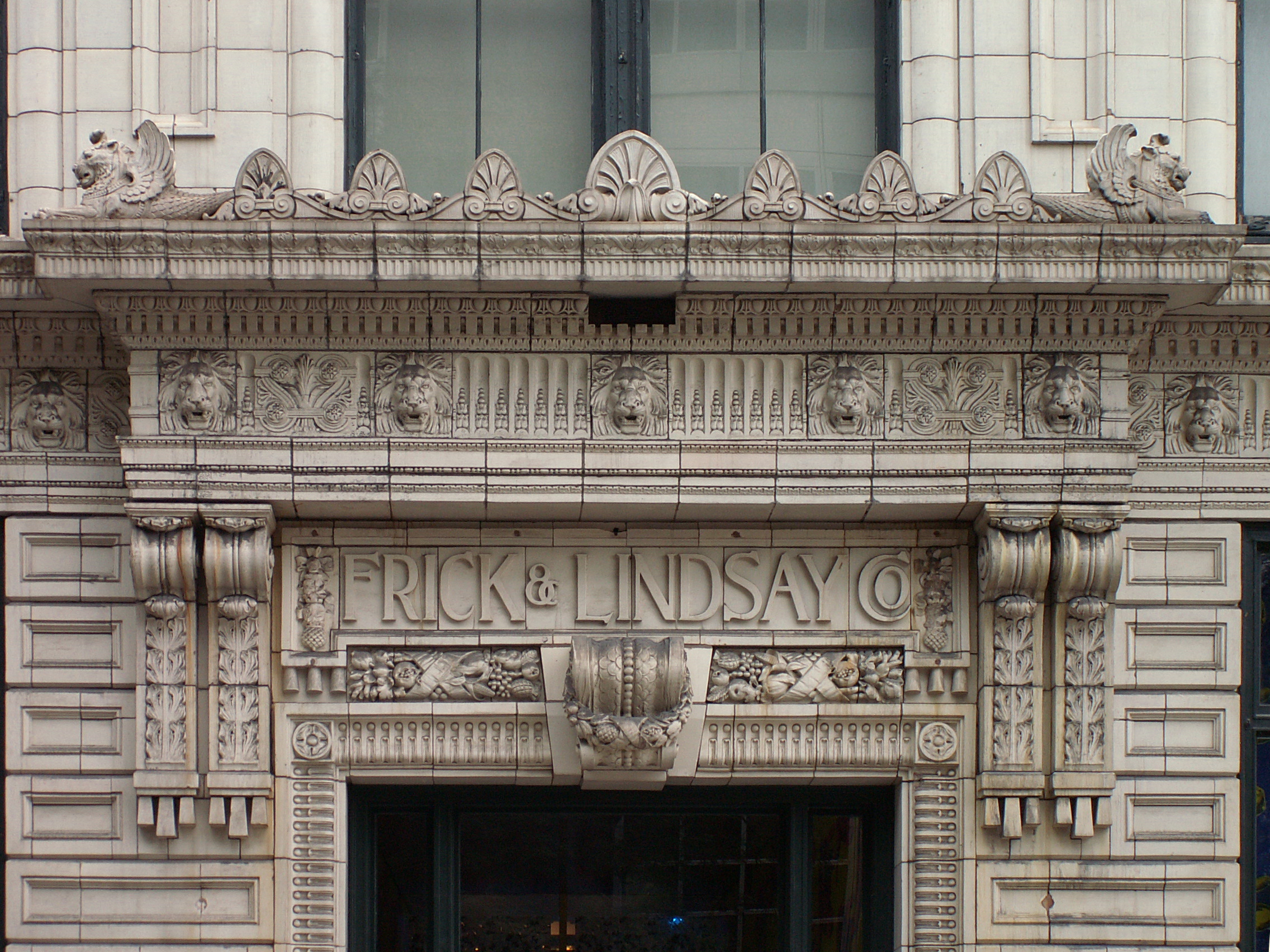
Pittsburghers who remember the days before we had the largest museum in the world dedicated to a single artist will remember this as the Volkwein’s building, which housed one of the largest music stores in North America. (Volkwein’s moved to the western suburbs, where the tradition of carrying more music than anyone else continues.) But it was built as a warehouse for the Frick & Lindsay Company, a purveyor of “industrial supplies.” If warehouses were commonly as splendid as this, there would be regularly scheduled tours of the warehouse district.
No one knows who designed the original building, but in a Post-Gazette article from 1993 (when the building was under restoration), Walter Kidney suggests the William G. Wilkins Co. (Update: We have confirmed that the William G. Wilkins company were the architects.1 Specifically, the building seems to have been designed by Joseph F. Kuntz, who worked for Wilkins.) The details were originally in terra cotta, but the cornice had been entirely removed and other details were damaged. During the restoration, the cornice and some of the other decorations were reconstructed in glass-reinforced concrete from photographs, records, and imagination.
The Frick of Frick & Lindsay was William Frick, a distant relative of the famous robber baron Henry Clay Frick.
Source: The Construction Record, January 13, 1912: “Architect William G. Wilkins Co., 200 Ninth street, have plans nearly completed for a six-story brick, terra cotta, steel and concrete warehouse to be constructed on Reliance street and Rose alley, Northside, for the Frick & Lindsay Company. Cost $90,000.” January 27, 1912: “Architects William G. Wilkins Company, 200 Ninth street, are taking bids on the foundations for a warehouse building, 103×110 feet, six stories and basement, to be built on Reliance and Sandusky streets, Northside, for the Frick & Lindsay Company, 109 Wood street. The building will be of brick and probably terra cotta, steel and reinforced concrete. Plans for the superstructure will be ready about February 1.” Rose Alley is now Silver Street; General Robinson Street was formerly Robinson Street; it must have been called “Reliance” very briefly when duplicate street names were eliminated in Pittsburgh and the new North Side, but the name does not show up in 1910 or 1923. ↩︎
Until April 4, the Frick is hosting an exhibit called “Impressionist to Modernist: Masterworks of Early Photography.” The “early” part is debatable—the exhibit begins in the 1880s and concludes in the 1930s, by which time photography was already a century old. Father Pitt would call these works “middle” photography. There is no room for debate on the quality of the exhibit itself: all the artistic possibilities of photography as a medium are on display. It was enough to inspire old Pa Pitt to try some work in black and white, so here are some ducks: