Once again, old Pa Pitt has set his shutter to the highest speed possible, just because no one else these days would take a picture of a fountain that way. If you would like a picture taken with a slow shutter speed that shows the fountain as an eruption of cotton candy, you can take your own picture.
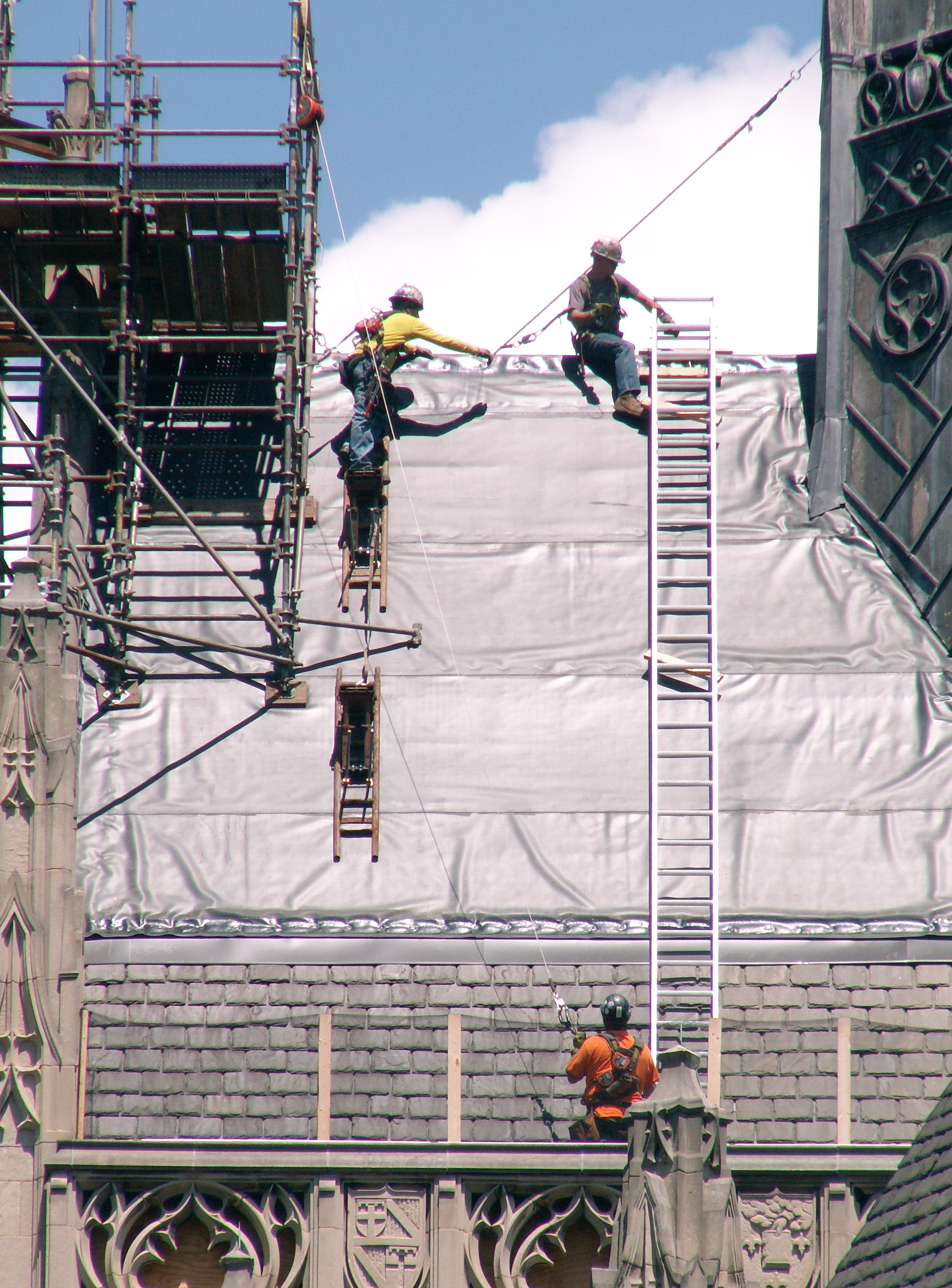
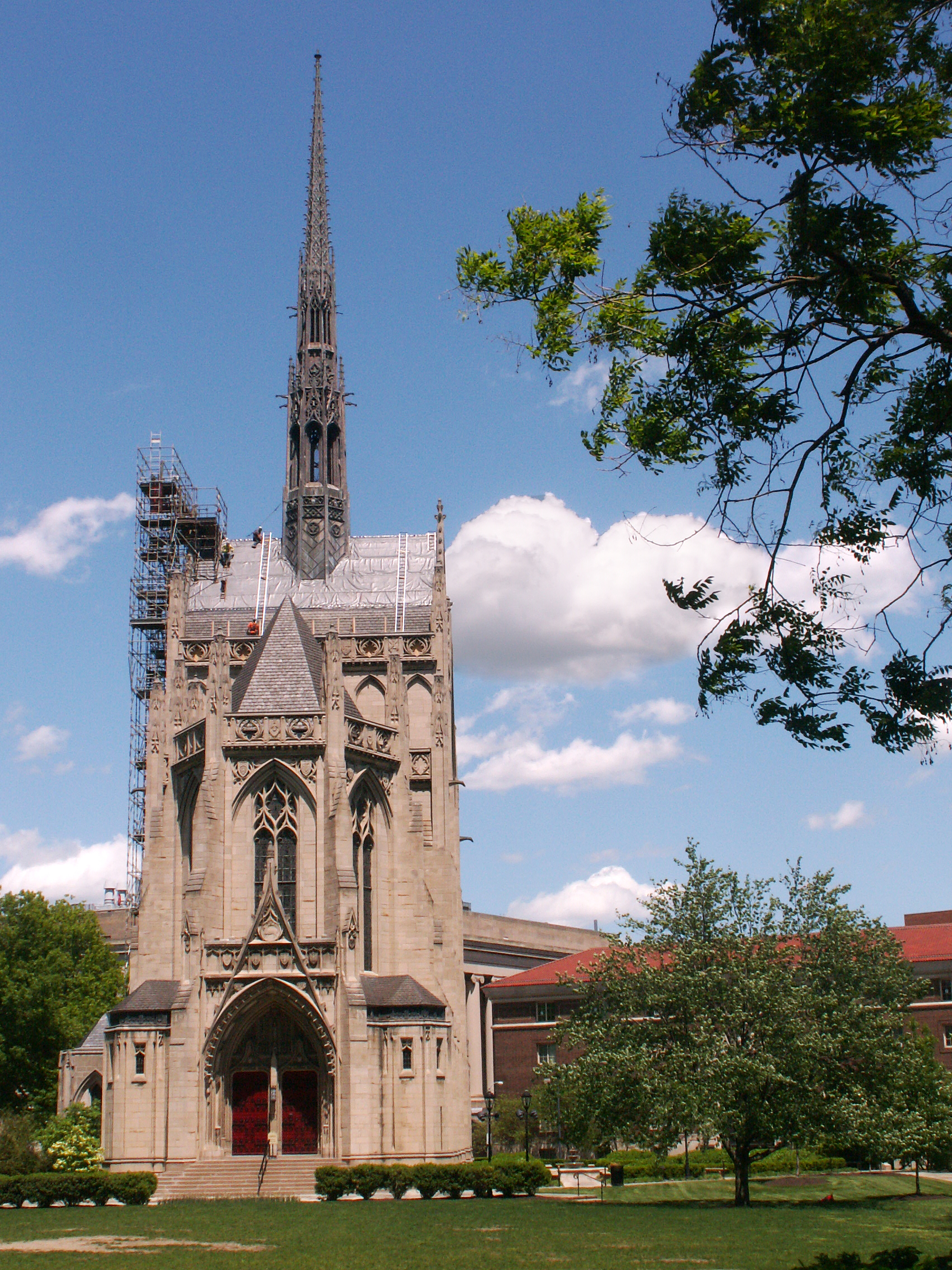
Heinz Chapel, built over five years from 1933 to 1938, is one of the complex of three great Charles Z. Klauder buildings at the center of the University of Pittsburgh, along with the Cathedral of Learning and the Stephen Foster Memorial. A while ago old Pa Pitt picked out some of the details with a long lens.
The decorations include the arms of various colleges and universities.
The elaborately carved reredos does its part to focus attention on the altar before it. The four wooden figures are Peter and John on the left, Paul and James the Greater on the right. The carving was done by the Irving & Casson—A. H. Davenport Co. of Boston
That is the claim made for the transept windows in Heinz Chapel, and old Pa Pitt accepts it until someone proves otherwise. They were created by the studio of Charles Z. Connick.
The windows trace Christian history down from Christ to American heroes like Abraham Lincoln, shown here freeing slaves with his Emancipation Proclamation.
Father Pitt’s very favorite detail in these windows is in the Lincoln pane. In fact it is one of his favorite details in any stained glass anywhere. You probably won’t even notice it as you look at the heroic figure of Lincoln, but here it is:
This scowling cartoon-villain plantation owner, furious that some Northern abolitionist scum has the temerity to interfere with his right to whip his own property, is the perfect background for Lincoln. One feels that the whole Civil War was worth the trouble just to make this man frown.
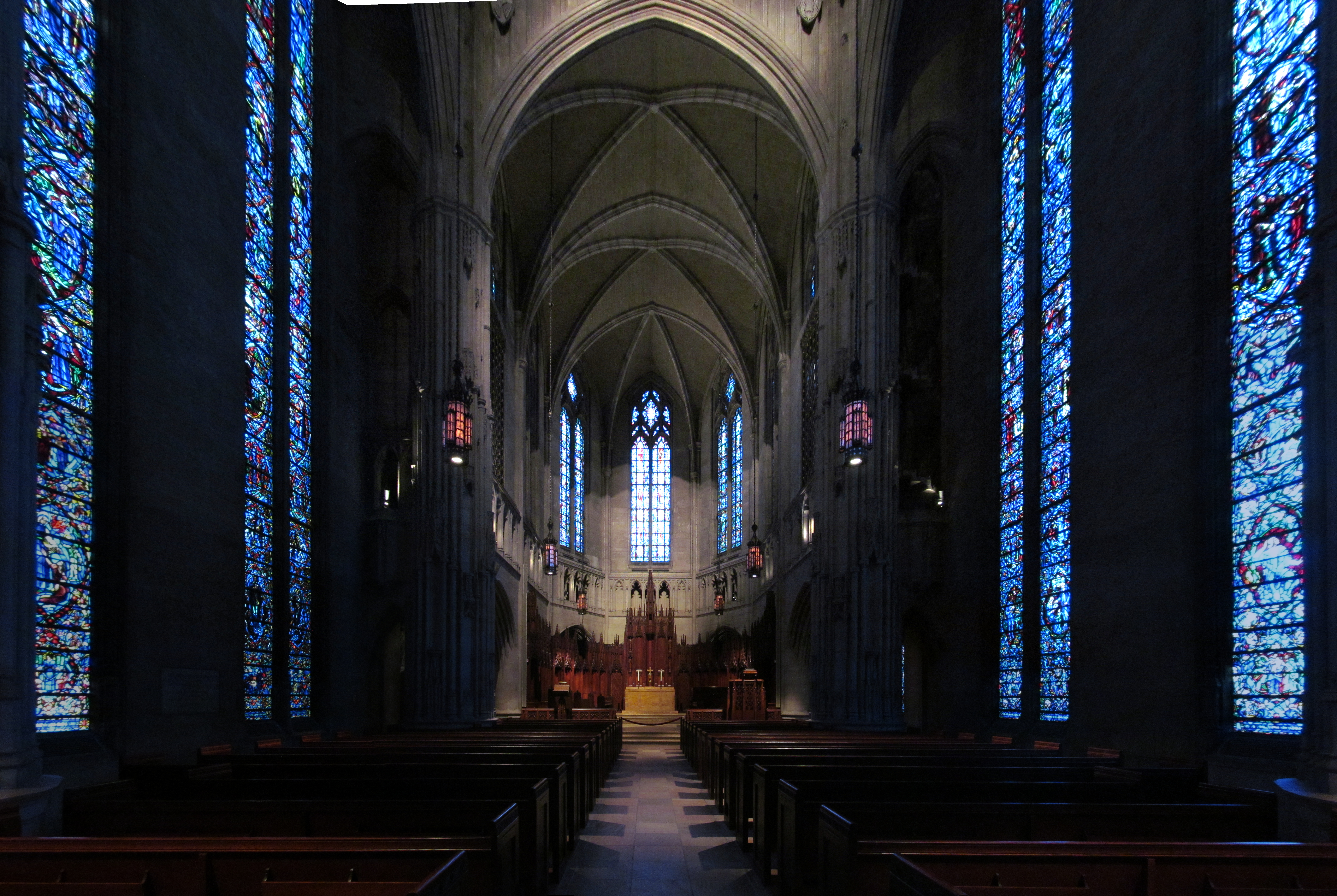
But let my due feet never fail To walk the studious cloister’s pale, And love the high embowed roof, With antique pillars massy proof, And storied windows richly dight, Casting a dim religious light. There let the pealing organ blow, To the full-voic’d quire below, In service high, and anthems clear, As may with sweetness, through mine ear, Dissolve me into ecstasies, And bring all Heav’n before mine eyes.
It is difficult to convey in a photograph the impression we get from entering a glorious Gothic church like Heinz Chapel. In general photographs are too light, either because the photographers laudably attempted to capture the many artistic details of the Gothic interior, or because they used automatic exposure and let their cameras do the thinking. Old Pa Pitt has tried very hard in these pictures to give some impression of the relative lighting as we enter the chapel from the bright light outside. Most of the light is dim, but a pool of light shines in the distance, drawing us toward the altar.
No matter how bright it may be outside, turning to leave the church is walking away from the light.
More pictures of Heinz Chapel, the last major work of Charles Z. Klauder, who designed the whole Gothic city of buildings at the heart of the Pitt campus.