
A striking modernist Gothic church whose clean lines are lovingly preserved by the congregation. Below, we add some bonus utility cables to prove that this is Pittsburgh.


This church has an unusually eclectic history. It began as the Second United Presbyterian Church. Father Pitt does not know the original architect, but in 1915 there was a devastating fire, and a large reconstruction project was supervised by the architect John Louis Beatty. In 1933 the Presbyterians moved out, and this became the East End Baptist Church. Now it is the Union Project (an arts venue) and the meeting-place of the Jonah’s Call Anglican congregation.
About two and a half years ago, old Pa Pitt published some pictures of this church, but something seemed different about it. It took a moment to realize: the decorative details on the tower have been cleaned. Back in 2021, all the stone had been cleaned except for the very top of the tower:

But now the tower is clean to its very tip:


This little pinnacle is still the color the whole church used to be.


This old Lutheran church1 is no longer a church, but the exterior has been preserved very well. It is an unusual style for a small church, much like a Queen Anne house with a corner tower. The woodwork in the front gable is especially ornate.


Most recently the Homewood Church of God, this building seems to be vacant right now; and although Homewood is prospering more than it has done in decades, it is not likely that this church can be saved. It was built in 1905, and renovated enough in 1961 to merit a new cornerstone.


Addendum: The architects were Struthers & Hannah. Source: American Architect and Building News, June 24, 1903, p. xv. “Architects Struthers & Hannah let the contract to Frank H. Fulmer for the Hamilton Avenue United Presbyterian Church to be erected at Idlewild St. and Homewood Ave. Cost $40,000.”

This church was built in 1907 as the Eleventh United Presbyterian Church. The architect was Thomas Hannah.1 Now it belongs to the Greater Allen African Methodist Episcopal congregation, which has kept it in beautifully original shape, right down to the uncleaned black stones, which Father Pitt loves.


Chauncey W. Hodgdon had been practicing architecture for well over four decades when he designed this little church. It was built in about 1924,1 and this is Hodgdon on a small budget. He minimized expensive indulgences like stone trim and large windows, while still giving the congregation the respectable Gothic church it dreamed of. Now the building belongs to New Hope Church, which is keeping it in very good shape.


If you were on a budget of only $20,000, which was fairly modest for a church, you could still get yourselves some distinguished architects to make the most of your money. Vrydaugh & Wolfe designed some huge millionaires’ mansions and a number of glorious stone churches, but they put their usual care into this little project as well, using inexpensive materials to the best effect.1 It was built as Emanuel Evangelical Church; later it became Emanuel United Methodist Church, and now it is New Destiny Christian Methodist Episcopal Church.


A small addition filled in one corner at some time when the church was a United Methodist congregation.
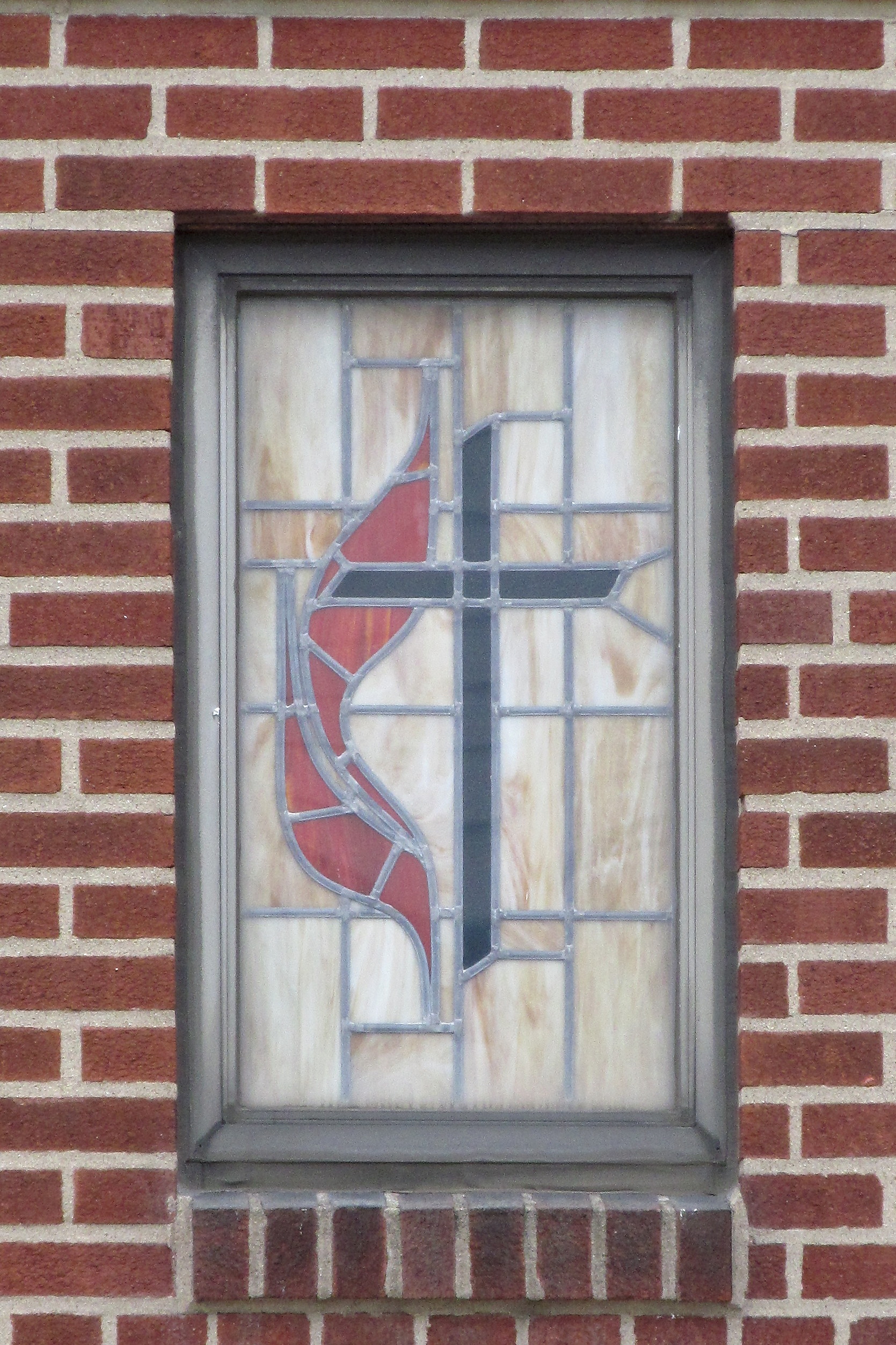
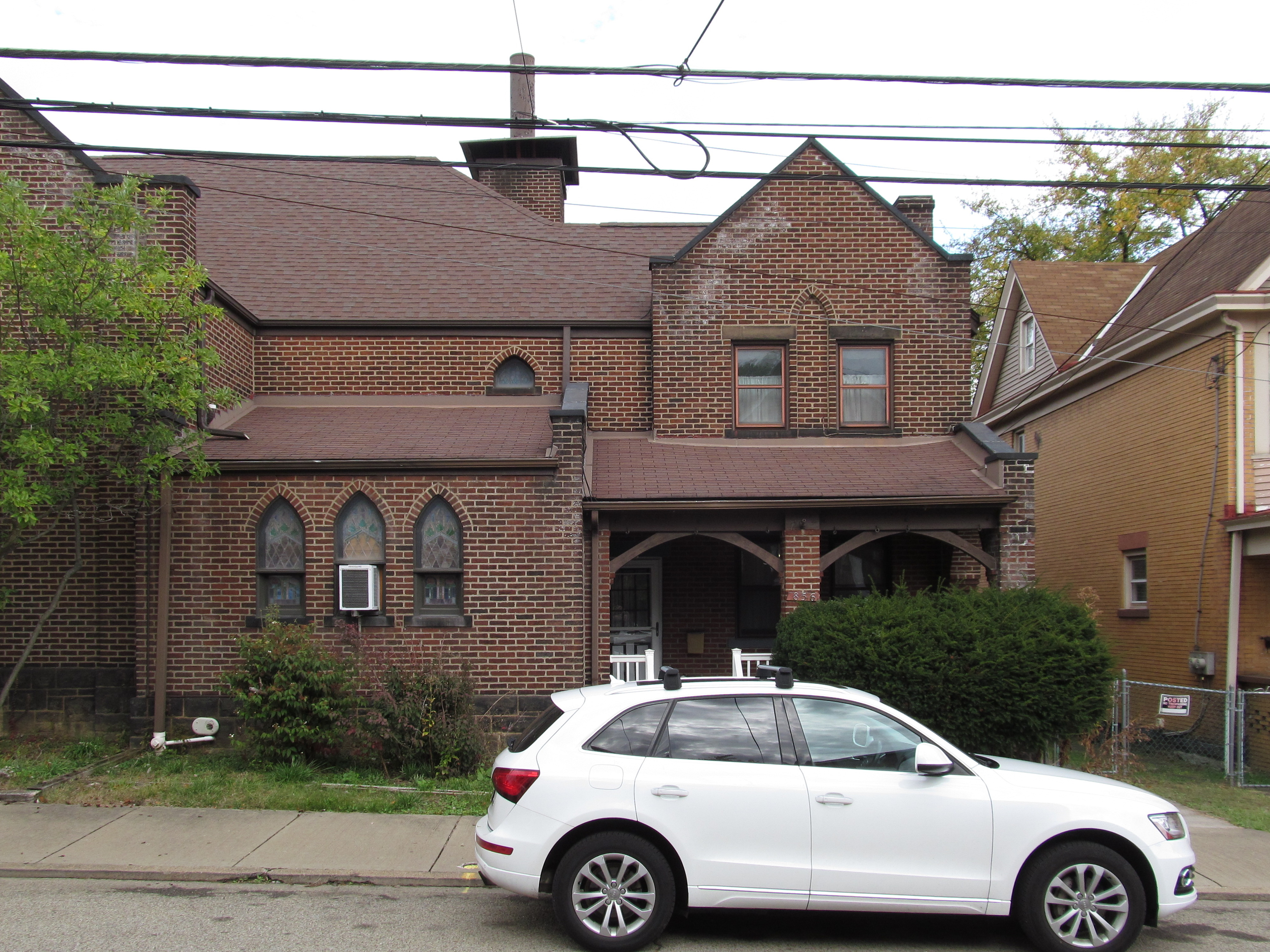
The attached parsonage is small but in perfect taste, neither too ostentatious nor unduly plain.

Here is a little Arts-and-Crafts Romanesque church that had money at the wrong time. The modern addition (probably 1960s or early 1970s) is not sympathetic to the church behind it. The elaborate modernist window in the front probably replaced an earlier decorative window; perhaps the church had a fire. If a member of the congregation has any information, old Pa Pitt would be grateful for it.


Built in 1911, this church served the Methodists until 1995. It is now home to the Lamb of God Church. The architects were Vrydaugh & Wolfe.

Here, by the way, is an example of how one develops an instinct for church architecture. Father Pitt did not know what congregation originally built this church, and how would one easily find out without some research? (One might have done the research, but it is always better to spare oneself trouble if one can.) The answer is by guess. “It looks Methodist,” Father Pitt thought to himself; and, with that clue, finding the information was easy.

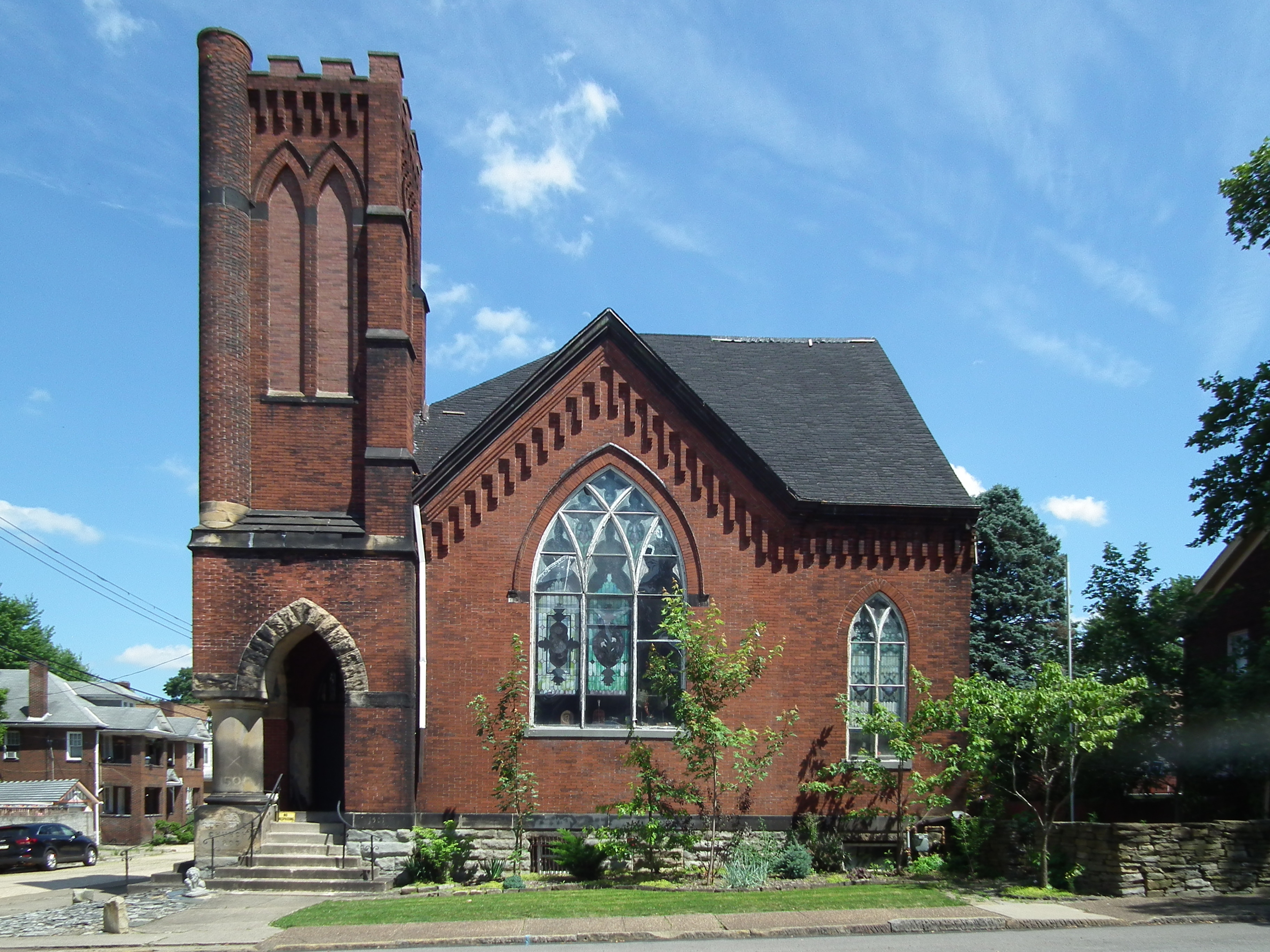
It is cheering to report that this impressive little Gothic church, once an abandoned hulk, has now been stabilized and put to use, apparently as a private home. Some of the stained glass was smashed while it was abandoned, but the remainder has been kept in place and covered with clear glass to seal up the holes. Since it sits in a prominent spot diagonally across from the Carnegie Free Library of McKeesport, it improves the neighborhood quite a bit to have this building occupied.

The cornerstone bears a date of 1903.
The outsized tower and shadowy inset corner porch are distinctive features.