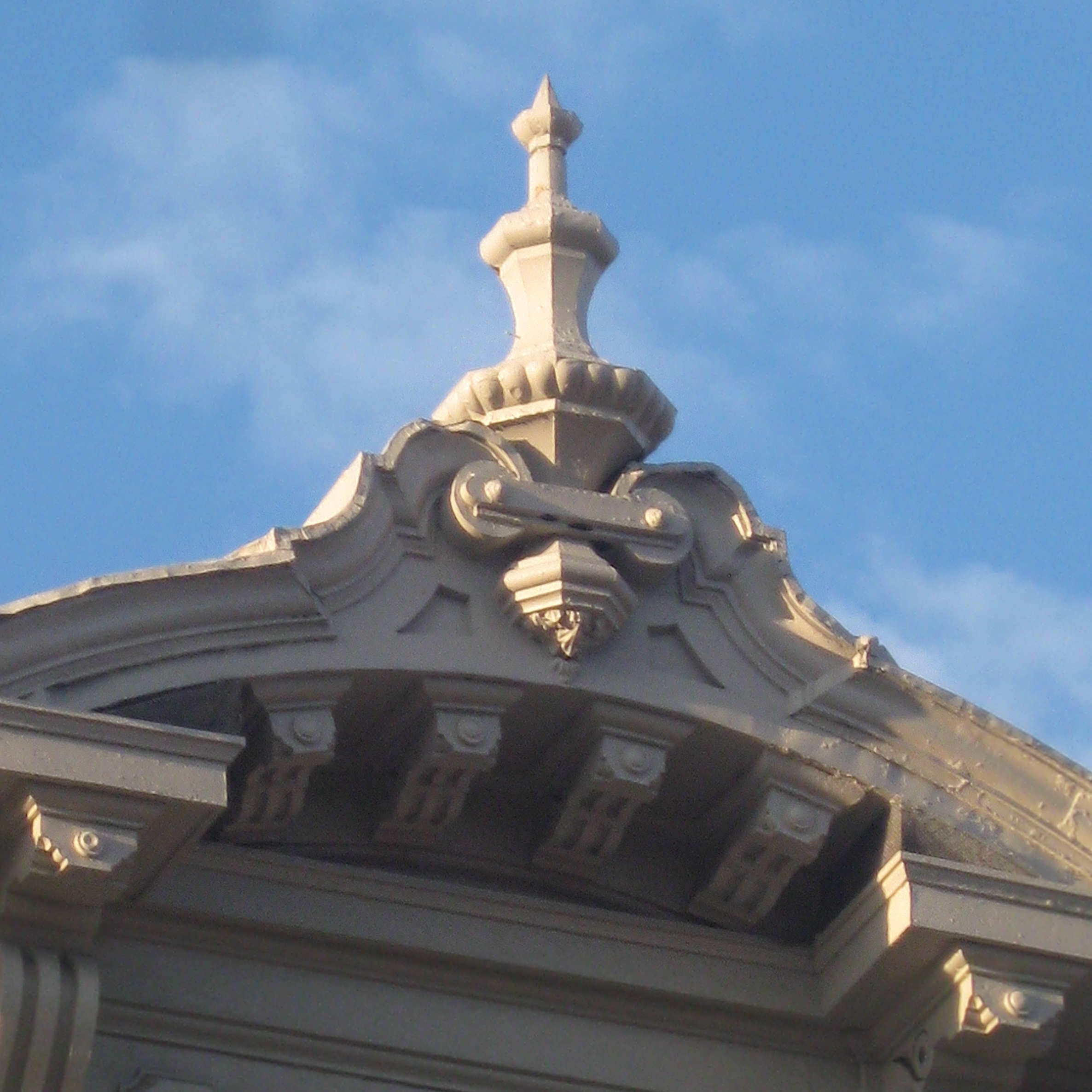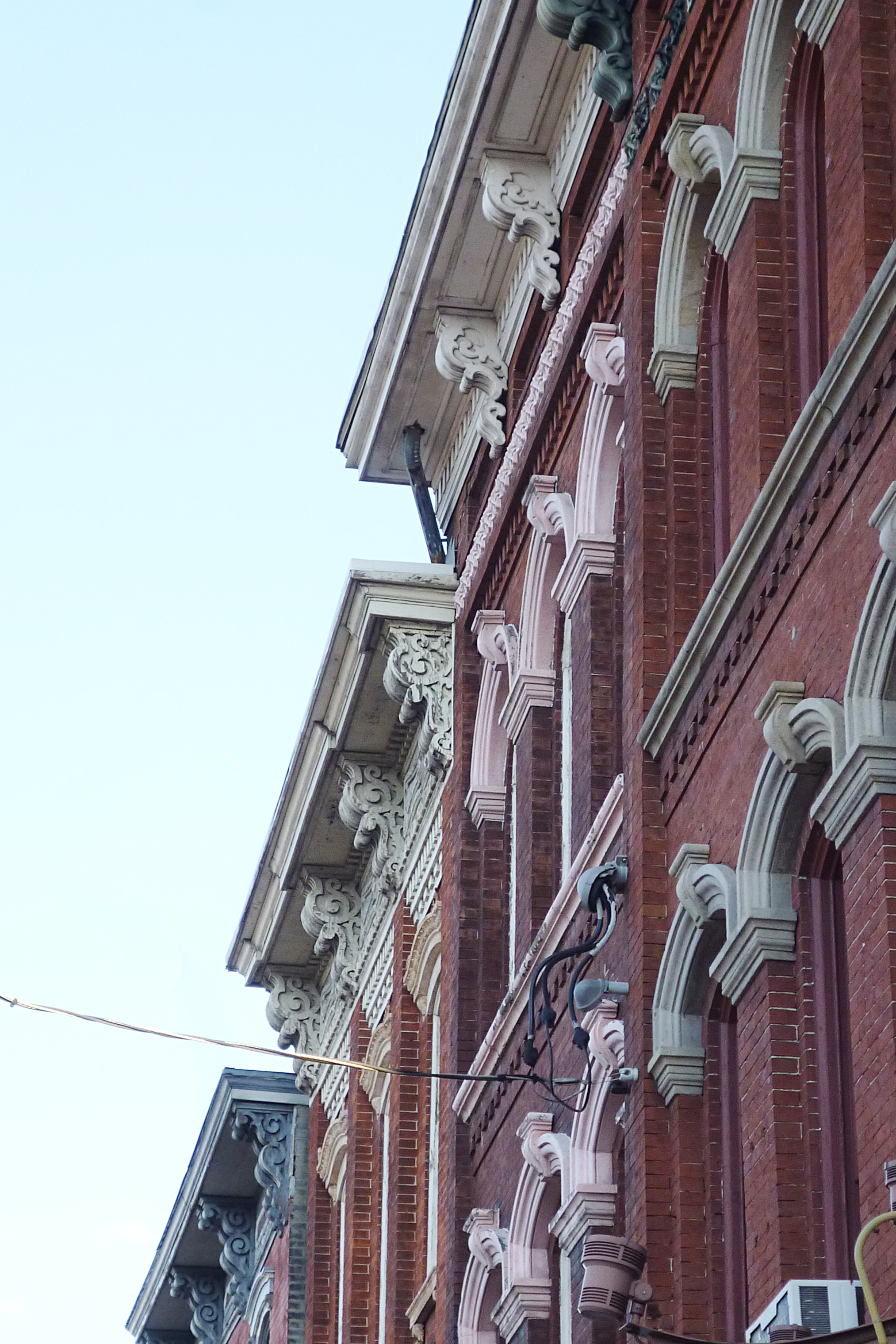

This doorway could use some fresh paint and a little wood repair, but it would certainly be worth preserving the Victorian carved ornaments.

A pair of storefronts in a commercial building between 15th and 16th Streets. The decorations are very well preserved—enlarge the picture to see how the ornaments in the carved cornice match the keystones in the flattened arches. Notice also the recessed entrances. Old Pa Pitt is still astonished that we have forgotten the reason for those. The reason is that, if the entrance were flush with the sidewalk, someone leaving the store could swing the door out into a passing pedestrian’s face. This happens more often than we realize in modern storefronts, or old ones that have been modernized, and apparently the reaction each time is “Who could have seen that coming?”—to which the answer is “Any Victorian architect.”
Note the distinctive beehive ornament in the middle of the building that serves as the date stone.


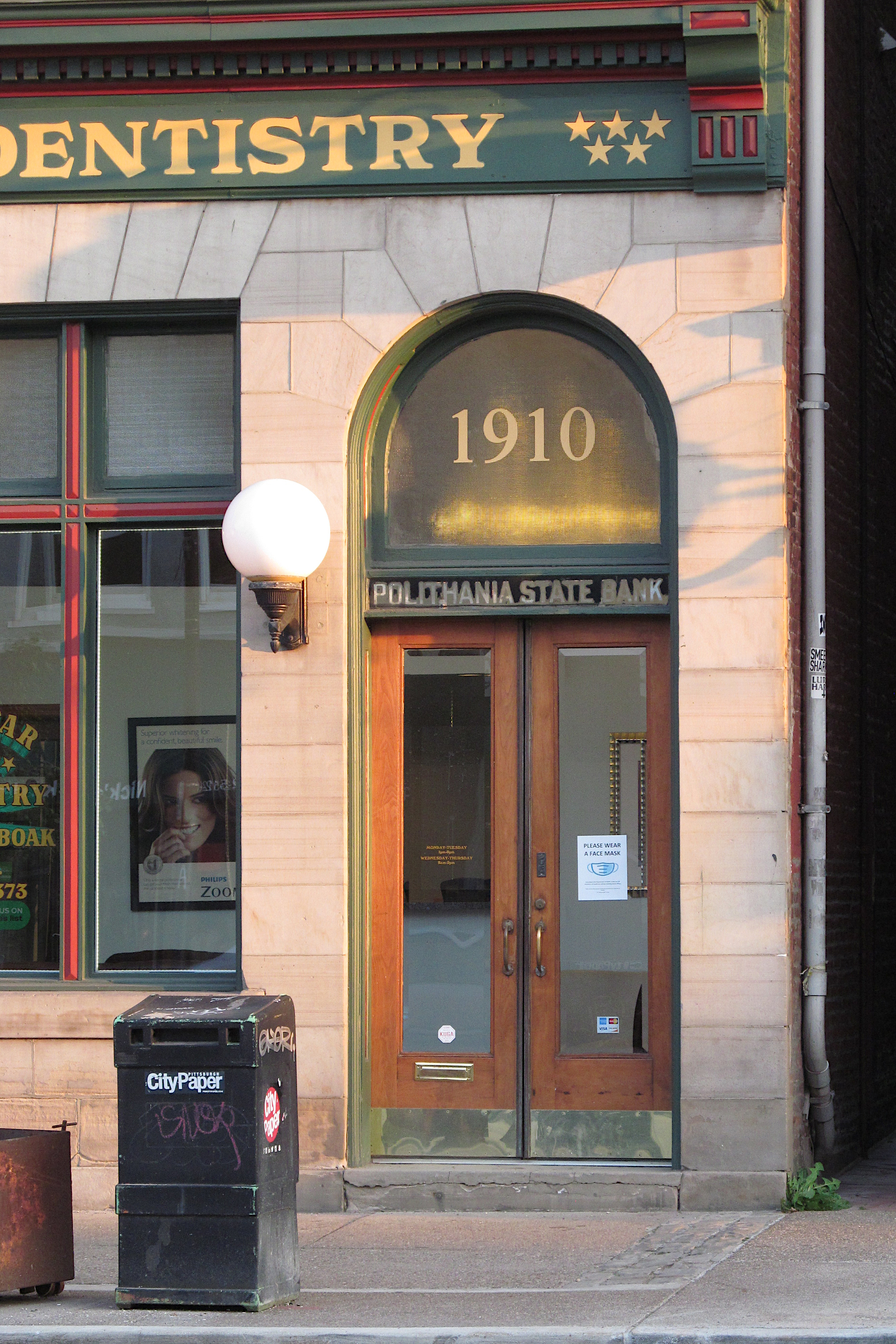
If you look up the word “Polithania” in your favorite search engine, you will find this building and nothing else. It was a bank and land office for Polish and Lithuanian immigrants (Poland and Lithuania have a long history of interconnection). Now it cleans teeth, but the original signs are still over the doors.
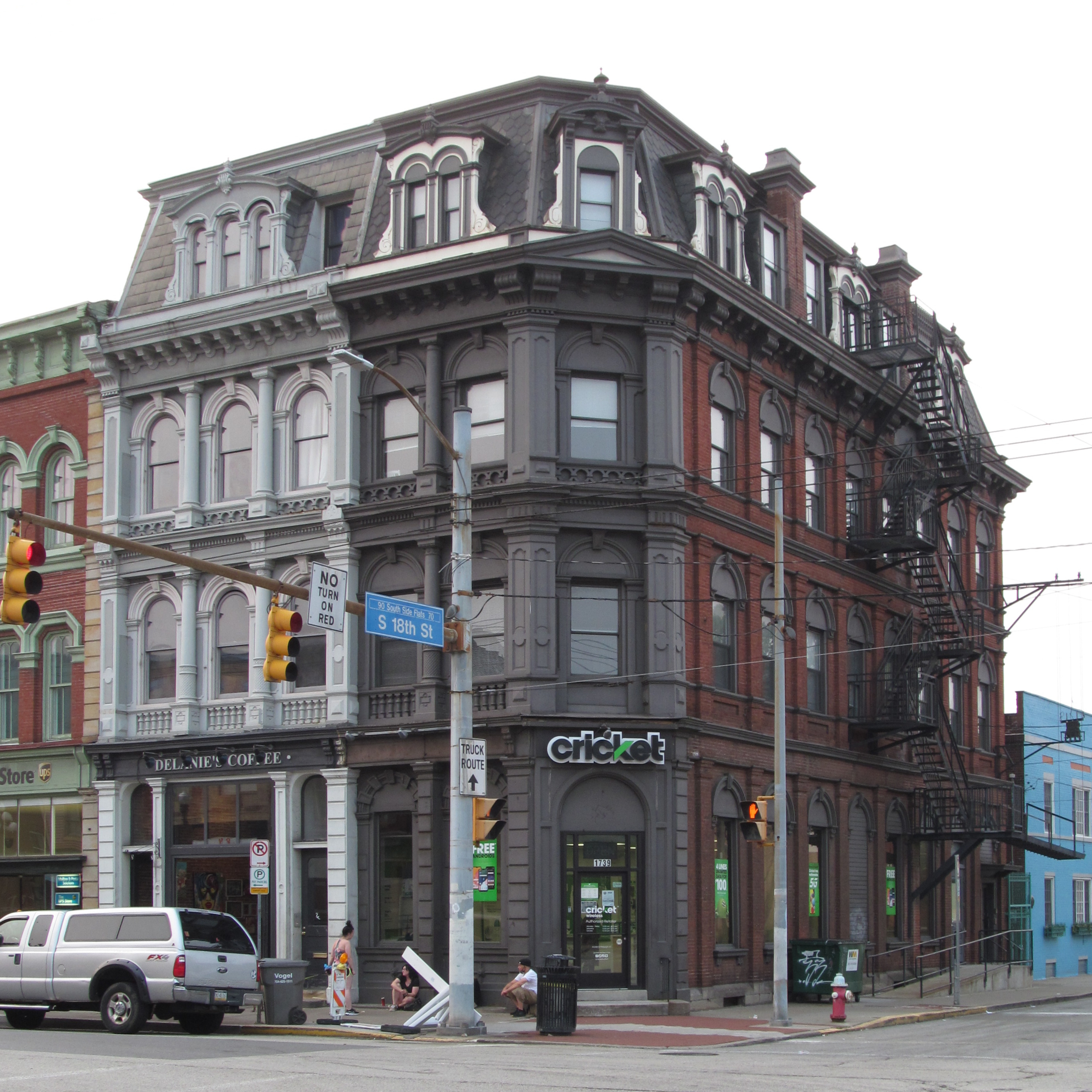
The Second Empire style is named after the Second French Empire of Napoleon III. Its most obvious characteristic is the mansard roof with dormers, which supposedly arose in France because, in buildings that were taxed by their interior space, attics were not taxed, and the space under the roof counted as an attic no matter how accommodating it was. The building here at the corner of Carson and 18th Streets is a splendid example of the Pittsburgh implementation of the style.