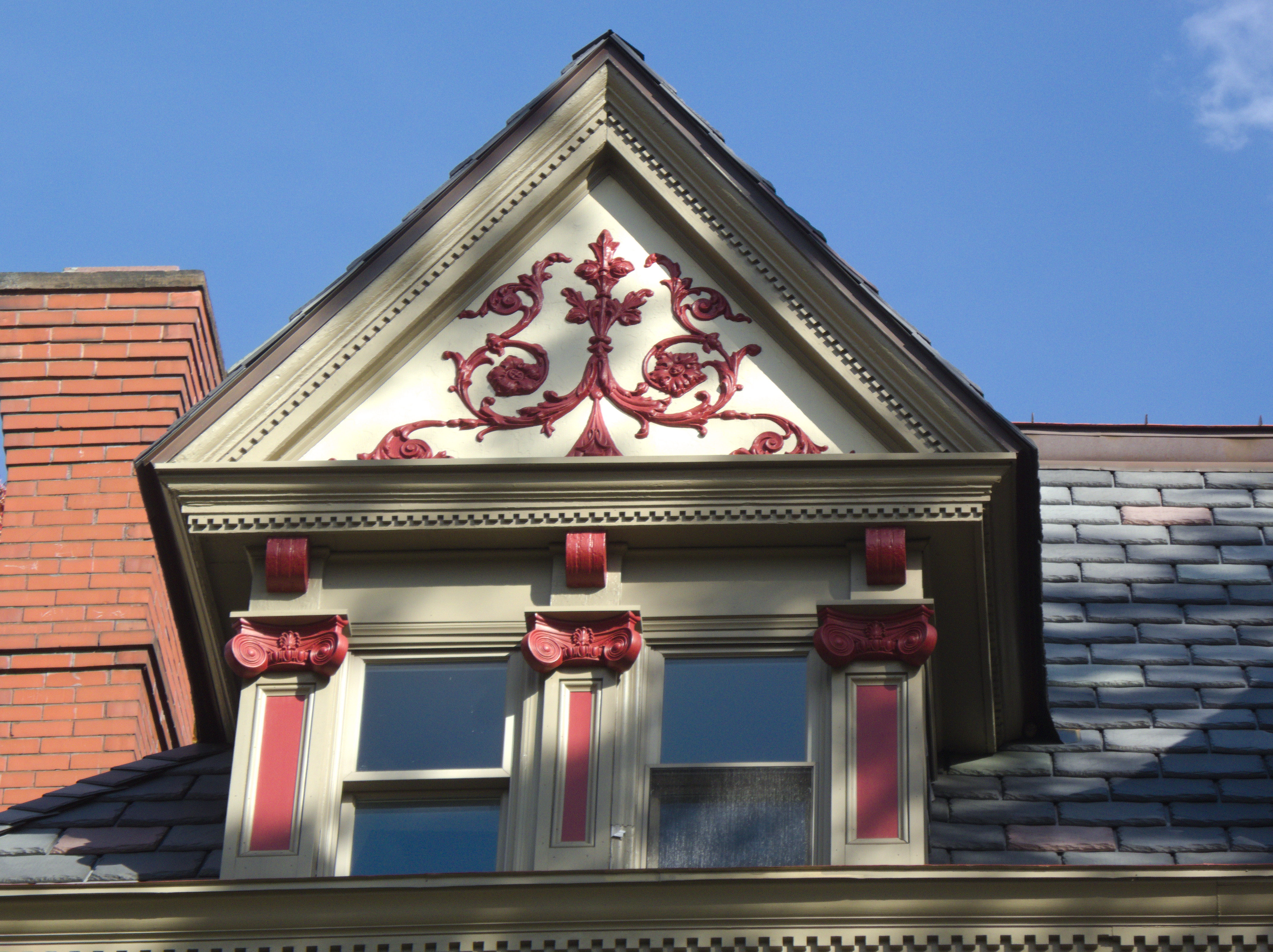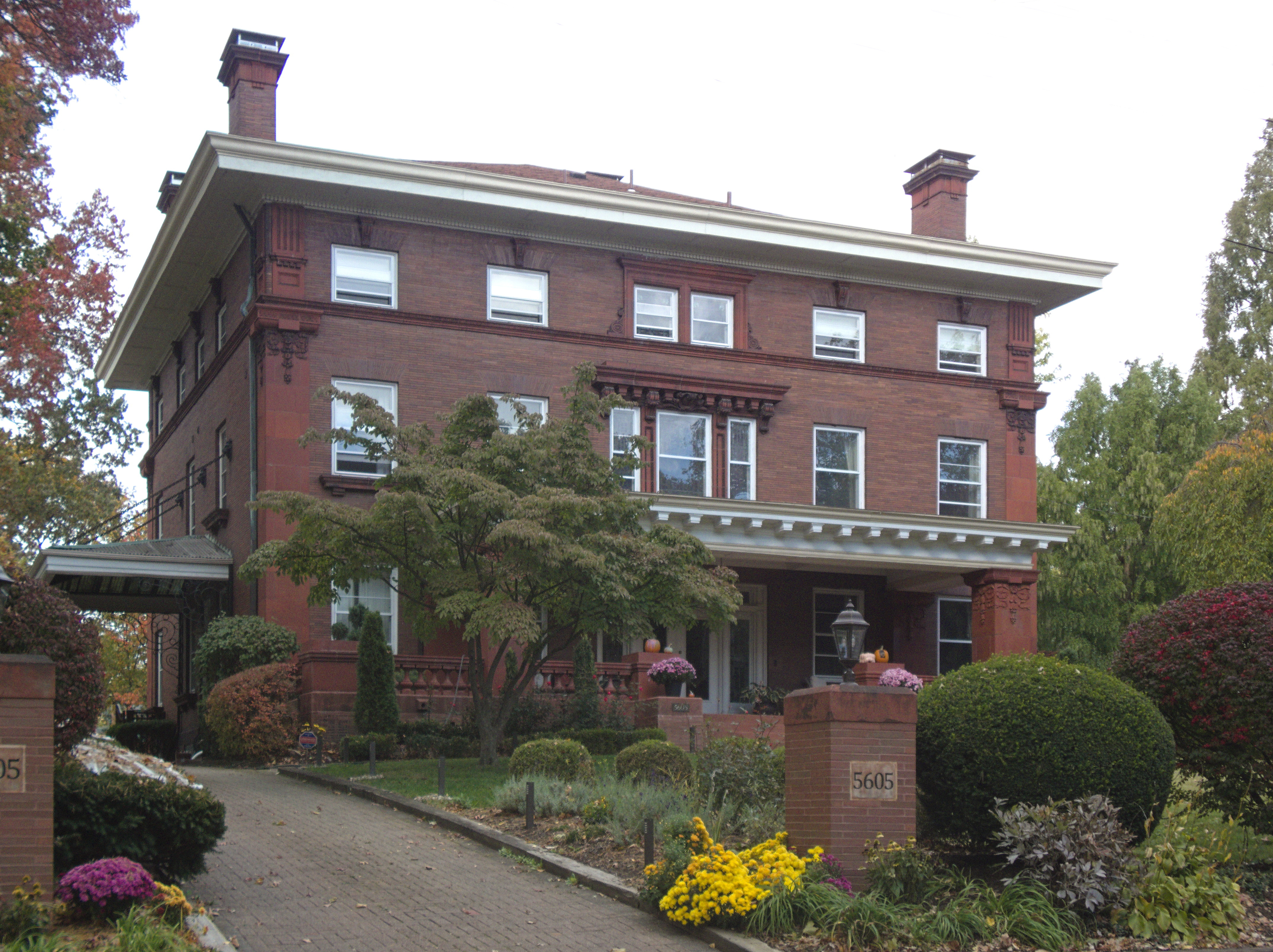

Something like a Pittsburgh foursquare stretched into a Renaissance palace, this house prefers simple dignity to ostentatious ornament.


This Art Deco block of small storefronts and offices on Murray Avenue is in a prosperous district, but the concrete details are decaying, and many have disappeared. The optometrist at the left end, the central entrance to the upstairs offices, and the tailor shop right of center preserve what was probably the decorative pattern of all the storefronts when this building was put up.
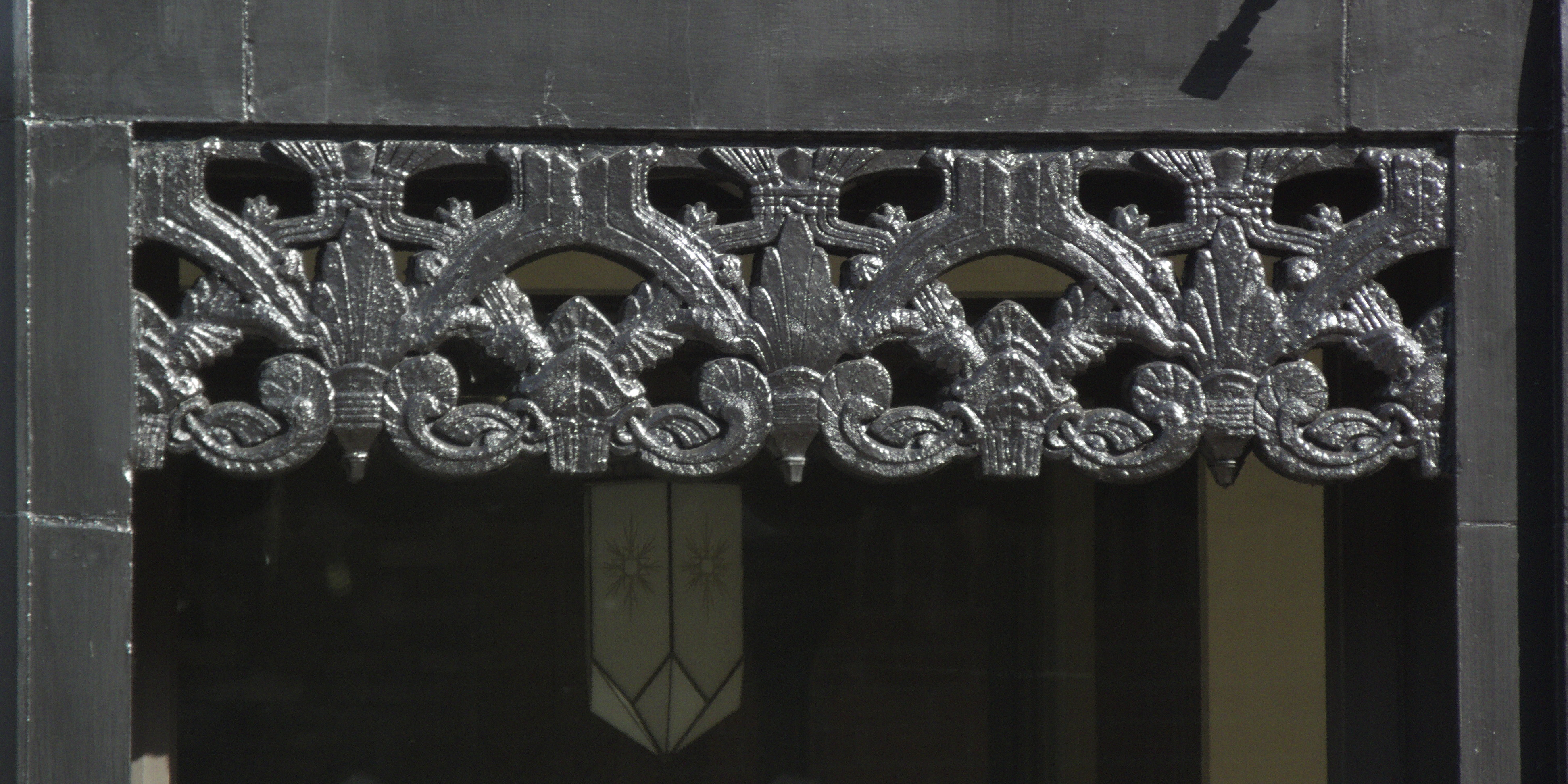

This is meant to be the central ornamental focus of the building, but it has been shedding bits and pieces.


From the “form follows function” era of the middle twentieth century comes this round bank. Round is probably the most impractical and anti-functional shape you could come up with for a bank, but modernism sacrificed function for a striking effect much more often than Victorian classicism did. This was built in 1965 for Mellon Bank.1 It now belongs to Citizens Bank, which bought Mellon’s retail branches when Mellon merged with Bank of New York and decided not to deal with grubby working-class people anymore.
Addendum: The architect was Pittsburgh-based Harry Lefkowitz.2

Warwick House was built in 1910 for Howard Heinz, son of the ketchup king H. J. Heinz. The architects were Vrydaugh and Wolfe, and the construction budget was $75,000. After the Heinzes it passed through the Hillmans, and now it belongs to the Catholic Diocese of Pittsburgh, from which it is rented by Opus Dei, the Catholic organization famed for its albino assassins. But the organization seldom sends the assassins out against anyone but renowned curators; the rest of us are quite safe. At an open house this summer, old Pa Pitt was graciously allowed to take a few pictures of the beautifully maintained Jacobean interior. Above, the window in the grand staircase.

This picture of the front is not the best; the light was from the wrong direction. It means we will have to return soon at a different time of day.
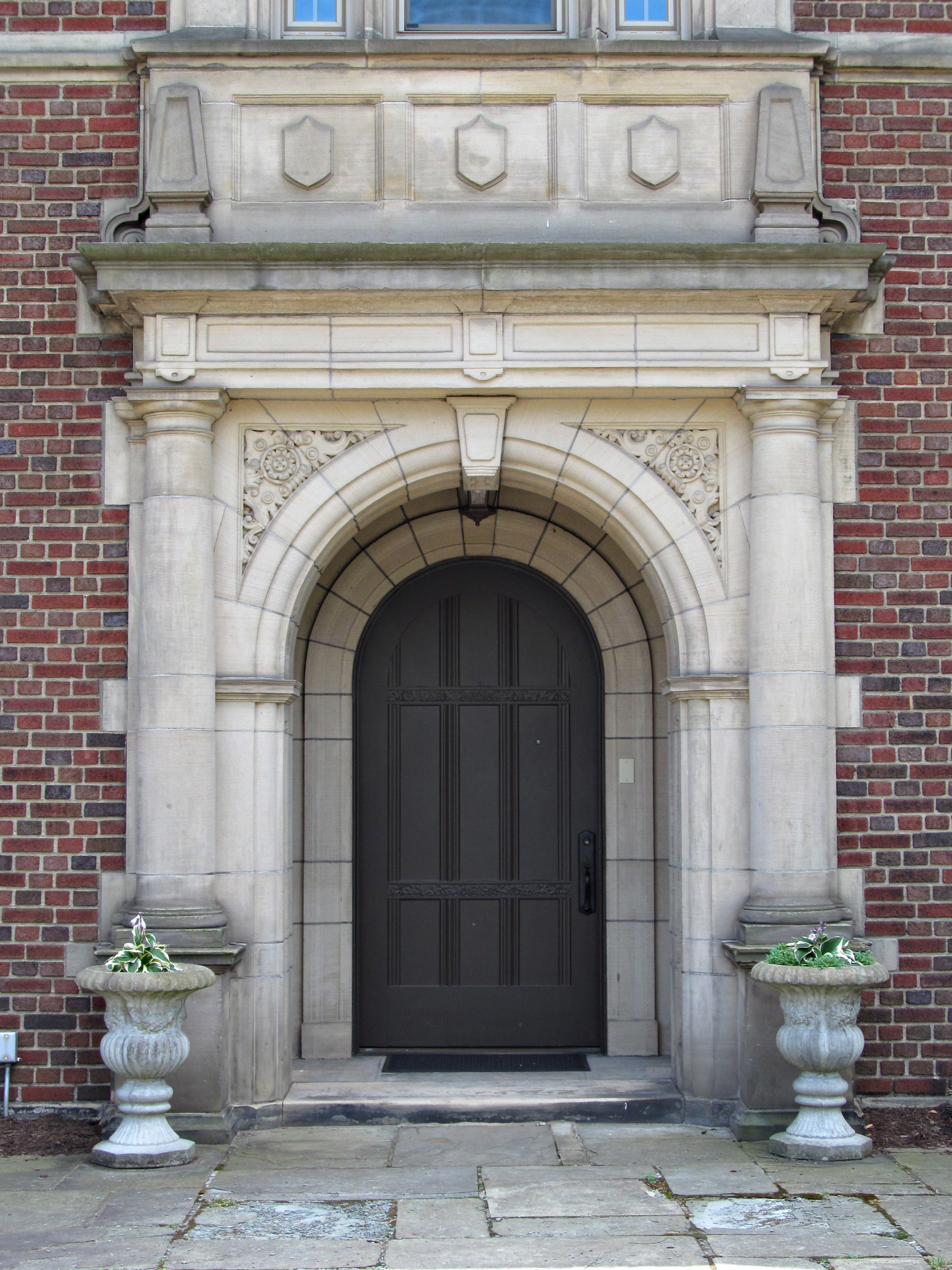
The front door.

The front hall; the door to the library is on the right, the grand staircase on the left.
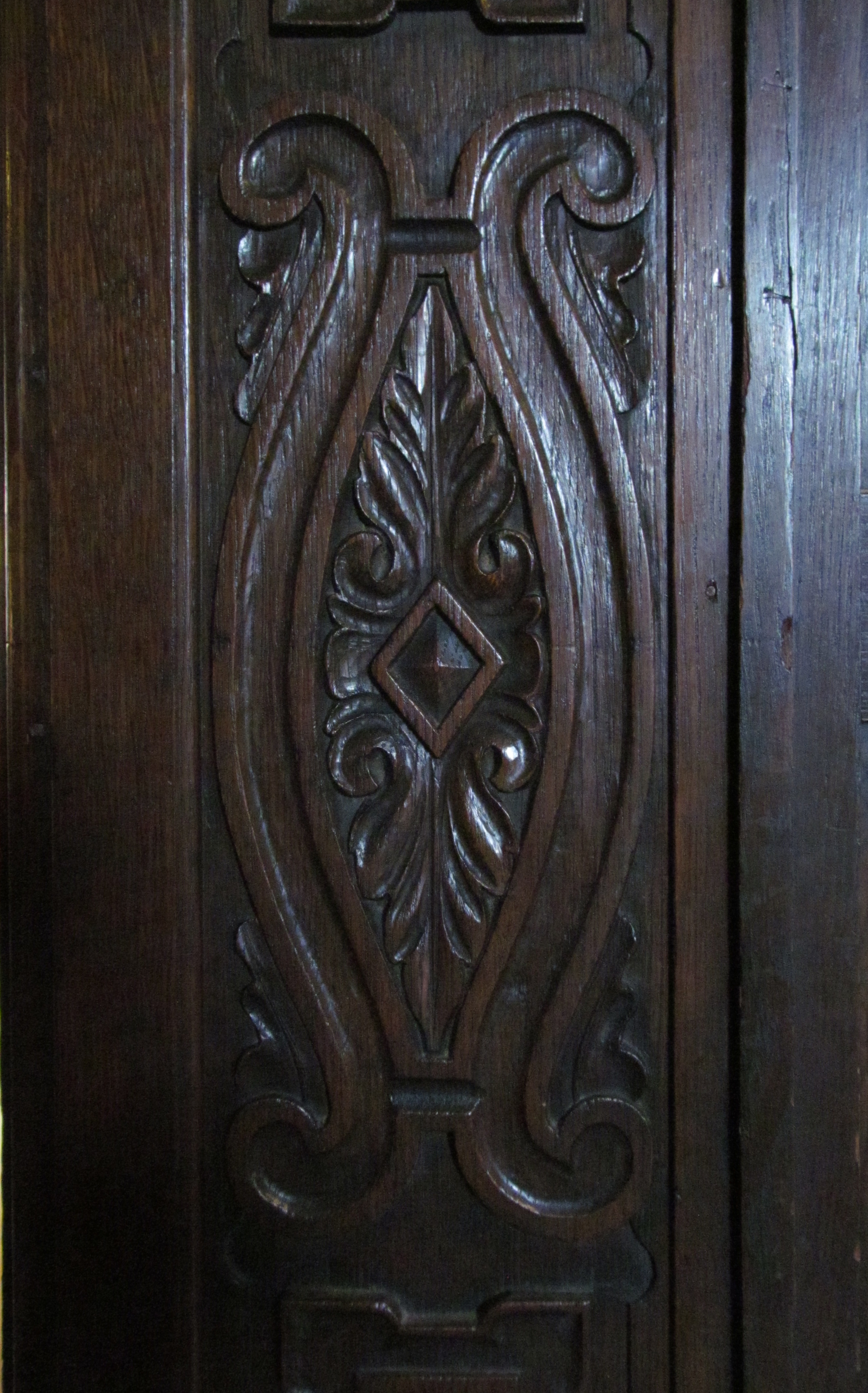
A little bit of the decorative woodwork in the front hall.

The grand staircase.
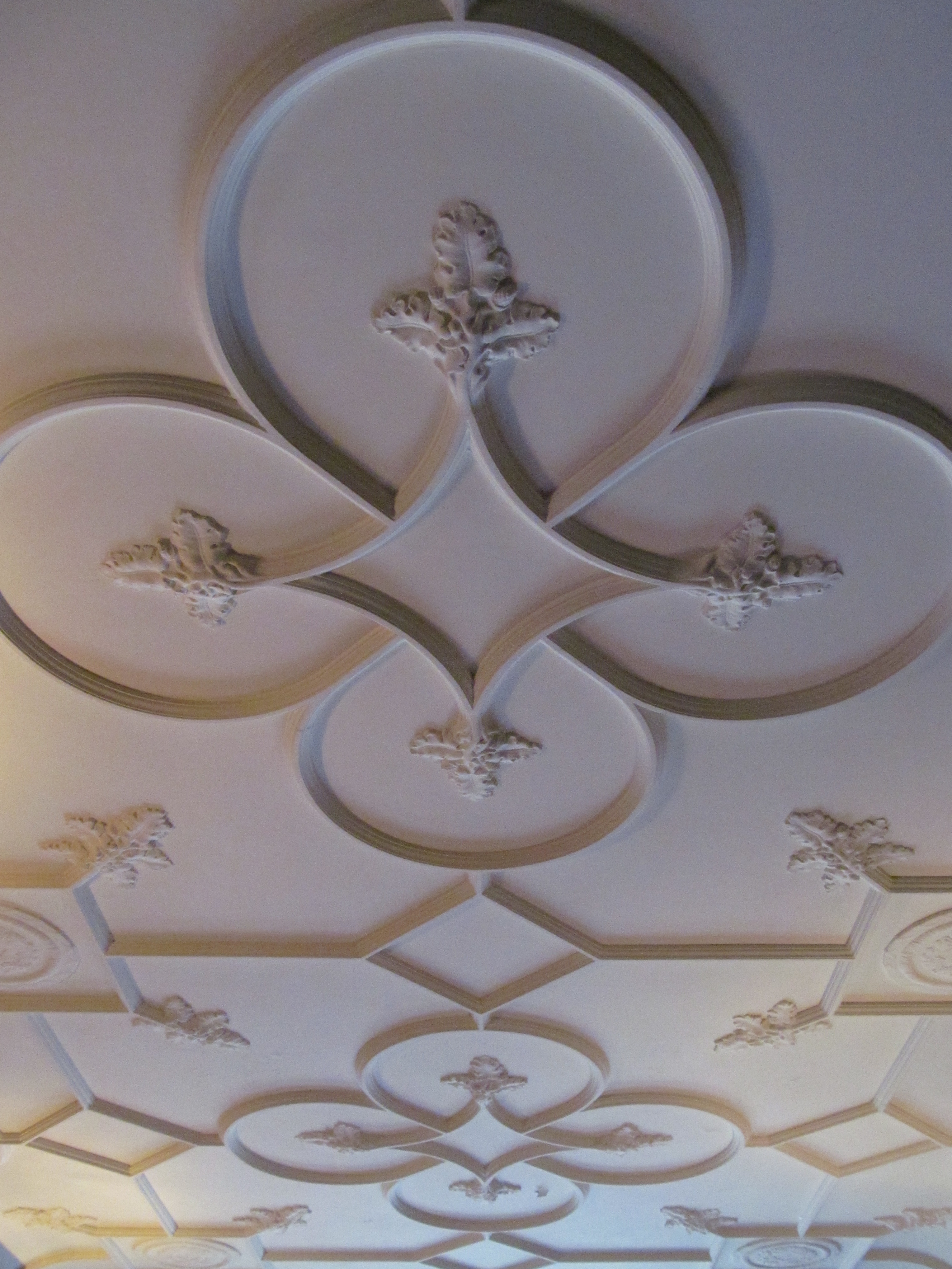
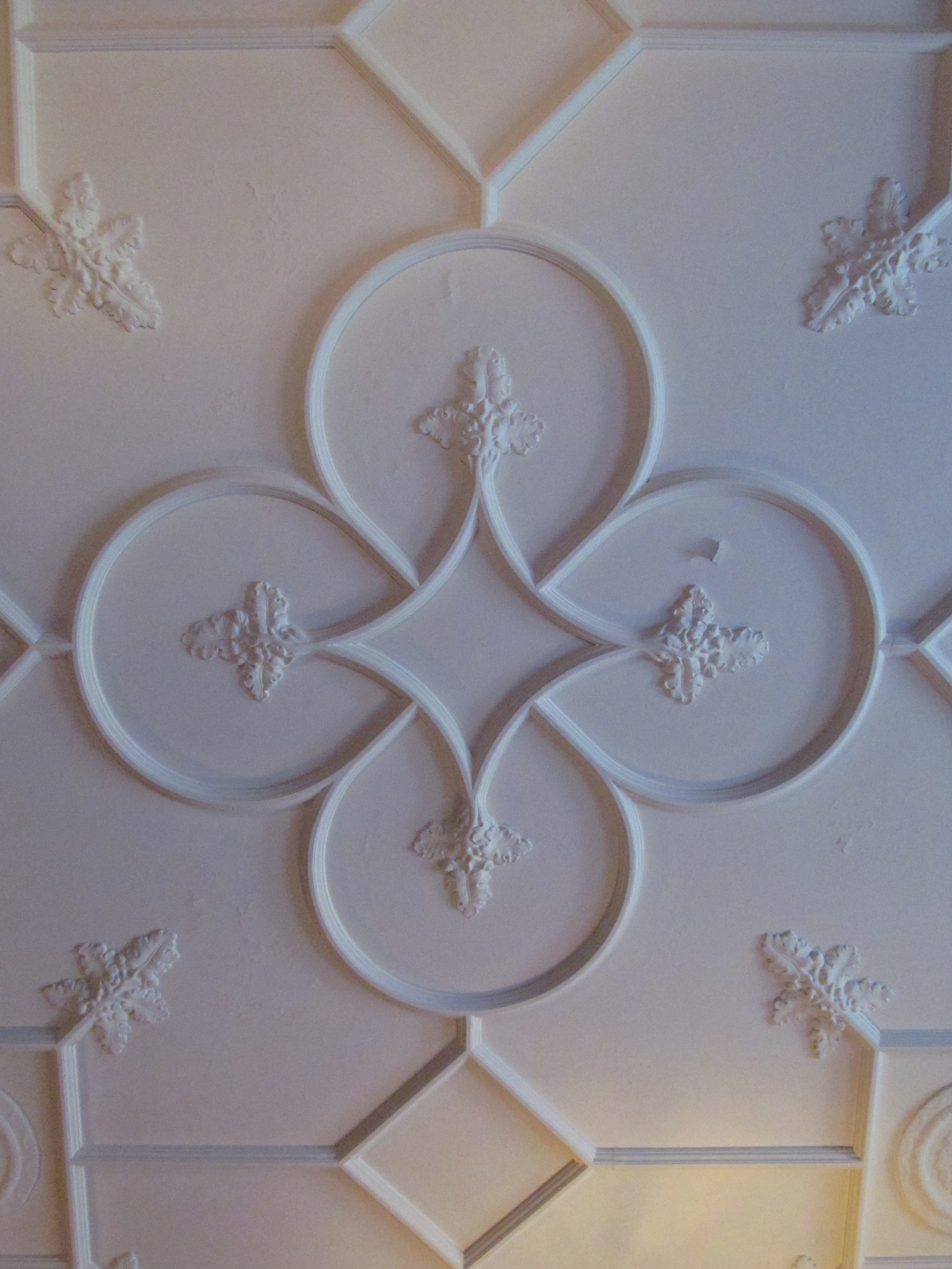
Modern American houses forget about the ceiling, as if people never looked up. Warwick House does not make that mistake. This is the decorated ceiling in a side hall.


The former ballroom was converted into a chapel by the late Henry Menzies, an ecclesiastical architect whose specialty was refurbishing modernist churches of the 1960s and 1970s to make them suitable for liturgical worship. He liked to use a baldacchino to give proper emphasis to the altar. (The ballroom was added to the house later, probably in 1929 according to the current residents.)

The ceiling of the ballroom.

Col. Hawkins was a state senator as well as a much-respected officer in the Spanish-American War, which America fought to free the Spanish colonies, and the ensuing Philippine insurrection, which America fought to keep her newly acquired colony. He died in 1899; this memorial was put up in 1904. Originally the base extended in an embracing curve, as we see in this old photograph from Historic Pittsburgh; the extensions were probably cut off when the approaches were built for the Panther Hollow Bridge.
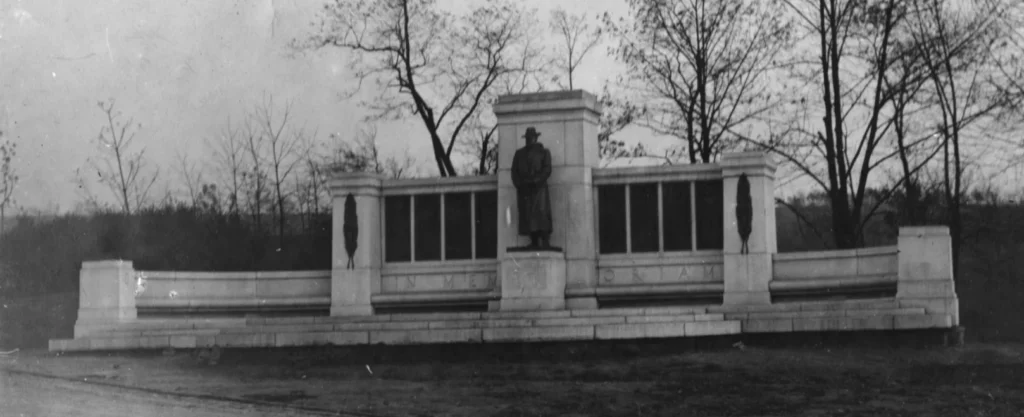


In an earlier version of this article, Father Pitt had negligently typed “1894” instead of “1904” as the date of this memorial. It is harder than one thinks to cross the gap between centuries.