The angle is not exaggerated in this photograph: Pittsburgh streetcars really do have to climb absurd grades like this. This is one of the small number of remaining streetcar safety islands in the city. Behind it is a tiny Central American restaurant with a reputation for excellent food; it inhabits a little building in the Spanish Mission style, which seems appropriate.
A commercial building like a thousand others in the city, but nicely restored, with attractively varied brickwork and a subtle polychrome scheme to pick out the details of the trim. Because old Pa Pitt happened to be out for a walk in the neighborhood, we get to see it from all angles.
Addendum: The building was put up in about 1911, and the architect was the extremely local William J. Gray,1 whose address was almost directly across the street. When this building was finished, however, Gray moved his office into it.
In most cities you can ask how many floors a building is and get a reasonable answer. In Pittsburgh, that’s a complicated question.
A friend from Beechview was complaining that no one believes streetcars still run in Pittsburgh. Pittsburghers from between the rivers know there’s a subway, but they seem entirely unaware that the subway fans out into various lines that meander through the city neighborhoods south of the Monongahela and far out into the South Hills. The next time you run into a doubter, you may offer this photographic proof that streetcars (as people in Beechview still call them) still run on the street in Pittsburgh. This is a Red Line car stopping at the outbound Hampshire stop in Beechview, and then continuing around the bend past the Beechview Community Center.
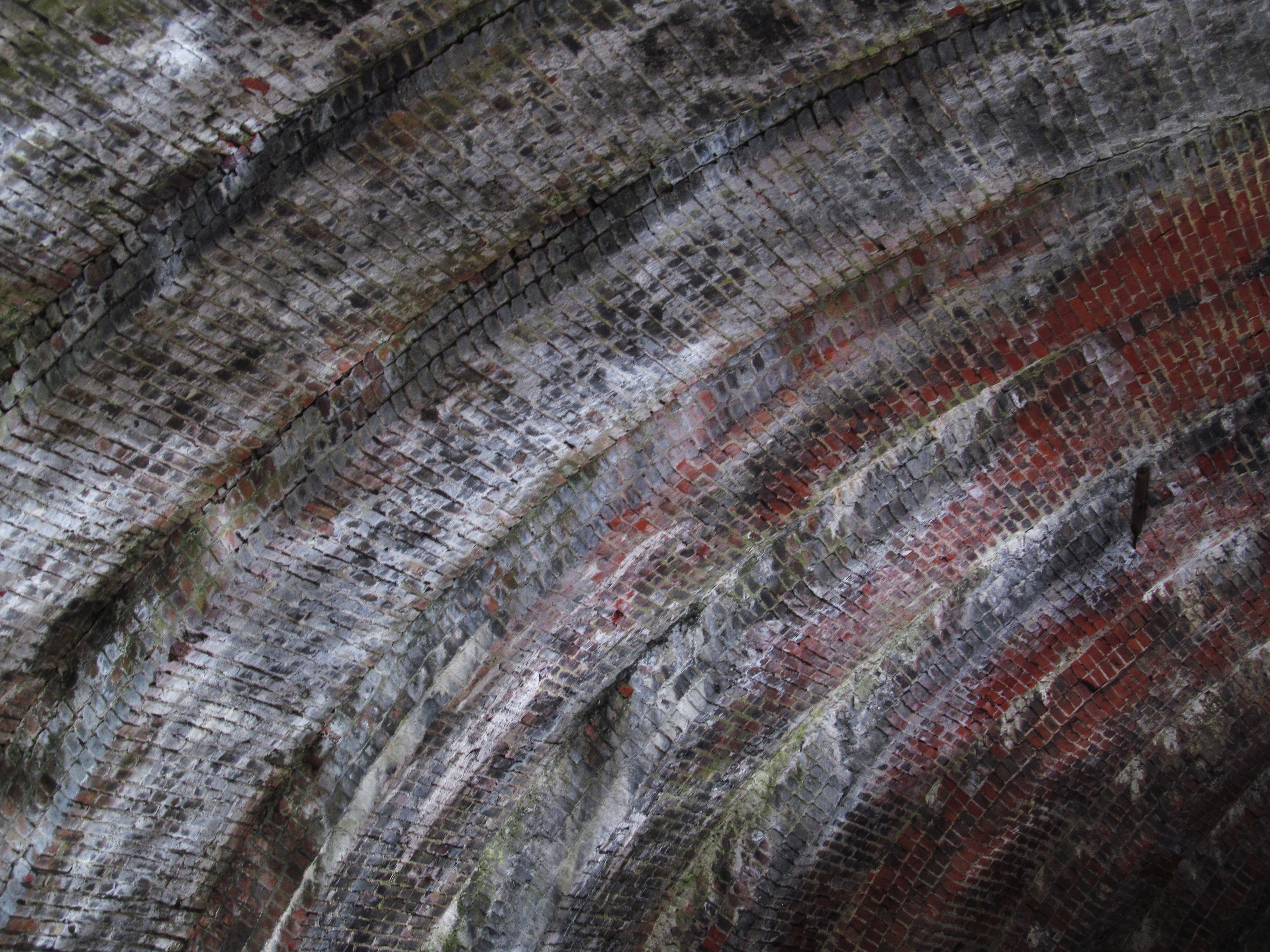
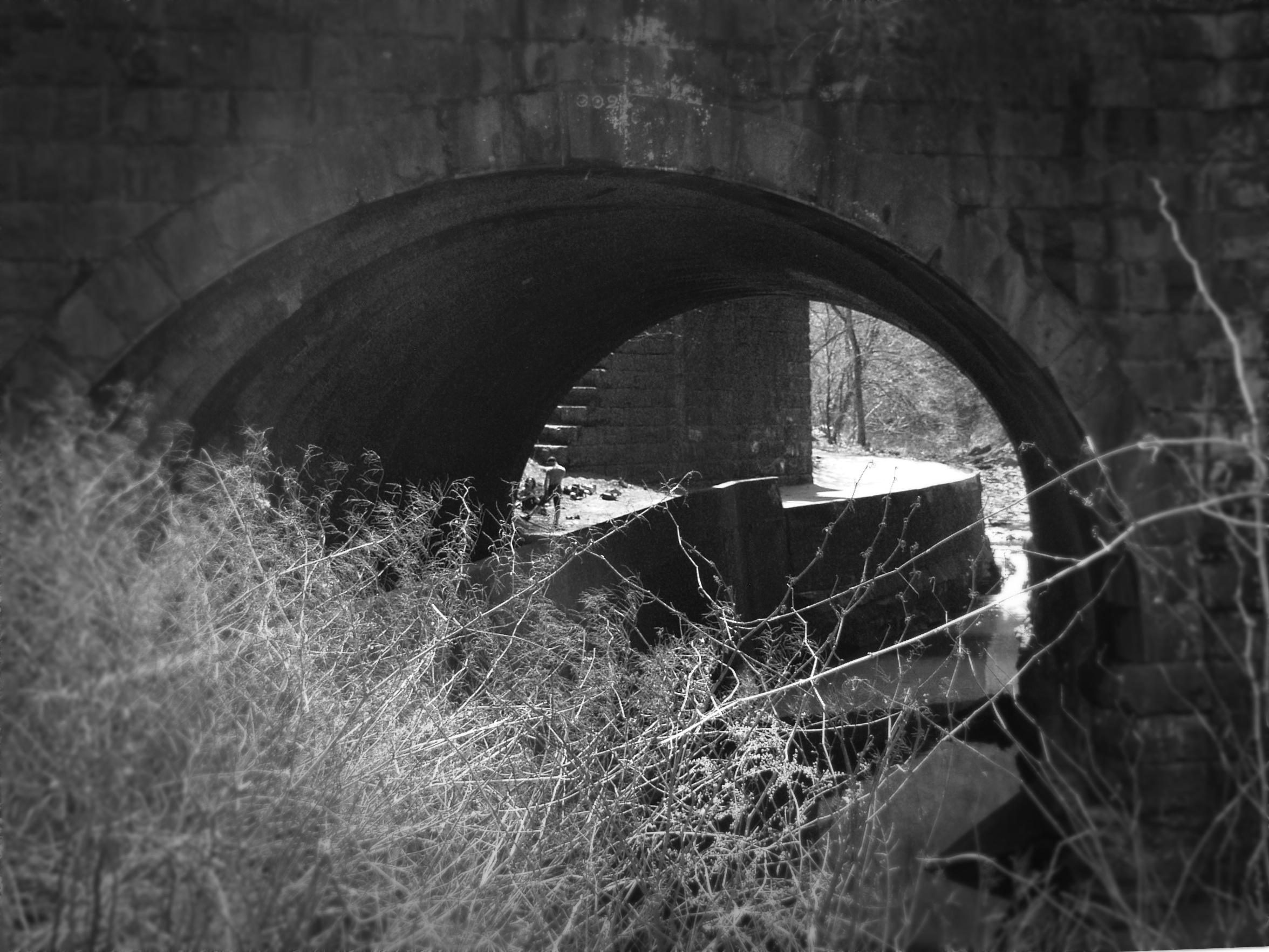
The Wabash Railroad built this picturesque structure to carry its line over Saw Mill Run and the little lane that led back into the village of Seldom Seen.
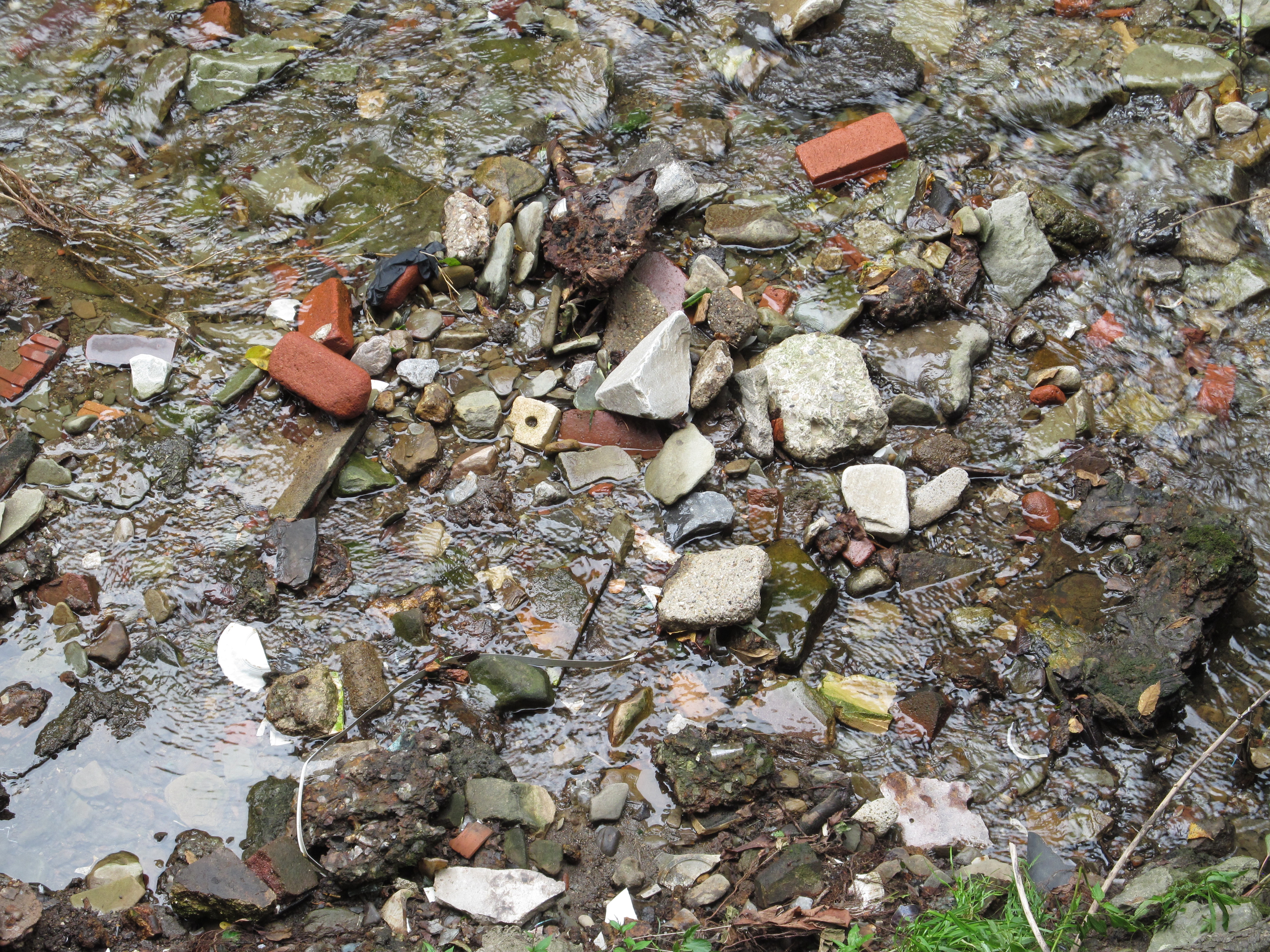
Like many streams in the city, Saw Mill Run is full of debris. But it is very interesting debris. If you enlarge the picture, you can see bricks of multiple types, bits of glass, broken plates, and other evidence of the long-vanished village of Shalerville. For the urban archaeologist, Seldom Seen is a rich treasury.
This was an attempt to make a modern digital photo look like a nineteenth-century art photograph. Note the rock climbers preparing to climb the stone wall.
One never knows what may turn up at an old homesite. The Seldom Seen Greenway on the border of Beechview and Mount Washington is forest now, with Saw Mill Run gushing merrily through it. But Seldom Seen was a little village of its own once, and the old homesites are full of broken plates and bottles and other items of intense archaeological interest. Here is a plate from the Hotel Henry, once a grand hotel on Fifth Avenue, but torn down in the 1950s to make way for a modernist skyscraper. Was it bought or stolen from the hotel? We’ll never know.
Hypnotic patterns of sunlight reflected from the pool in Saw Mill Run on the bricks of the Seldom Seen Arch. Go to the Wikimedia Commons hosting page to see the video in glorious HD-ish.
A passenger waits for a Red Line car on the Belasco safety island on Broadway, the main street of the Beechview neighborhood. His wait will not be long.
This 4200-series car rolled up seconds after the earlier picture was taken.
Pittsburgh used to be full of safety islands like these; wherever there was a broad street, the streetcars usually ran in the middle of it, avoiding the chaos of parking and double-parking along the edges. Broadway is the only street that has kept its safety islands, since elsewhere the streetcars mostly have their own right-of-way. (Warrington Avenue, used by the Brown Line when it is active, is narrow enough that passengers board from the curb.) There are three stops along the street trackage in Beechview; two others were eliminated a few years ago. Now Belasco is scheduled to be replaced with a platform-level station, which will be a boon to handicapped riders in Beechview. That will leave only the safety islands at Shiras and the single safety island at Hampshire (outbound passengers there board from the curb).
Above we can see the inbound safety island on the left. Behind the outbound stop, incidentally, is a typical Pittsburgh cliff house: a house whose street entrance is on the top floor, with the rest of the house clinging to a steep slope down from the street.