

The oldest building in the city, and the only Colonial-era building as well,1 the Fort Pitt Blockhouse survived by becoming part of a private house in what was then the poor section of town.

Russell Smith made this painting, detailed down to the laundry, in 1832. (The Blockhouse was actually built for Fort Pitt.)

The blockhouse remained a residence for most of the 1800s, until at last Mary Schenley donated it to the Daughters of the American Revolution.2 They fenced and landscaped its little lot and made it an island of tidy Colonial architecture in an otherwise tumbledown neighborhood. The date stone we saw above had been kept in City Hall, but was returned to the building when the DAR restored it.
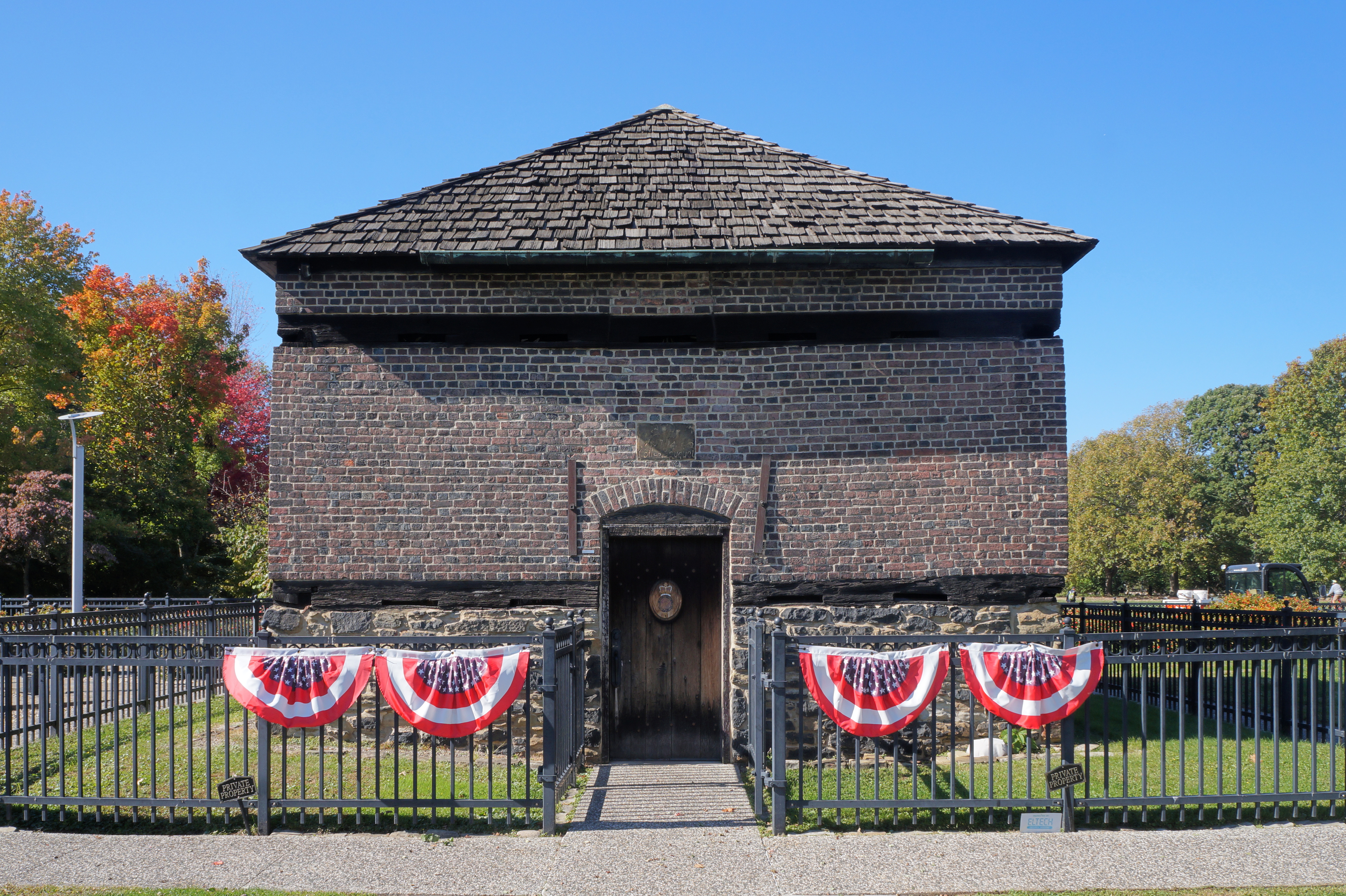
Only after the Second World War was the Blockhouse given its current green and pleasant surroundings. But it remains a tiny island of private ownership in Point State Park: the Daughters of the American Revolution are still responsible for it.


- The Old Stone Tavern in the West End has sometimes been claimed as older, but the claims seem to have been based on a mistake. ↩︎
- This is a correction. The article had originally said, “until the Daughters of the American Revolution finally bought and restored it,” but it was actually a gift of Mary Schenley, as recorded on a plat map from the early 1900s: “Daughters of the American Revolution / OLD BLOCK HOUSE / Presented by Mary E. Schenley.” Thanks to David Schwing for pointing out the correction. ↩︎
Leave a Reply