
Go to the Wikimedia Commons page and choose “Original file” for the video in full HD resolution.
Comments
Go to the Wikimedia Commons page and choose “Original file” for the video in full HD resolution.


The oldest building in the city, and the only Colonial-era building as well,1 the Fort Pitt Blockhouse survived by becoming part of a private house in what was then the poor section of town.

Russell Smith made this painting, detailed down to the laundry, in 1832. (The Blockhouse was actually built for Fort Pitt.)

The blockhouse remained a residence for most of the 1800s, until at last Mary Schenley donated it to the Daughters of the American Revolution.2 They fenced and landscaped its little lot and made it an island of tidy Colonial architecture in an otherwise tumbledown neighborhood. The date stone we saw above had been kept in City Hall, but was returned to the building when the DAR restored it.
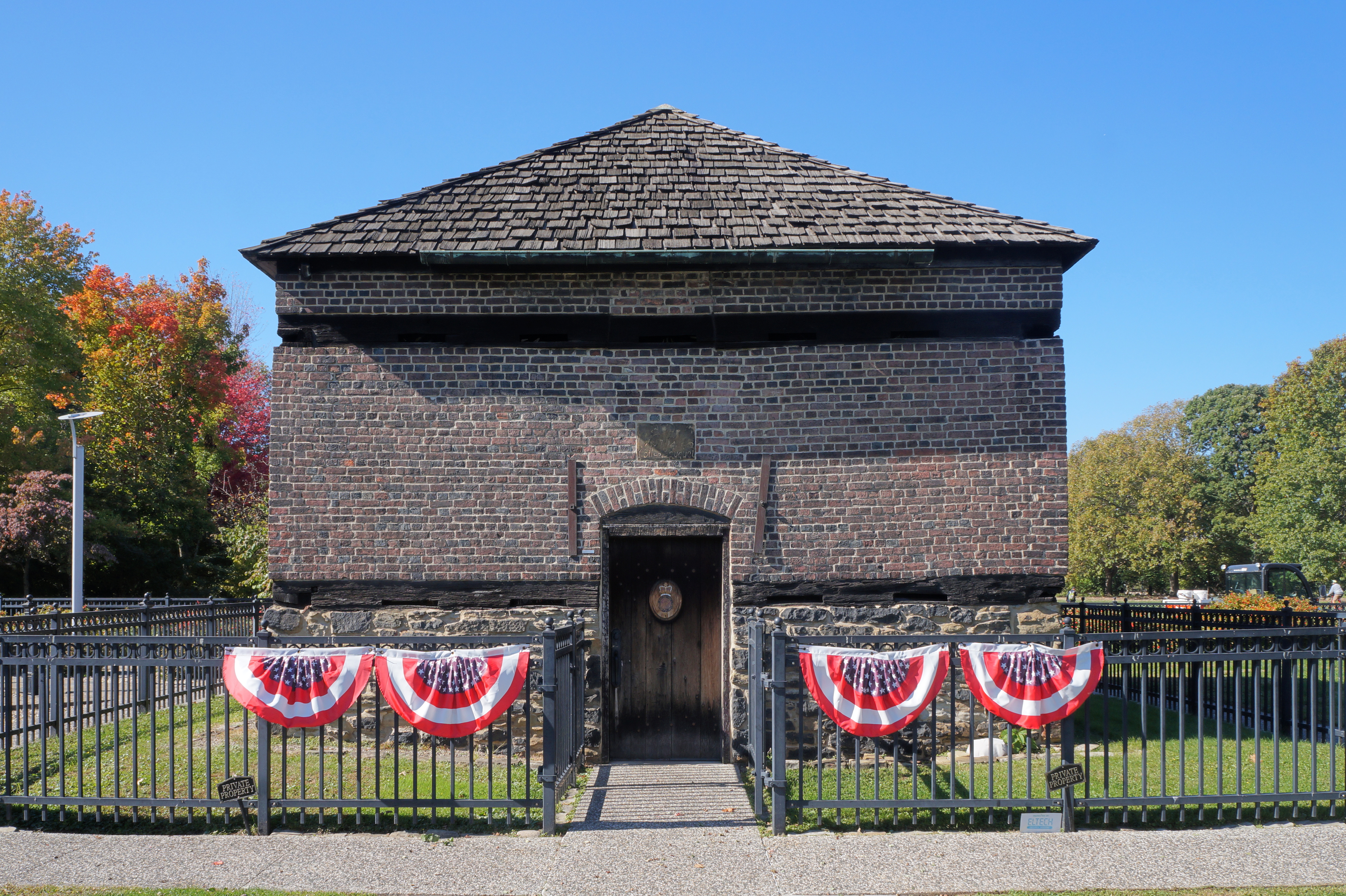
Only after the Second World War was the Blockhouse given its current green and pleasant surroundings. But it remains a tiny island of private ownership in Point State Park: the Daughters of the American Revolution are still responsible for it.


This bridge carries eight lanes of expressway traffic over the entrance to Point Park. It was also designed to make entering and leaving Point Park a dramatic experience. Under the bridge is a footbridge over an artificial pond, and as we cross the footbridge on the way in, the Point Fountain becomes visible; on the way out, the skyline opens up to us.

In 1967, the Point had been cleared and the Fort Duquesne and Fort Pitt Bridges had been built. But the old Manchester and Point Bridges were still standing. The Manchester Bridge was still in use; the Fort Duquesne Bridge was famously the Bridge to Nowhere, with no approaches on the North Side end. It was built in 1963, but did not open (with actual ramps on the north end) until 1969. The Fort Pitt Bridge, on the other hand, had opened in 1959, so the Point Bridge was an abandoned hulk. Both the Point and Manchester Bridges were finally taken down in 1970.
This old slide, taken by the late Donald Bailey in 1967, was badly overexposed to begin with, and it had been stored in bad conditions, but we were able to get a recognizable image out of it with some work in the GIMP. We thank Mr. Bailey’s heirs for donating some of his pictures to the public.


