

On a storefront on Carson Street, South Side.
Last week old Pa Pitt published this picture of a cast-iron storefront on 18th Street, South Side.
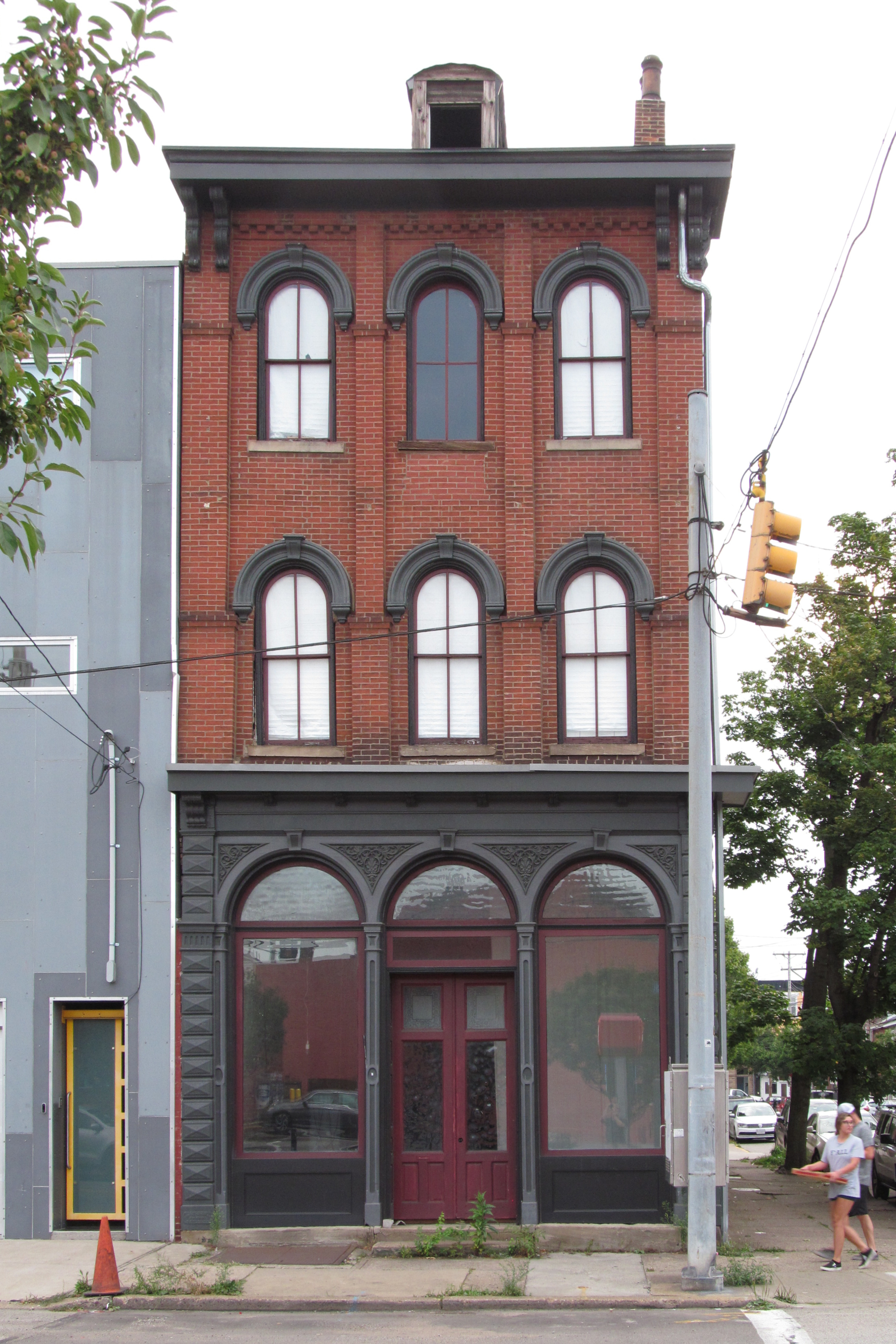
Today, walking past the same building, he noticed an inscription at the base.

This is the mark of the founder who cast the storefront, and we see that it was a very local business: East Birmingham was the borough that went from today’s 17th Street to about 27th Street.

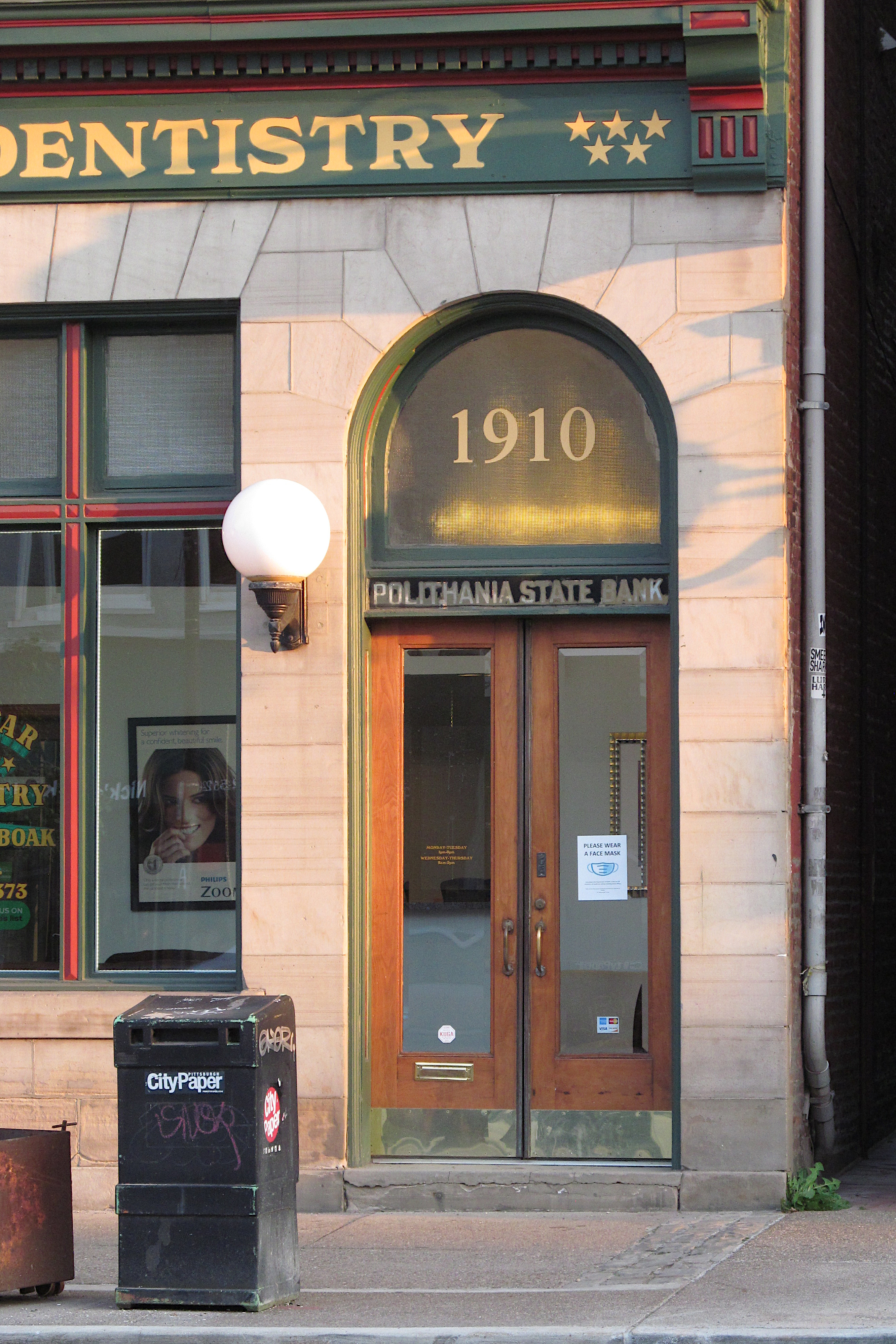
If you look up the word “Polithania” in your favorite search engine, you will find this building and nothing else. It was a bank and land office for Polish and Lithuanian immigrants (Poland and Lithuania have a long history of interconnection). Now it cleans teeth, but the original signs are still over the doors.
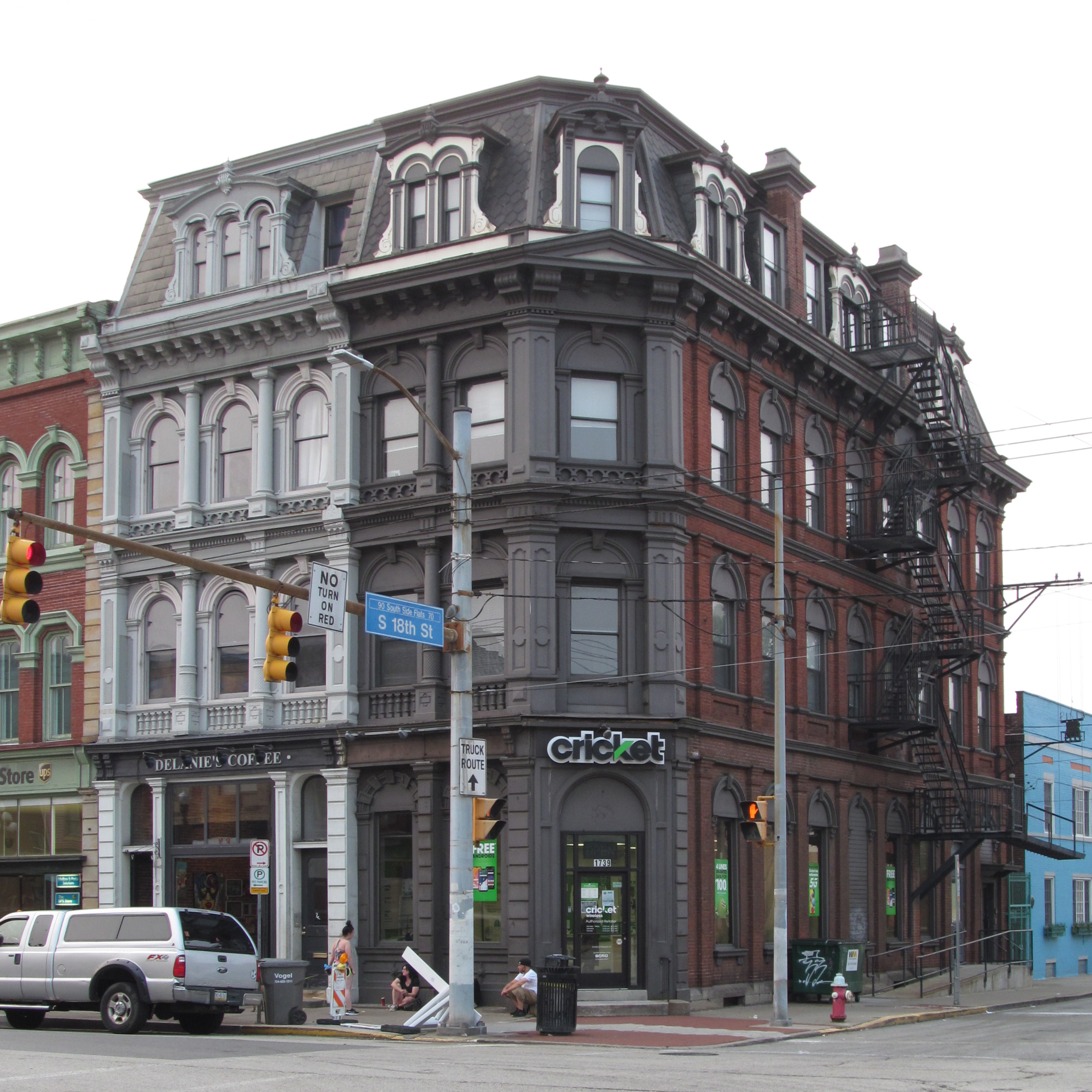
The Second Empire style is named after the Second French Empire of Napoleon III. Its most obvious characteristic is the mansard roof with dormers, which supposedly arose in France because, in buildings that were taxed by their interior space, attics were not taxed, and the space under the roof counted as an attic no matter how accommodating it was. The building here at the corner of Carson and 18th Streets is a splendid example of the Pittsburgh implementation of the style.

More old backstreet stores converted into living spaces on the South Side. As old Pa Pitt mentioned earlier, it is easy to recognize these old backstreet stores. They are usually on corners, and the ground floor shows the distinct traces of its old commercial purpose. Above, two side by side on 23rd Street.


The cheap-looking fluted pilasters, ersatz-colonial multipane windows, roof over the entrance, and pedimented schedule board make it almost certain that this pair of houses combined into one was used as a funeral home.

Not every backstreet storefront has been turned into living space. Once in a while we run across one that is still active as a business, like this salon on Sidney Street.

In the days before suburban shopping centers, every block of a city neighborhood would have its backstreet grocery store. Many of these old stores have been converted to apartments, but you can still recognize them easily. They’re often on a corner, and the ground floor in front is distinctly different, usually distinguished by space for a sign along the top of the ground-floor façade, sometimes with the shop windows filled in with siding or other later accretions. Here are two typical examples from the South Side.

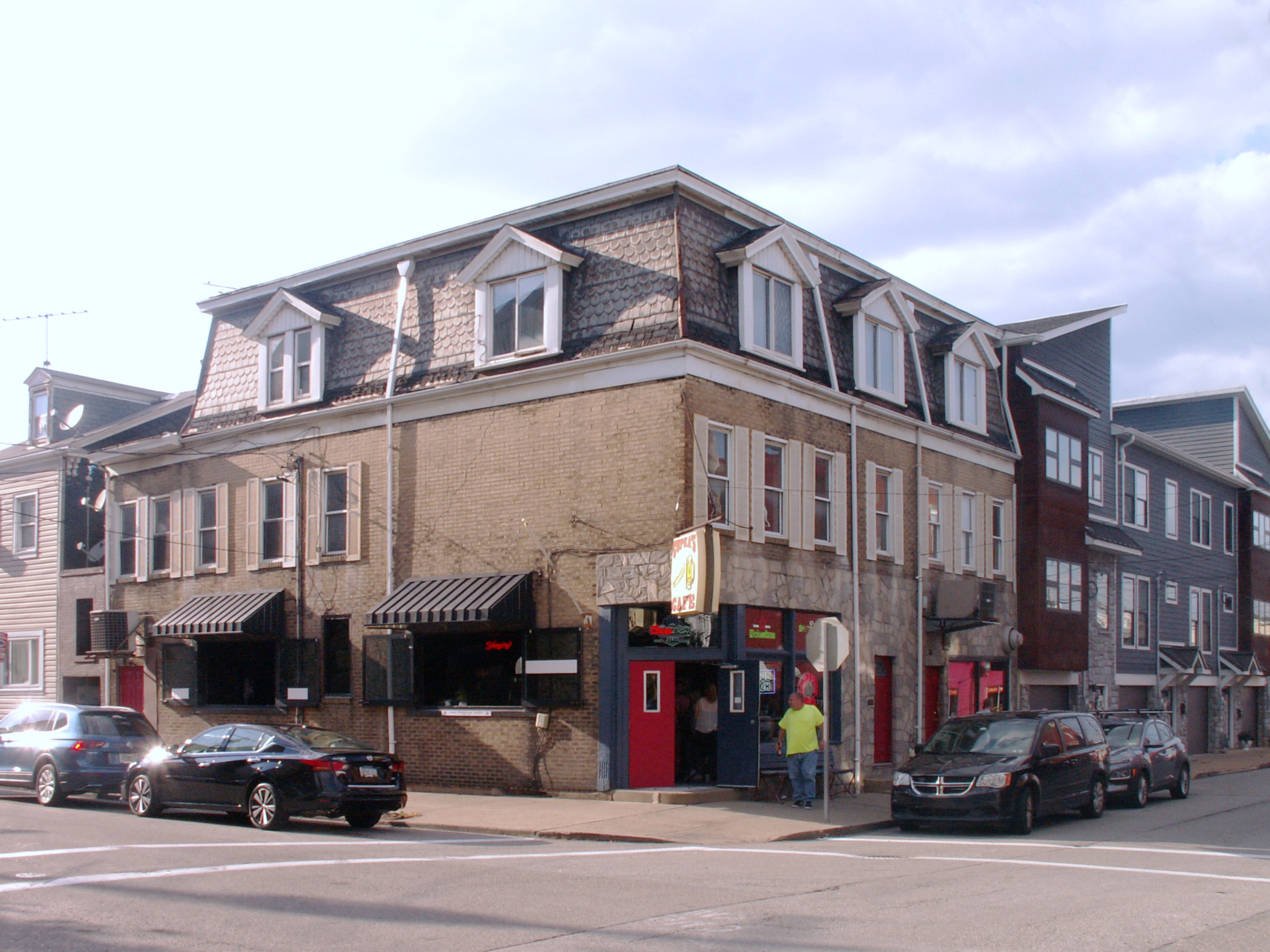
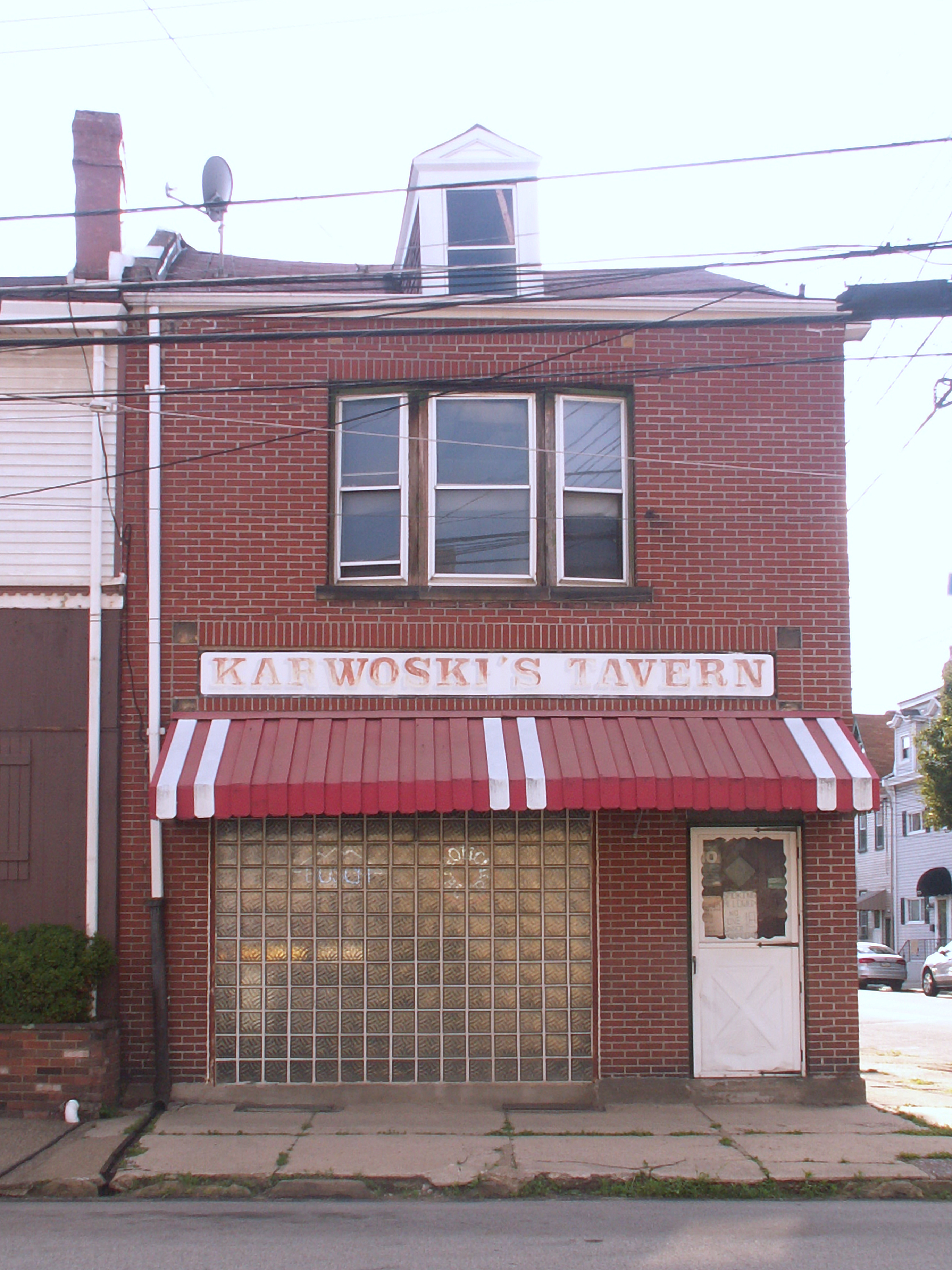
In the old days, every block in a dense rowhouse neighborhood like the South Side had its backstreet grocery and its backstreet bar. Most of the groceries are gone, but a surprising number of the bars survive. Above, Cupka’s Cafe, which has become well known for food as well. Below, Karwoski’s Tavern, which is mostly for drinking and not much for eating.


In the little corner of downtown Pittsburgh near First Avenue there are still some half-blocks that never entered the skyscraper age. Here we can see some of the humbler pre-skyscraper commercial architecture of Pittsburgh. The first floor of the front of this building has been heavily altered, probably by someone who wanted to make it look more Victorian and ended up making it look more 1978. But the rest of the building is a typical small Italianate structure of the 1870s.
