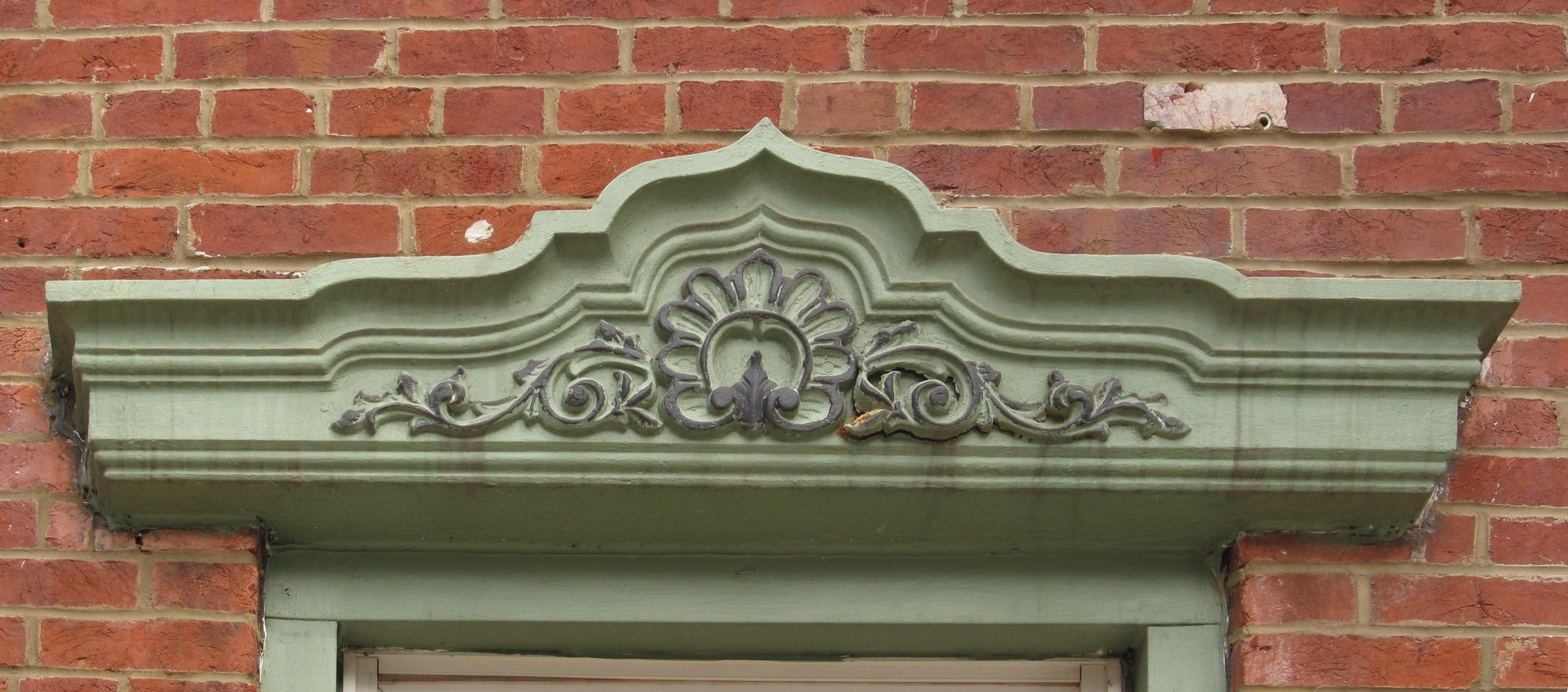

Remarkable mostly for its unremarkableness, this little house in the back streets of the South Side is a good demonstration of how to keep an old house (it might be 150 years old or more) tastefully up to date.

From the blocked-up Gothic windows and general shape, we can infer that this was a small church. But at some point not very recently it was converted to four tiny alley houses, made only slightly less tiny by the addition of what are probably kitchens on the back. (Update: For the history of the church, see “The Mystery of the Converted Church on the South Side.”)


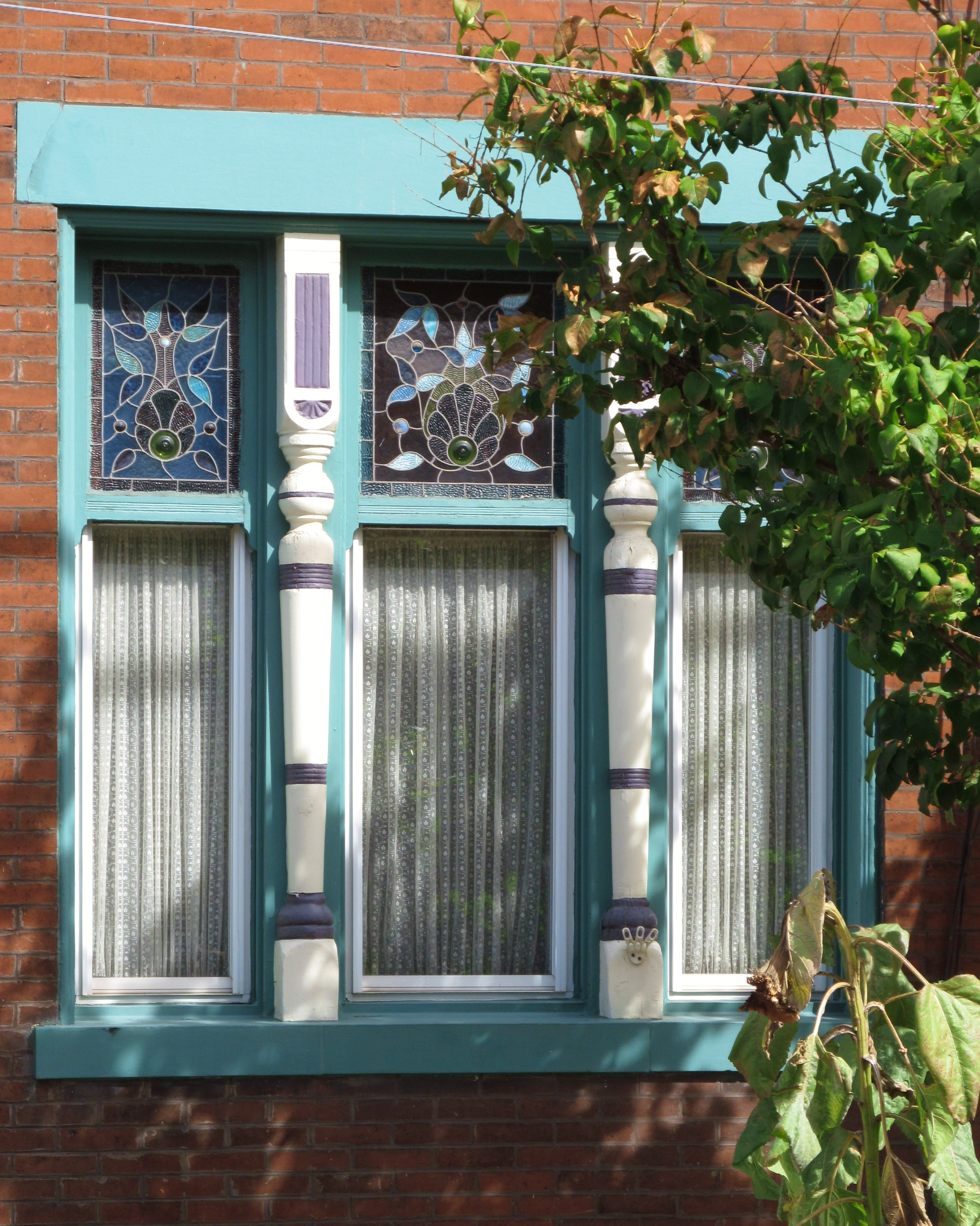
In a Victorian rowhouse, the parlor window—the ground-floor window facing the street—was an opportunity for the homeowners to display their taste and, even more important, their ability to pay skilled craftsmen to decorate their houses with woodwork and stained or leaded glass. Above, even the masonry is incised with decorative patterns.

There are many houses of this age in East Birmingham, the section of the South Side between 17th and 27th Streets that was laid out in the middle 1800s. Most of them are anonymous and unremarked. This one, however, has a specific date and pedigree, according to a sign placed on it when it was renovated thirty years ago:
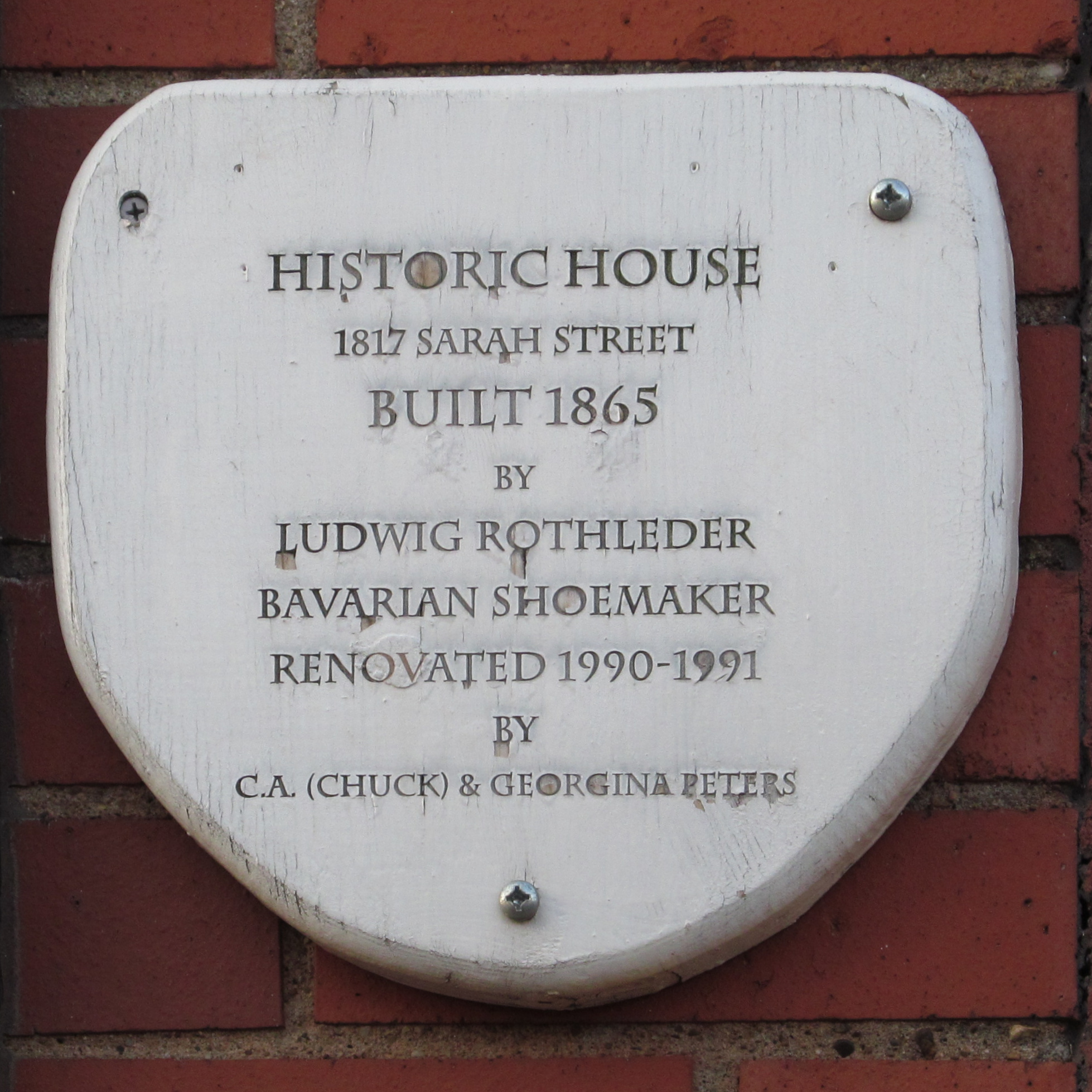
We notice the choice of the word “renovated” rather than “restored,” which is appropriate. The details are a little off for the age of the house, particularly the windows and doorway. Old Pa Pitt suspects that the house had already been altered that way, and the new owners worked with what they had to make the exterior look attractive if not historically correct. At any rate, hundreds of houses on the South Side are in similar shape, but few of them have a known date and history.

Streetscape of Sarah Street, with typical South Side rowhouses, a small synagogue, and the South Side Presbyterian Church at the end of the block.
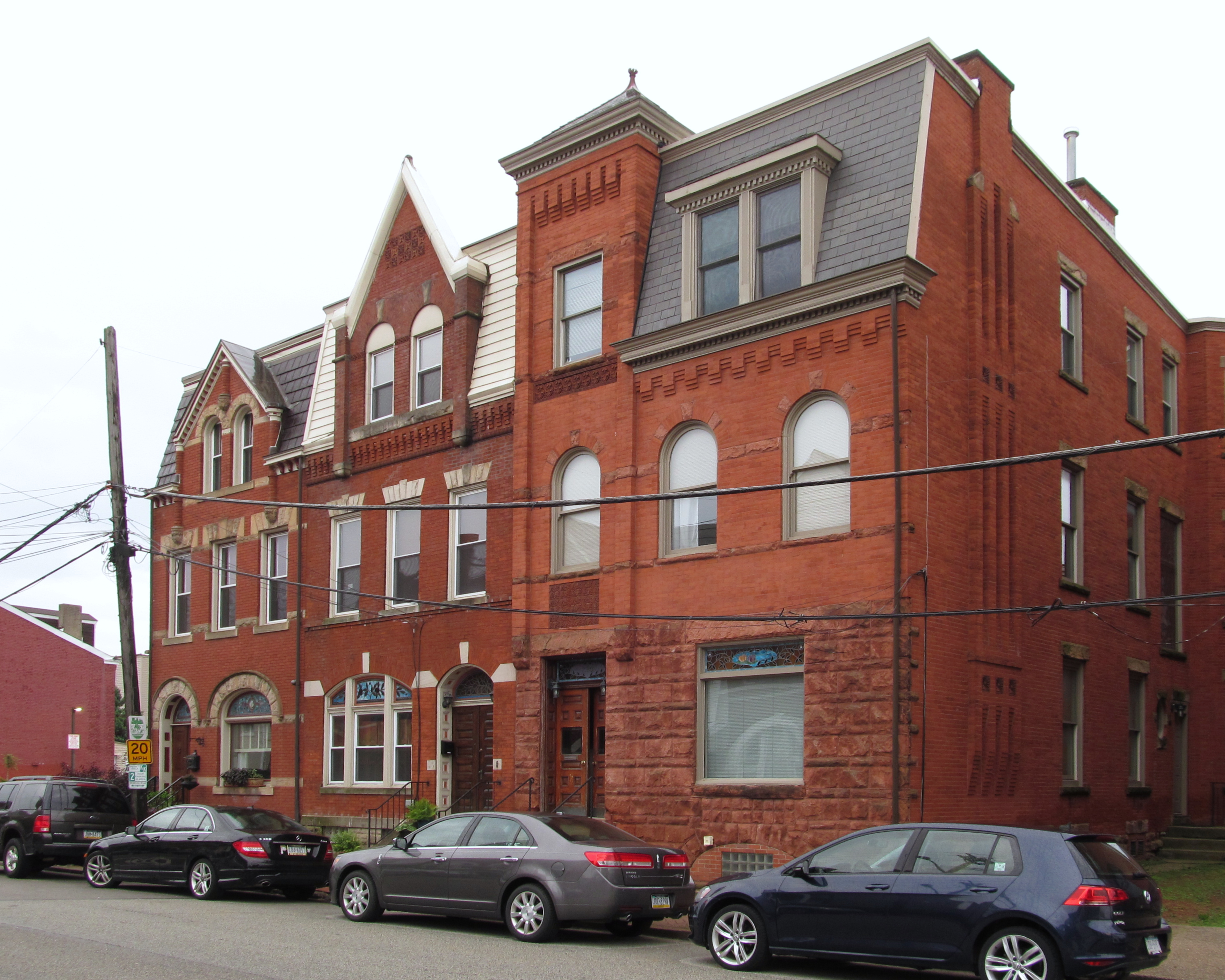
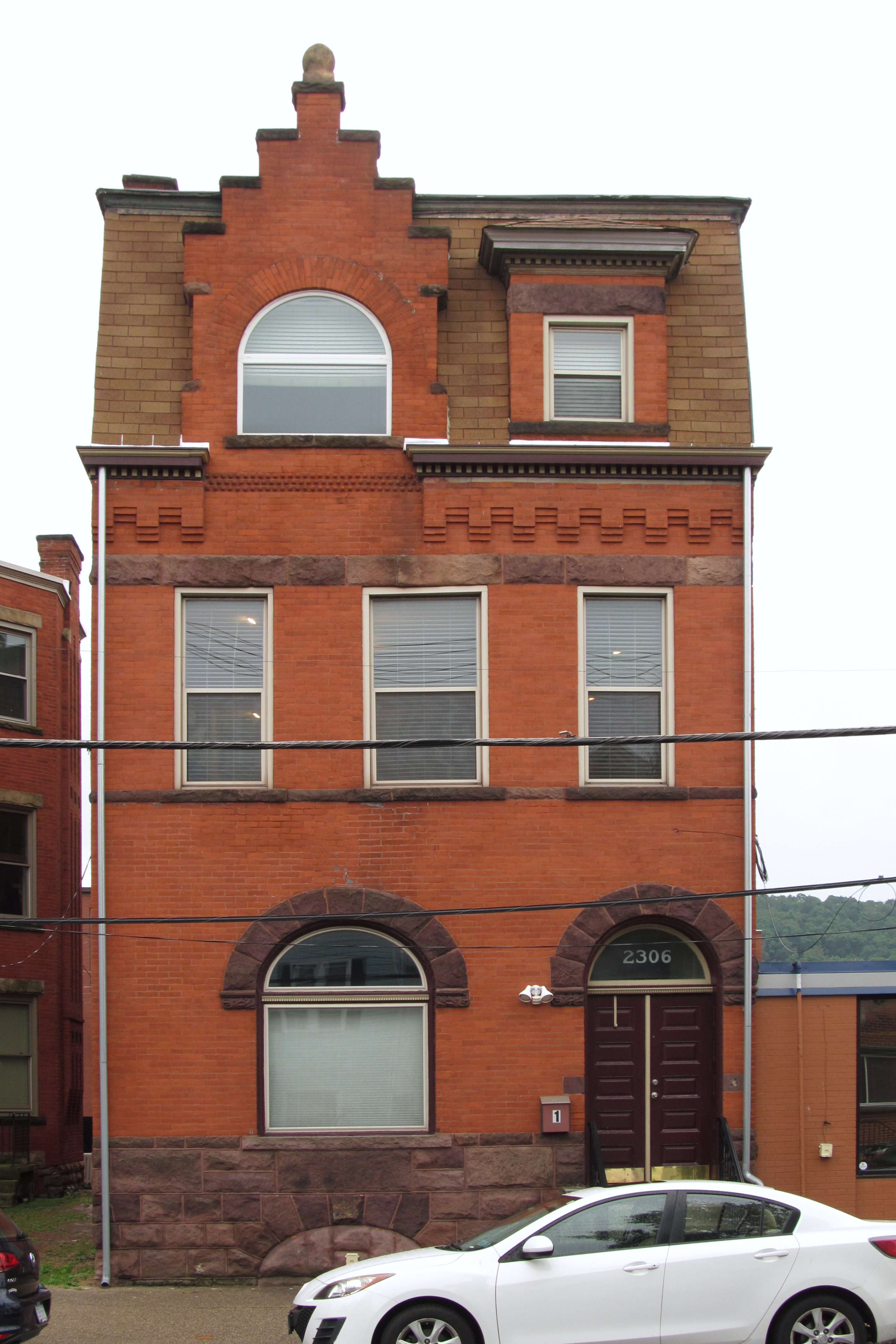
Some typically elegant Victorian brick houses on Sidney Street between 23rd and 24th.

Side-by-side duplexes are often built to give the impression of a single elegant house; but over the years, separate ownership can destroy the illusion, as it has done in the left-hand pair, where one half has been modernized without regard to the appearance of the whole.

The same two houses on 40th street in Lawrenceville across from Arsenal Park, taken in 1999 with two different twin-lens-reflex cameras. Above, a Lubitel, a Russian camera with a plastic body but a decent lens and all the usual manual controls. Below, an Imperial, the sort of thing photographers call a toy camera: a cheap old plastic fixed-focus camera that takes 620 film.

The house on the left has had its Gothic peak restored since this picture was taken.