Tag: Relief

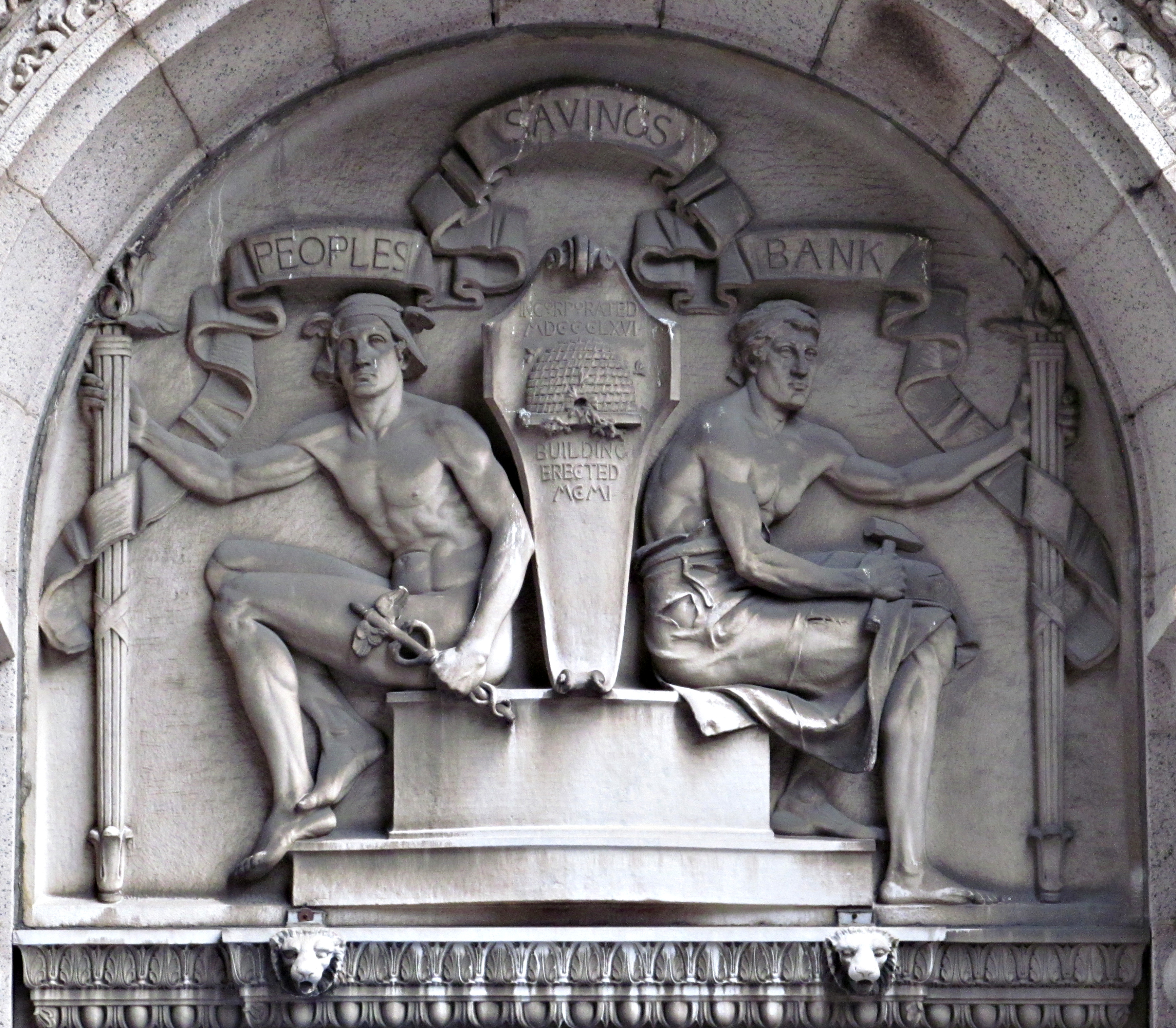
  • Reliefs by John Massey Rhind on the People’s Savings Bank Building

    Relief by John Massey Rhind

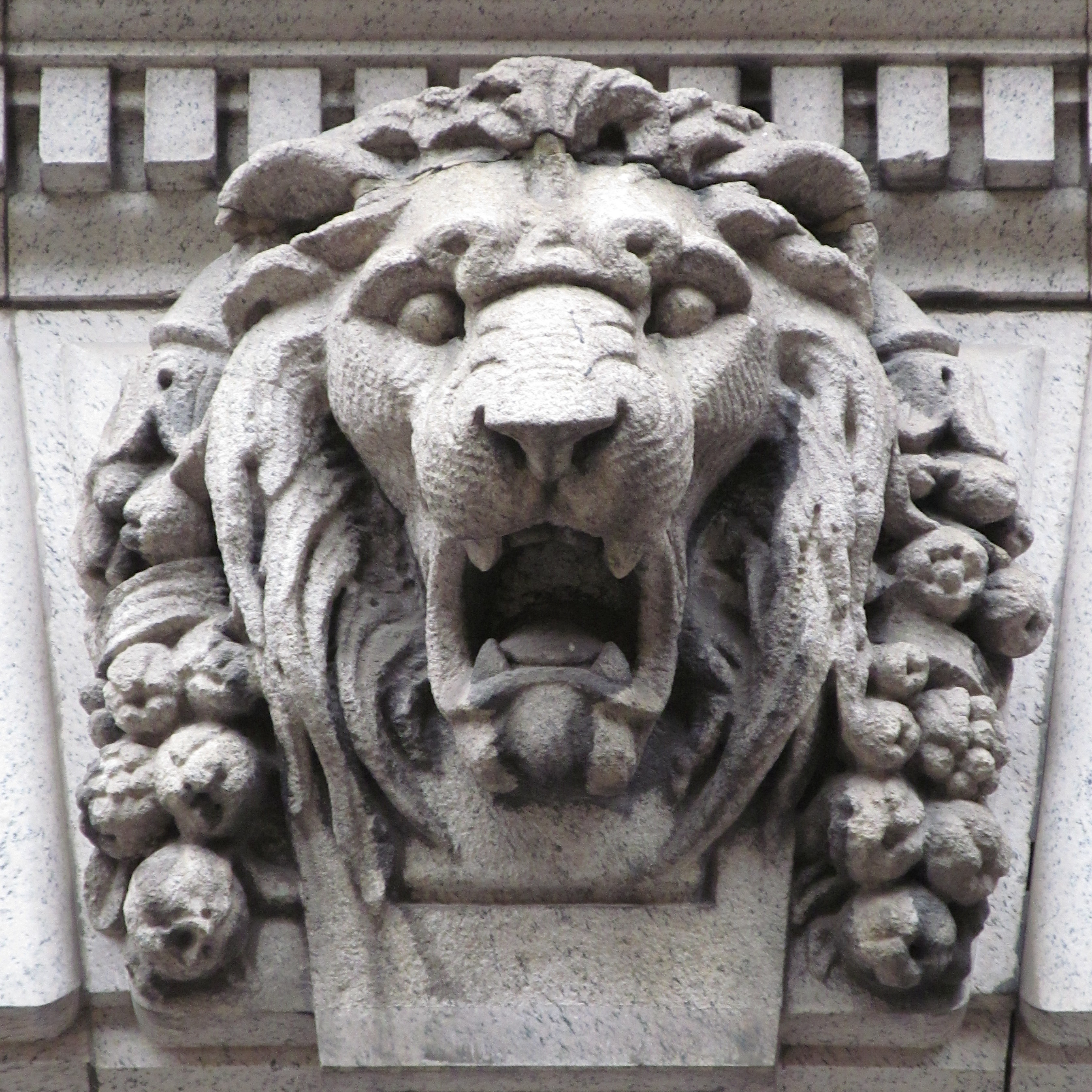
    John Massey Rhind was Andrew Carnegie’s favorite sculptor; he gave us the Noble Quartet in front of the Carnegie Institute and the statue of Robert Burns outside Phipps Conservatory. Here he gives us some allegorical figures to adorn the entrances to the People’s Savings Bank’s splendid tower at Fourth Avenue and Wood Street. Not altogether coincidentally, the building itself was designed by Alden & Harlow, Carnegie’s favorite architects, whose firm (with their earlier partner Longfellow) was also responsible for the Carnegie Institute. Above, the Wood Street side; below, the Fourth Avenue side.

    Fourth Avenue side
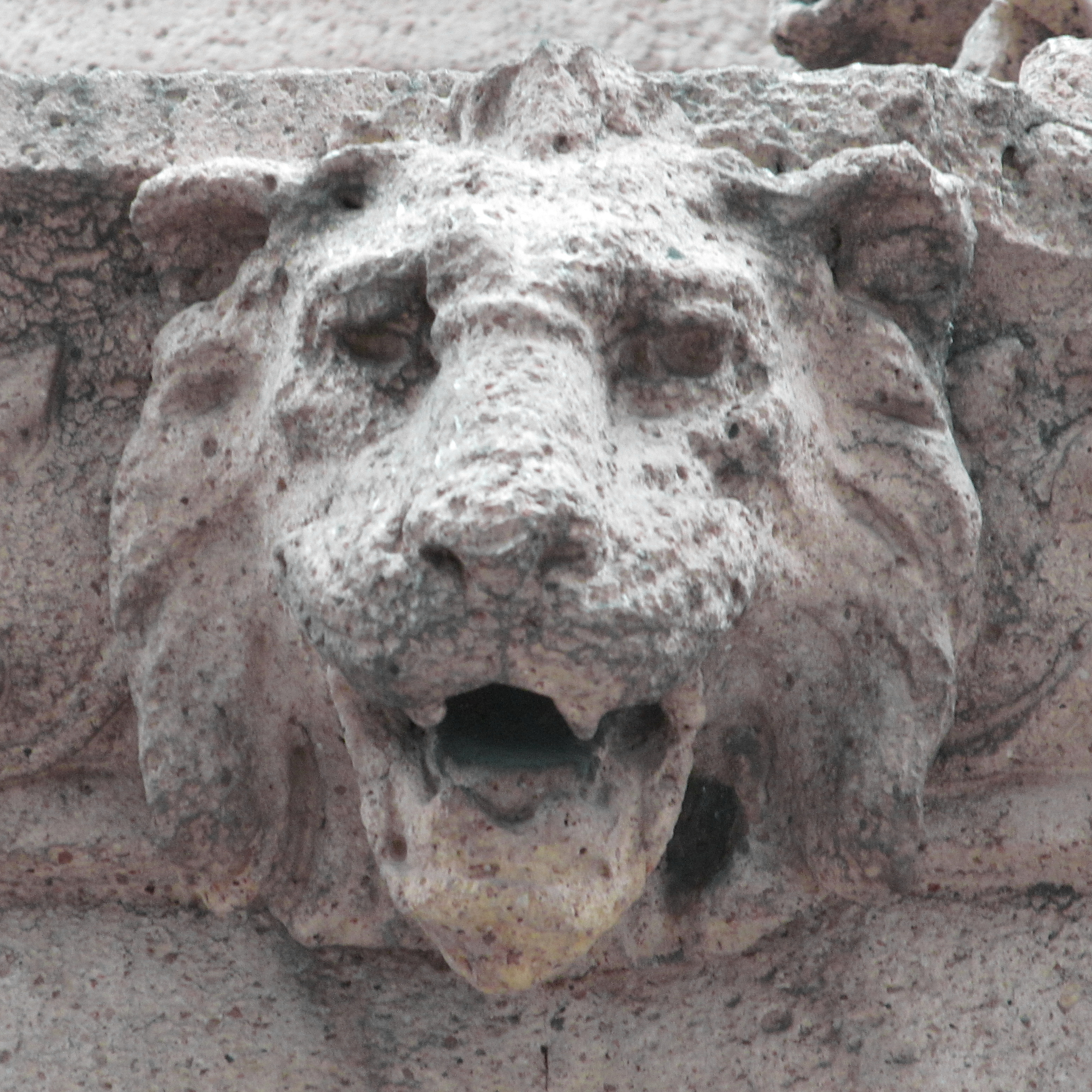
  • Lion on the Keystone Bank Building

    Lion on the Keystone Bank

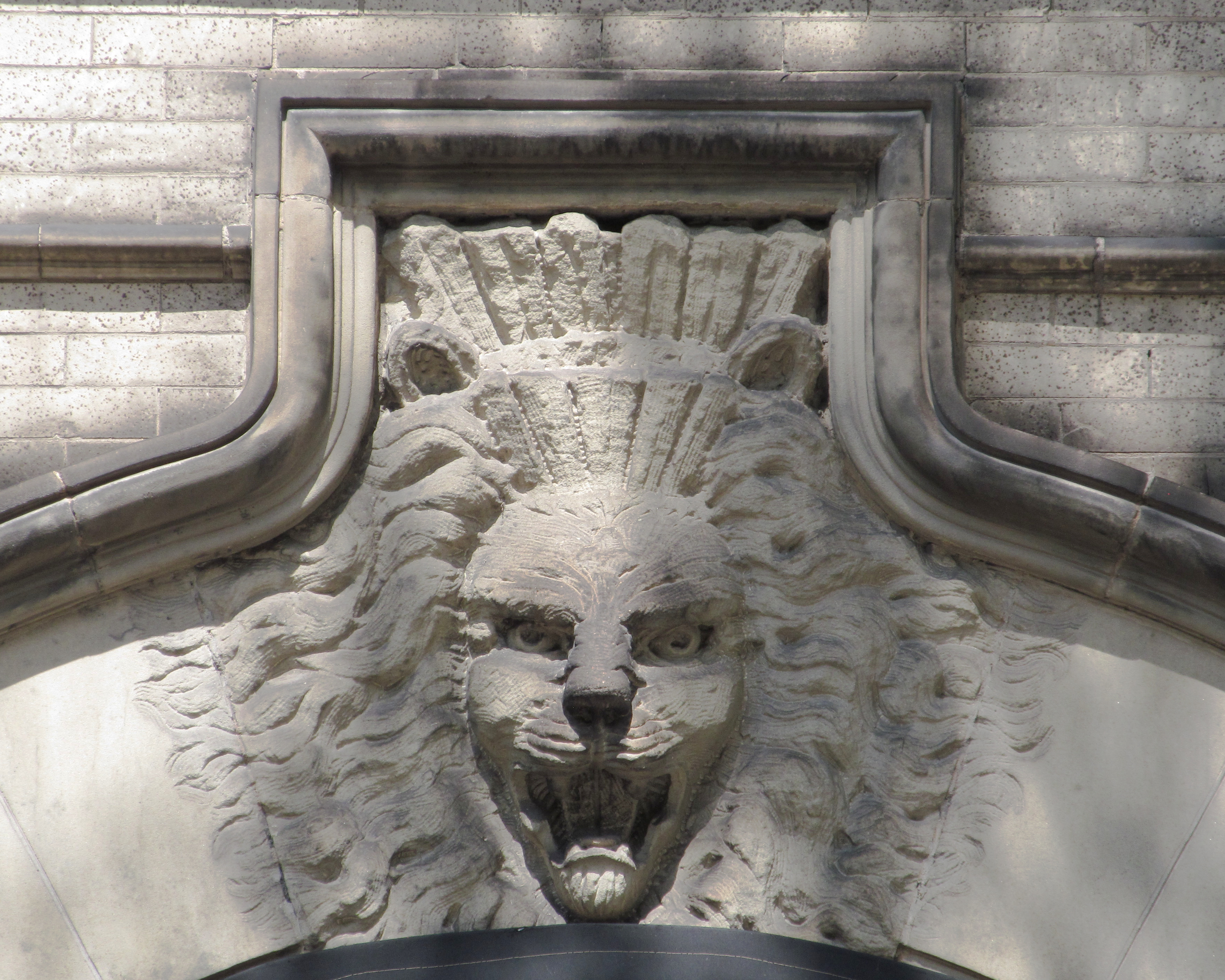
    Fourth Avenue has a denser population of lions than anywhere else in Pittsburgh, and possibly anywhere else in North America.

  • Commercial National Bank

    Commercial National Bank

    This little bank on Fourth Avenue was originally designed by Alden and Harlow. The central section has been ruthlessly mutilated, with the elegant arch replaced by a cartoon suggestion of an arch. For reasons unknown, much of the rest of the building was left untouched (although it is pretty clearly missing its top), and the details there are enough to make it worth our while to stop and admire them.

    Of course there are lions. How could there not be lions?

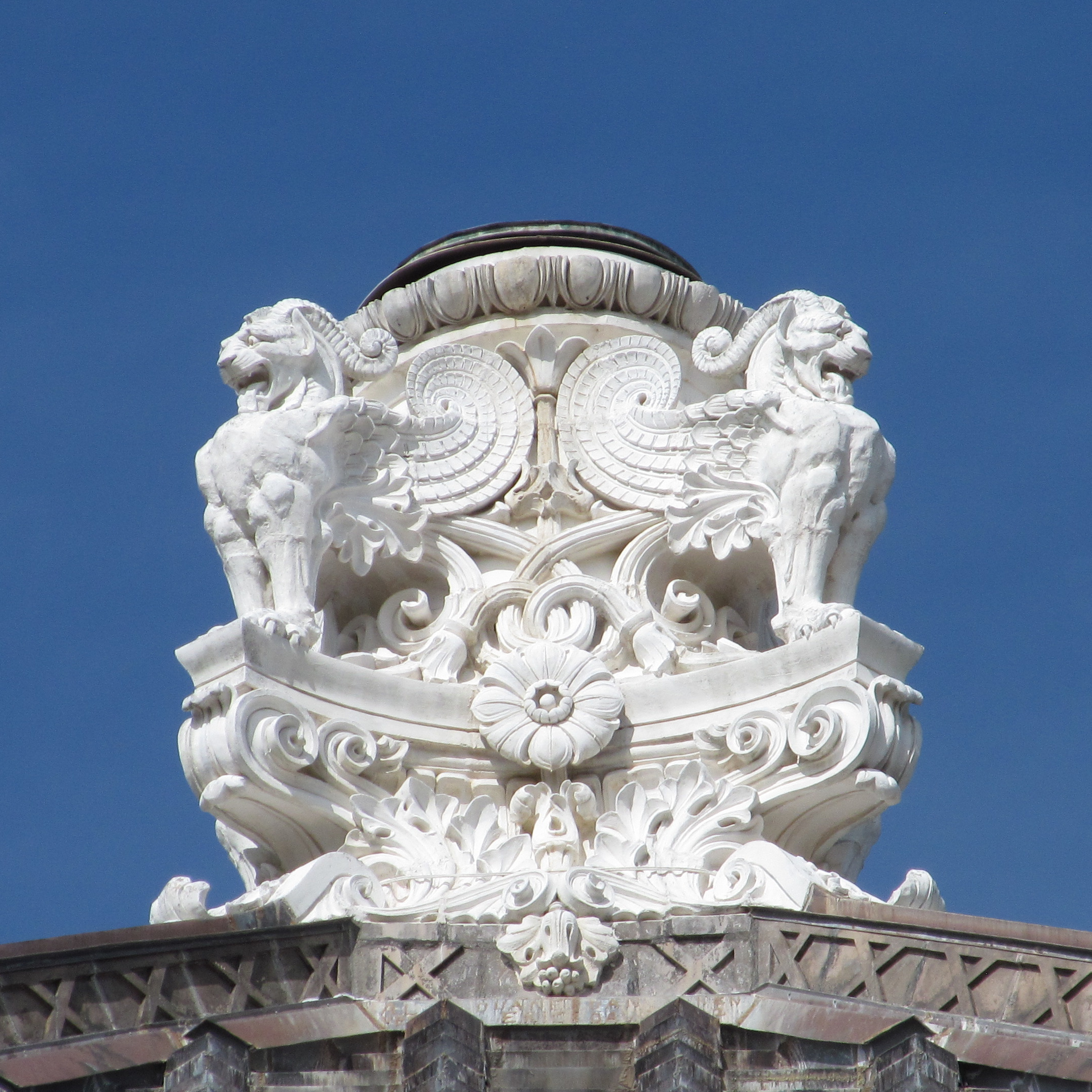
  • Roof Ornaments, Soldiers and Sailors Memorial

    Above, the distinctive grotesque eruption at the pinnacle of the pyramid roof. Below, the alternating eagles and torches of the cornice.

  • Green Tree, Land of the Pharaohs

    In Pittsburgh, the Egyptian style is almost always associated with the death business, so it is no surprise to learn that this little building was a monument dealer before it became Green Tree’s oddest office building. The fact that it sits directly across the road from the entrance to Chartiers Cemetery is another clue. It is right on the border of Green Tree, at the edge of a little neighborhood called Rook, which once had a station on the Wabash Pittsburgh Terminal Railway, and still has a large freight yard belonging to the Wheeling and Lake Erie Railway.

  • Engine Company No. 28, Shadyside

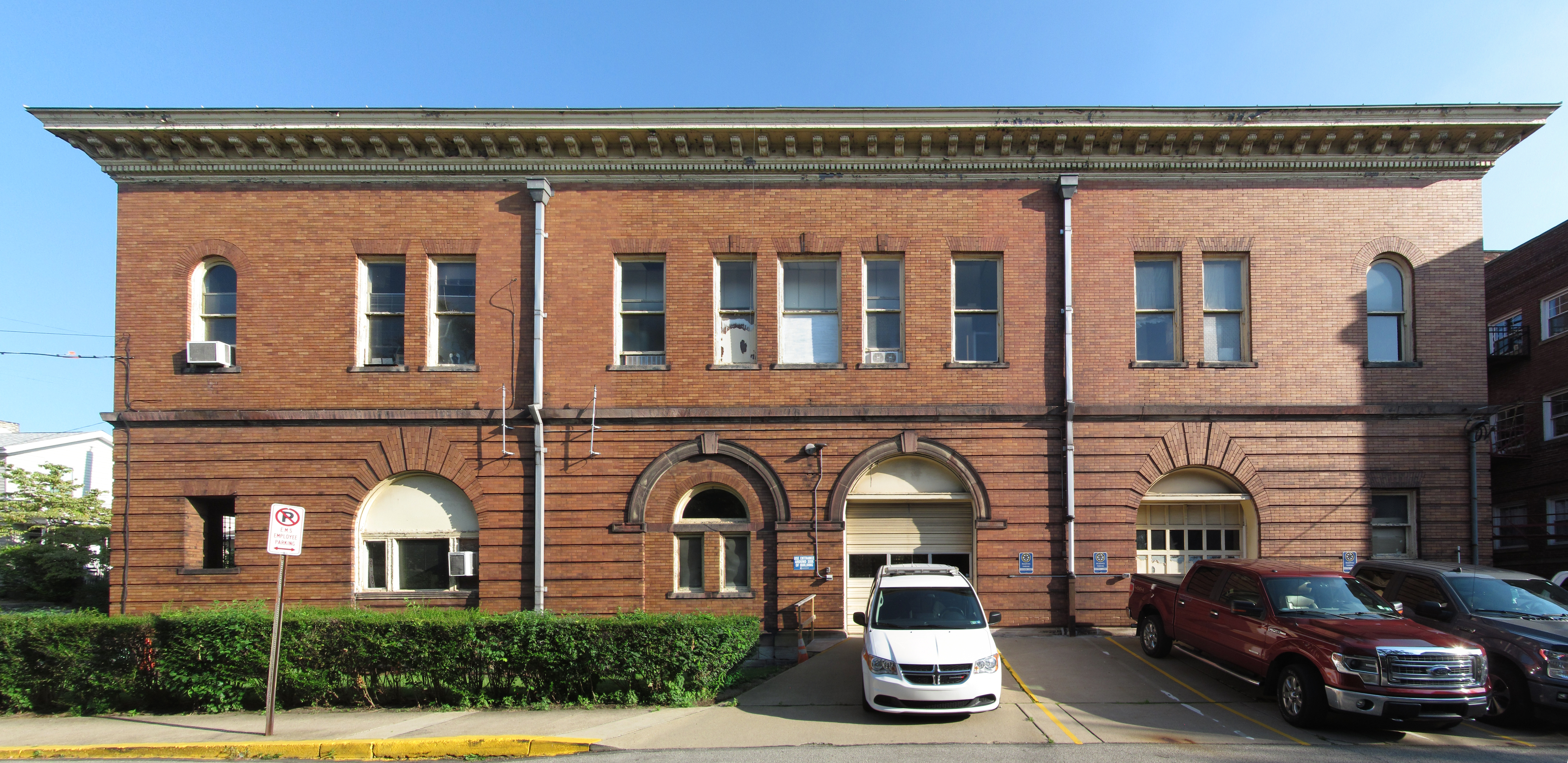
    A large classical firehouse with its front on Filbert Street and a long, well-designed side on Elmer Street.

    The Filbert Street front.

    Arms of the city of Pittsburgh, on the left side of the front.

    Arms of the Commonwealth of Pennsylvania, on the right side of the front.

    The Elmer Street side looks like an Italian Renaissance palace.

  • The Lionhead, Shadyside

    Twin lion heads guard the entrances to the Lionhead, an apartment building in Shadyside.

  • Decorations on the Parkvale Building, Oakland

    The richly decorated Parkvale Building on Forbes Avenue is currently under renovation, so we can hope that these splendid reliefs will continue to delight future generations of Pittsburghers.

  • The Iroquois

    The Iroquois Building

    The Iroquois Building, which takes up a whole block of Forbes Avenue, was designed by Frederick Osterling, Pittsburgh’s most consistently flamboyant architect. Osterling designed in a variety of styles: he had his own ornate version of Richardsonian Romanesque, and his last large commission was the Flemish-Gothic Union Trust Building. Here, as in theArrott Building downtown, he adapts Beaux-Arts classicism to his own flashier sensibilities. The building was finished in 1903.

    This clock sits in front of the central light well—a typically ornate Osterling detail.

    A naked brick front would never do for Osterling; it must be constantly varied in shape and texture. These grotesque reliefs help.

  • Terra-Cotta Ornaments on the Maul Building

    Terra-cotta ornament, Maul Building

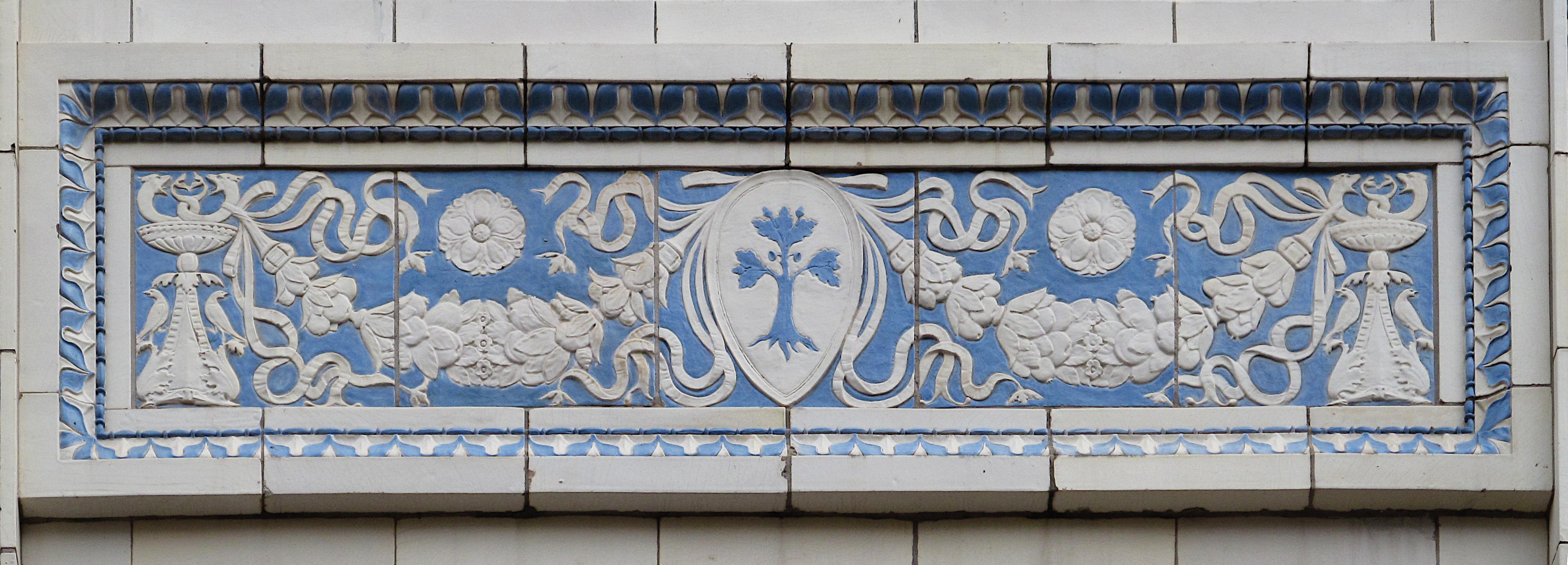
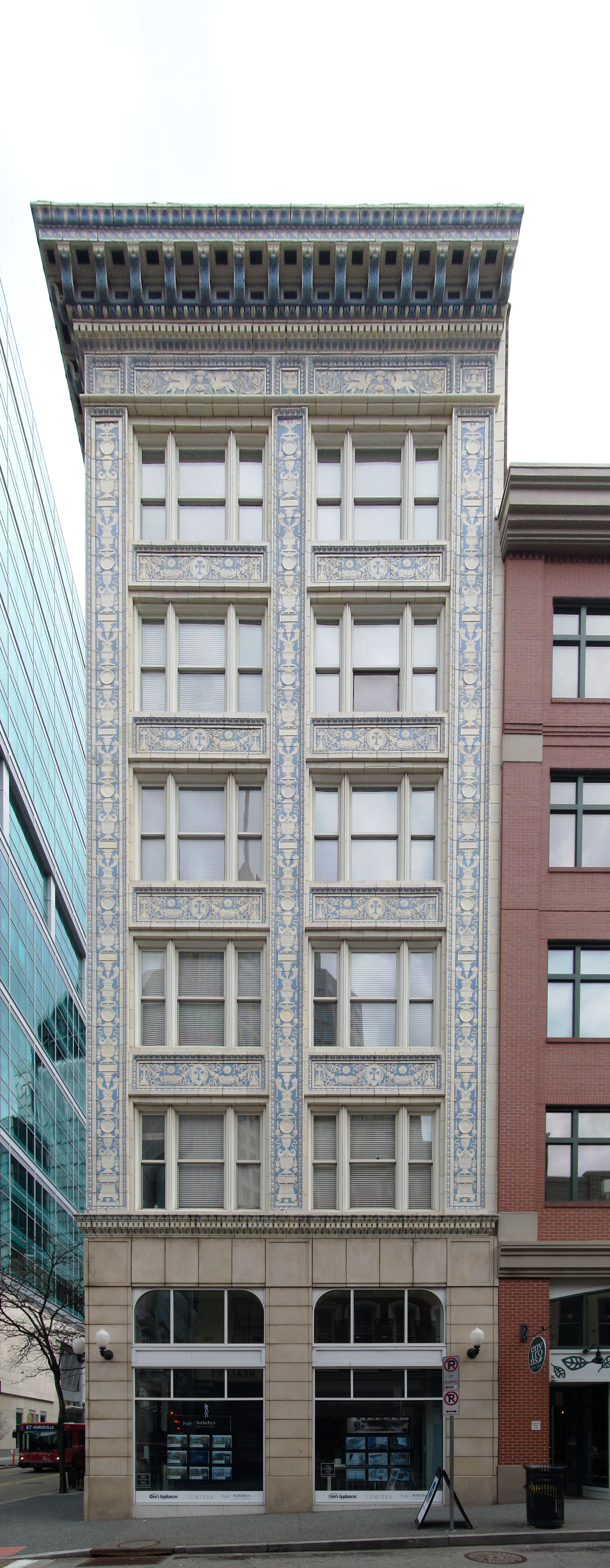
    The splendid terra-cotta facing of the Maul Building is covered with ornaments that may have been standard catalogue items, but nevertheless show considerable artistic talent.