


A man who has the geese for his friends fears no enemy.


Comments

Large city parks often have picnic shelters, but it is not common for the shelters to be so elaborate. This one was built in 1902–1903, during the reign of Edward Manning Bigelow, the father of Pittsburgh’s system of boulevards and parks. The architect was young Harry Summers Estep, who would soon earn his place as a prominent architect with the McKeesport Masonic Temple.


Lake Elizabeth in West Park on the North Side. Above, just a few weeks ago. Below, in 1999.


Originally a shelter for access to an underground spring, this spiral structure—which may have been built under the WPA—has a stairway that winds down to a pool of stagnant water and debris. But it looks wonderfully mysterious.
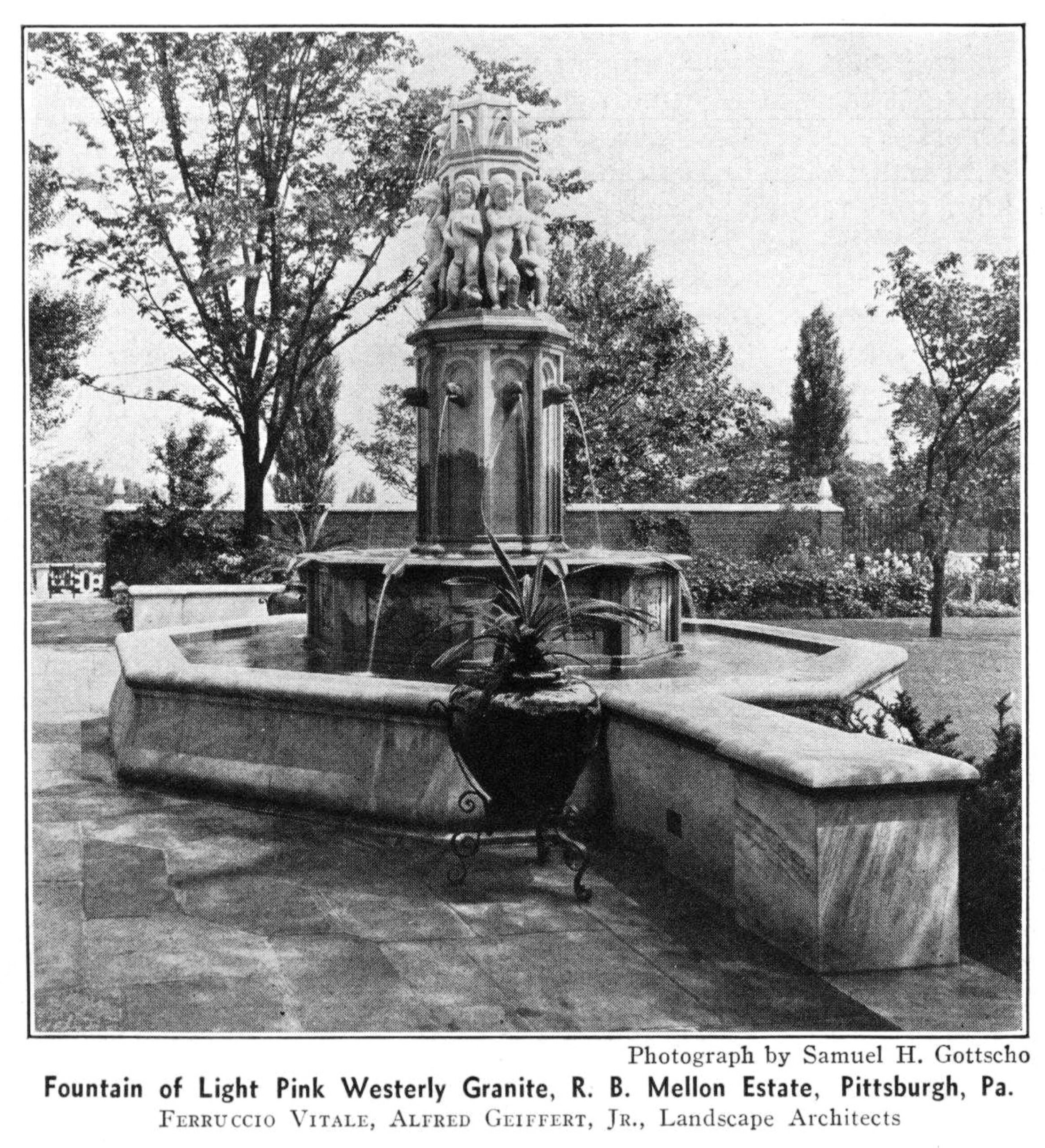
Courtesy of the New England Granite Works, a picture of the fountain in the Mellons’ Walled Garden shows us a little of what the garden, now part of Mellon Park, looked like when the Mellons lived there. The sculpture on the fountain is the work of Edmond Amateis, and the fountain has been beautifully restored for the delight of visitors to the park.


This looks exactly like the gateway to a world of sylvan rest and rustic pleasure that it was meant to be. In passing we note that the gatehouse is actually a building, with a room on either side of the gate: we used to have staff to sit here and tend to park visitors’ needs.

The architect was a big deal for such a small structure: John Russell Pope. He had some famous commissions in Washington (that’s Big Worshington to residents of the South Hills): the Jefferson Memorial, the National Gallery of Art, Constitution Hall, and the National Archives, among other buildings. In Pittsburgh he is best known for the colossal Winter mausoleum at Allegheny Cemetery.


