Tag: Modernist Architecture

  • Fifth Avenue Place, Remodeled

    Entrance to Fifth Avenue Place
    Kodak EasyShare Max Z990.

    The shopping arcade at Fifth Avenue Place, like almost all indoor shopping arcades and a good many enclosed shopping malls, withered and emptied, so advertising it on the Liberty Avenue entrance no longer made sense. The new entrance is much more restrained, modernist rather than postmodernist. This, in case you don’t remember, is what it used to look like:
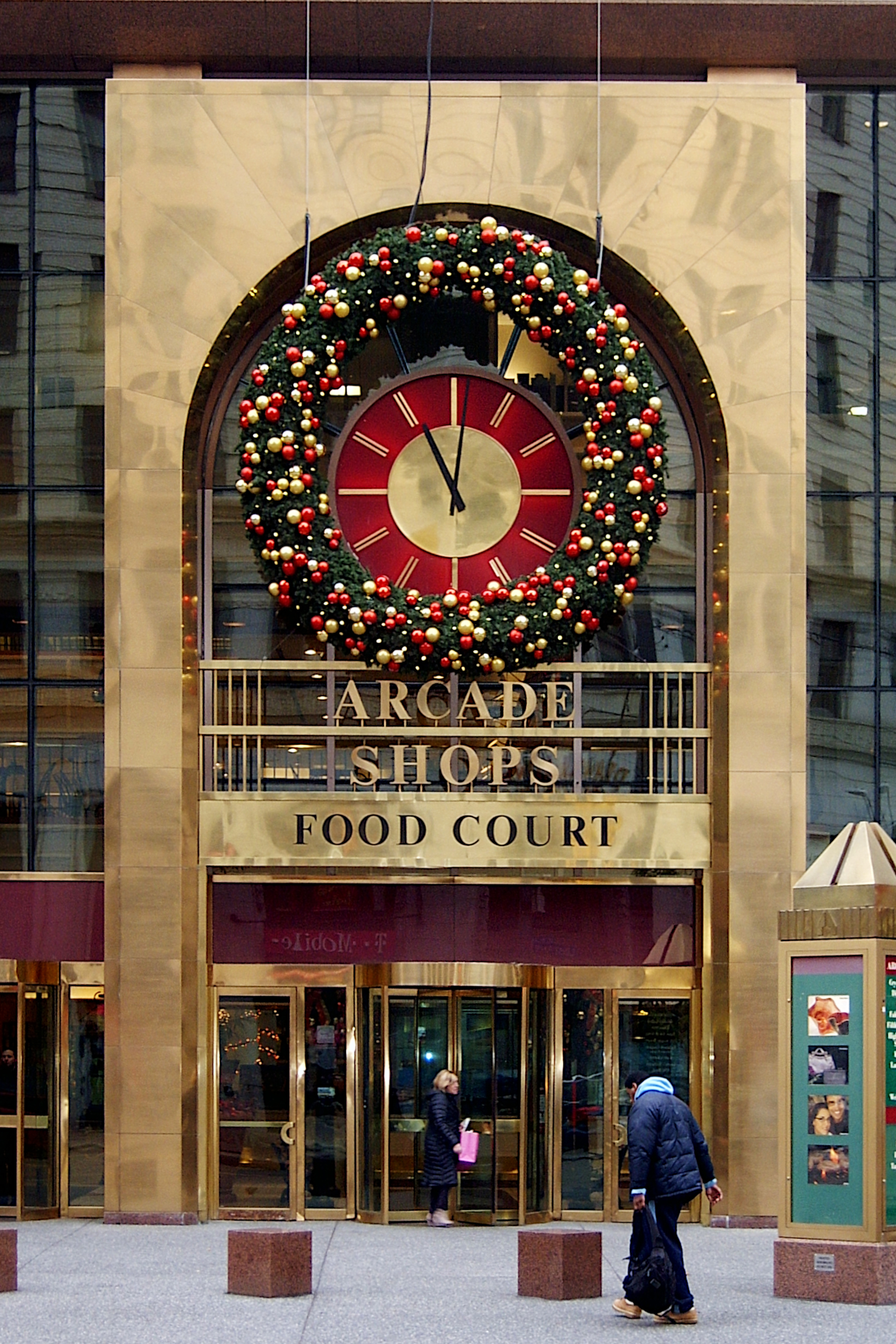
    Entrance in 2019
    Samsung Digimax V4.

    Father Pitt will not fault the tasteful modernism of the new design in isolation—in fact he thinks it makes a good picture—but it does not fit the spirit of Reagan-era excess in the building itself. It would have been better to leave the old entrance, with its gold-foil arch and its giant clock, and just remove the signs.

    It is a rule, however, that the style of the previous generation is always the most embarrassing, and the style of the generation before it is always to be preferred. It seems to old Pa Pitt that today’s architects and builders are embarrassed by the exuberant postmodernism of the 1980s, and are taking every opportunity to remold it into fussily correct International Style modernism, exactly the same way their ancestors of a century ago were embarrassed by the exuberant Victorianism of the 1880s and were taking every opportunity to remold it into fussily correct classicism.


    Comments
  • One Mellon Center

    One Mellon Center
    Fujifilm FinePix HS10.

    Or BNY Mellon Center, or whatever it is called now that BNY Mellon is just BNY, seen from across the Mon.


    Comments
  • McGinley Hall, Duquesne University

    McGinley Hall
    Fujifilm FinePix HS20EXR.

    A massive new apartment tower for Duquesne University students, and a big improvement in the Uptown cityscape (it replaced a parking lot). The architects were Indovina Associates, who designed the building in a subdued version of the currently popular patchwork-quilt style, with materials that harmonize well with the other buildings along the Uptown corridor.


    Comments
  • Chatham Two

    Two Chatham Center
    Fujifilm FinePix HS20EXR.

    Burt Hill Kosar Rittelman, a firm that began in Butler and grew to be an international architectural titan, would become famous in the middle 1980s for postmodernist buildings like Liberty Center. This building, however, is prepostmodernist. It opened in 1981, and it is a straightforward modernist box with a Miesian look. Although it doesn’t arrest our attention the way some of the firm’s later projects do, it was a harbinger of Renaissance II, the building boom of the 1980s that remodeled Pittsburgh with a postmodernist skyline.


    Comments
  • Distinguished International Style in the Suburbs

    Manor Oak One

    The developer Oliver Tyrone, who had built a high-class shopping center called Manor Oak on Cochran Road, brought in the New York firm of William N. Breger & Associates to design a high-class high-rise office building for the rising land behind the shops.1 In his early career, Breger had worked for Walter Gropius, and by 1966 his International Style credentials were well established. This building brought some distinguished modernist design to the quiet suburban landscape of Scott Township, and it still stands out as one of the more notable modernist office buildings in Pittsburgh suburbia.

    Manor Oak One
    Manor Oak Two

    It seems Mr. Tyrone’s investment was a success: two years later he started construction on a much larger nine-floor office building farther up the hill. Breger’s firm was once again in charge of the design,2 but instead of just repeating Manor Oak One but bigger, the architect made a completely different design—very Miesian to old Pa Pitt’s eye, though like many buildings inspired by Mies it narrows the Miesian colonnaded porch to vestigial width.

    Manor Oak Two
    Kodak EasyShare Max Z990.

    A native Pittsburgh architect might have adapted the buildings to their sloping site. But instead, the ground was completely leveled for each building, and the buildings could just as easily have grown in a flat city like New York.

    Manor Oak Two
    Samsung Galaxy A15 5G with ultra-wide camera.

    Comments
  • Murray Towers, Squirrel Hill

    Murray Towers

    Since it was built as public housing and opened in 1973, and since it bears a strong resemblance to his many other public-housing projects, Father Pitt does not hesitate to assign this building to Tasso Katselas, the king of public works in Pittsburgh.

    Entrance
    Entrance
    Perspective view
    Burned apartment
    Kodak EasyShare Max Z990; Fujifilm FinePix HS20 EXR.

    An apartment fire fortunately was confined.


    Comments
  • St. Mark’s Evangelical Lutheran Church, Brookline

    St. Mark’s Evangelical Lutheran Church

    In honor of Reformation Day, here is a Lutheran church. O. M. Topp, for a generation the favorite choice of Lutherans, designed this neat Gothic church, which was built in 1929, as we see from the cornerstone.1 But, oddly, the cornerstone says that the church is the Sunday school.

    Cornerstone with date of 1929

    That’s because things didn’t go exactly as planned. This was meant to become the Sunday-school wing, temporarily serving as the sanctuary until the much larger church was built. But then the Depression came, and then the war, and the big church was never built. Instead, when the congregation was finally ready to expand in 1960, it was decided to keep this building as the sanctuary, and a large modern Sunday-school wing was built beside it.

    St. Mark’s Evangelical Lutheran Church

    The architect’s drawing shows us that nothing on the outside has changed except for the encrustation of newer building to the left.

    “New Church Planned in Brookline,” Pittsburgh Press, April 6, 1929, p. 28.
    St. Mark’s Evangelical Lutheran Church
    Entrance
    Ornament
    Cross
    Lantern
    Sunday-school wing and main sanctuary

    The Sunday-school wing is in a very different style, but tall Gothic arches are meant to tie it to the earlier building.

    Sunday-school wing
    St. Mark’s Evangelical Lutheran Church
    Kodak EasyShare Max Z990; Fujifilm FinePix HS20 EXR.

    Comments
  • Modernistic Apartment Building in Allentown

    Modern apartment building on Warrington Avenue
    Kodak EasyShare Z981.

    An attractively modernistic little apartment building—Father Pitt would guess it dates from about 1940—in good shape, with not too many alterations. Small details like decorative brickwork elevate it from mundane to elegant. And note the corner windows, the badge of mid-century modernity.


    Comments
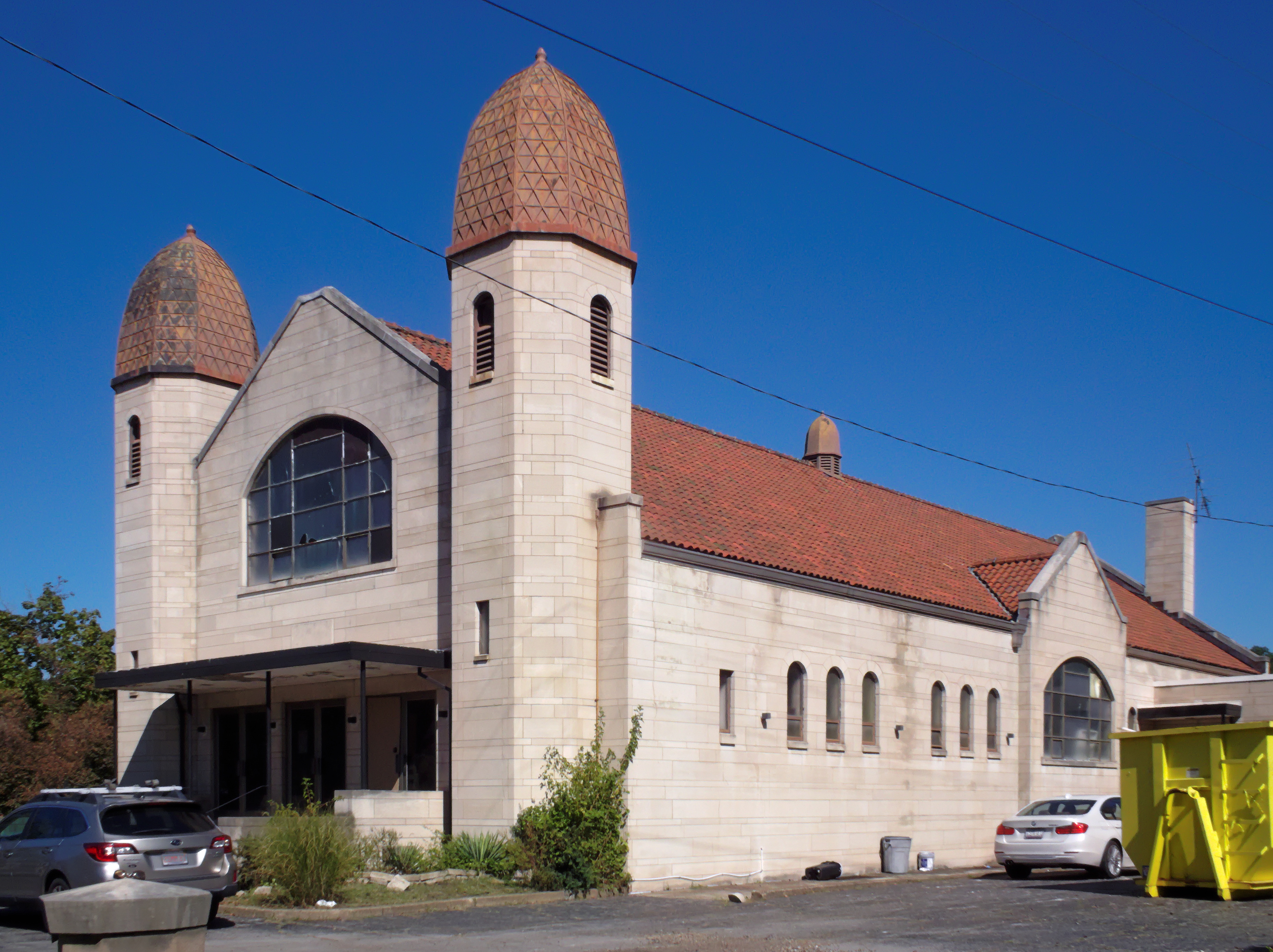
  • Nativity of Our Lady Church, Greenfield

    Nativity of Our Lady Church

    The architect of this Byzantine-modern church was Charles J. Pepine, who designed a number of postwar churches in our area.1 It was dedicated in 1949 under the name “Nativity of Our Lady”; later it was known as Nativity of the Blessed Virgin, but it was usually just called St. Mary’s. It closed in 2010. Some attempts were made to turn the building into apartments, but they ran into objections from neighbors and we know not what other troubles; currently the building is vacant, though with building permits dated 2015 and 2019 in the front window.

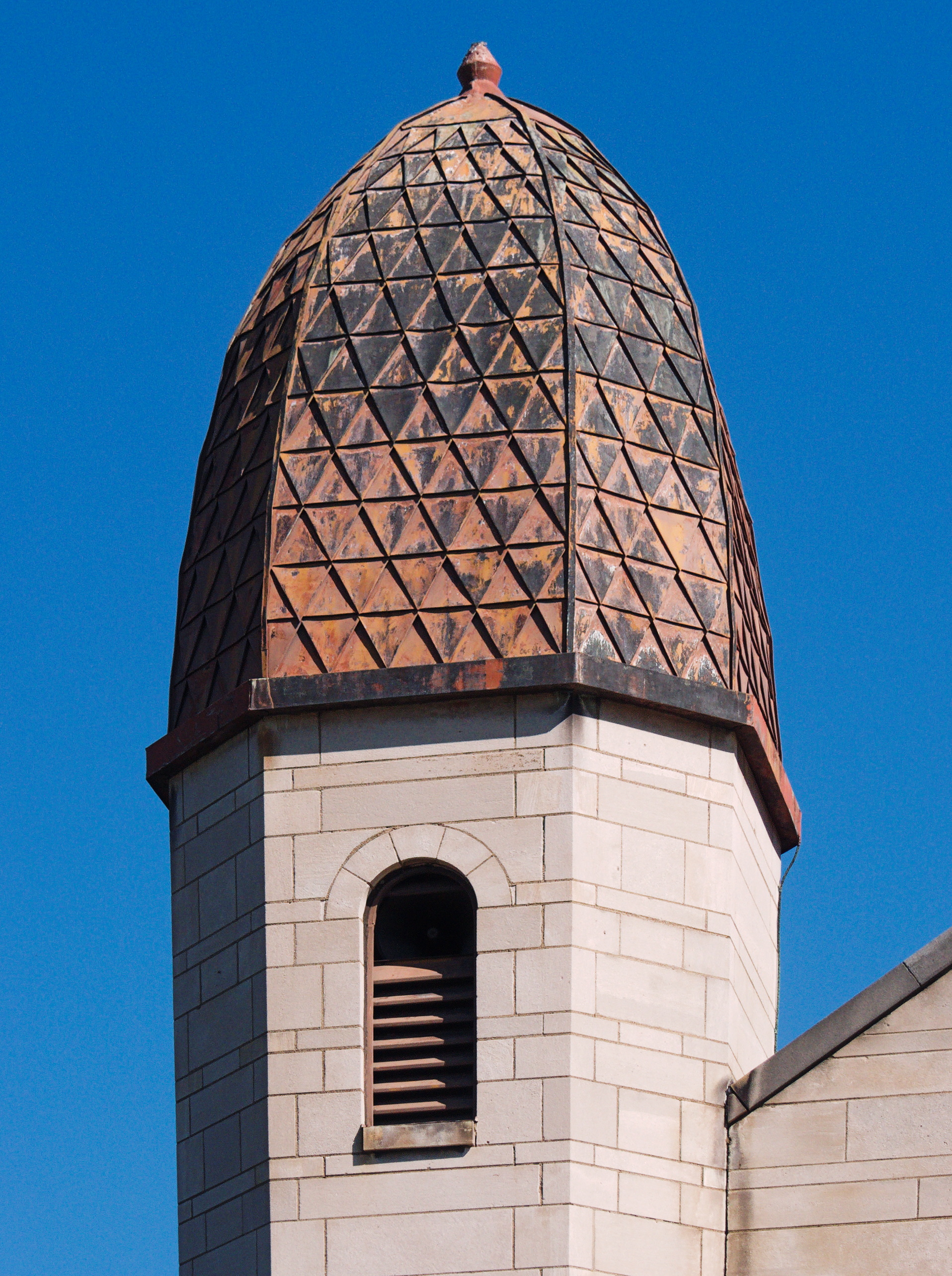
    Tower

    The distinctive high domes of these towers were not part of the original plan when the new church was first announced in September of 1948, as we can see from this sketch by the architect.

    From the Pittsburgh Sun-Telegraph, September 4, 1948.
    Nativity of the Blessed Virgin Church
    Nativity of Our Lady Church
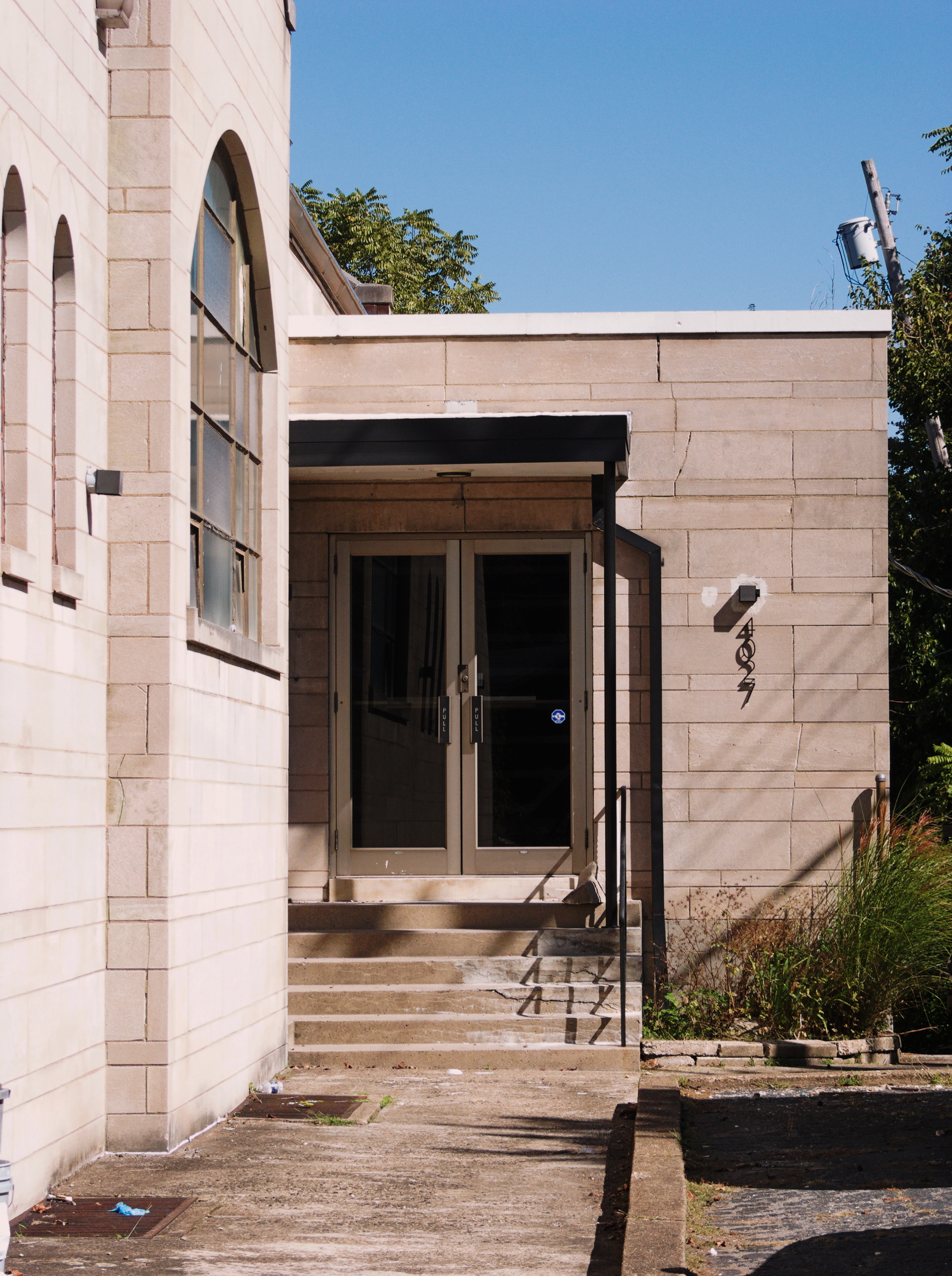
    Side entrance
    Entrance to the parking lot
    Pillar
    Olympus E-20N; Fujifilm FinePix HS10.

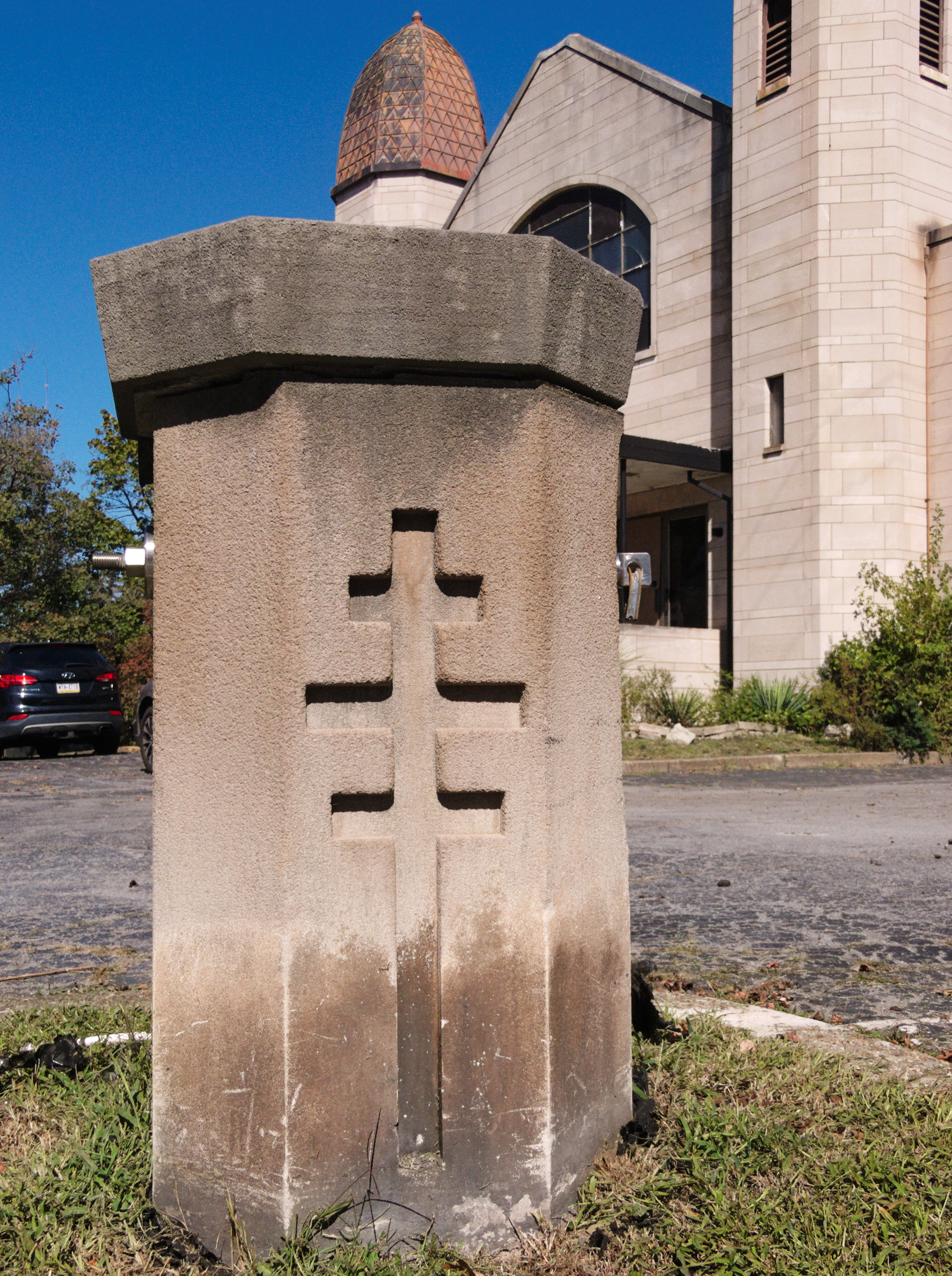
    If there must be parking lots, they should be marked by architectural elements in keeping with their buildings—like these pillars at the parking-lot entrance for St. Mary’s.


    Comments
  • Modern Apartments on Neville Street, Oakland

    Mark Twain Apartments

    In the boom years after the Second World War, new housing couldn’t be built fast enough to satisfy the demand. Architects were busy, and modernism was the rage. The Mark Twain and the Stephen Foster brought clean modern lines to Neville Street and doubtless filled up as soon as they were opened to eager renters.

    Stephen Foster Apartments
    Mark Twain and Stephen Foster
    Kodak EasyShare Z981.

    Comments