

The fountain at Gateway Center dyed pink for breast-cancer awareness.


The gleaming modernist towers of Gateway Center in afternoon sunshine.


Did you notice how Father Pitt did not slow down the shutter speed for the flowing water, the way every photography site on the Internet dogmatically insists you must do it? Did you notice the fascinating patterns of falling water that were captured by the deliberately fast shutter? Are you ready yet to abandon the dentist’s-office-wall-decor cliché of slow shutter speeds for waterfalls and fountains? You can join the rebel alliance!

The picture above is made from three separate photographs at different exposures, which gives us a better range of detail—but it also adds to the complexity of the play of falling water. To approximate the golden color of the late-afternoon sunshine, it was then put through a simulated Kodachrome 64 filter, with many thanks to the obsessive fiddler who did his best to match the color and light response of Kodachrome film so that the rest of us can have at least an echo of that Kodachrome look. Since Kodachrome has been extinct for fifteen years, this is as much as we can do.
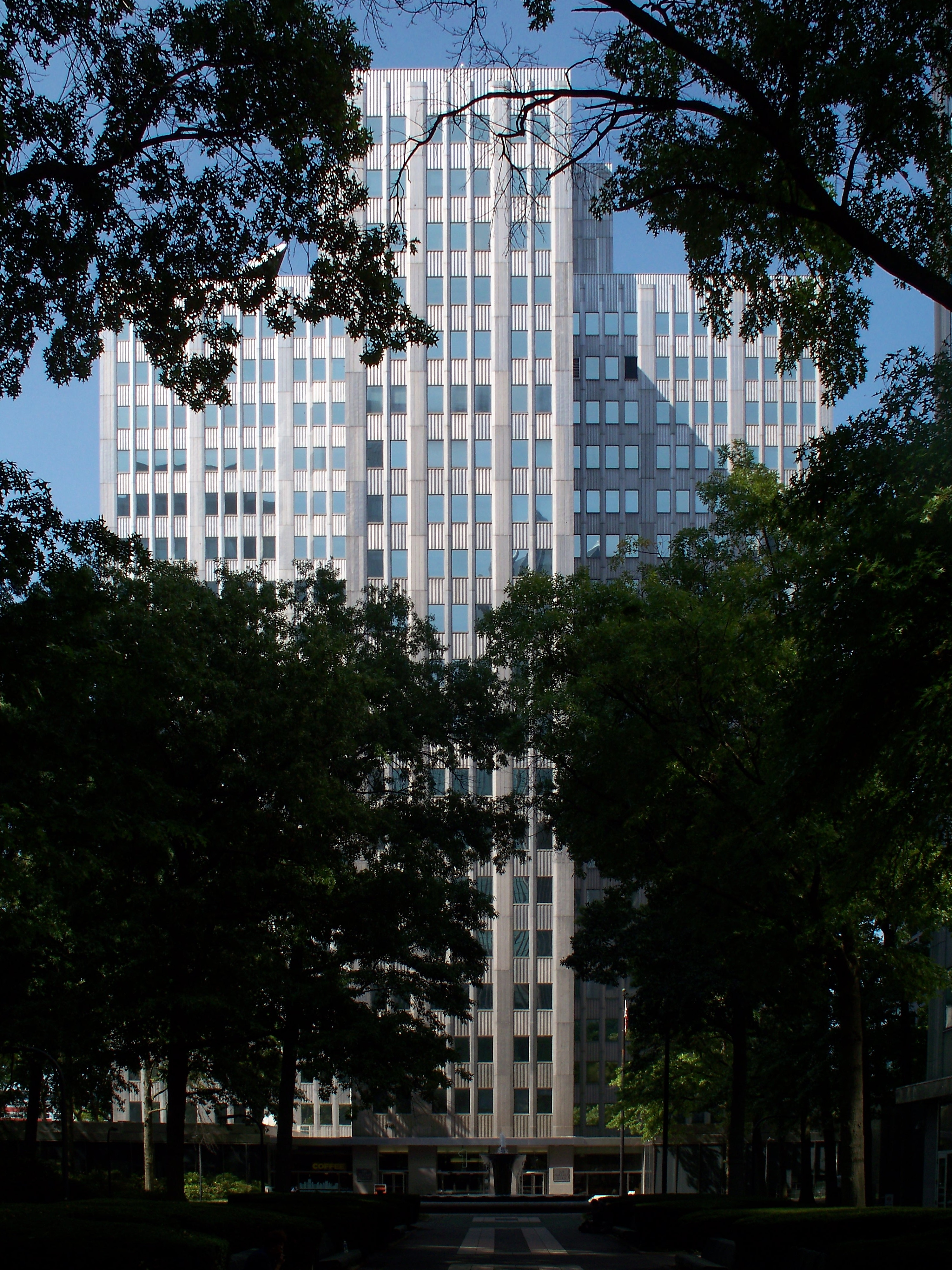


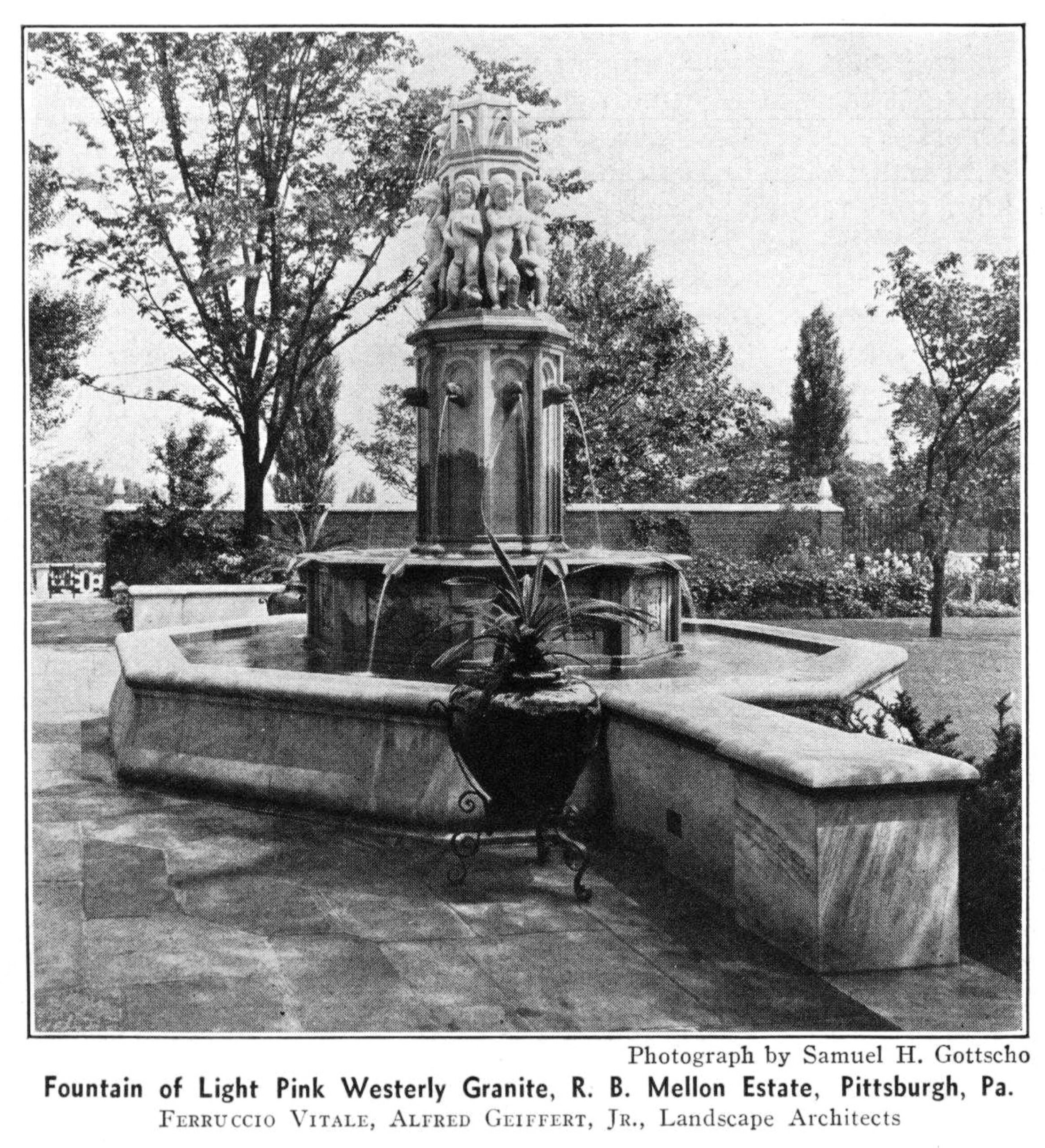
Courtesy of the New England Granite Works, a picture of the fountain in the Mellons’ Walled Garden shows us a little of what the garden, now part of Mellon Park, looked like when the Mellons lived there. The sculpture on the fountain is the work of Edmond Amateis, and the fountain has been beautifully restored for the delight of visitors to the park.

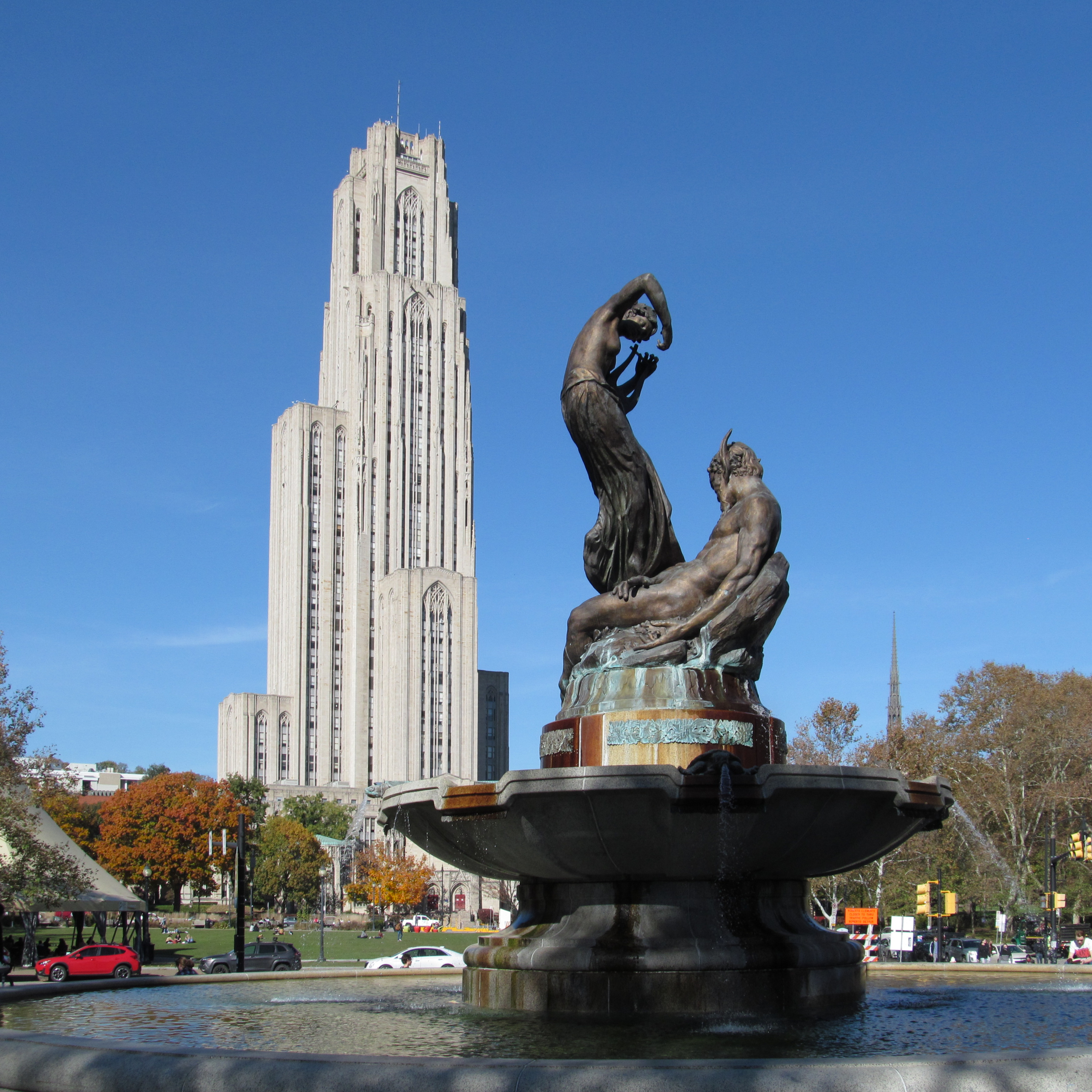
This fountain is a memorial to Mary Schenley, heir to the O’Hara glass fortune and donor of the vast tract of land that became Schenley Park. It is remarkable as a work of art, and almost as remarkable for being one of the relatively few fountains in the world built above a buried bridge. There was once a hollow here; an arch bridge crossed the hollow at this point. The hollow was filled in, but if you dig far enough at this spot, you will find the Bellefield Bridge.

The sculpture, A Song to Nature, is by Victor David Brenner, and old Pa Pitt is going to make a remarkable offer to his readers. If you ever meet Father Pitt in person, he will give you for your very own another famous sculpture in metal by the same great artist. He can make this remarkable offer because Victor David Brenner’s most famous work is the face of Abraham Lincoln on the United States penny.

In this sculpture, the female figure represents Sweet Humanity playing her song to the lazy earth-god Pan, who responds in a way that we may perhaps judge from his face.


