

The Skinny Building and its neighbor the Roberts Building have been bought by PNC. Here they are shrouded for renovation work. The last old Pa Pitt heard, PNC was planning on displaying art in the upper windows of the Skinny Building.
The Skinny Building and its neighbor the Roberts Building have been bought by PNC. Here they are shrouded for renovation work. The last old Pa Pitt heard, PNC was planning on displaying art in the upper windows of the Skinny Building.

This splendid terra-cotta façade on Forbes Avenue used to belong to Donahoe’s Market and Cafeteria (note the D above every second-floor window). Father Pitt enjoys the challenge of getting a complete picture of a large façade on a narrow street. Here the stitching has succeeded admirably; except for a little distortion at the ends of the building, this is probably just how the architect drew the upper floors. Old Pa Pitt doubts whether an architect had anything to do with the current incarnation of the ground floor; it looks like the work of a contractor who had a brother-in-law in the corrugated-steel trade.
Addendum: According to the Pittsburgh History and Landmarks Foundation, the original architect of the Donahoe Building was William E. Snaman.

One of the many black stone buildings that still remained in Pittsburgh in the 1990s. Like almost all the others, Sixth Presbyterian has since been cleaned and restored to its original color.
Father Pitt has always wondered why the Presbyterians kept numbering their churches. “First Presbyterian” is an honorable distinction. “Fifth Presbyterian” just sounds tired. And then why stop at six? There is a Seventh Presbyterian in Cincinnati, for example. (Update: They did not stop at six; in fact both Presbyterian and United Presbyterian churches in Pittsburgh went into the double digits. Sixth Presbyterian is the highest number still going that we know of.)
Addendum: The architect was John Lewis Beatty; the church was built in 1902.1

The Burke Building was built in 1836, and rather surprisingly (considering that Pittsburgh was founded in 1758) it’s the oldest building downtown outside Fort Pitt. The Great Fire of 1845 just missed it. The architect was John Chislett, Pittsburgh’s first resident architect, who also designed the Butler Street gatehouse for the Allegheny Cemetery.
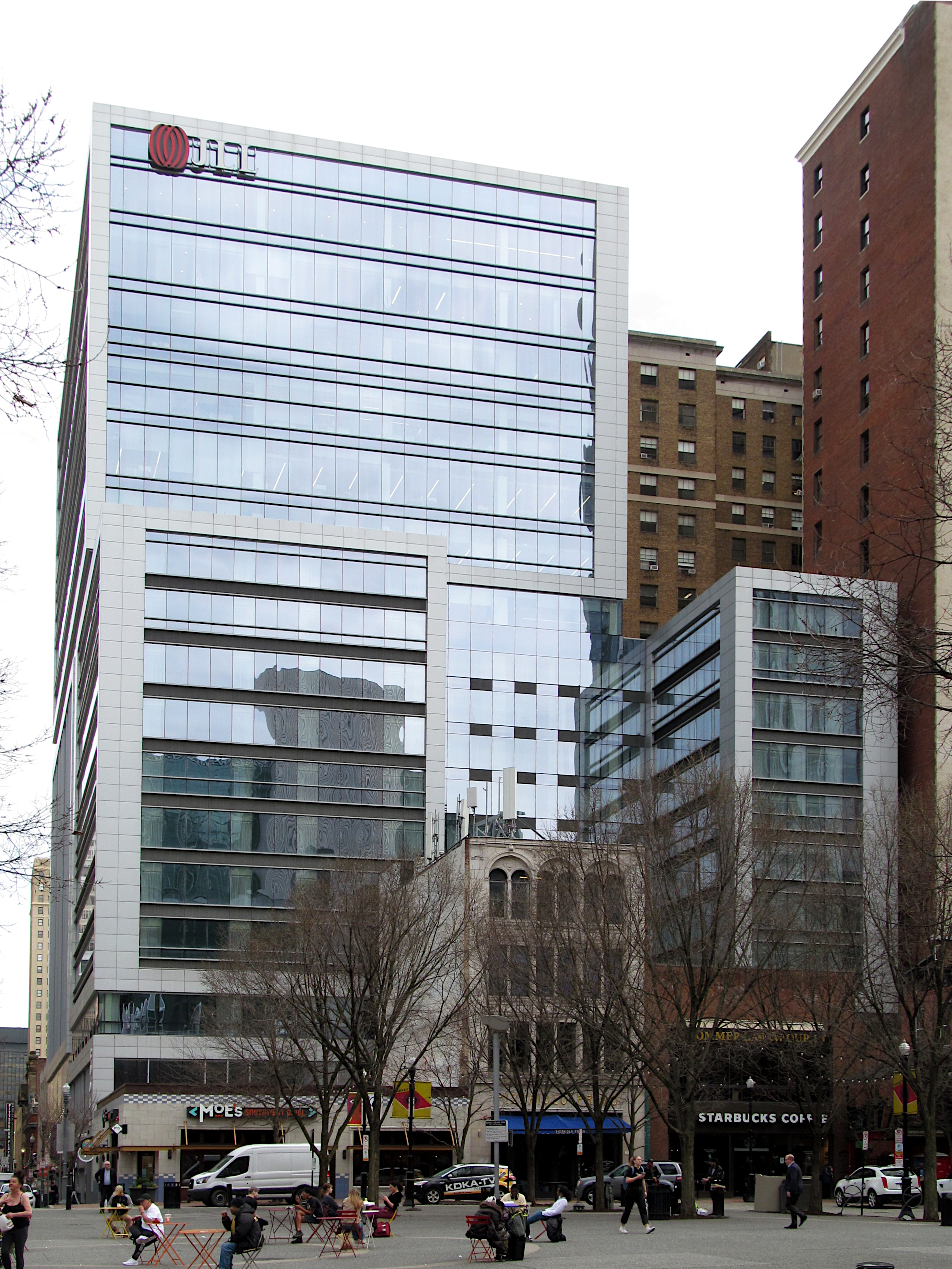
The blockish Tower Two-Sixty looms over the little human-sized buildings on the Diamond.
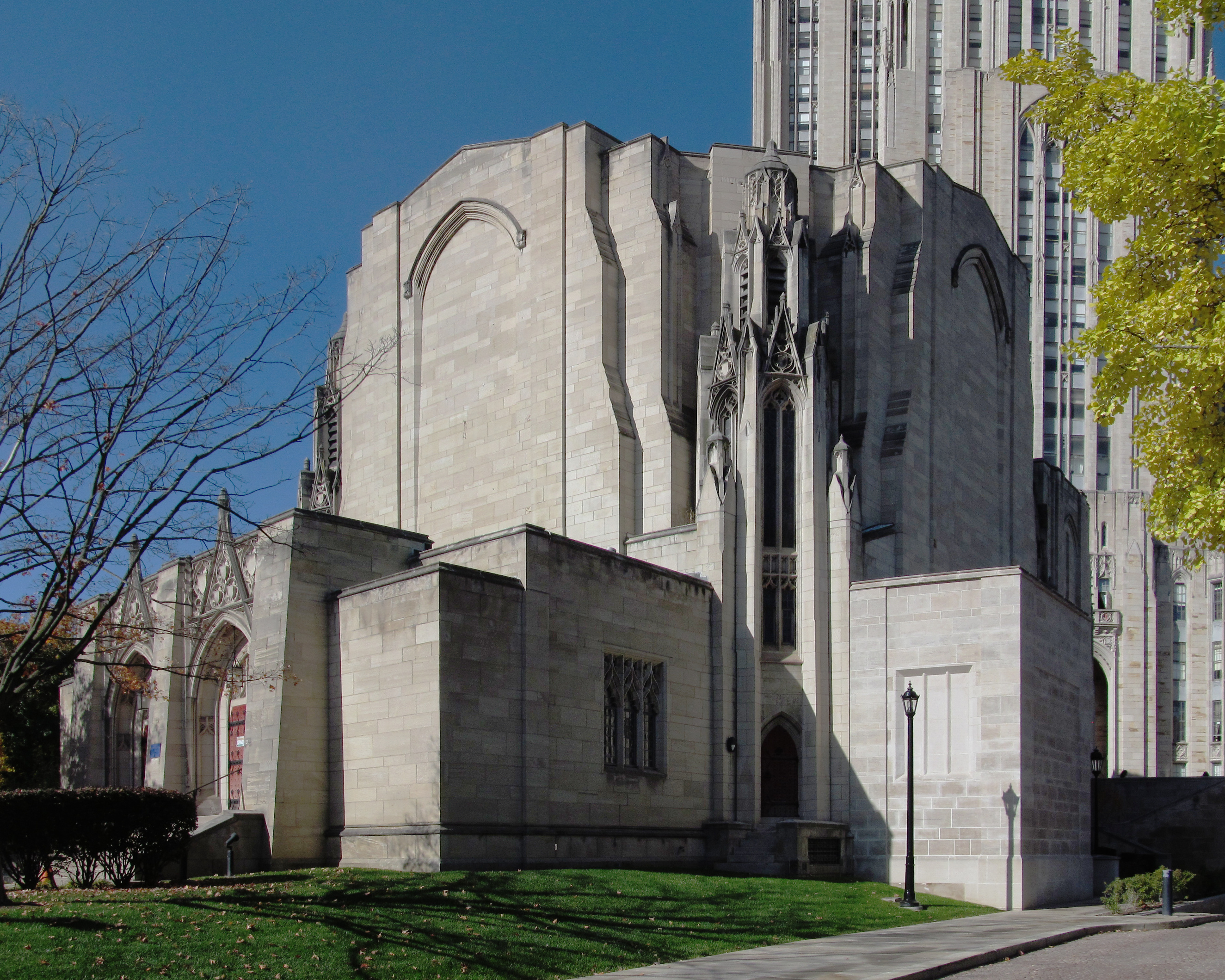
One of the cluster of Gothic buildings by Charles Z. Klauder at the heart of the University of Pittsburgh, this looks like the baptistery for the Cathedral of Learning. It houses a museum of Stephen Foster, two theaters, and the Ethelbert Nevin Collection. There was a time when Ethelbert Nevin might have got a museum of his own, but he missed his chance, and now he is an appendix to Stephen Foster.


The exceedingly improbable Skinny Building, which is five feet eight inches deep, seen in wintry December light. The picture was taken two years ago, but Father Pitt didn’t like the harsh lighting and high contrast in the original picture. Looking at it again just recently, he thought perhaps the lighting could be made into the subject of the picture if it were a black-and-white picture.
The building has been sold to PNC, which plans to display art in the upper floors.
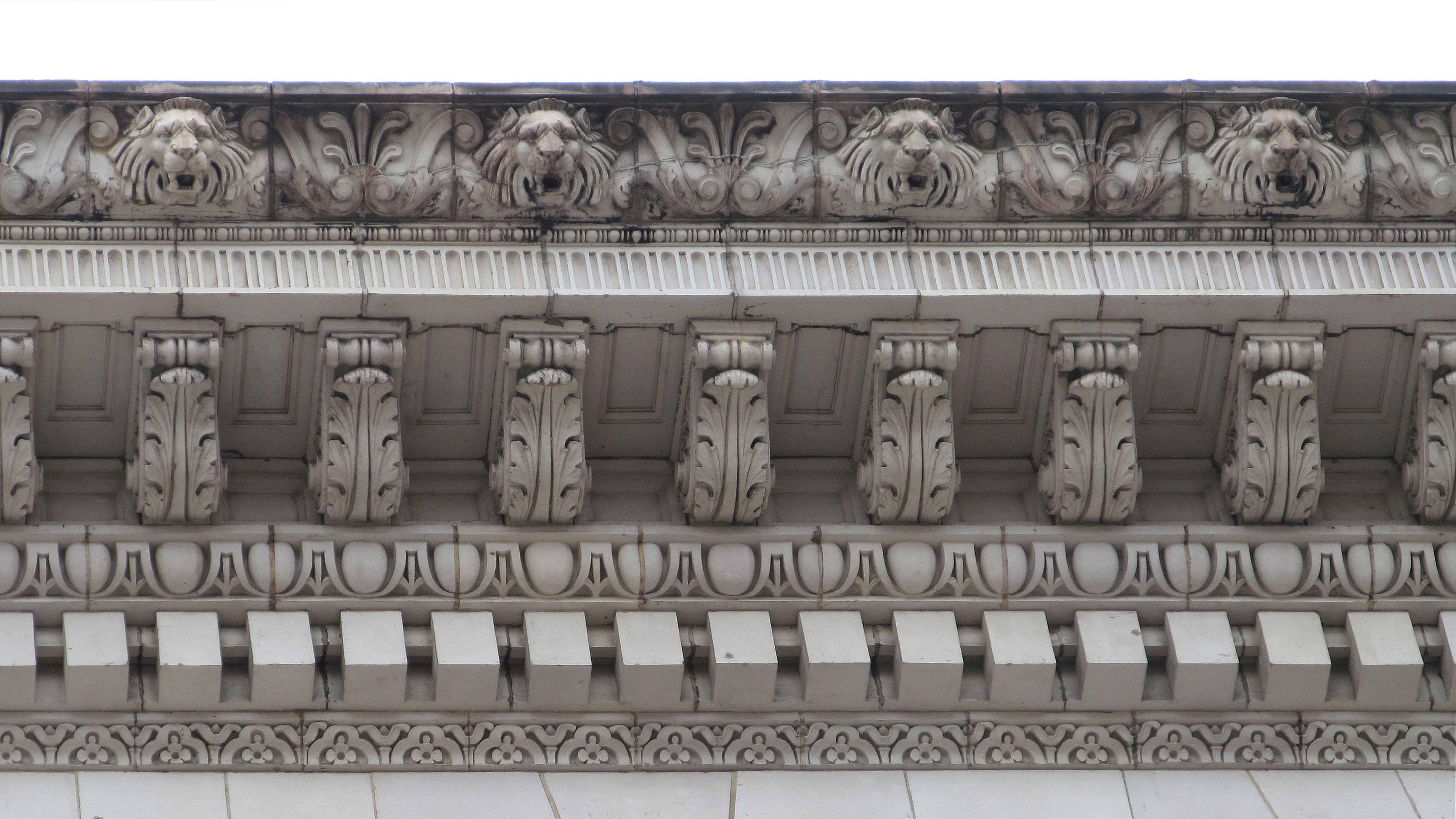
The richly decorated Parkvale Building on Forbes Avenue is currently under renovation, so we can hope that these splendid reliefs will continue to delight future generations of Pittsburghers.
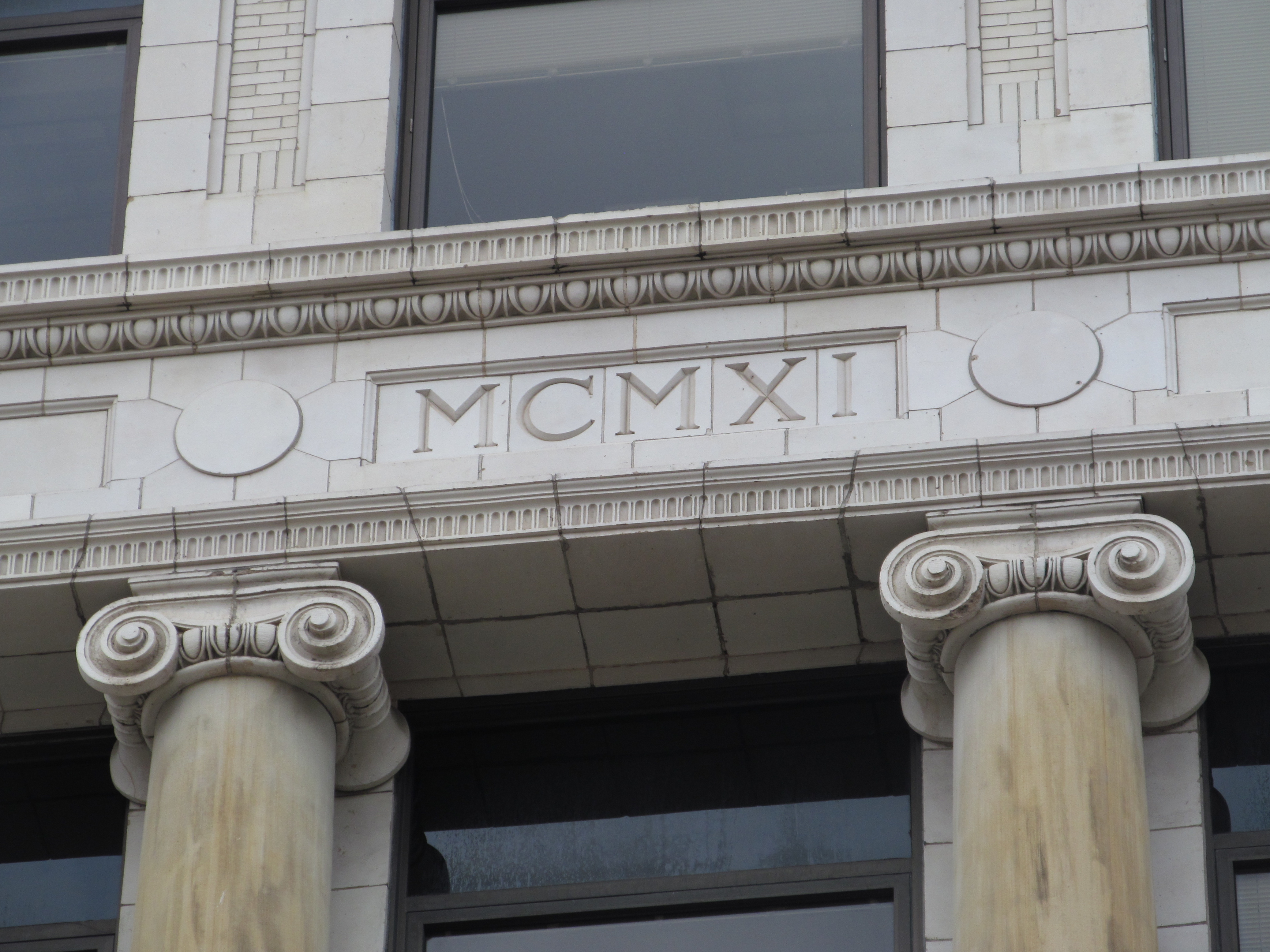


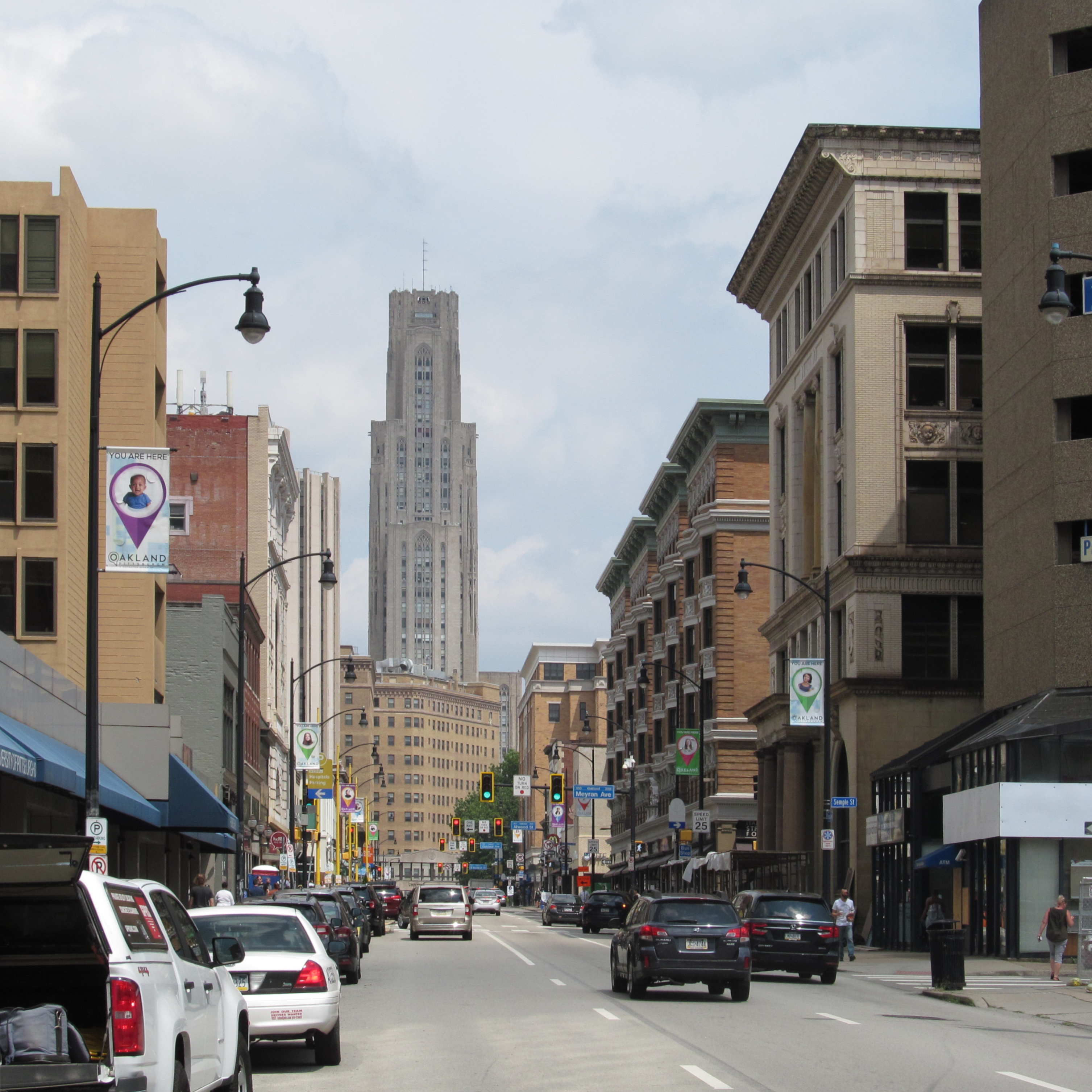
The lively and varied streetscape of Forbes Avenue in Oakland, looking toward the Cathedral of Learning.

An image from an advertisement in the National Vaudeville Artists’ Annual for 1928. You and your dancing poodles are invited to shop here. This building is now under renovation, and with the removal of some later accretions the shadows of the Frank & Seder signs are visible (see the recent photos here).