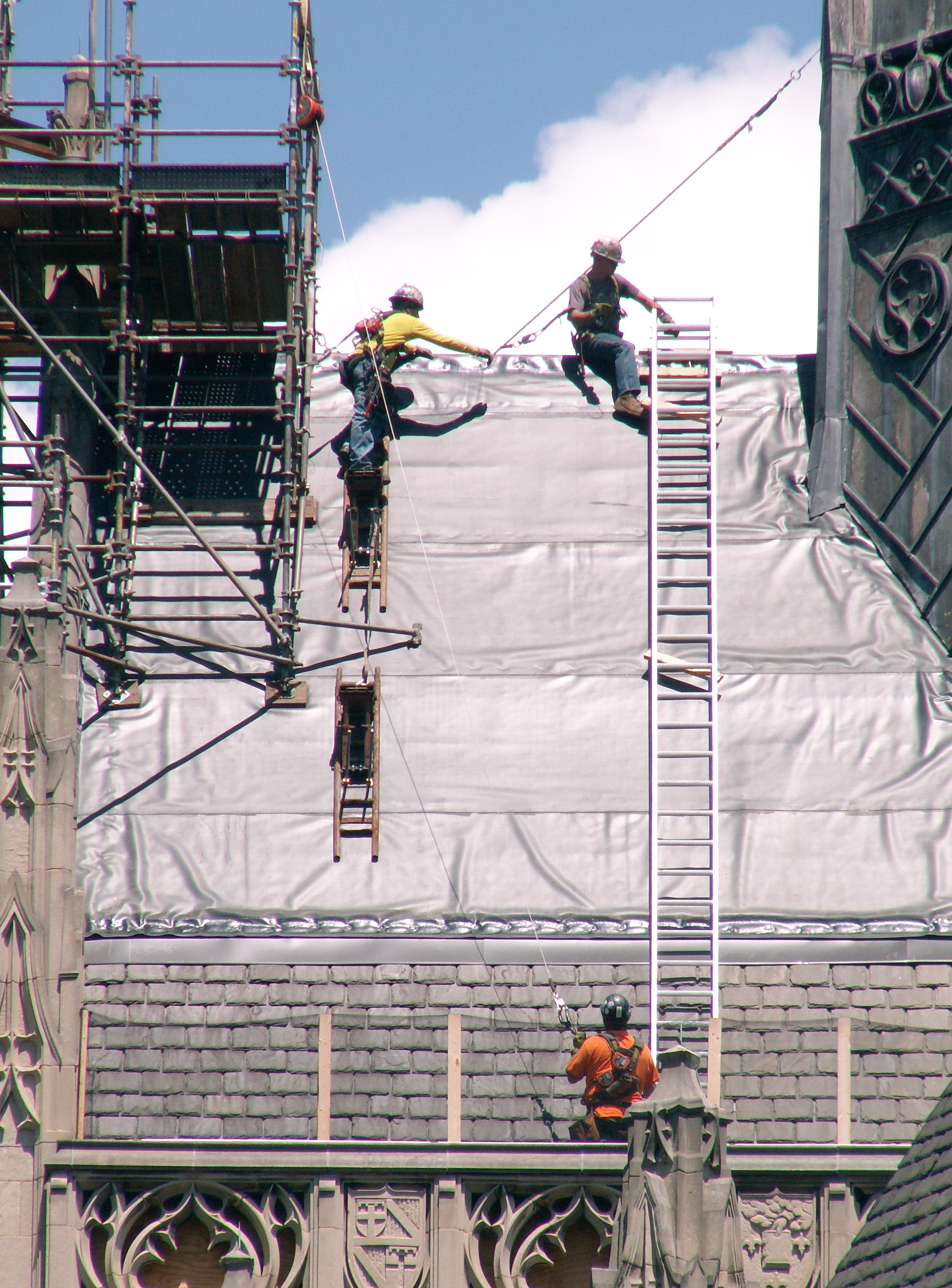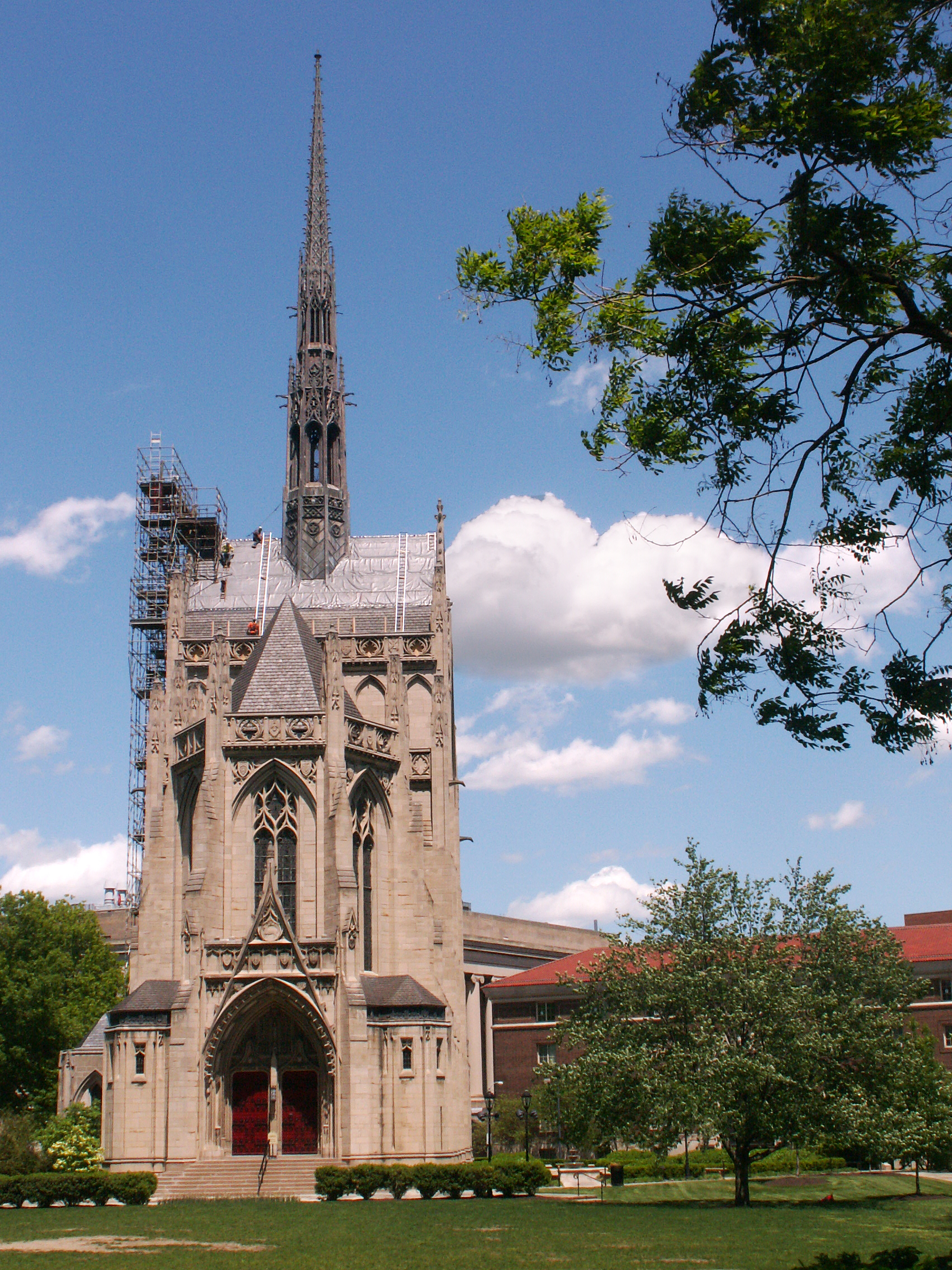

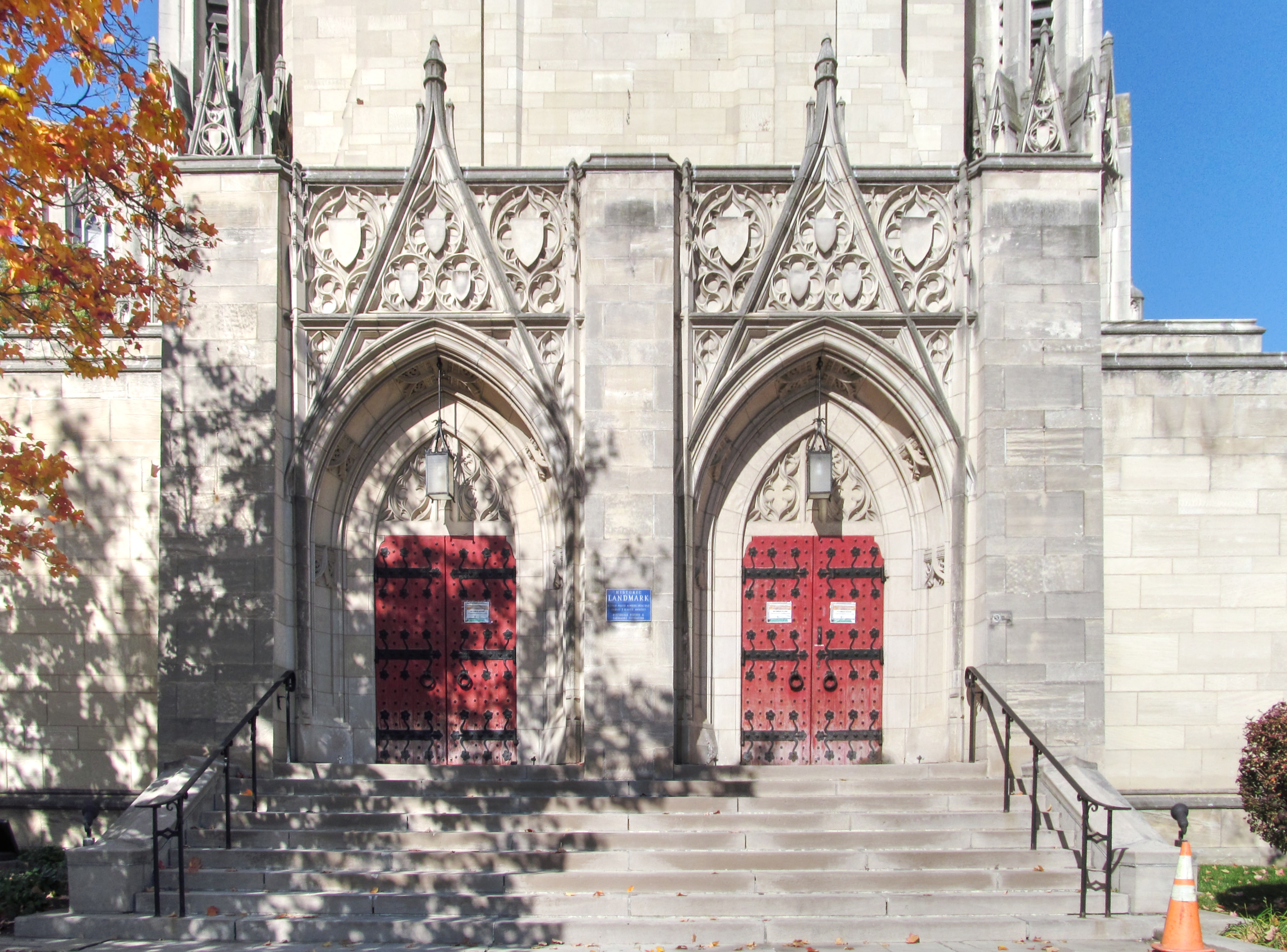
We have seen this view more than once before, but it is one of the best views of the building, and it is worth seeing in different lights. Here the patterns of light and shade from the drifting clouds made an especially pleasing picture.

That is the claim made for the transept windows in Heinz Chapel, and old Pa Pitt accepts it until someone proves otherwise. They were created by the studio of Charles Z. Connick.
The windows trace Christian history down from Christ to American heroes like Abraham Lincoln, shown here freeing slaves with his Emancipation Proclamation.

Father Pitt’s very favorite detail in these windows is in the Lincoln pane. In fact it is one of his favorite details in any stained glass anywhere. You probably won’t even notice it as you look at the heroic figure of Lincoln, but here it is:

This scowling cartoon-villain plantation owner, furious that some Northern abolitionist scum has the temerity to interfere with his right to whip his own property, is the perfect background for Lincoln. One feels that the whole Civil War was worth the trouble just to make this man frown.
But let my due feet never fail
To walk the studious cloister’s pale,
And love the high embowed roof,
With antique pillars massy proof,
And storied windows richly dight,
Casting a dim religious light.
There let the pealing organ blow,
To the full-voic’d quire below,
In service high, and anthems clear,
As may with sweetness, through mine ear,
Dissolve me into ecstasies,
And bring all Heav’n before mine eyes.
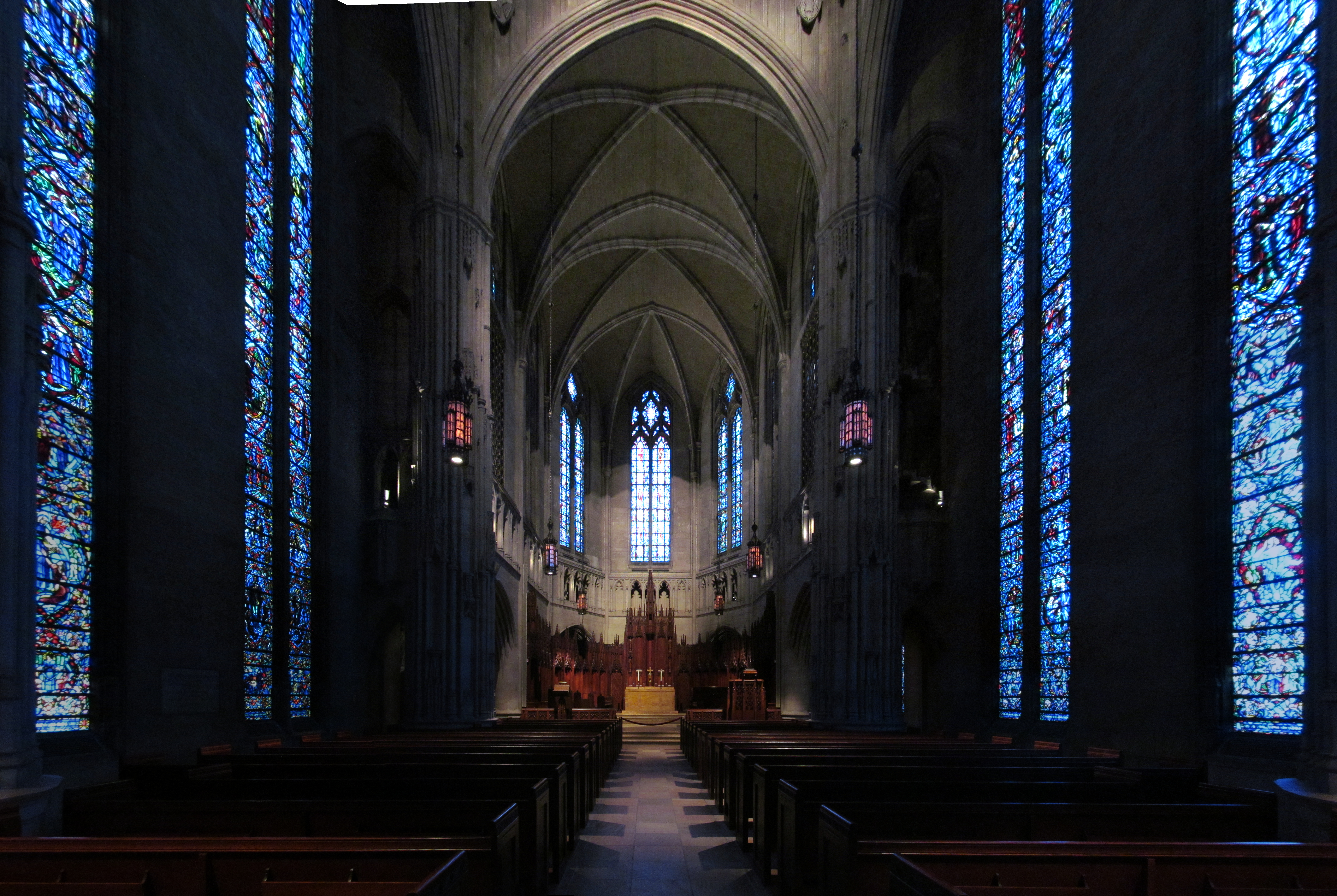
It is difficult to convey in a photograph the impression we get from entering a glorious Gothic church like Heinz Chapel. In general photographs are too light, either because the photographers laudably attempted to capture the many artistic details of the Gothic interior, or because they used automatic exposure and let their cameras do the thinking. Old Pa Pitt has tried very hard in these pictures to give some impression of the relative lighting as we enter the chapel from the bright light outside. Most of the light is dim, but a pool of light shines in the distance, drawing us toward the altar.


No matter how bright it may be outside, turning to leave the church is walking away from the light.
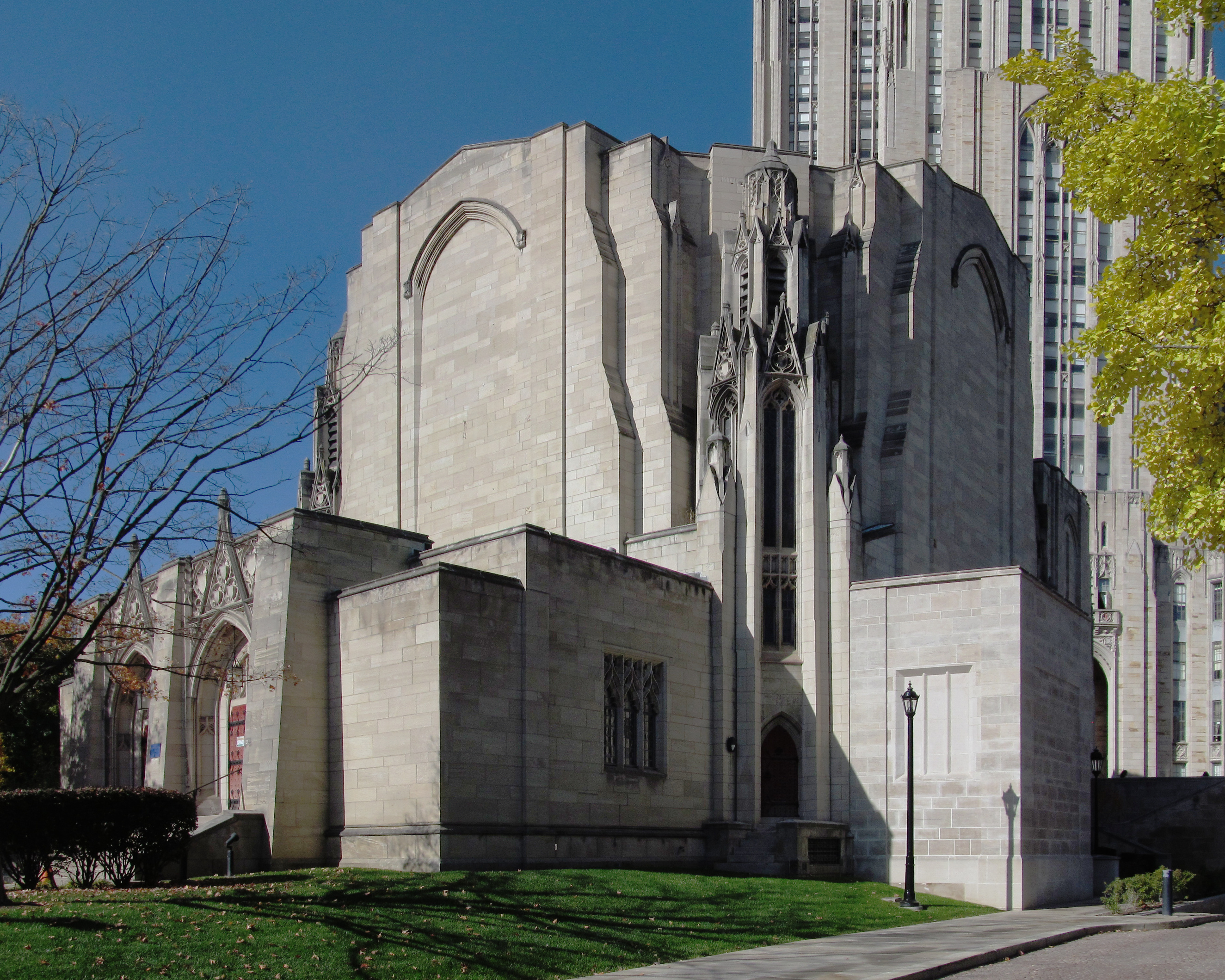
One of the cluster of Gothic buildings by Charles Z. Klauder at the heart of the University of Pittsburgh, this looks like the baptistery for the Cathedral of Learning. It houses a museum of Stephen Foster, two theaters, and the Ethelbert Nevin Collection. There was a time when Ethelbert Nevin might have got a museum of his own, but he missed his chance, and now he is an appendix to Stephen Foster.


One of the most remarkable things about the Cathedral of Learning is that it is an isolated skyscraper. There are very few places in the world where a skyscraper can be examined by itself, and few skyscrapers so much worth examining as this, which Father Pitt has often declared the only convincing application of Gothic style to the skyscraper form.