
One of the Impressionist treasures of the Carnegie Museum of Art.
Comments

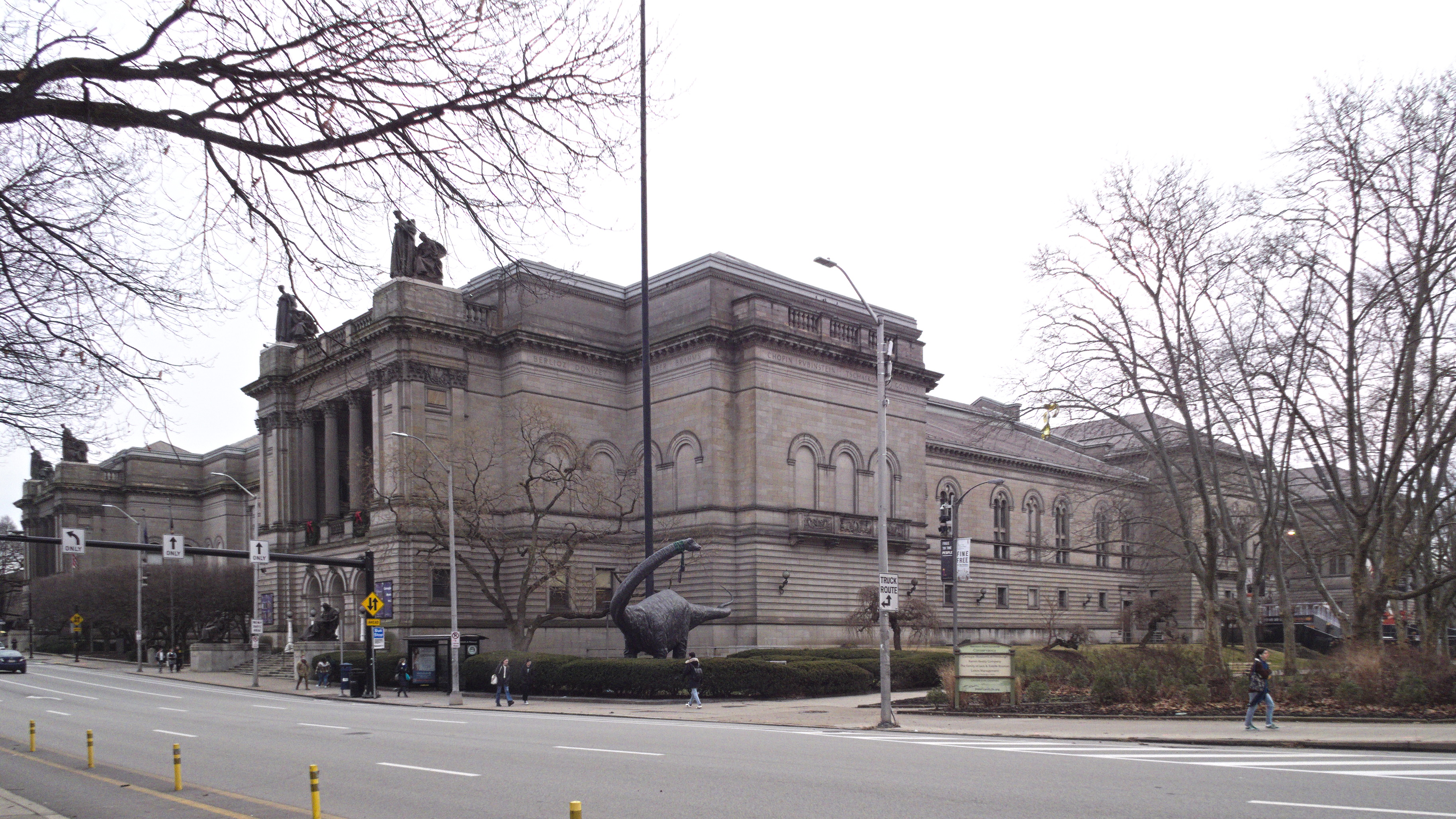
The vestibule at the original entrance to the Carnegie Institute building, seldom used now because visitors come in through the modernist Scaife Galleries addition. This picture was taken hand-held in dim light with the ultra-wide auxiliary camera on old Pa Pitt’s phone, so please forgive its obvious flaws.

A rainy November afternoon is the perfect time to spend an hour or two in the art museum. Here are a few of the things you might see if you visited the Carnegie right now.
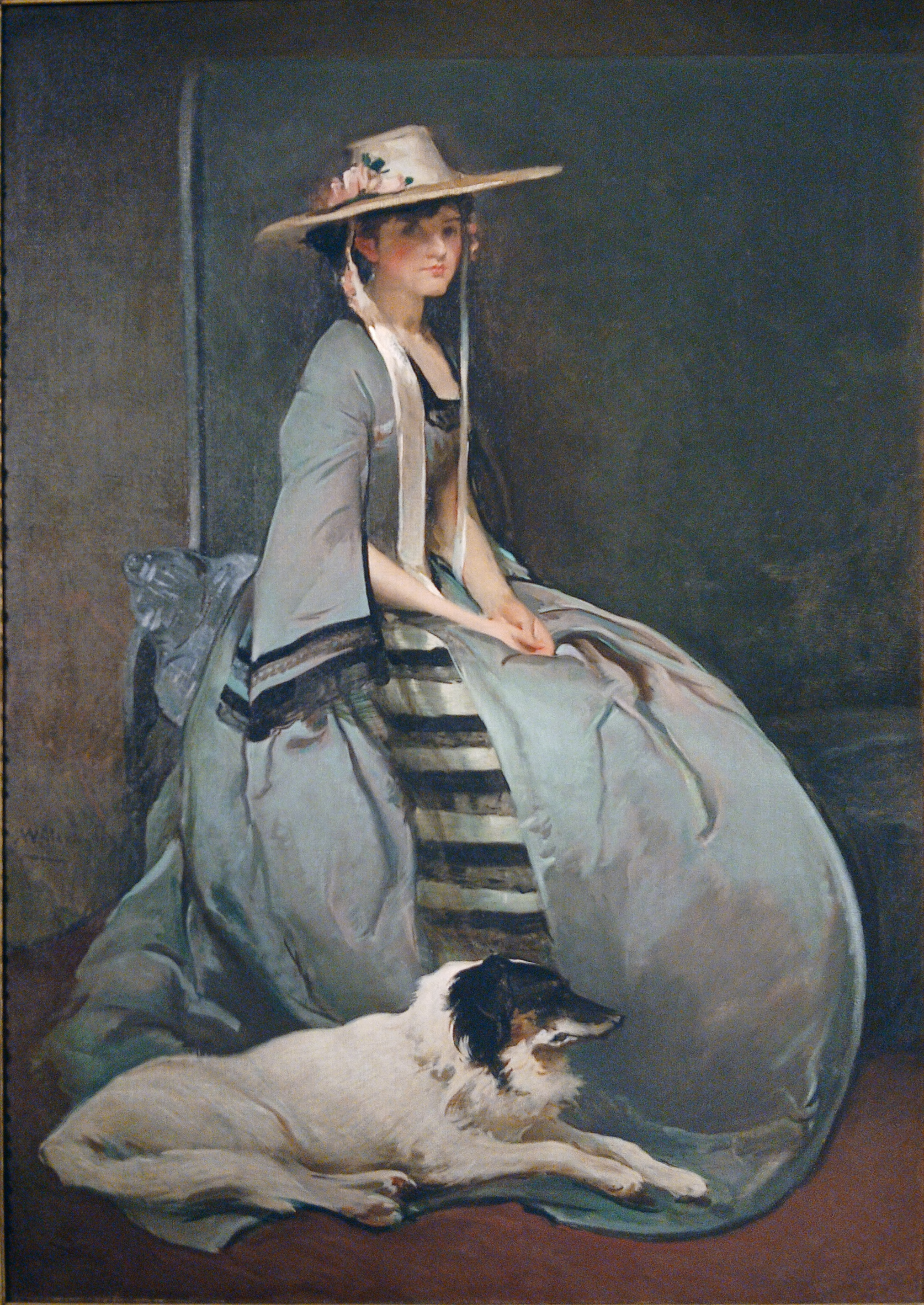
Aurora Leigh, by John White Alexander, 1904: an imaginative portrait of the heroine of Elizabeth Barrett Browning’s verse novel. Alexander’s last and greatest work was the decoration of the Grand Staircase in the Carnegie, so you’ll have a chance to see those murals, too.

Sunrise Synchromy in Violet, by Stanton Macdonald-Wright, 1918.
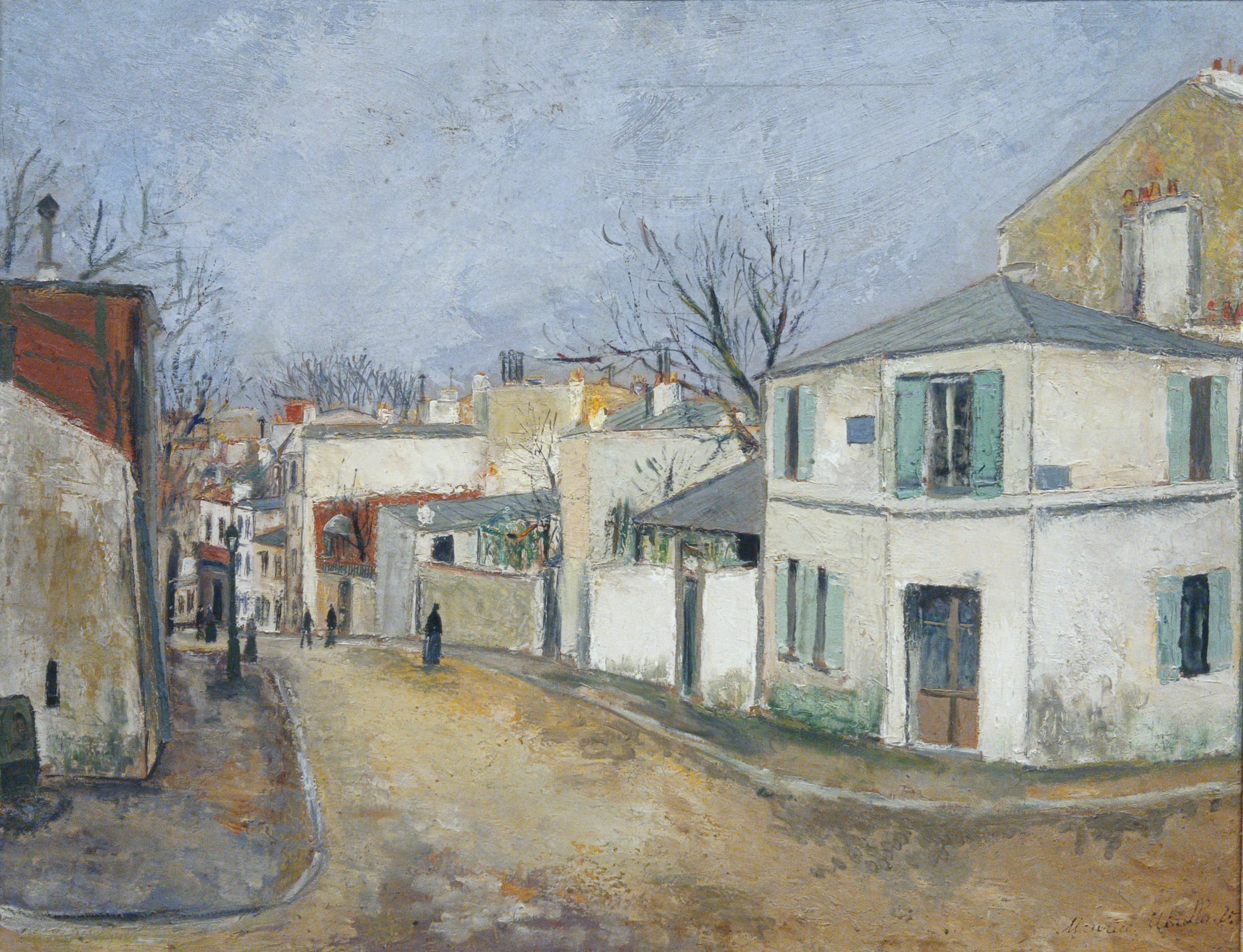
Rue de L’Abreuvoir, by Maurice Utrillo, 1911.
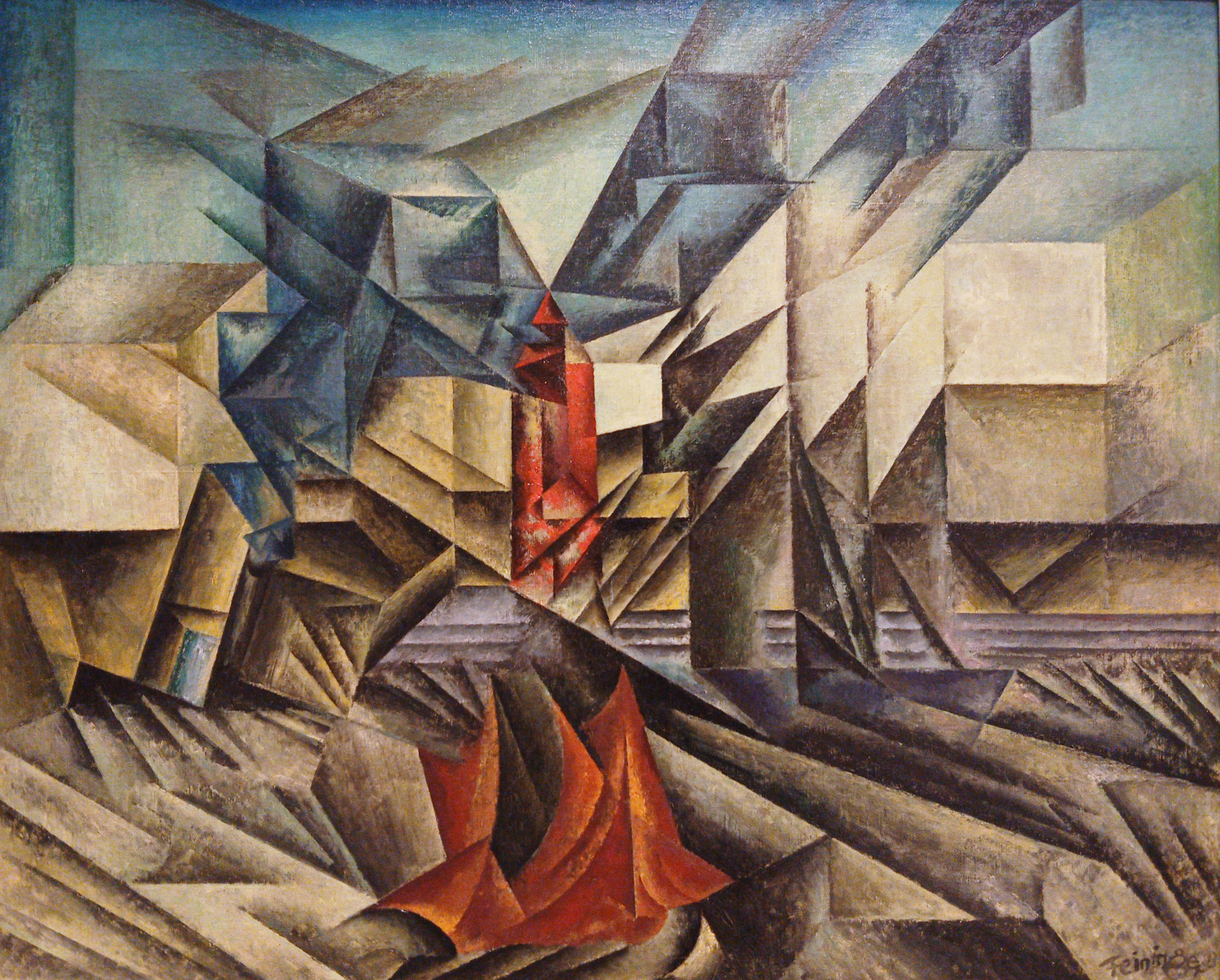
Harbor Mole, by Lionel Feininger, 1923.
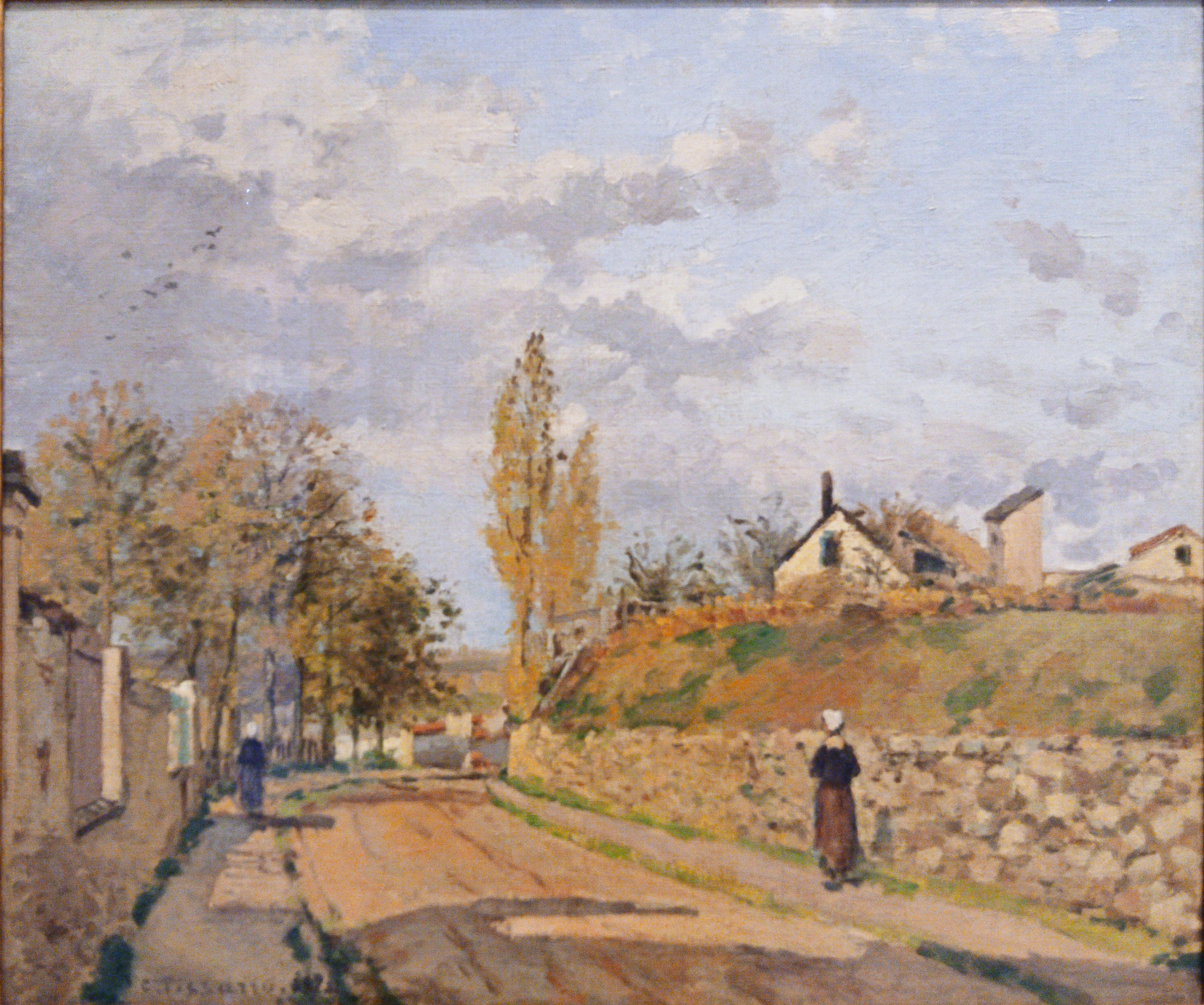
Rue de Beaujour, Pontoise, by Camille Pissarro, 1872.

“No woman has a right to draw like that,” said her friend Edgar Degas when he saw this painting—a compliment Mary Cassatt remembered for years. Mary Cassatt was born in 1844 in Allegheny (now the North Side of Pittsburgh) and grew up there. She studied art in Philadelphia for a while, but spent most of her life in France after that—although it is to the honor of Pittsburgh’s cultured citizens that, when she had to come back to America for a while, one of the first people to recognize Cassatt’s talent and give her a professional commission was Michael Domenec, the Roman Catholic bishop of Pittsburgh.
This painting is one of the treasures of the Carnegie Museum of Art, whose collection of Impressionists is worth traveling a long way to see.

The Hall of Architecture in the Carnegie gives us a whirlwind tour of Western architectural history from Egypt to the Renaissance, through the medium of life-size plaster casts. Above, the sphinx on the Votive Column of the Naxians at Delphi. It originally stood on a column more than thirty feet high, and the Carnegie’s cast is elevated to give viewers an approximation of the angle at which the sculpture was meant to be seen.


The façade of the Temple of Athena Nike, a textbook Ionic temple, and the model for many a mausoleum in Pittsburgh cemeteries.

The Porch of the Maidens, whose caryatids were much imitated in the Renaissance.

Ever since Lord Elgin bought the Parthenon sculptures and other bric-a-brac on eBay in the early 1800s, there have been debates about whether the Turks had any right to sell them, and whether they really ought to be where they are (in the British Museum), or whether they ought to be back in Athens. The arguments are still going on, and the United Nations has tried to sort out the dispute to no avail.
But here they are in Pittsburgh, and no one has to have a fight about it, because these are plaster casts of the originals. They are almost indistinguishable visually from the original art, and they can be experienced in three dimensions like the originals, and you don’t have to cross the Atlantic to see them.

In the late 1800s, the world’s great museums had the idea that it would be good for people to be able to experience the great sculpture and architecture of the world in three dimensions, just as if it were in their own city. The craft of making plaster casts had been brought to a peak of perfection, and museums eagerly bought up these casts and formed large collections.
Then, as the twentieth century rolled on, the collections became mortal embarrassments. Art was valuable only if it was original, and plaster casts are not original. Only three of the great plaster-cast collections survive, and this is one of them. It is the only one that was never kicked out of its original home.

Museum curators are beginning to wake up to the value of these collections. From a visual point of view, the experience of viewing them is almost exactly the same as the experience of viewing the originals. An art student can sketch them from different angles, can observe how the shadows fall across the drapery, can crane her neck to look at the bits that aren’t visible in photographs.

Father Pitt is sure that someone, somewhere, can find a reason for being angry about these plaster casts. But for most sane people, here are some of the remaining glories of classical art for you to enjoy guilt-free and without a passport.

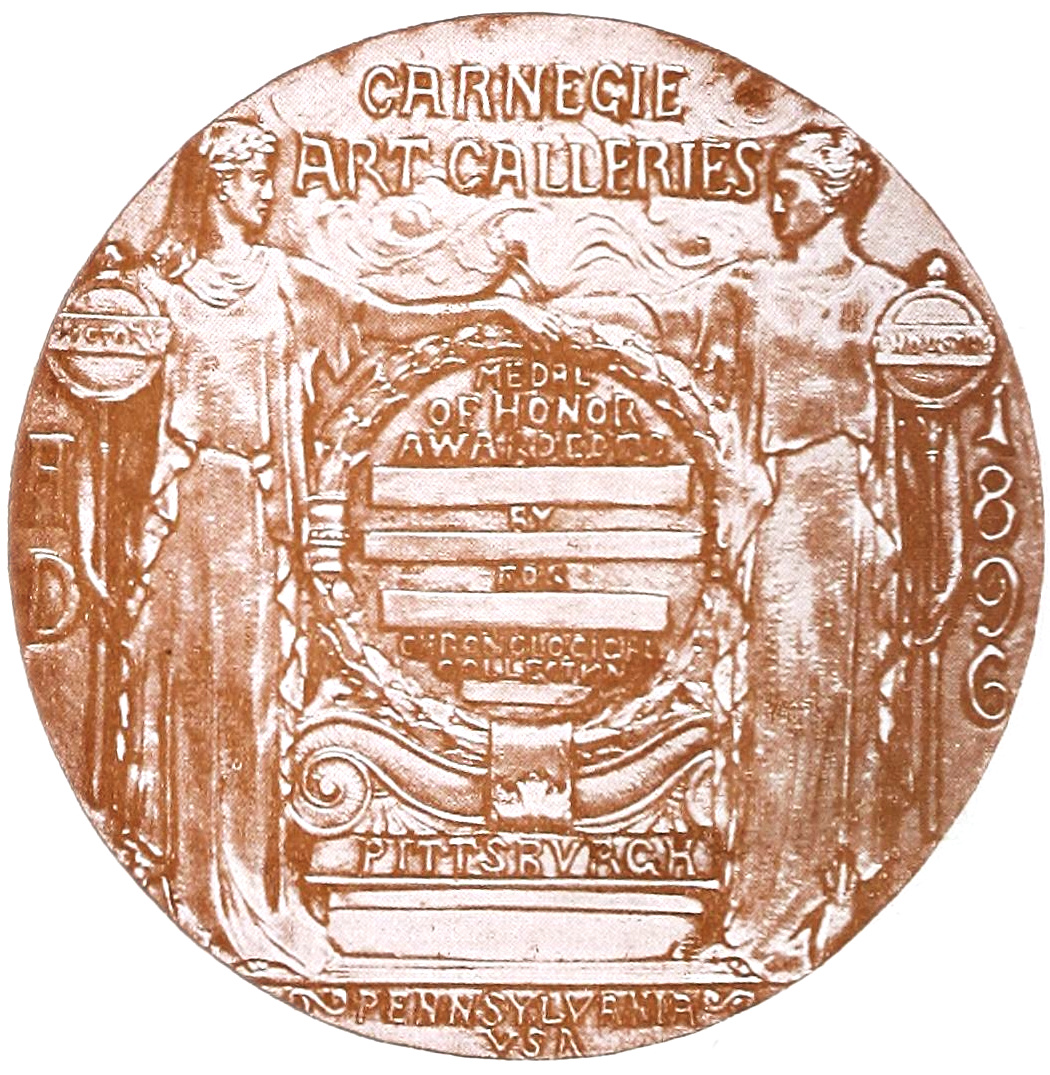
The first Carnegie International was held in 1896, and it immediately became one of the most important exhibitions of modern art in the world. Andrew Carnegie believed in encouraging artists by collecting the old masters of tomorrow, and many priceless works have been acquired for the Carnegie’s collection from International exhibitions.
This Medal of Honor was designed for the Carnegie by Tiffany & Co. It was reproduced in the catalogue of the 1899 International, which is a beautiful publication from the golden age of American printing.