
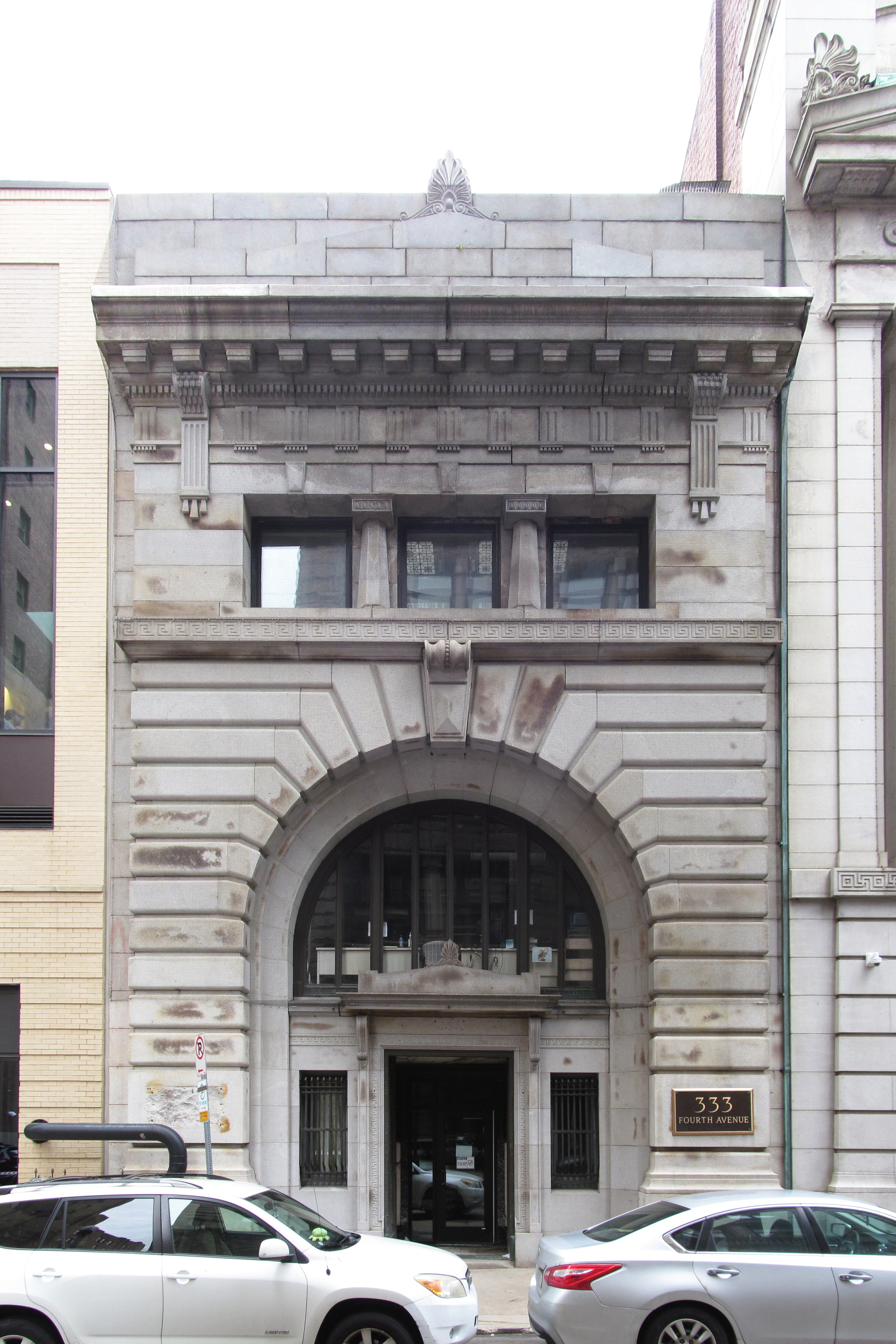
A little bank built in 1903, designed to convey the message that you don’t have to be big to be rich. The architect was Charles M. Bartberger.
A little bank built in 1903, designed to convey the message that you don’t have to be big to be rich. The architect was Charles M. Bartberger.

This little bank on Fourth Avenue was originally designed by Alden and Harlow. The central section has been ruthlessly mutilated, with the elegant arch replaced by a cartoon suggestion of an arch. For reasons unknown, much of the rest of the building was left untouched (although it is pretty clearly missing its top), and the details there are enough to make it worth our while to stop and admire them.

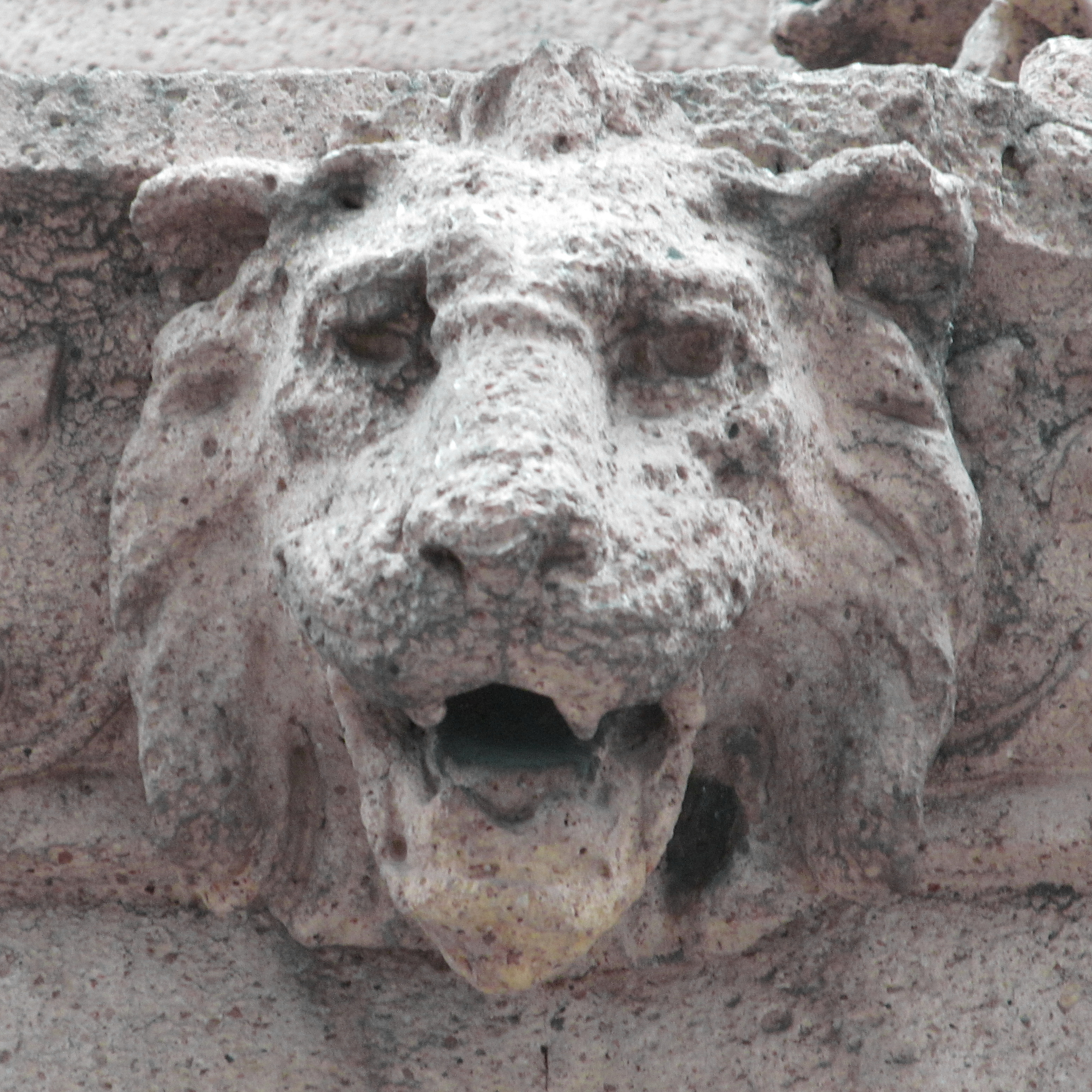
Of course there are lions. How could there not be lions?


The adjective “tasteful” does not naturally attach itself to this structure. It has the look of a building specified by a banker who hired an expensive architect and was determined to wring every cent of his money’s worth out of the details. It is magnificent in a slightly horrifying way: this is the kind of monstrosity that was in the minds of the modernists when they condemned all things Victorian. Old Pa Pitt would not change a single swirl or swag or grotesque half-vegetable naked lady.
The architect in question was the firm of Isaac H. Hobbs & Sons from Philadelphia. Isaac H. Hobbs was a kind of celebrity architect. He was familiar to the thousands of ladies across our fair land who read Godey’s Lady’s Book, the premier fashion magazine of the middle 1800s: every month, Hobbs contributed a design for an elaborately Victorian residence for the lady readers to drool over. It was something like having a regular segment on a popular daytime talk show today. According to the Pittsburgh History and Landmarks Foundation’s Fourth Avenue walking tour (PDF), Hobbs designed a number of houses around Pittsburgh, but Father Pitt does not know any of them; he wonders whether they were original designs, or whether they were adaptations of the many designs published in Godey’s.

It appears that the crust of 150-year-old ornamentation requires some stabilization: netting is stretched over the top half of the building at the moment.


A splendid banking hall with façades by Frederick Osterling. The Wood Street one above is one of his late works, from 1926. Many of the banks along Fourth Avenue went for height, building some of the first skyscrapers; the Colonial Trust Company went for length. Its main hall extends all the way through from Fourth to Forbes, with elaborate façades at both ends; it later extended a perpendicular arm to Wood Street. Below, the Fourth Avenue façade from 1902, also by Osterling. We can see how much his ideas of classical architecture had changed in 24 years. In 1902 he chose the Corinthian order and elaborated it with every kind of ornament of which classical architecture is capable; in 1926 he chose the Ionic order and kept the ornamentation to a minimum.


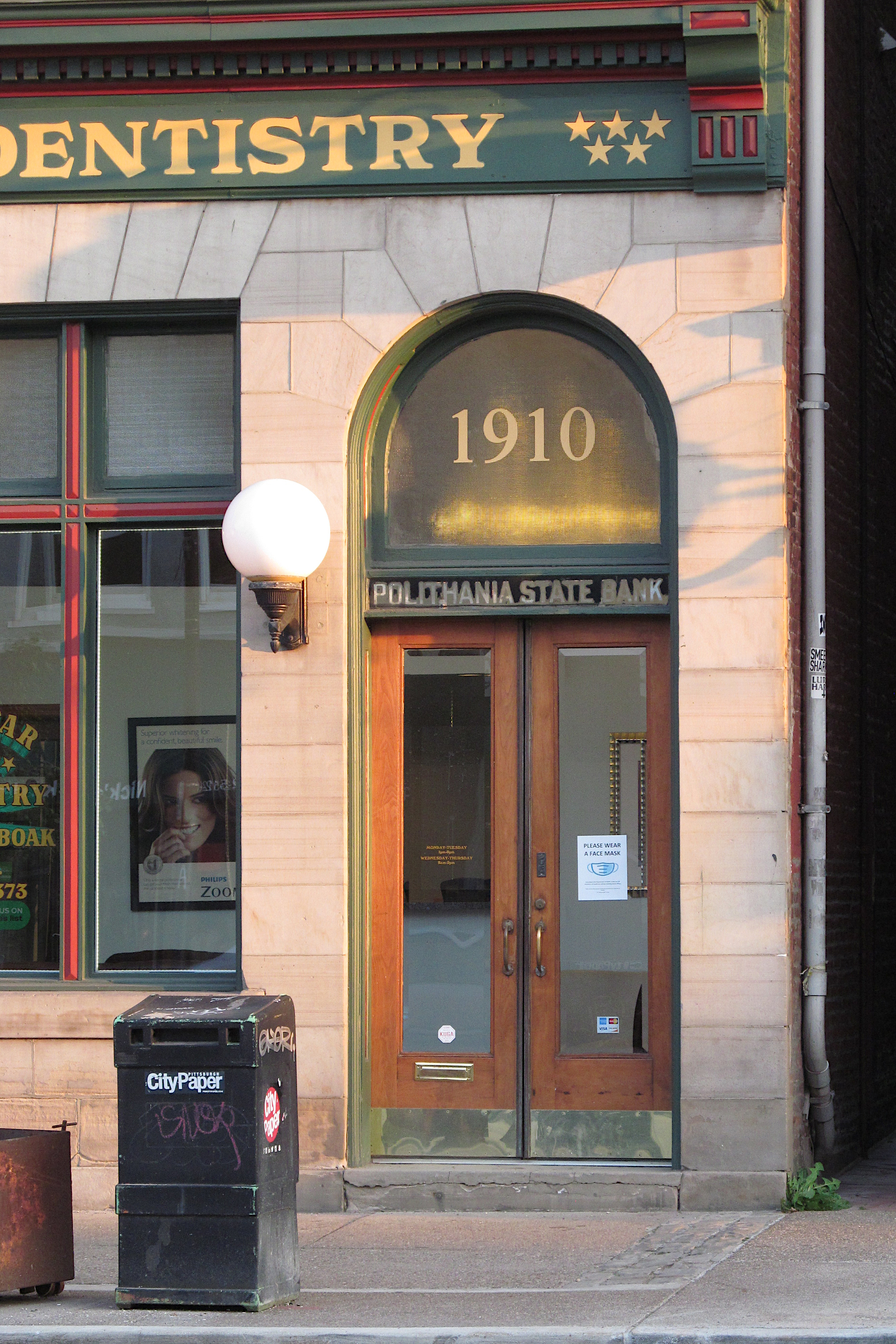
If you look up the word “Polithania” in your favorite search engine, you will find this building and nothing else. It was a bank and land office for Polish and Lithuanian immigrants (Poland and Lithuania have a long history of interconnection). Now it cleans teeth, but the original signs are still over the doors.

In classical times, worshipers deposited their money in temples, leaving it under the protection of the god. In neoclassical times, banks were built in the form of classical temples, but the only god was money itself.
