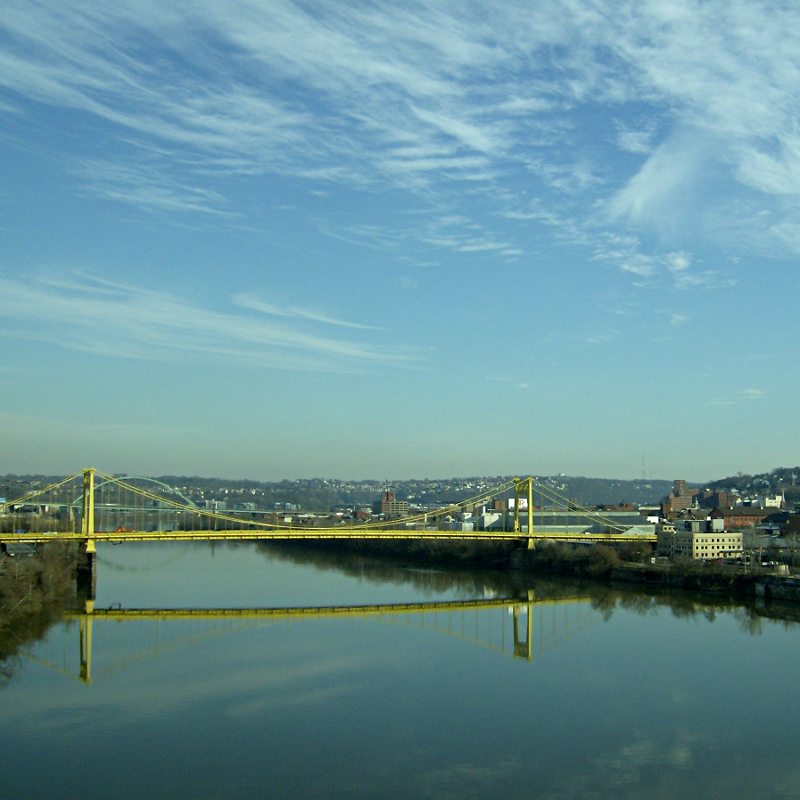
The Tenth Street Bridge reflected in the unusually placid Monongahela.
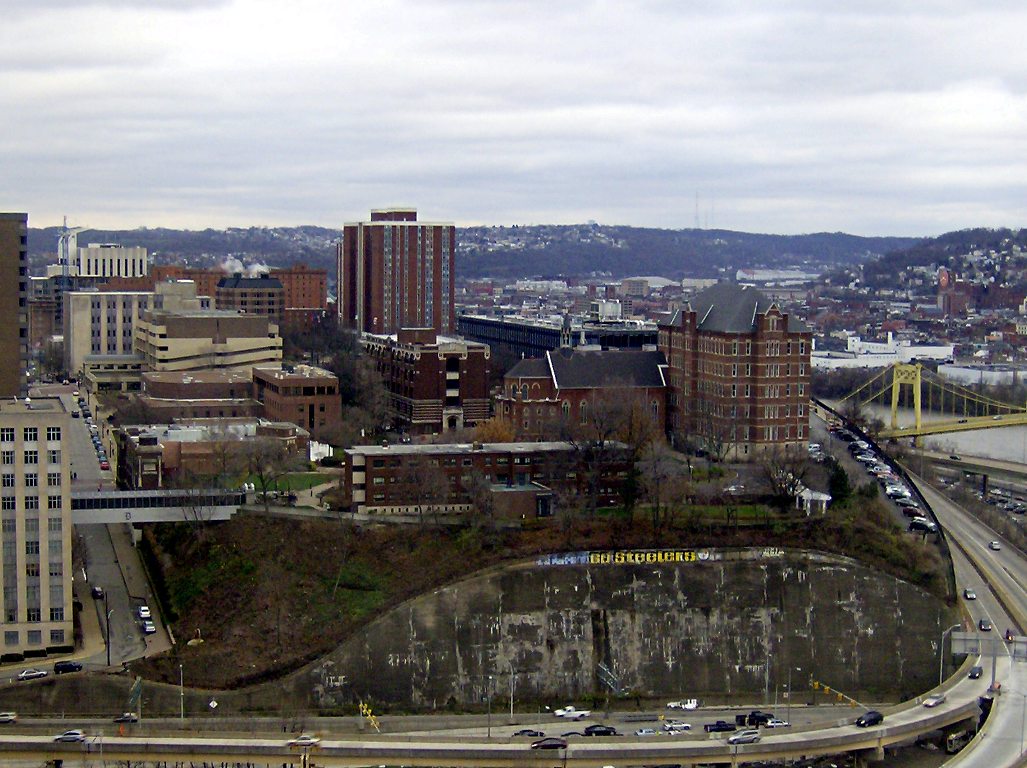
“Built on a bluff and operated on the same principle”—that was the slogan Peter Leo proposed for Duquesne University. Here we see the campus from the twenty-third floor of the Grant Building downtown.
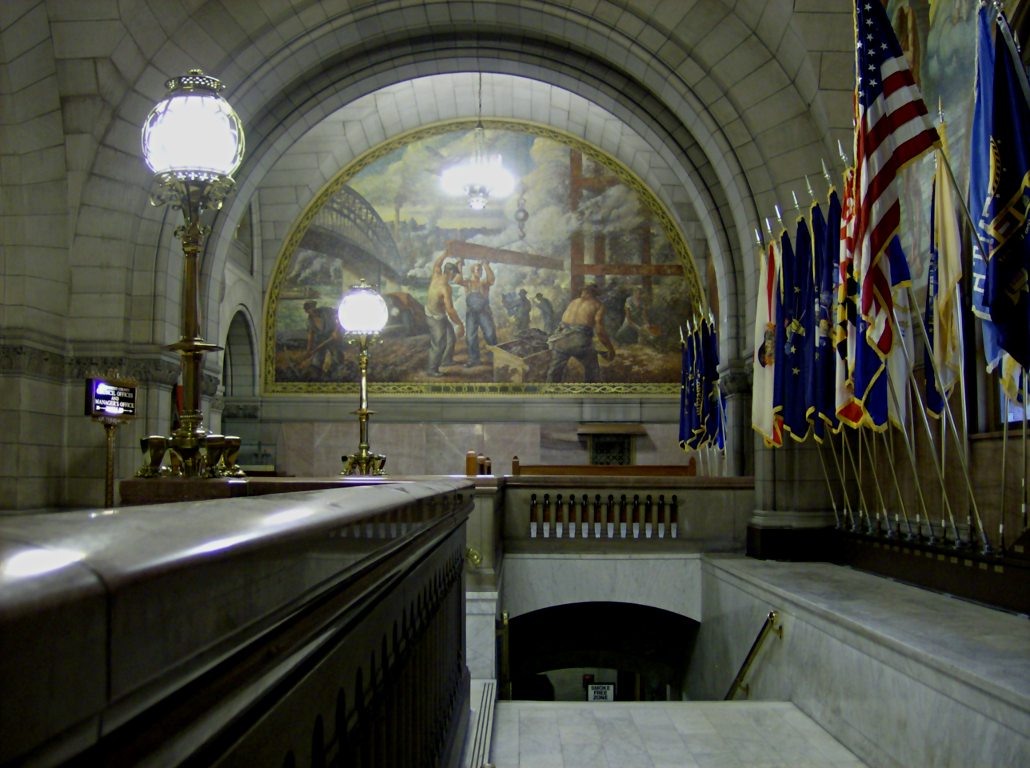
“Industry” by Vincent Nesbert, whose murals for the Allegheny County Courthouse were finished in 1940. In the foreground, the stairway that leads to the basement, which for most of the building’s history has been the street entrance because of the re-grading of Grant Street.
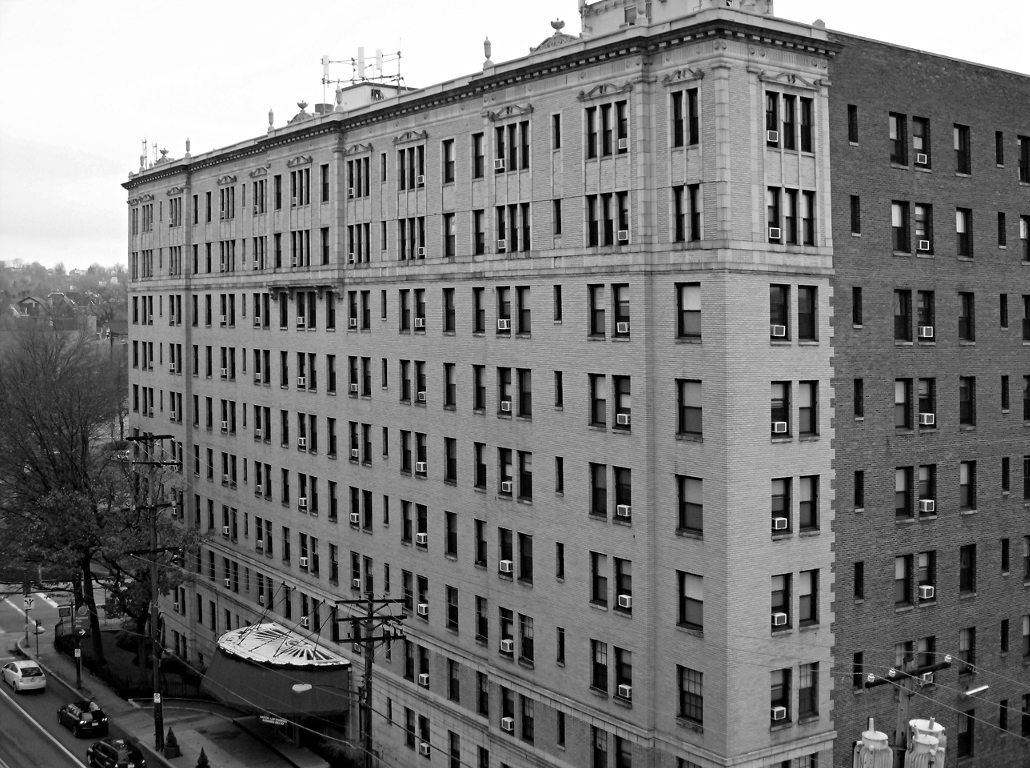
In general, Pittsburgh apartment buildings can be small and elegant or large and atrocious, but Shadyside is one of the few neighborhoods in Pittsburgh where apartment buildings can be both large and elegant. The Arlington, at the corner of Centre Avenue and Aiken Avenue, is one of the most elegant of the lot. Here we see the Aiken Avenue side. The various room layouts are rather charmingly named for composers, Bartok being the cheapest and Sibelius the most expensive. If you wish to occupy a spare hour or two, try to come up with a critical theory that accounts for that pricing.
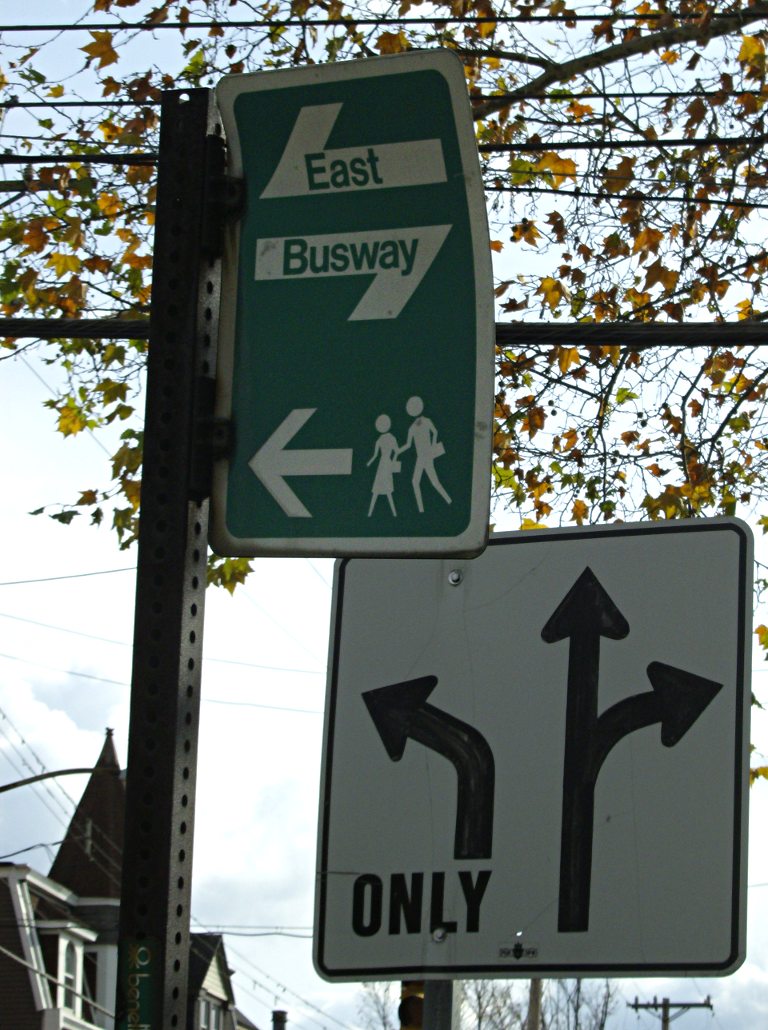
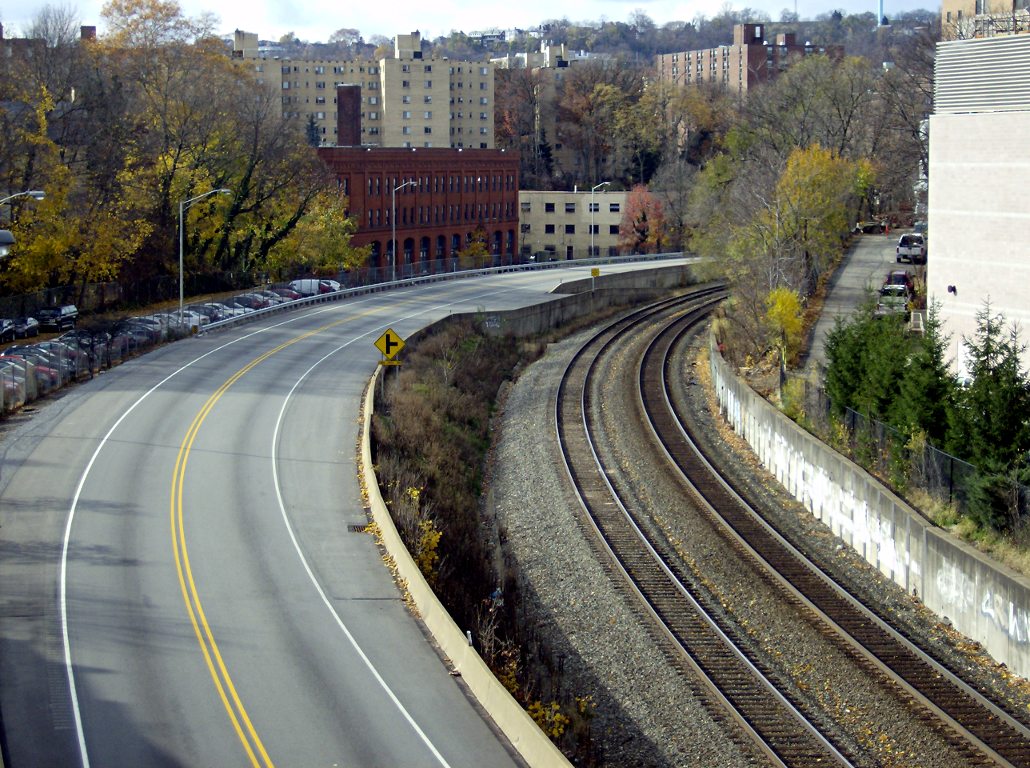
The Martin Luther King Jr. East Busway, which in the Pittsburgh Metro scheme almost but not quite adopted by the Port Authority would be the Purple Line, is an almost unique phenomenon in “bus rapid transit”: real rapid transit, but with buses. Unlike the half-baked busways in other cities, Pittsburgh’s busways are true metro lines, with no at-grade crossings or mixing with street traffic. Cheery signs like the one above were put up all over the neighborhoods the busway serves when it first opened in 1983; many of them are still there, though they do not seem to be maintained or replaced. Below, we see the real secret of this busway’s success: it follows the railroad through a deep hollow in the middle of the city, giving it a subway-like grade separation without the expense of digging tunnels.

The massive tower of East Liberty Presbyterian Church rises above almost everything else in East Liberty, even competing with the Highland Building. The design is by Ralph Adams Cram, arguably America’s greatest Gothic architect.
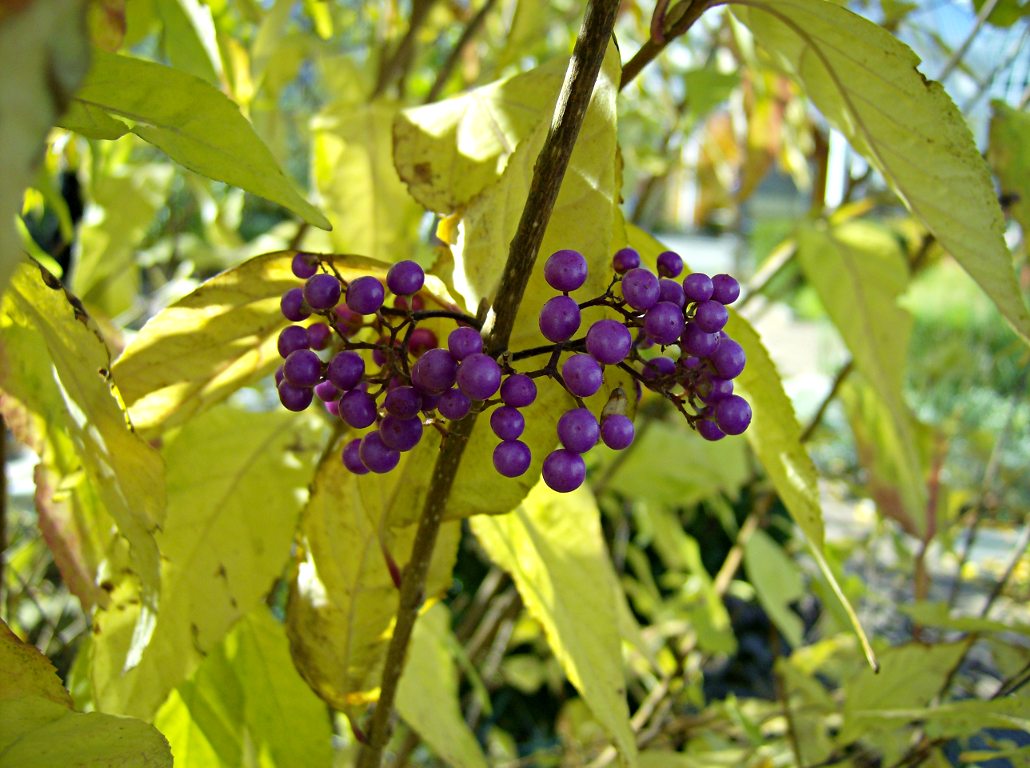
In the fall, the bright purple berries of this East Asian bush make a stunning contrast to the chartreuse-yellow leaves. This plant was growing in the Discovery Garden at Phipps Conservatory.
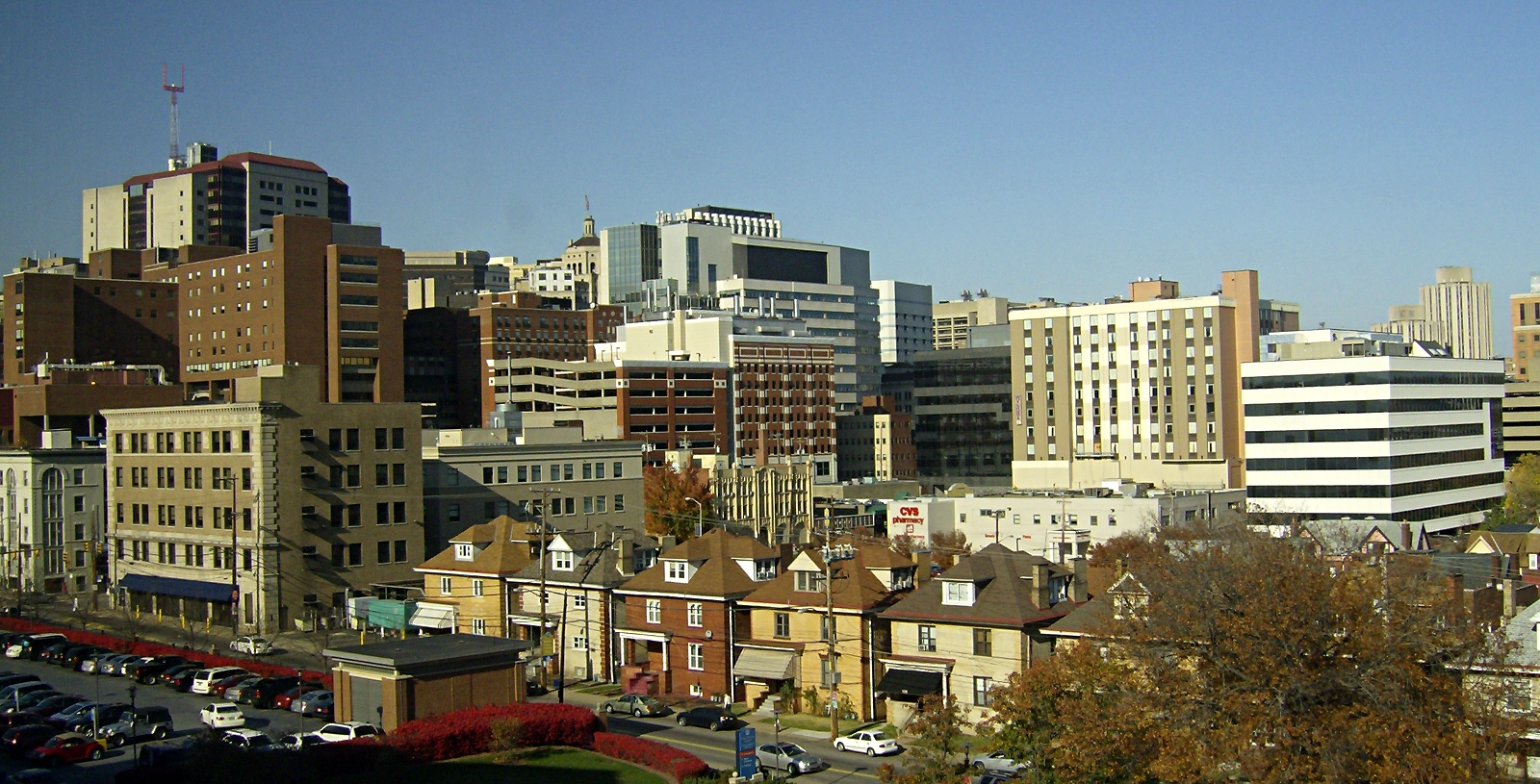
The crowded clutter of university and medical buildings that makes up central Oakland. If downtown is the heart of Pittsburgh, this is the brain, with three universities, two important museums, and a labyrinthine medical-research complex that covers several city blocks interconnected with pedestrian bridges. This view is looking toward the north, with Halket Street running diagonally in the foreground.
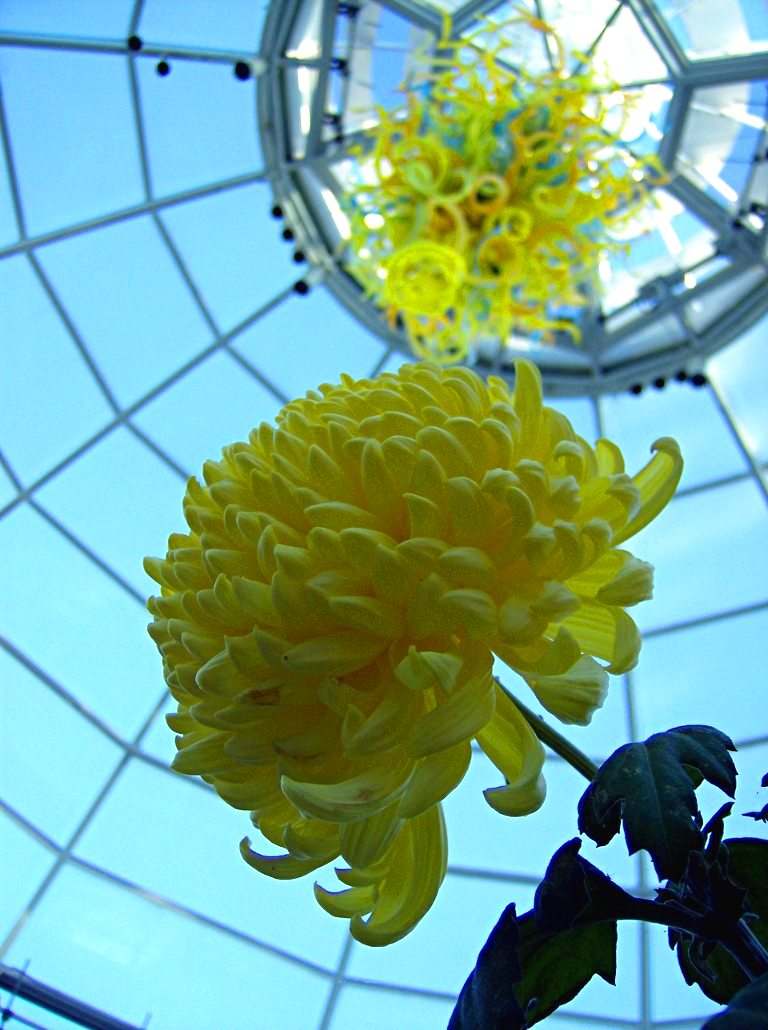
The Fall Flower Show at Phipps ended this weekend. Once again it earned its reputation as one of the year’s great events—especially if you happen to like chrysanthemums. Above, looking up into the dome of the entry toward a glass sculpture by Dale Chihuly.

In the Broderie.
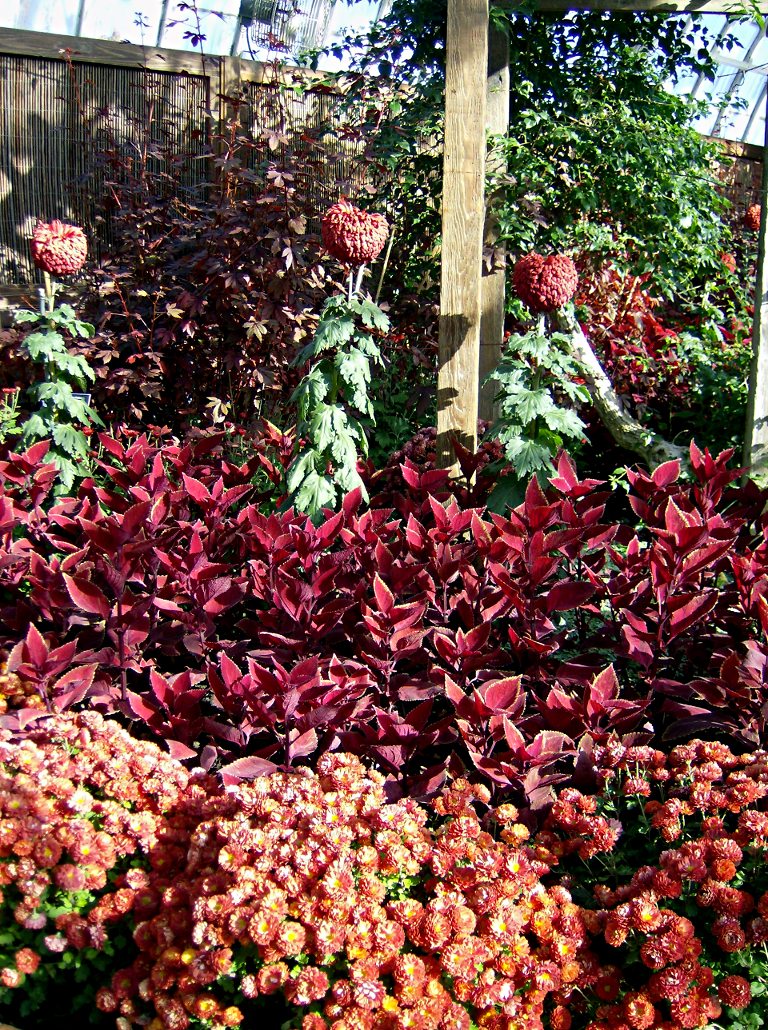
A composition in red.
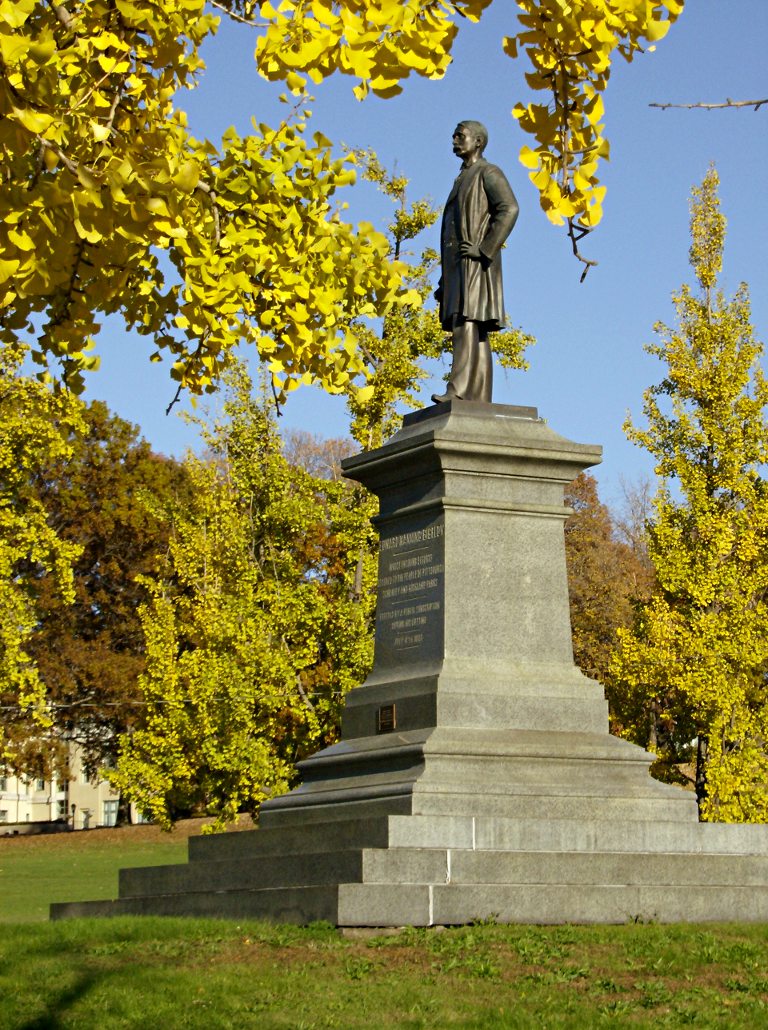
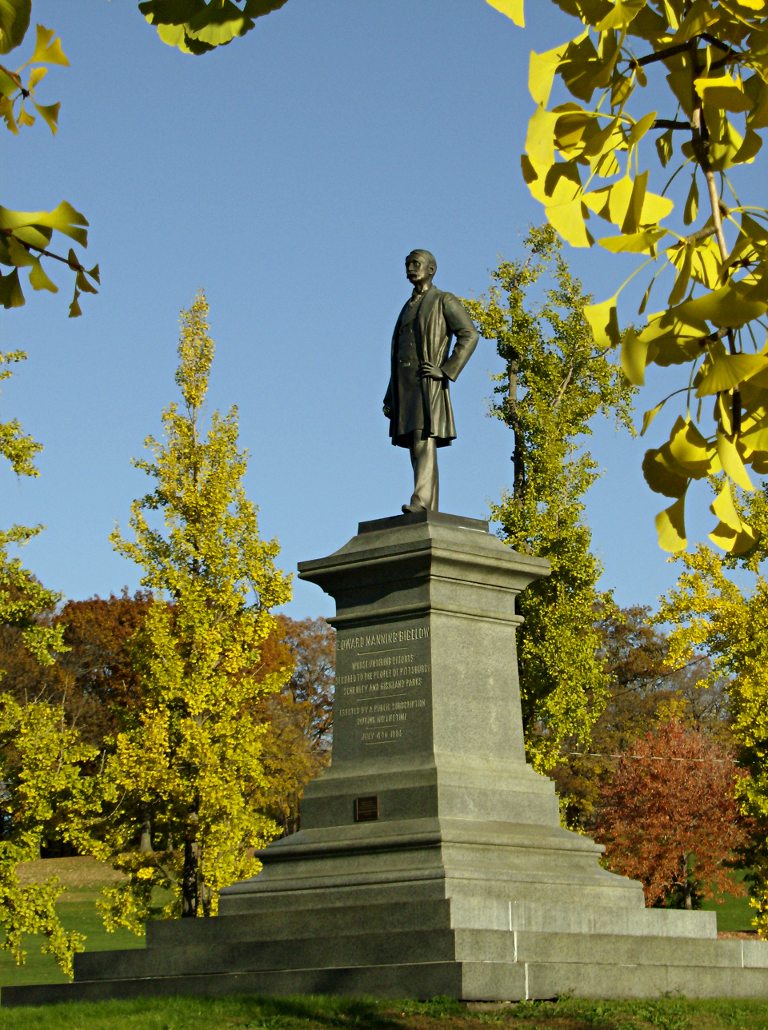
Edward Manning Bigelow was, by all accounts, as corrupt as any other Pittsburgh politician of his day. But he had two things that earn him a place in history: a vision of Pittsburgh as a great city, and a silver tongue with little old ladies. Seeing that Pittsburgh was rapidly expanding to the east, he determined that a great city must have a great park. Right in the way of the eastward expansion was Mary Schenley’s broad expanse of empty land. Mary Schenley was heiress to the O’Hara glass fortune, but she had abandoned Pittsburgh and moved to England. Bigelow went there and persuaded her to donate her land to the city. In her honor, we call it Schenley Park, and—just as Bigelow imagined it—it’s a beautiful oasis of fields, forests, and art in the middle of the city. One of those works of art is this statue of Bigelow himself, which stands in the middle of the street in front of Phipps Conservatory. Here we see it surrounded by the golden late-fall leaves of Ginkgo biloba.