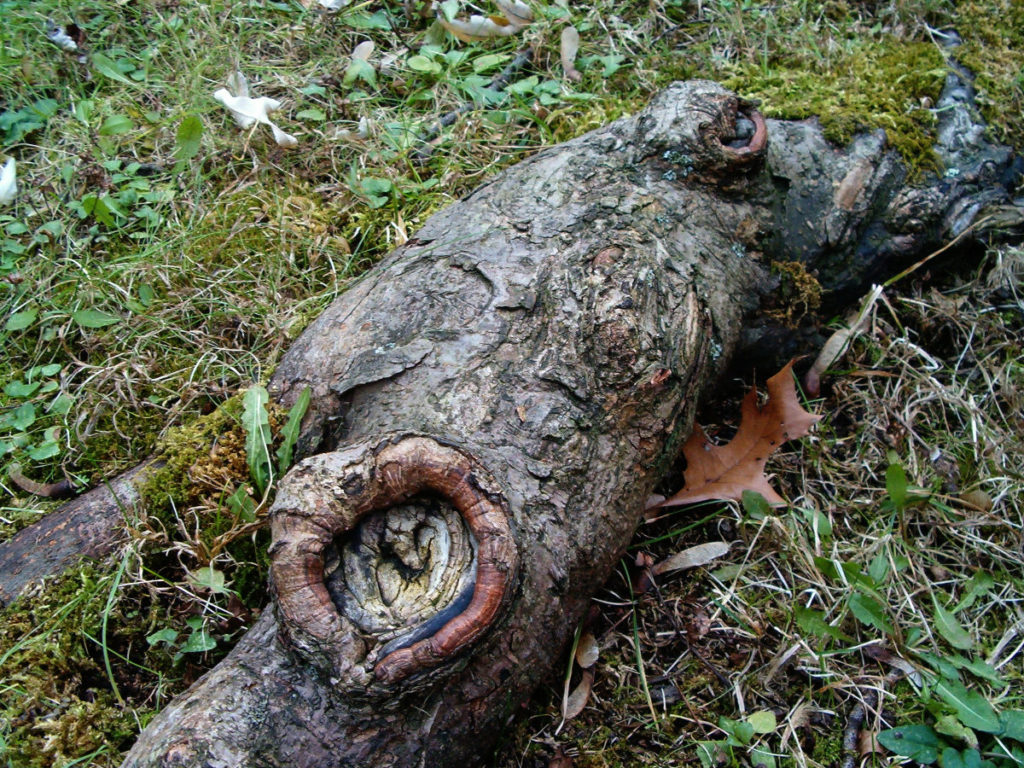
The snow that fell earlier this week is still here for Thanksgiving, melting and refreezing into interesting patterns of ice.
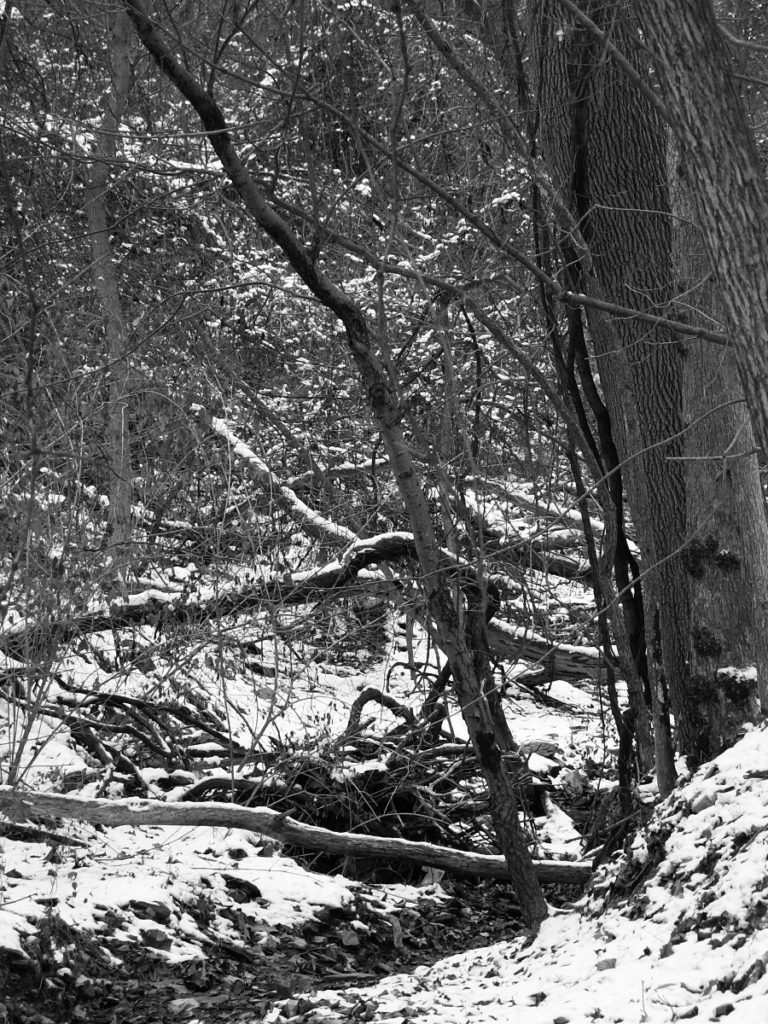
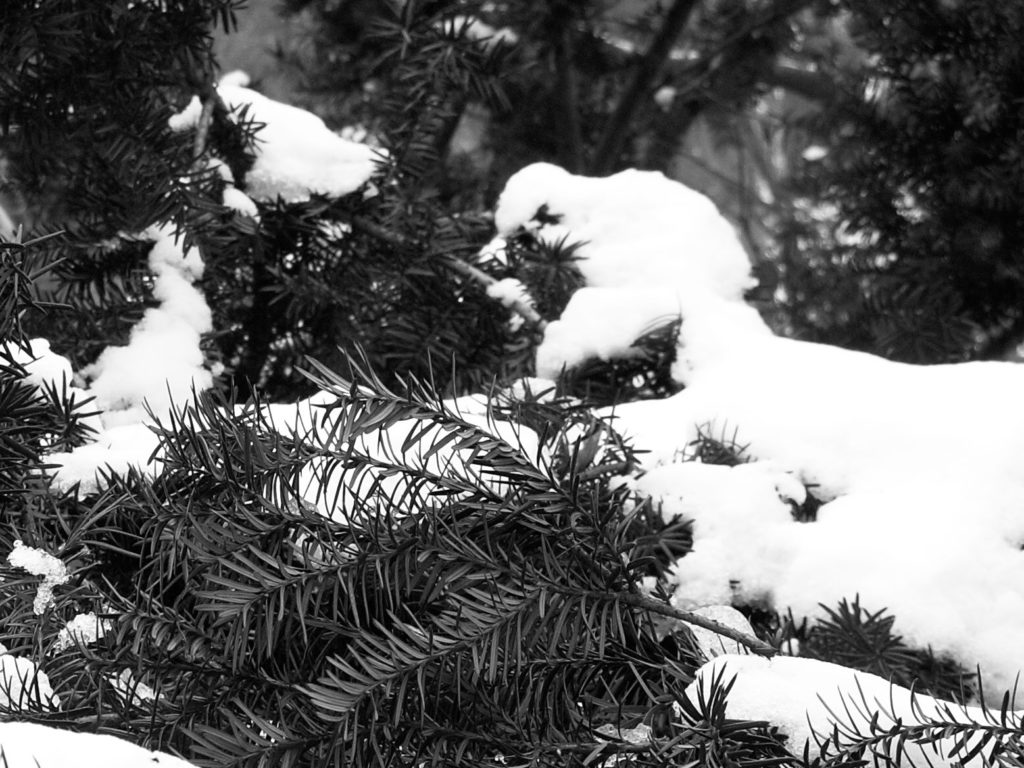

The snow that fell earlier this week is still here for Thanksgiving, melting and refreezing into interesting patterns of ice.
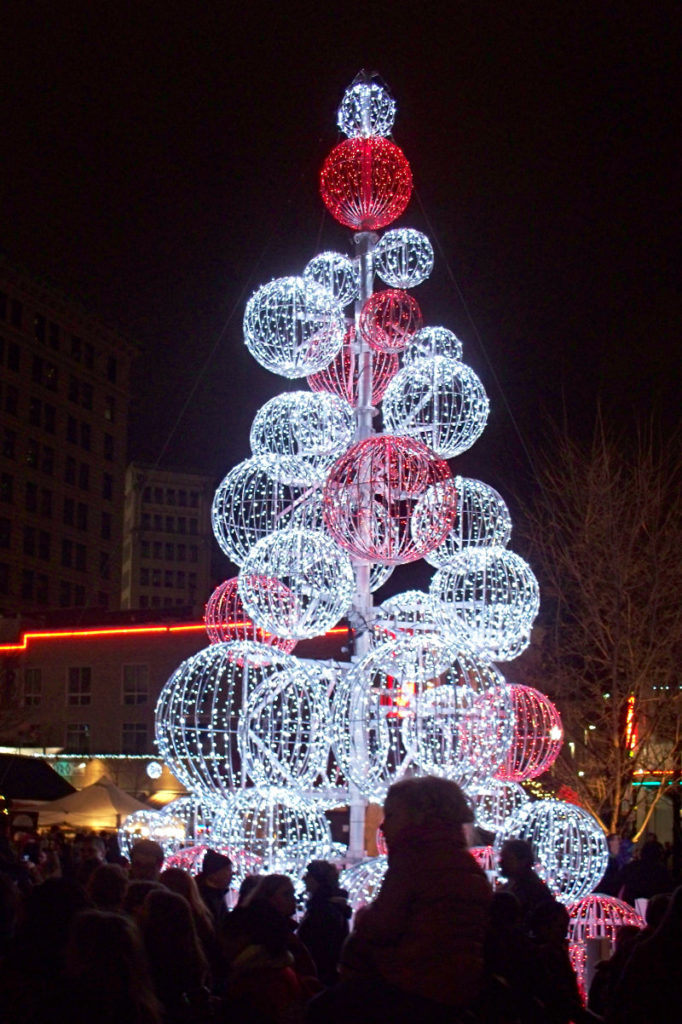
It would be hard to explain Light-Up Night to an out-of-towner. The abstract idea of a night when Christmas lights are turned on for the season is not hard to convey, but no words could describe the seething mass of cheerful humanity that gathers downtown, stuffing trolleys like rolling sardine cans and tying up traffic for hours. It is a night when every good Pittsburgher feels obliged to pay his respects to the Golden Triangle. There are bands, orchestras, choirs, street performers, multiple fireworks displays, lights, ice skating, and even a few random acts of kindness. Every year it’s a bigger deal than last year.
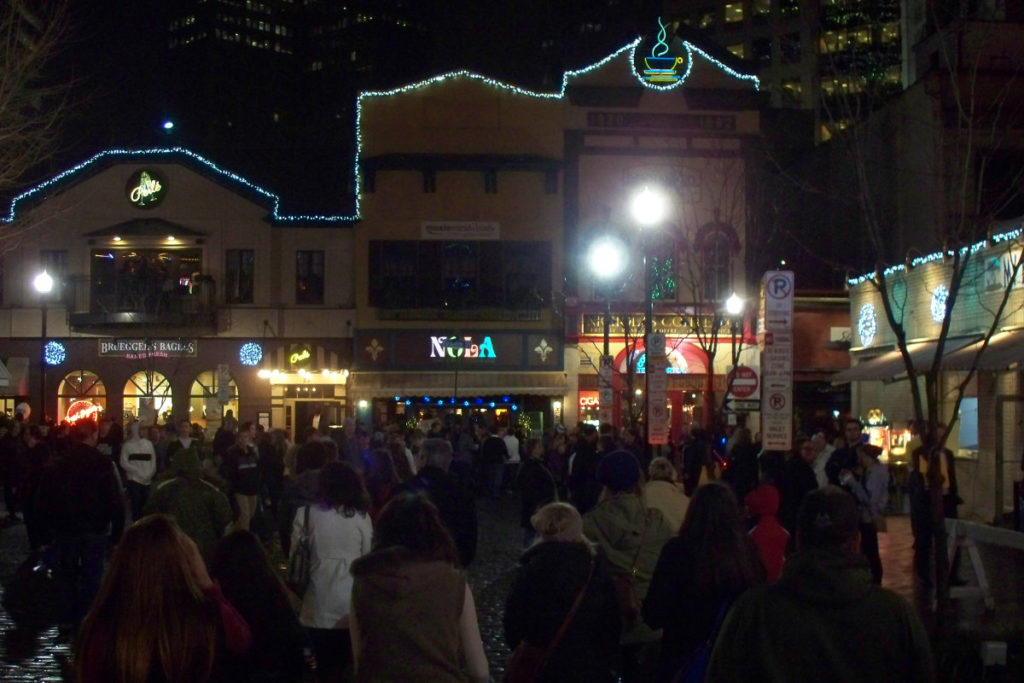
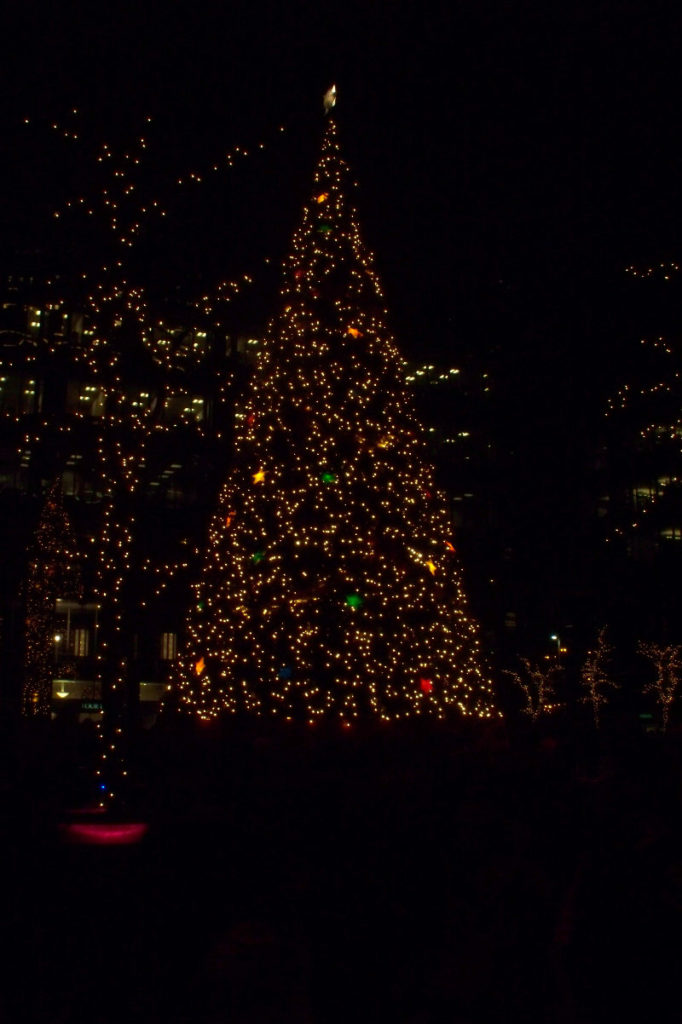
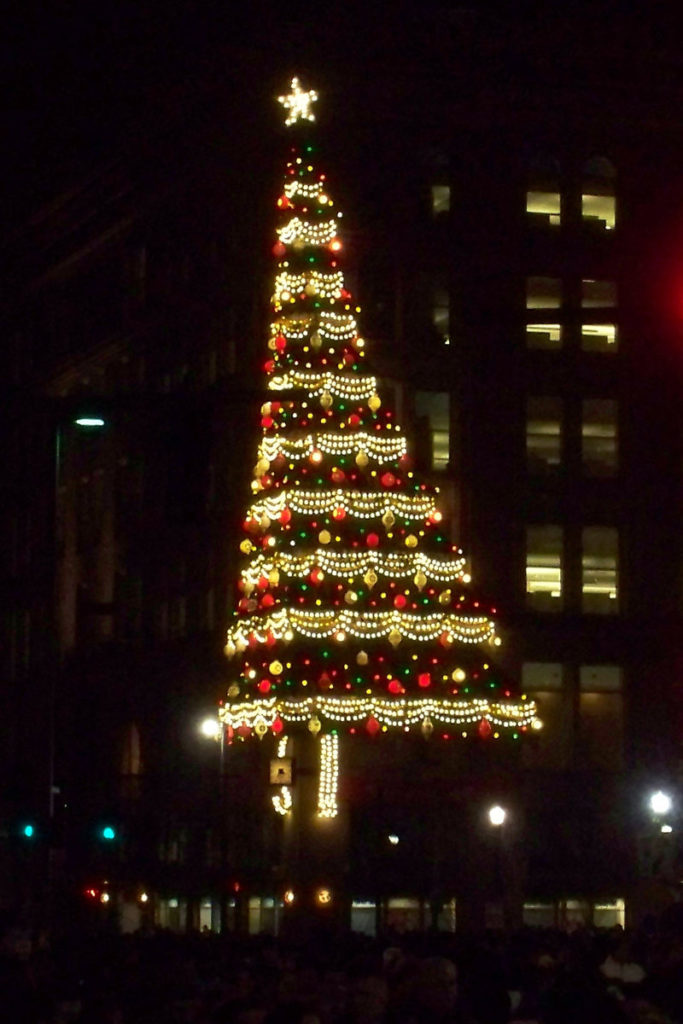
The Horne’s Christmas tree, above, is a tradition that predates Light-Up Night by decades. The Horne’s department store is gone, but the owners of the building still graciously allow us to admire the famous tree that takes up a whole corner of what used to be our second-largest department store.

In the late fall, a field of goldenrod gone to seed is both decorative and a bit mournful.
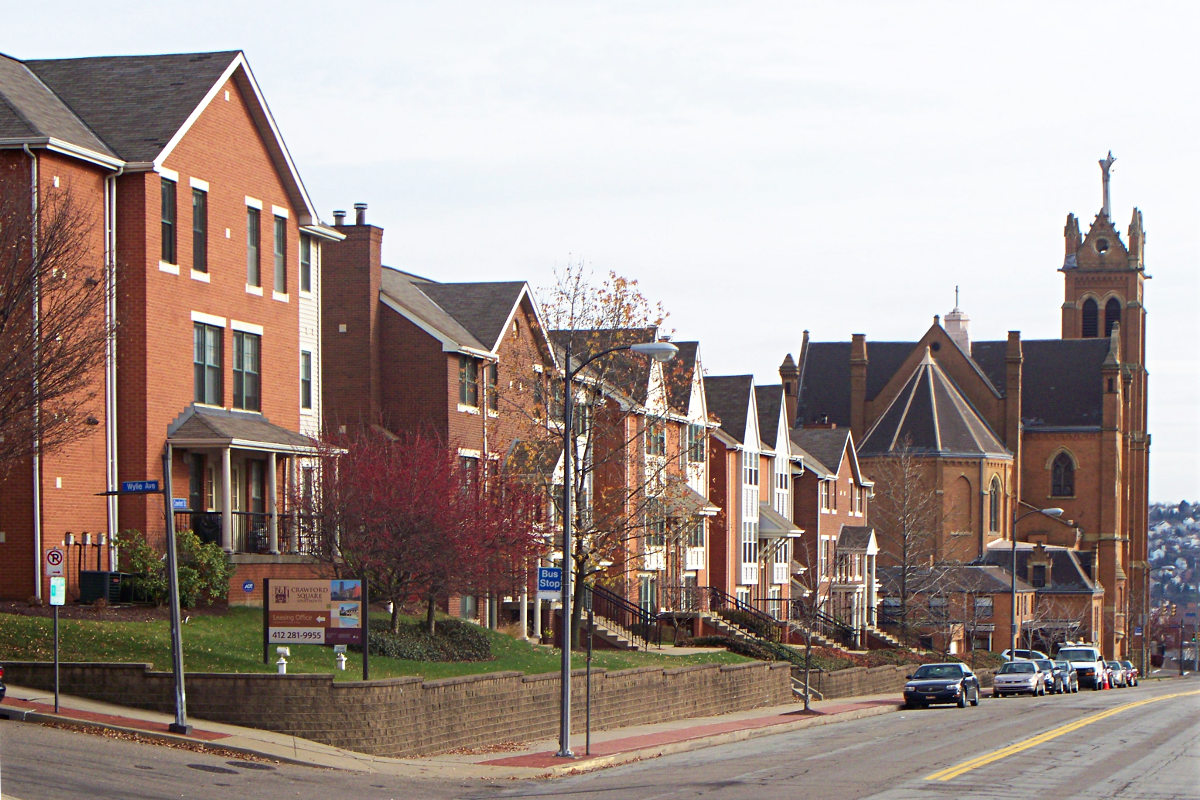
After the long dark age of “urban renewal,” which always meant either warehousing the poor in ugly towers or replacing city neighborhoods with suburban ranch houses, Crawford Square, begun in 1993, was the first attempt to build a new urban neighborhood in Pittsburgh. It was not as adventurous as it might have been: it was purely residential, with no stores or churches or any of the other things that make a neighborhood in the city. But its success showed that people wanted attractive housing in an urban setting, and paved the way for other developments to come. This is Crawford Street, with St. Benedict the Moor (one of the few remnants of the old neighborhood) at the end of the block.
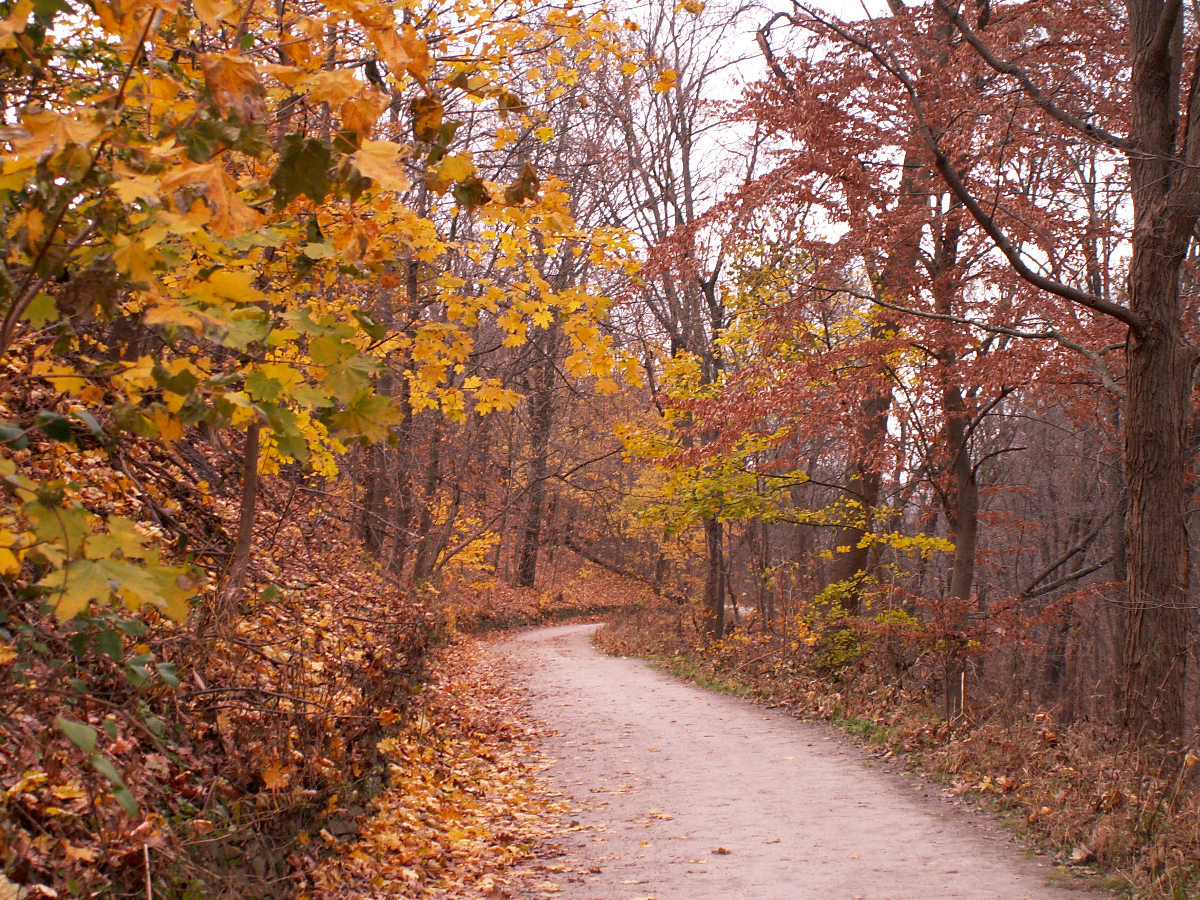
Most of the leaves have fallen, so we can see down into the hollow through the trees. But a few bright patches of color remain.


Another view of the Gulf and Koppers Towers, this time from the Lower Hill. Surprisingly, the Koppers Tower (left) is one of only two classic skyscrapers in Pittsburgh with setbacks, the other being the Grant Building, which was under construction at the same time.
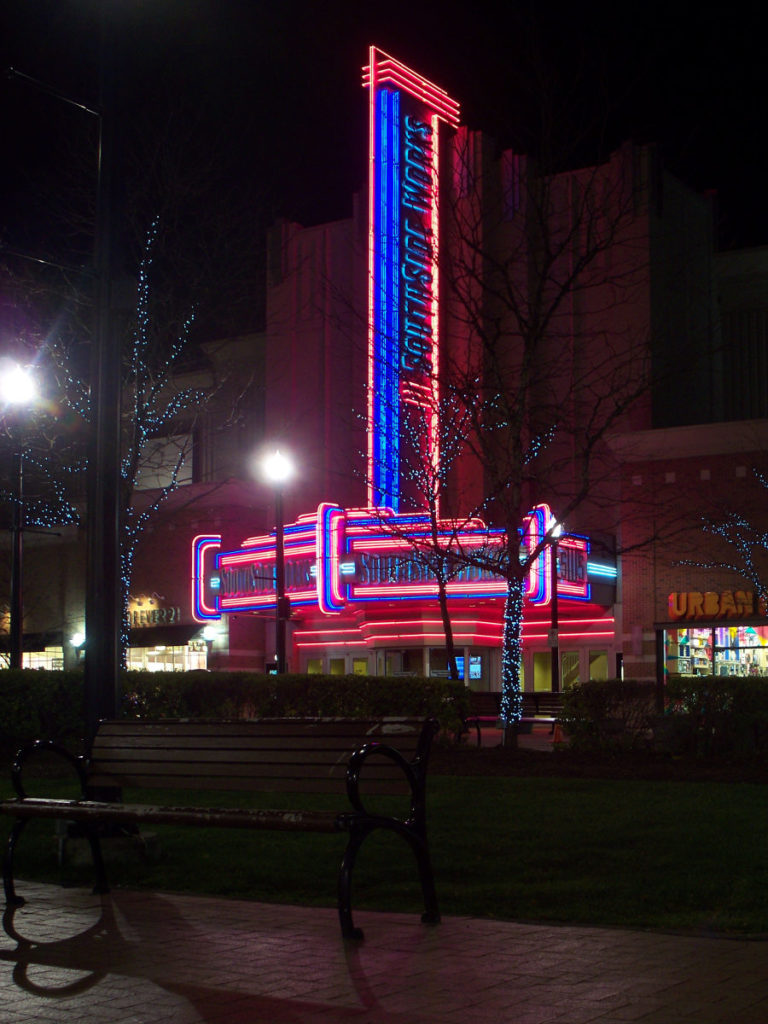
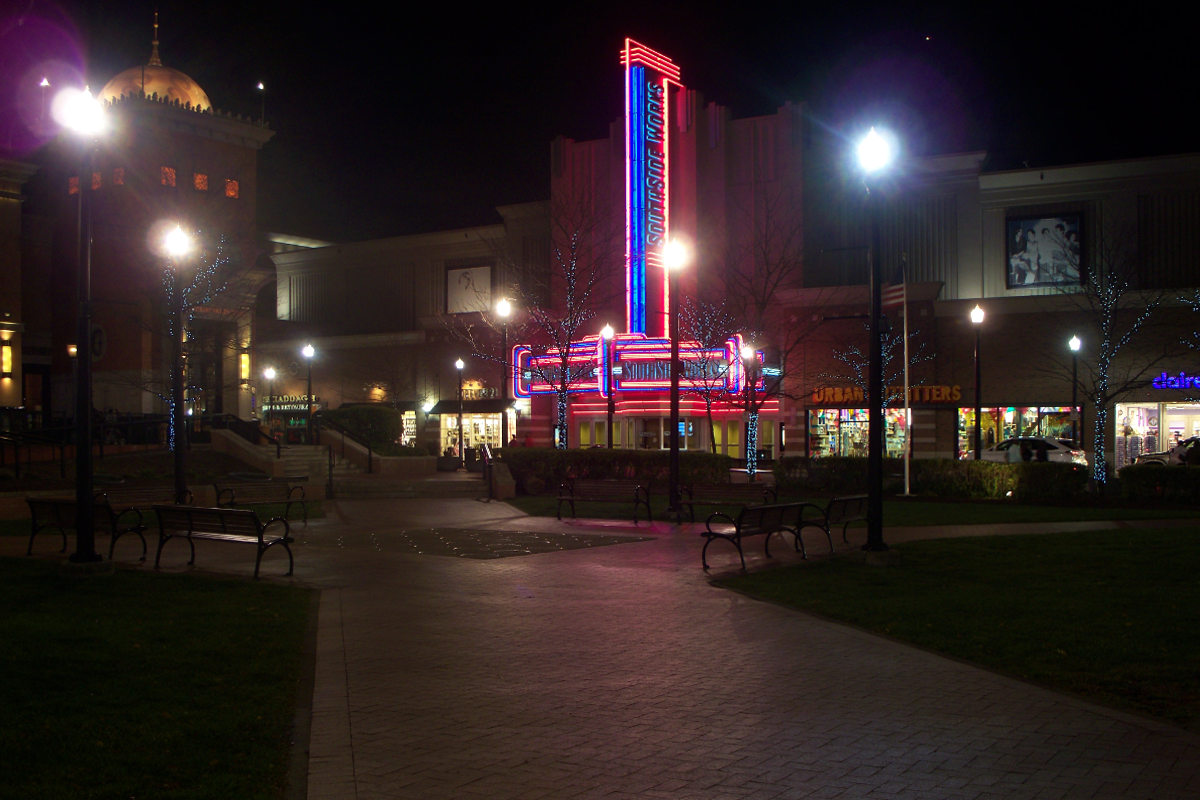
The South Side Works, an ambitious project to build an entirely new urban neighborhood, naturally needed a neighborhood cinema on the square. And the proper style for a neighborhood cinema is Art Deco, with lots of neon and other noble gases.
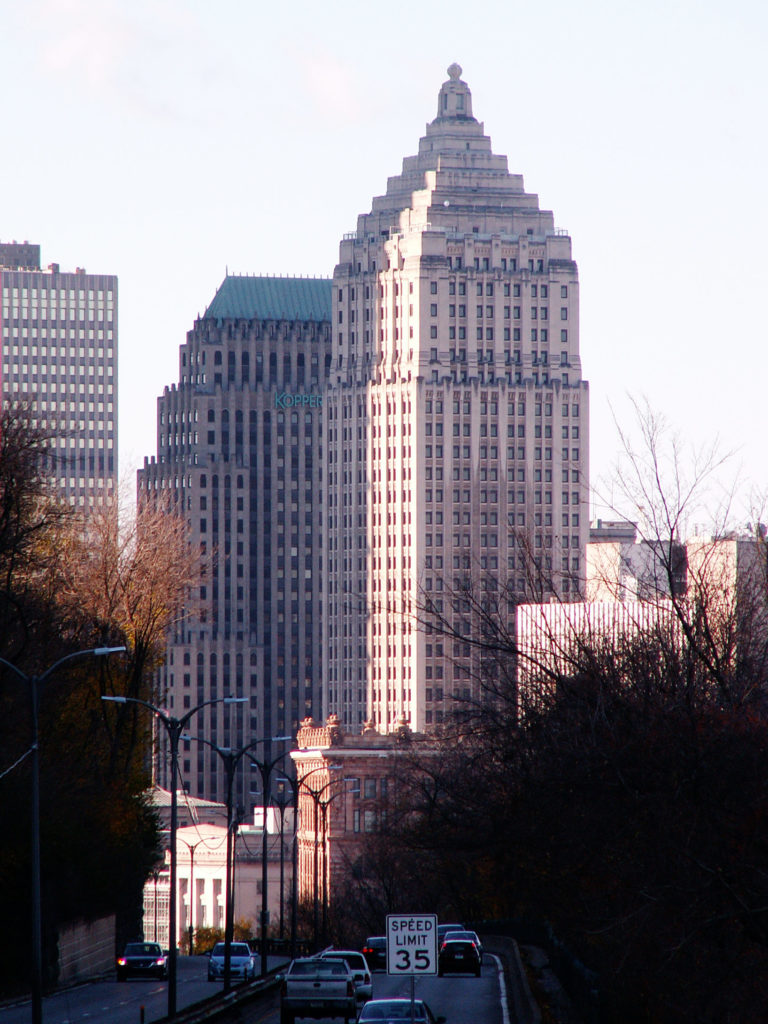
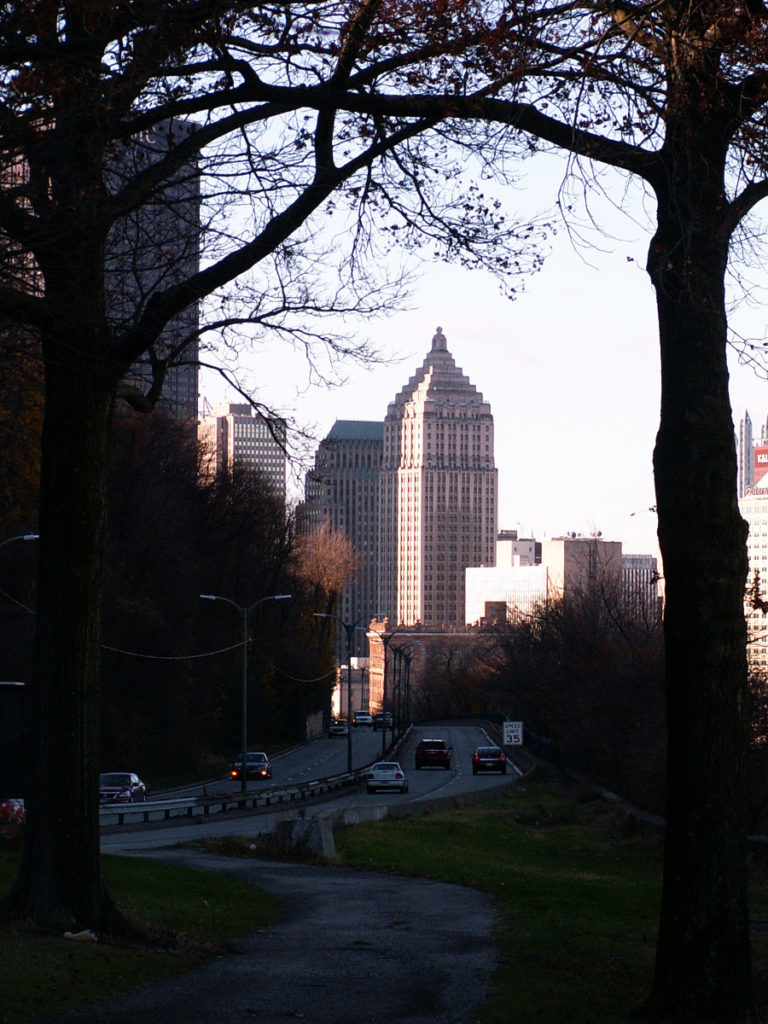
Two grand Art Deco skyscrapers face each other across Seventh Avenue: the Gulf Tower (1932) and the Koppers Tower (1929).
The Gulf Tower (in front in these pictures) is a good example of the style Father Pitt calls “Mausoleum-on-a-Stick”: the top is modeled after the Mausoleum at Halicarnassus. This was Pittsburgh’s tallest building for decades, until it was surpassed by the U. S. Steel Tower; after the building boom of the 1980s, it now stands at number 6. The architects, Trowbridge & Livingston, were the originators of the Mausoleum-on-a-Stick style: twenty years earlier, they had created it with the Bankers Trust Company Building in New York, which looks very much like a primitive, pre-Deco version of the Gulf Tower.
The Koppers Tower was designed by the prolific firm of Graham, Anderson, Probst & White, whose buildings litter the skyline in Chicago, and who also designed the Terminal Tower in Cleveland. This is the most splendid Art Deco building in Pittsburgh, and it was very briefly the city’s tallest building, until the Grant Building surpassed it a few months later.

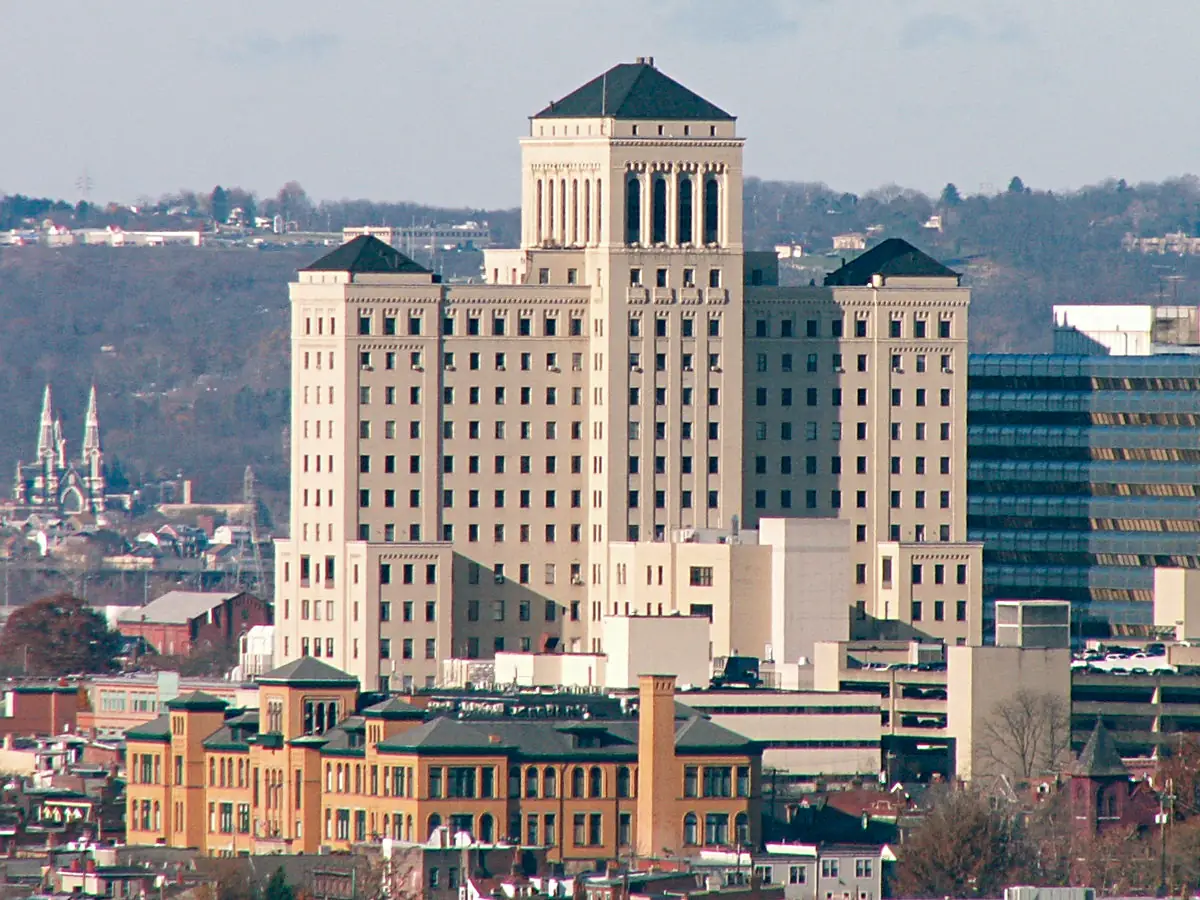
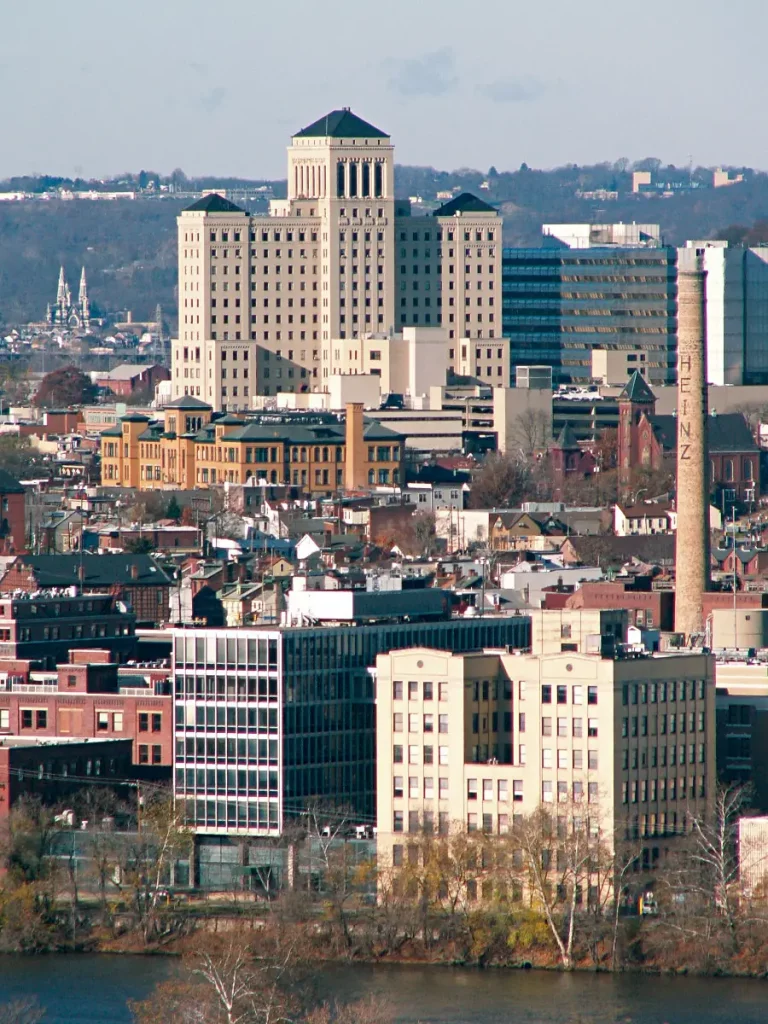
The only really elegant skyscraper on the North Side is this hospital, designed by York & Sawyer in 1926. The style is what old Pa Pitt likes to call “Mausoleum-on-a-Stick”: the central tower is topped by an Art Deco interpretation of the Mausoleum at Halicarnassus. This is one of three Mausoleum-on-a-Stick towers in Pittsburgh, and two of them are hospitals (the other being Presbyterian Hospital in Oakland). The third is the Gulf Building,which was designed by the originators of the style.
Below, we see the hospital with the narrow streets of Dutchtown in front of it.
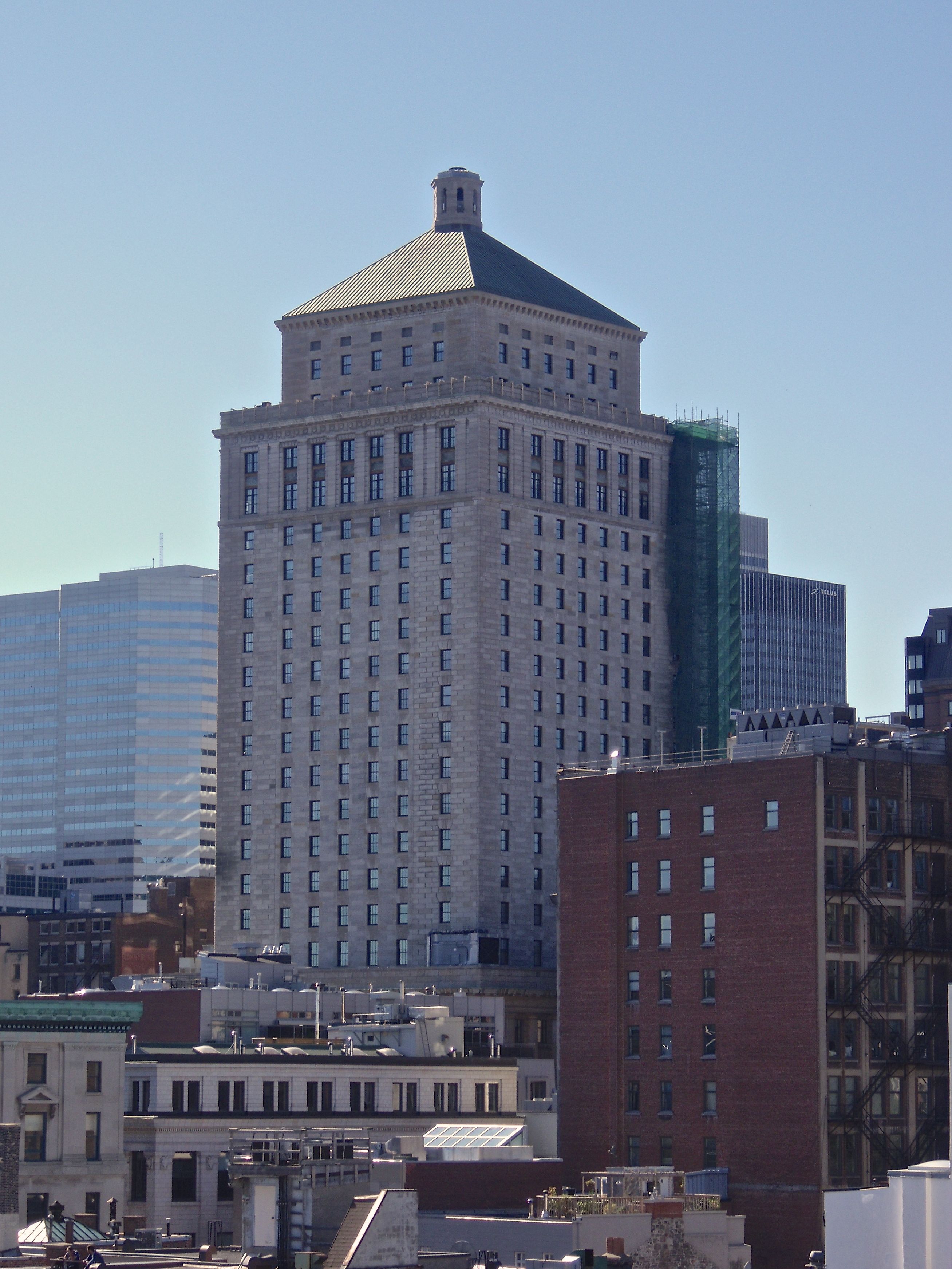
York & Sawyer built two skyscrapers in 1926 with notably similar designs. The other is the Royal Bank Tower in Montreal, which was the tallest building in the British Empire at the time (though it did not compare with the tall buildings of New York, Chicago, and Pittsburgh). The picture at left, by “Thomas1313,” was made available on Wikimedia Commons under a Creative Commons Attribution-Share Alike license.