

Grape vines can cover acres, blanketing everything in their way to form a surreal topiary.
Grape vines can cover acres, blanketing everything in their way to form a surreal topiary.

Sometimes one finds things one didn’t know one was looking for. Father Pitt had decided to visit Rosedale Cemetery in Ross Township, a small German cemetery that does not show up on many maps, and here it was: the Osterling family monument, with “Fred J. Osterling” inscribed on it. By the dates we know that this is Frederick Osterling, the great architect, and the monument itself is so strikingly tasteful that one suspects Mr. Osterling designed it himself for his parents.
Frederick Osterling is responsible for some of the most important buildings in Pittsburgh:
The Union Trust Building
The Armstrong Cork Factory
The Westinghouse “Castle”
The Arrott Building
The morgue
The Times Building
—among many others. His career pretty much ended with the Union Trust Building, however; the client, Henry Frick, refused to pay Osterling’s fee when the construction ran late, and Osterling sued. After a decade in various courts, the case of Osterling v. Frick ended in victory for Osterling; but meanwhile it seems that Frick, who was good at holding grudges, had made sure Osterling would never work again. On the other hand, it seems he didn’t really need to work: when he died in 1934, Osterling left an estate valued at a million dollars, which was a good bit of money in those days.
The Bertha Osterling whose name appears below Fred’s name is one of Frederick’s sisters, who apparently never married. Frederick never married, either; but, when he died with a million dollars in his estate, he left $10,000 of it to a certain Martha O. Aber in a handwritten codicil to his will (the rest went to his sisters Bertha and Anna). This woman then claimed to be his secret wife, and demanded a much larger share of the estate. Old Pa Pitt does not know what happened after that.

The Teutonia Männerchor in Dutchtown is a strange and happy anomaly: most of the old German singing societies have long since vanished, but the Teutonia is flourishing. This amazing half-timbered building was designed by the relatively obscure Charles Ott, and it certainly does look like a little bit of Germany.


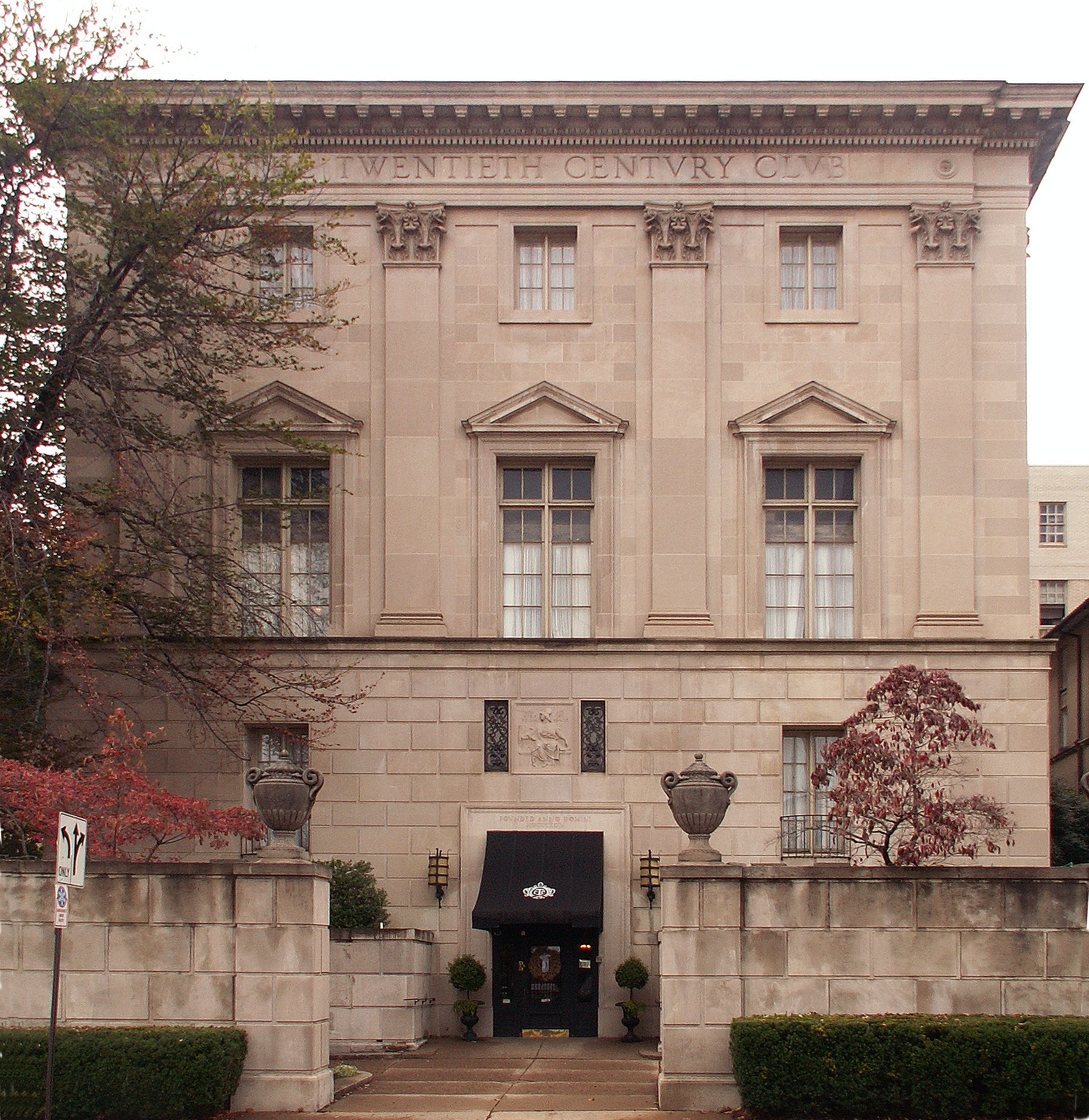
The Oakland neighborhood of Pittsburgh once was filled with elite clubs. Many of the buildings have been absorbed by the ever-expanding University of Pittsburgh, but the Twentieth Century Club—a name that sounded dashing and futuristic when the club was founded in 1894—remains, still a private women’s club. The building is larger than it looks, and the Opera Theater of Pittsburgh has been staging its summer season here for the past few years.
Every so often, Father Pitt rifles through his archives and finds perfectly good pictures that, for one reason or another, he never got around to publishing. This one was taken in October of 2013.

From the shore of the Allegheny. The immensity of the U. S. Steel Tower is particularly obvious from this angle.

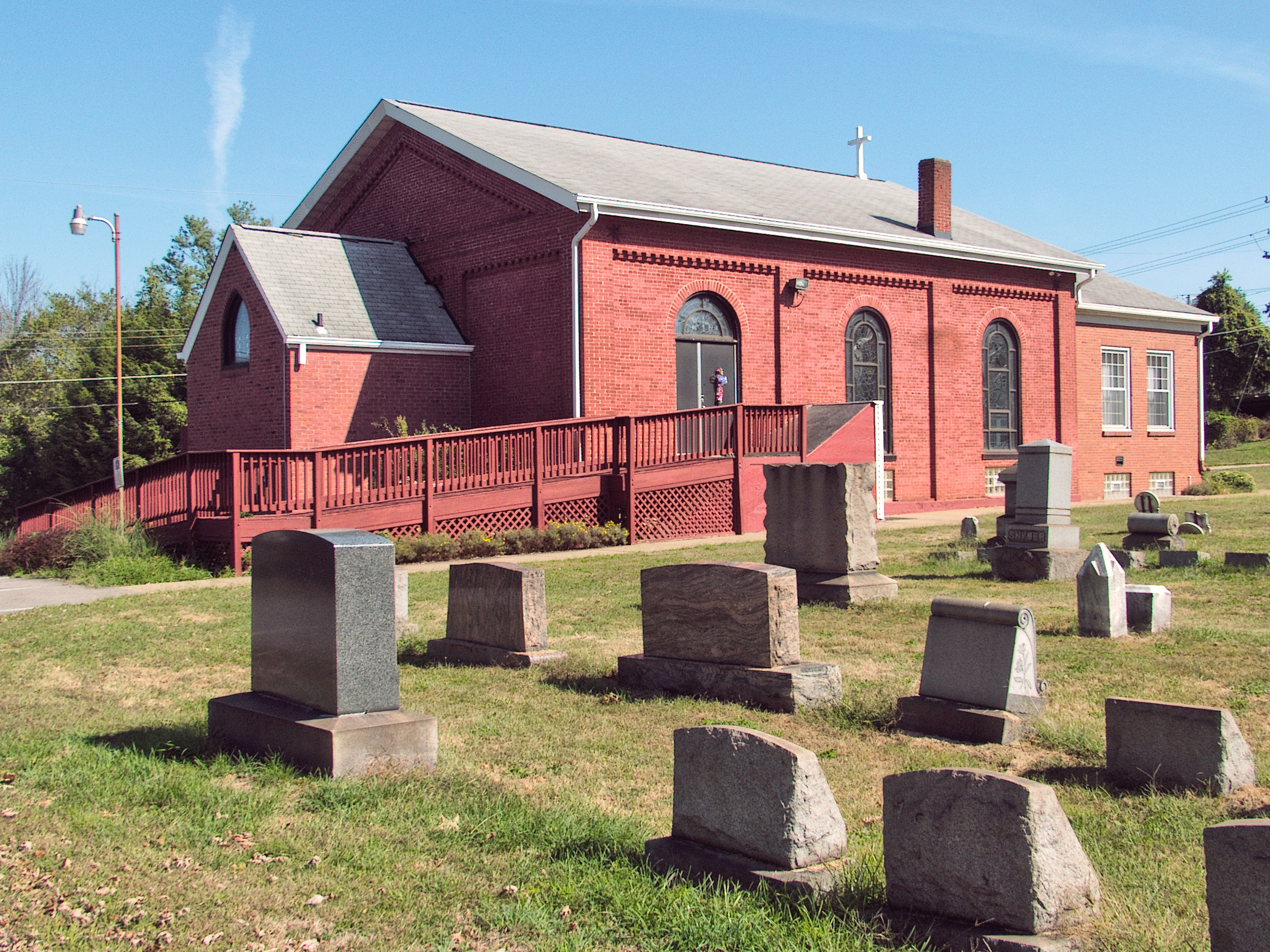
North Zion Lutheran Church is about a mile due south of Zion Lutheran Church in Baldwin Borough. Father Pitt will leave worrying about the cardinal directions to foreigners; Pittsburghers expect everything to be turned upside-down or sideways. The main part of the little church was built in 1859, and the congregation that inhabits it has been here for more than two centuries. Burials in the graveyard adjacent go back to 1812, but the earliest legible tombstones seem to be from the 1840s.

Frederick Osterling, one of Pittsburgh’s most interesting architects, designed the Armstrong Cork Company buildings, a masterpiece of functional yet attractive industrial architecture. They have now been turned into expensive loft apartments. You can see the buildings from a different angle here.

This colorful beetle (Megacyllene robiniae) is very destructive to locust trees in its larval stage; but since Pittsburgh has an infinite supply of locust trees, we need not worry about it. Probably these creatures are the only things that keep the locust trees from taking over and imposing martial law. The adult beetle looks very dashing in its striped livery. It eats goldenrod pollen, which means that our Locust Borers are very happy right now.


A shower hits downtown, as seen from the 31st Street Bridge. The rain moved rapidly eastward, leaving Father Pitt not quite enough time to walk to the end of the bridge with his dignity intact. But he kept the camera dry, which is the important thing.

