
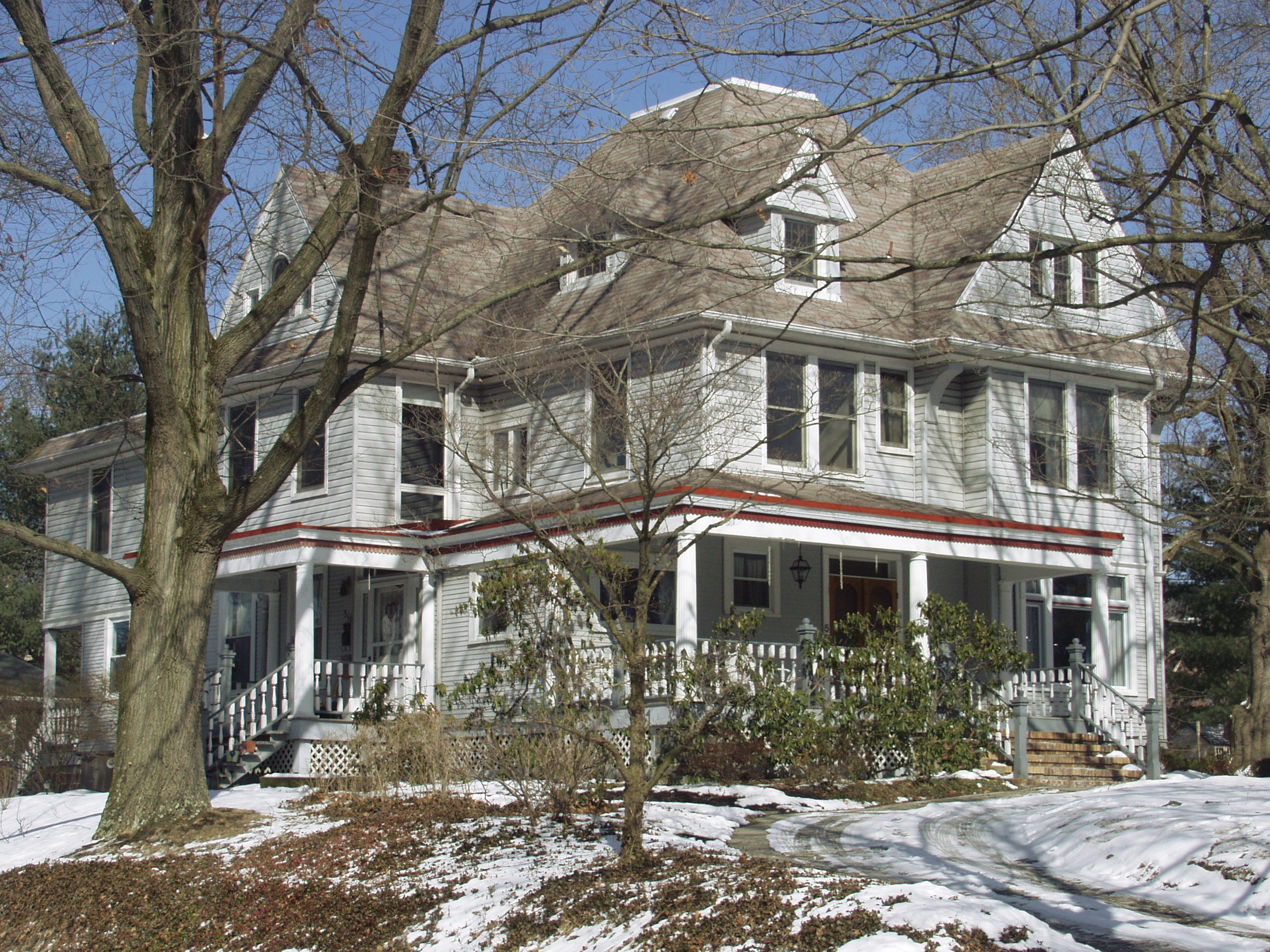
Oakmont is proud of its collection of Victorian houses, most of them frame structures on the respectable and impressive end of the Victorian spectrum rather than the whimsical and gingerbready end. Here is an album of a few of Oakmont’s fine houses.


Oakmont is proud of its collection of Victorian houses, most of them frame structures on the respectable and impressive end of the Victorian spectrum rather than the whimsical and gingerbready end. Here is an album of a few of Oakmont’s fine houses.
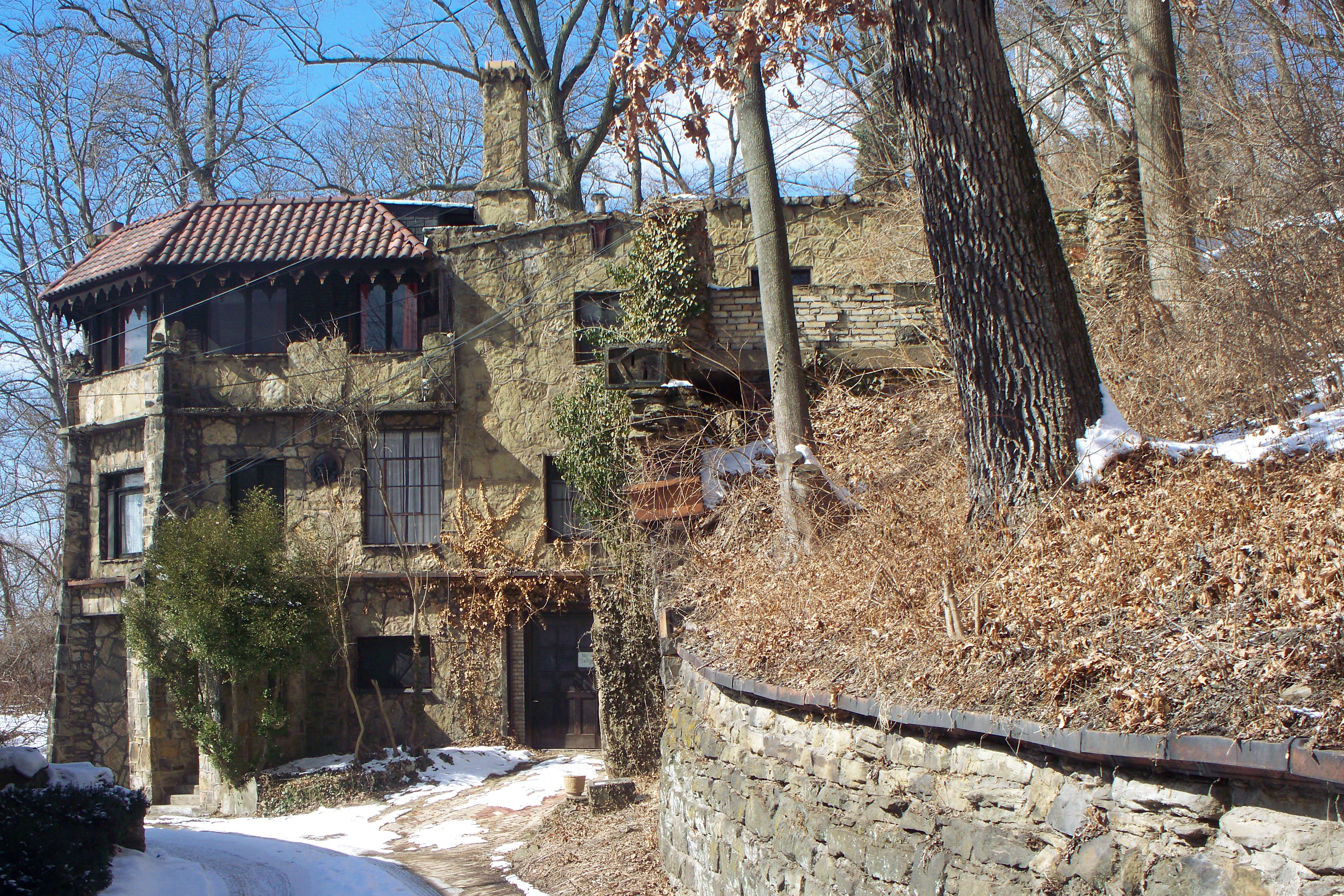
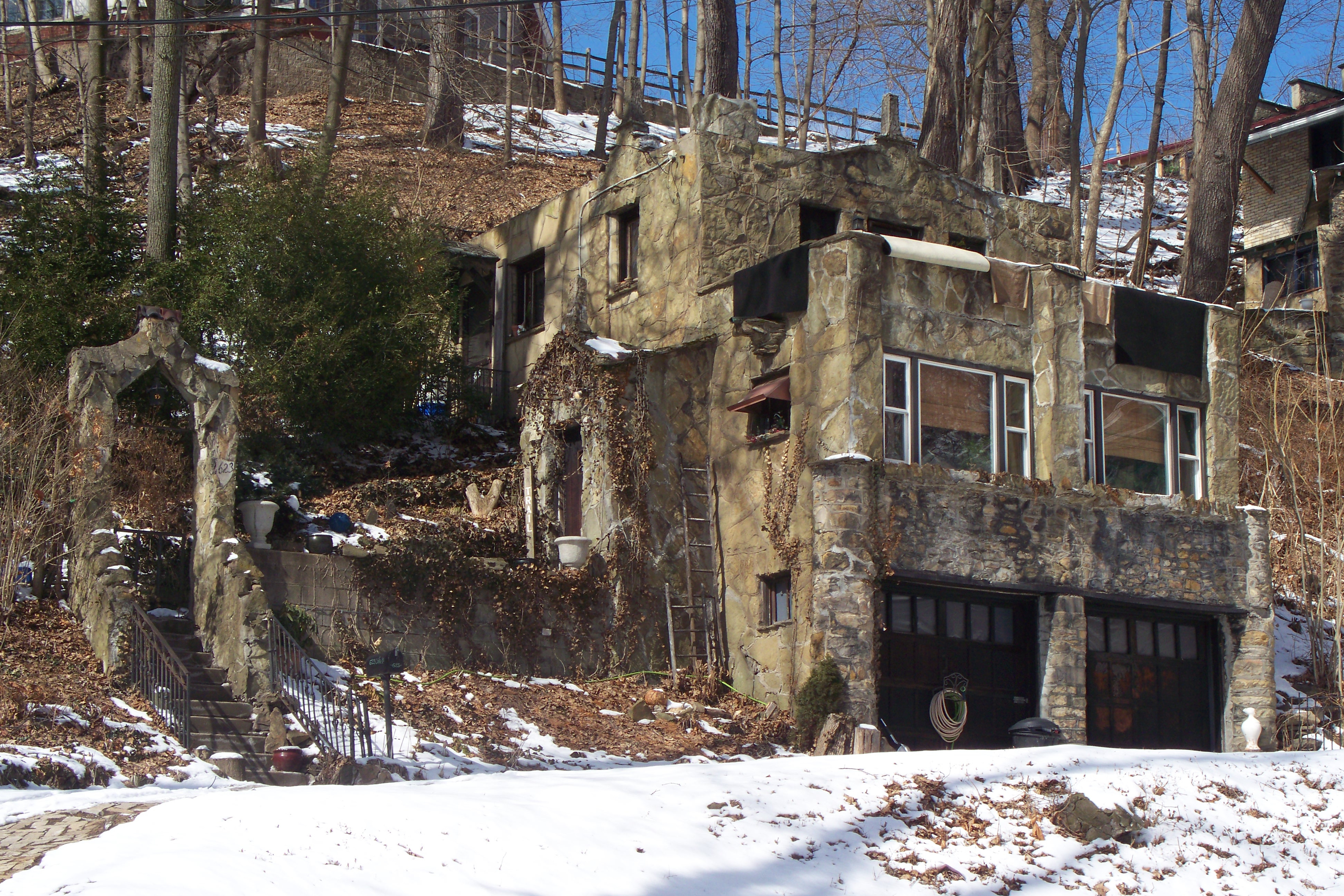
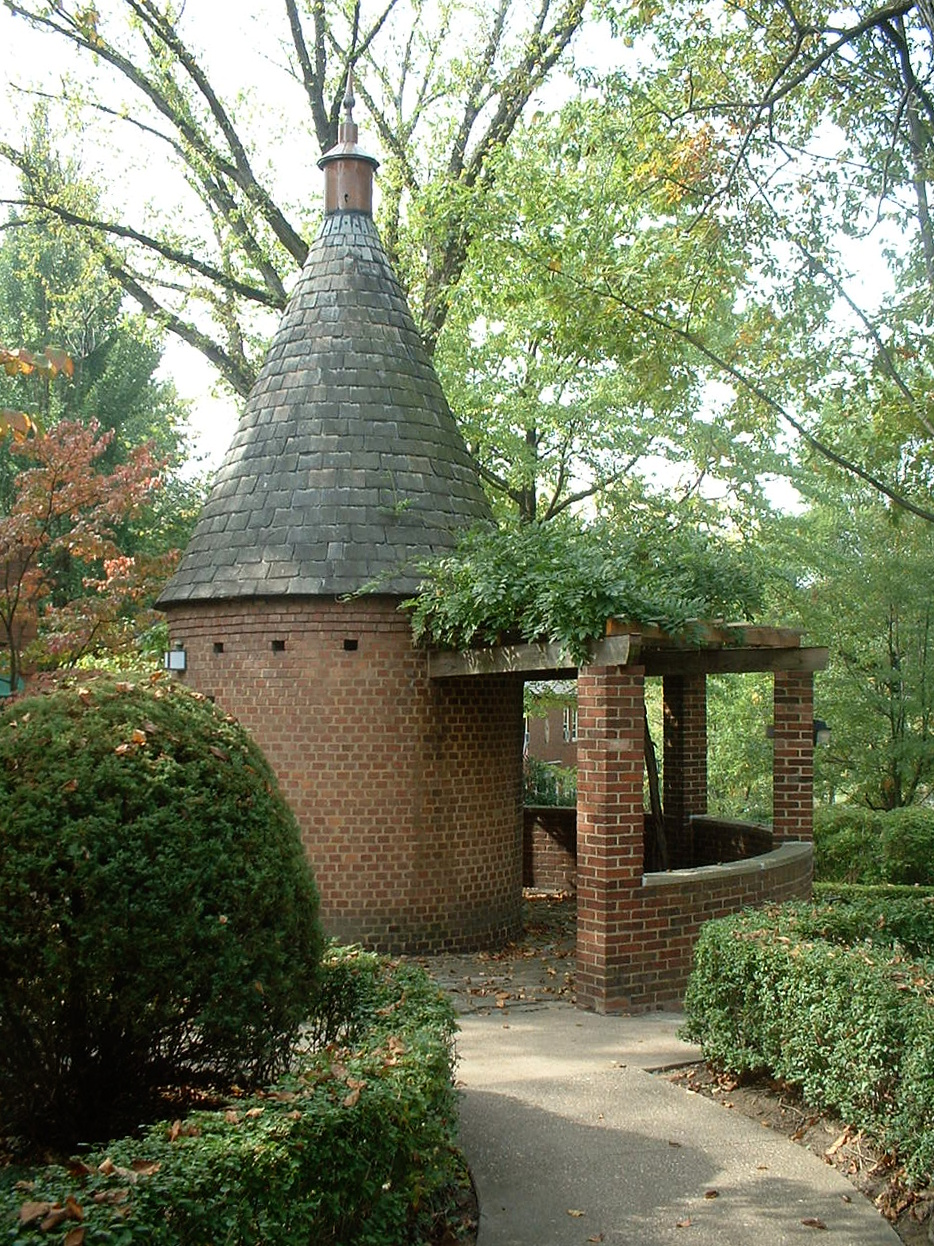
Frederick Sauer was a very reliable church architect responsible for many of Pittsburgh’s better Catholic churches, including St. Mary of the Mount. Nothing about his churches would stamp him as an eccentric; he gave his clients exactly the respectable buildings they wanted. But he had a streak of whimsy in him. He bought a large tract of land on the hill over Aspinwall and designed a very conventional and respectable house for himself. Then he started to play in the back yard. Beginning with his chicken coop, for example, he added fairy-tale projections and curious details, building up and out until he had made an apartment building, the Heidelberg Apartments (above). He did much of the building with his own hands, eventually creating half a dozen or so curious structures back in the woods behind his house. They now form the Sauer Buildings Historic District—one of those curious Pittsburgh treasures probably known less to Pittsburghers than to the rest of the world, where they are often mentioned as one of the most interesting flights of architectural eccentricity in America.


This charming building from 1900 was tastefully expanded in 2006. The new section is obviously of our century, but so well harmonized with the old that it seems an organic growth.

Here is a huge picture of the front of St. Mary of the Mount on Grandview Avenue, Mount Washington. It’s made from eight individual pictures, all cleverly sewn together by Hugin. If you click on the picture, you can enlarge it to 4,692 × 6,569 pixels, or about 30 megapixels. (It could have been larger, but old Pa Pitt decided that 30 megapixels was probably large enough.) Many thanks to Wikimedia Commons for being willing to host huge pictures at such a level of detail.
The architect was Frederick Sauer, whose conventionally attractive churches do nothing to prepare us for the eccentric whimsy he could produce when he let his imagination run wild.

And here’s the proof. Note the ice on the Monongahela, except for a channel wide enough for barge trains.


Another dip into the archives: some pictures of Chatham Village from 2005. Since the place hardly changes at all, they are current for practical purposes.

Chatham Village was a New-Deal-era utopian community, designed to be attractive cheap housing for the working classes. It was so attractive, in fact, that it is now more valuable than the neighborhood that surrounds it on Mount Washington.

The community owns the Bigham House, a fine 1844 farmhouse now used for community events and residents’ parties.
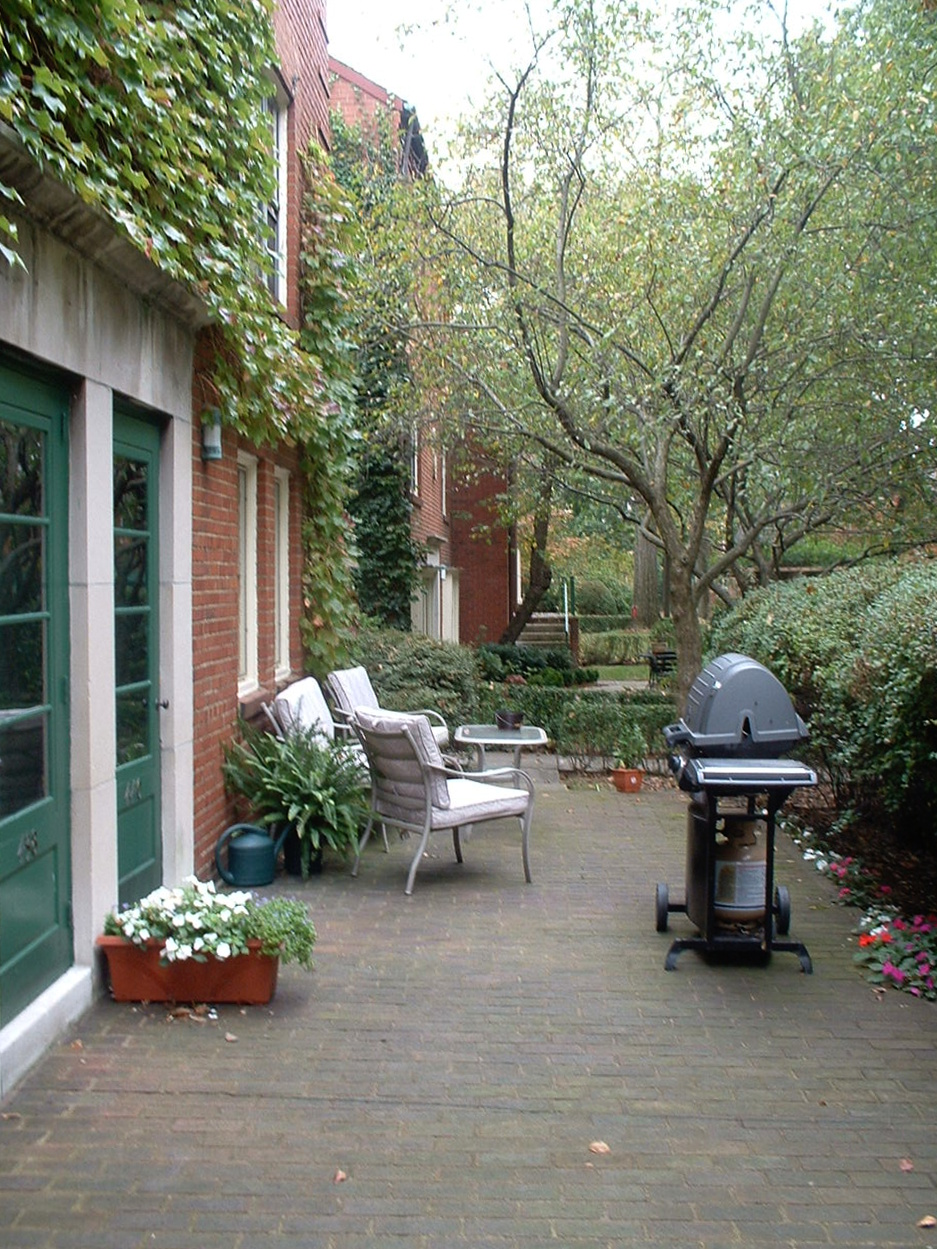
Old Pa Pitt was shocked to discover that Wikimedia Commons had very few pictures of Chatham Village. His own were taken at glorious 1-megapixel resolution, and they were huge compared to the other ones in the Commons collection. So he has donated all these pictures to Wikimedia Commons under the CC0 do-what-you-like license.
 Camera: Fujifilm FinePix 2650.
From Father Pitt’s archives, a picture taken before his Web site existed. This is a Philadelphia PCC car, decorated for a birthday party, waiting for passengers at the Pennsylvania Trolley Museum.
The museum has a large collection of trolleys from all over North America, but most of the ones from outside Pennsylvania must be modified to run on the museum’s track, which is Pennsylvania Broad Gauge. Both Pittsburgh and Philadelphia still use a non-standard gauge, because in the nineteenth century the Pennsylvania legislature, fearing that streetcar companies might do back-door deals with the railroads that would end with huge locomotives running down the middle of the street, made it illegal for streetcar companies to use standard-gauge track. (It seems that Philadelphia trolleys actually use a gauge a quarter-inch narrower than the Pittsburgh gauge, and Father Pitt has no idea how much modification they require to run on the ever-so-slightly broader gauge.)
Another moving still picture, this one of sunset light on steam rising from a chimney in Beechview.
Continuing his experiments with panorama stitching, Father Pitt is trying out a program called Hugin. The results are encouraging. All the pictures in this article were stitched together with the default settings and no tweaking at all.
Here’s a picture put together from two separate photos:

This is extraordinarily good work, because the original pictures did not match very well at all. They were taken hand-held, and the exposure is very different. Here they are, and you may judge Hugin’s work for yourself:


In addition to correcting the perspective and angles, Hugin has matched the lighting almost perfectly.
Here is a snow panorama from Father Pitt’s favorite little stream valley in Mount Lebanon:

This picture is put together from three separate photographs—again, with the camera hand-held, and with little serious attempt to be careful about lining things up. The lighting is not matched perfectly, but it’s not a bad job at all.
Here is a broad panorama made from four pictures:

Now here is something more interesting, from a technical point of view, though from an artistic point of view it’s just another boring old snow-in-the-woods picture:

It looks like an ordinary rectangular photograph, but in fact it is made from four separate hand-held photographs—two above and two below. Hugin had to sort out the different angles and match the lighting, and it did a very good job, giving us a very-wide-angle photograph with an ordinary somewhat-wide-angle lens.
One curious thing about Hugin is that it cannot deal with pictures from the Samsung Digimax V4. By simple bad luck, this was the first camera old Pa Pitt tried with Hugin, and he was convinced for half an hour that the program was broken. No; it was just a strange incompatibility with that one camera. Father Pitt suspects there is something odd about the EXIF data generated by that camera. There is something odd about almost everything that camera does, so one is not surprised that it should be the only camera so far to give Hugin problems.
But unless you have a camera that confuses it (and those are probably very rare), Hugin is exactly what you need for combining individual photographs into one large picture. It earns Father Pitt’s endorsement—an endorsement he feels all the better about giving it because Hugin is free and open source.

