Father Pitt

Would you like to see a random article?
Of course you would.

    • About Father Pitt
    • Contents & Search
      • Alphabetical Index
    • Father Pitt’s Other Collections
      • Father Pitt’s Pittsburgh Encyclopedia
    • Privacy
    • Using These Pictures
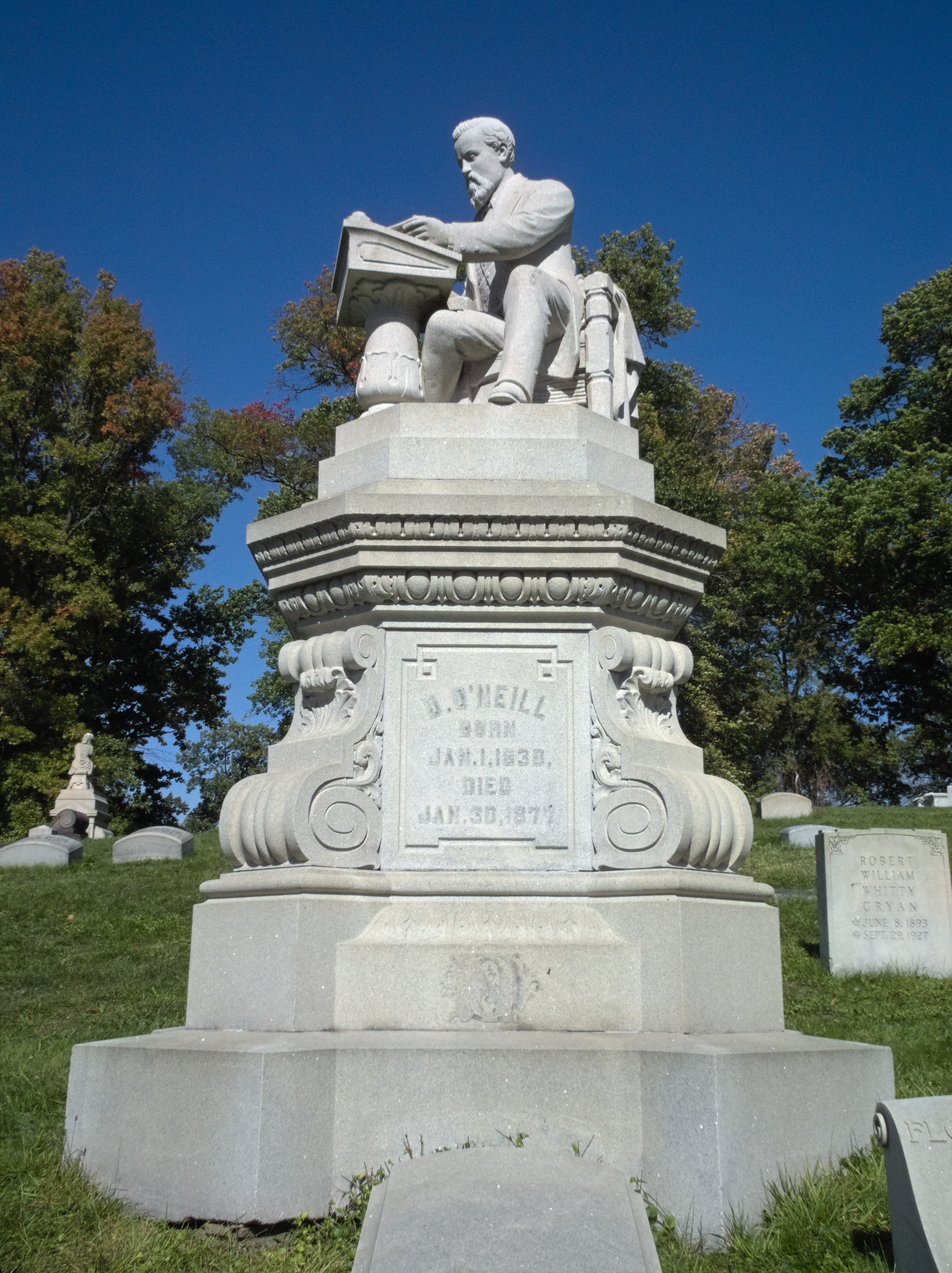
  • Daniel O’Neill Monument, Allegheny Cemetery

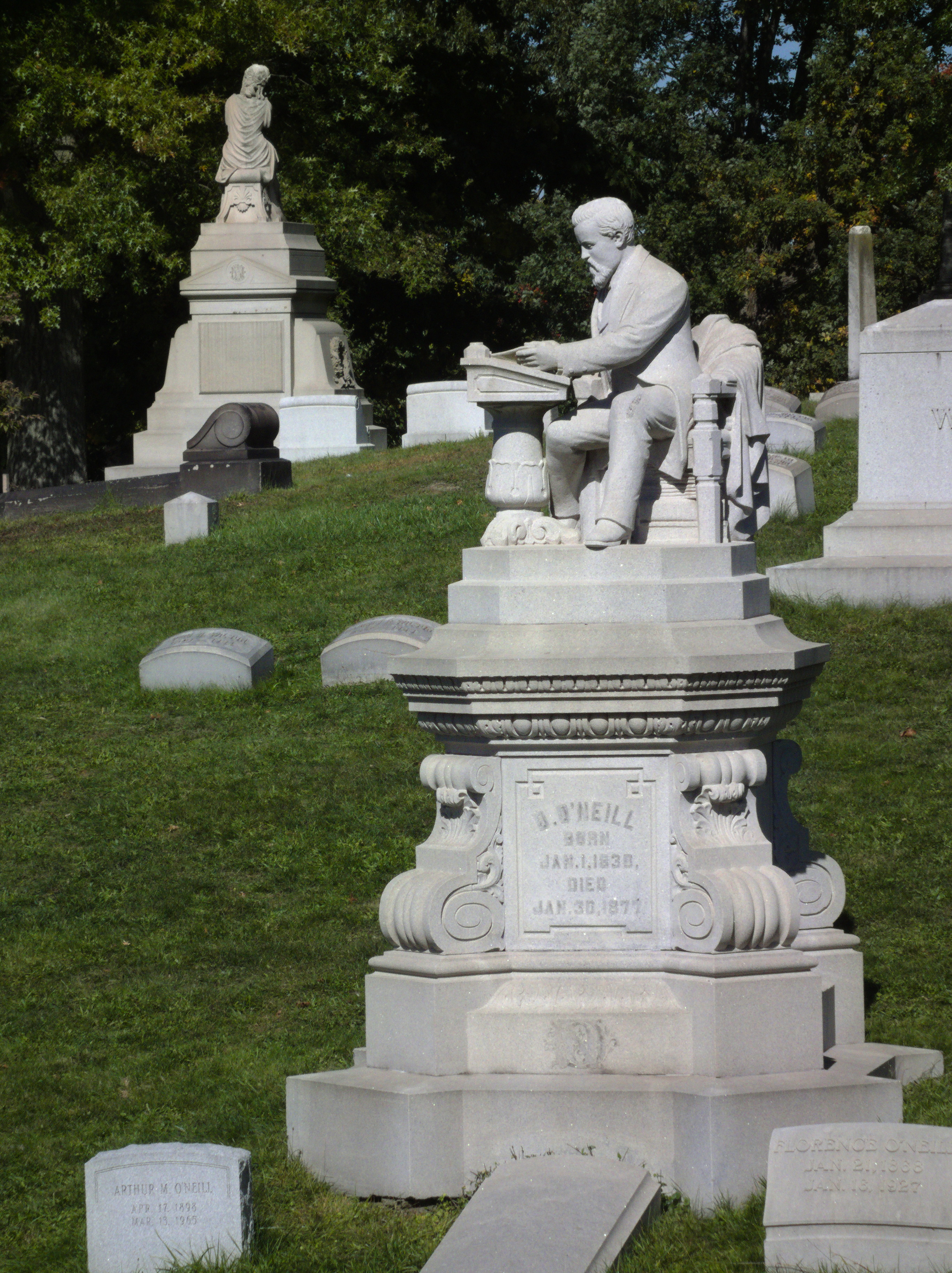
    This article on the Daniel O’Neill monument appears at Father Pitt’s Pittsburgh Cemeteries, but he thought his regular readers here might also enjoy seeing the portrait of an important figure in Pittsburgh’s literary history.

    Close-up of the face on the Daniel O’Neill portrait statue

    An editor’s work is never done. Here is Daniel O’Neill, owner and editor of the Dispatch, still at work 145 years after his death in 1877. Though he died at the young age of 47, he had already built the Dispatch into Pittsburgh’s most respected newspaper, a position it held until the great newspaper massacre of the early 1920s, when paper shortages and rising costs forced hundreds or thousands of papers across the country out of business. Before that there had been at least a dozen English dailies in Pittsburgh, not to mention three in German and several in other languages.
    From the hill opposite

    The monument itself is a harmoniously eclectic mix of styles in the Victorian manner: classical elements dominate, but Mr. O’Neill’s desk rests on an Egyptian pedestal.

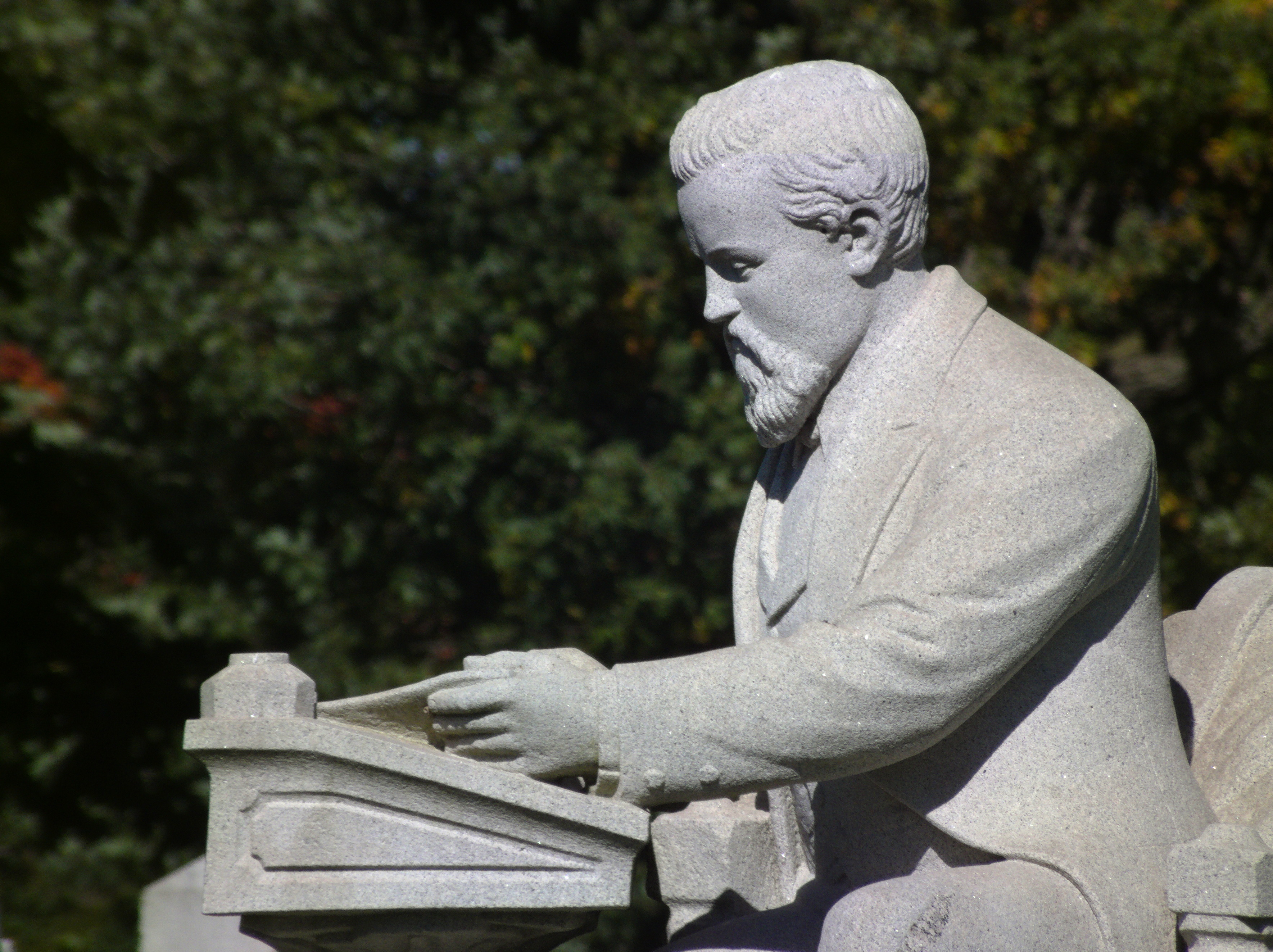
    From the front
    Daniel O’Neill hard at work
    The full statue
    Inscription on the monument
    Face, three-quarters view
    October 10, 2022
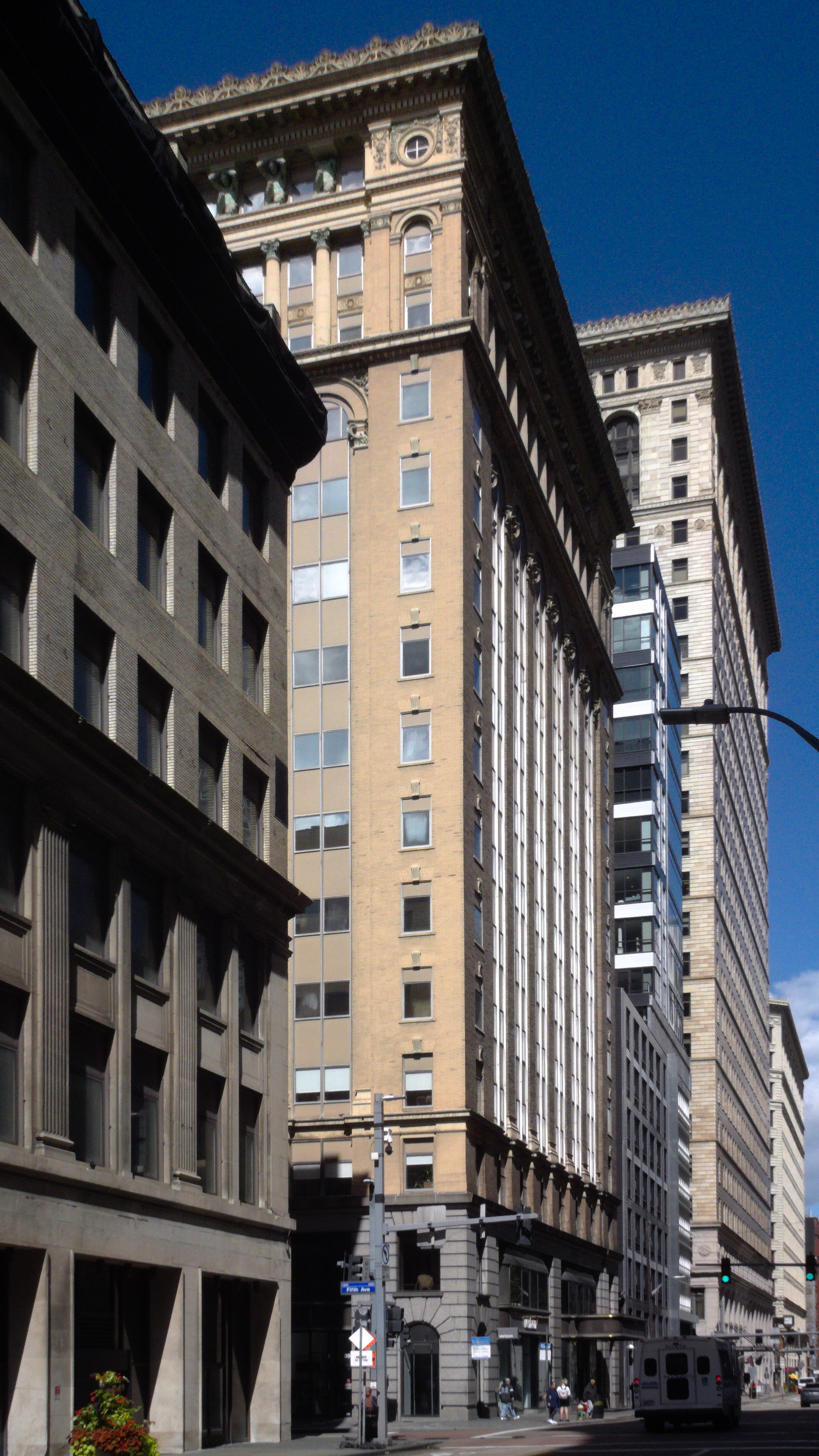
  • Top of the Frick Building, Tower of the Courthouse

    A little slice of skyline seen from the South Side Slopes.

    October 10, 2022
  • Doolittle House, Carnegie

    Doolittle house from the front

    A splendid country house overlooking the town of Chartiers (now the western half of Carnegie). Several real-estate sites on line list this house as built in 1900 or 1901, but clearly it is decades older, and very well preserved. According to our old maps, it appears to be the Doolittle house (but old Pa Pitt would be happy to be corrected). This section of Carnegie northwest of the railroad, the “Doolittle Place Plan,” was built on the former Jacob Doolittle estate, and Doolittle Avenue runs along the northeast side of the house.

    From the side
    From the rear
    October 9, 2022
  • W. Daub Building, South Side Slopes

    W. Daub Building

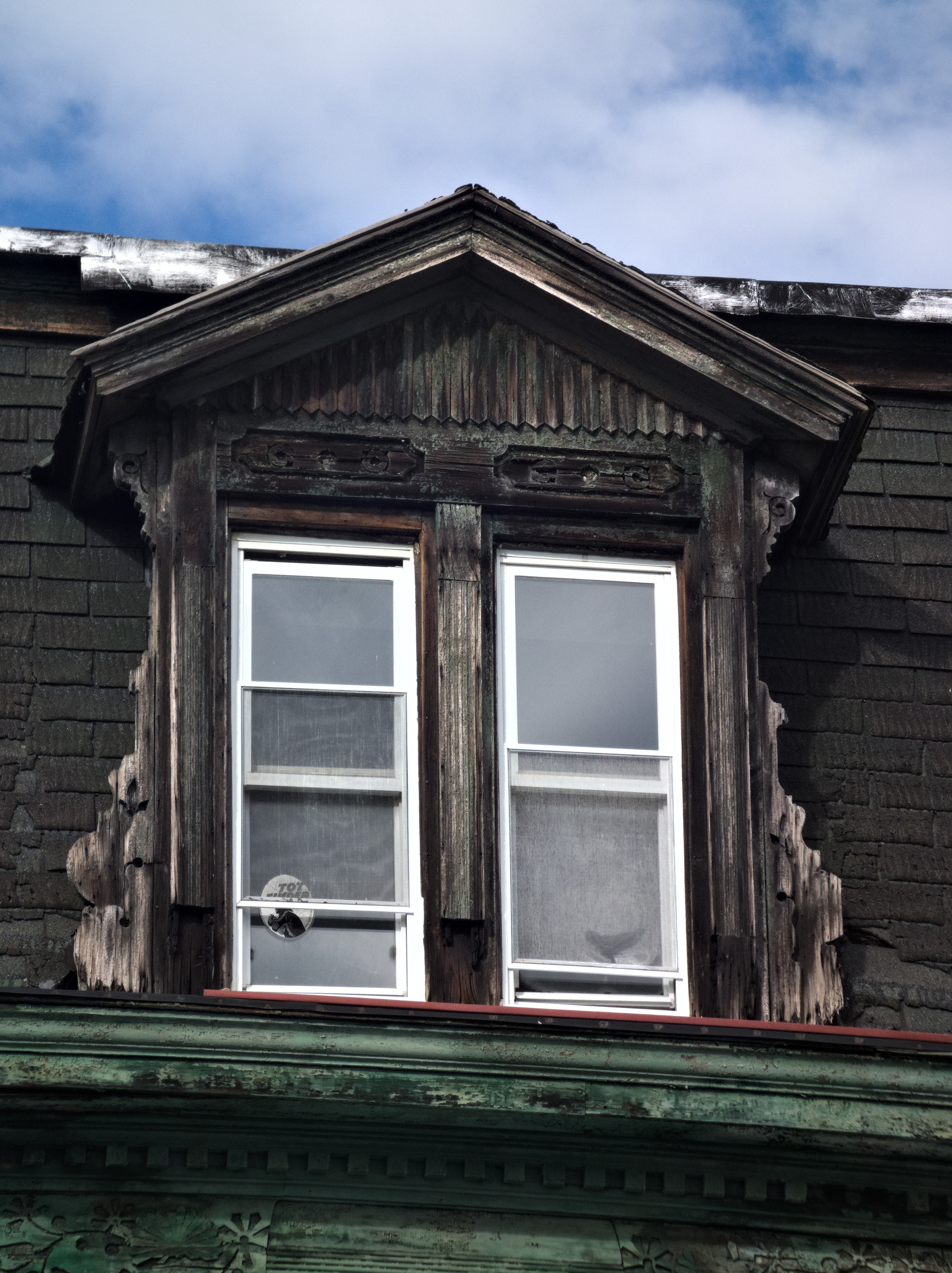
    This frame Second Empire building was put up in the 1880s, and old maps show it as belonging to W. Daub. It has seen better days: it has been sheathed in aluminum, and what was probably a storefront looks as though it has been filled in with a contractor’s remnants. If we look at the third floor, we can see a few lingering bits of what was once very decorative folk-art woodwork. Doubtless all the windows and doorways had similarly carved trim until the siding salesman came along. If old Pa Pitt had to guess, he would imagine this was a neighborhood hotel, which is to say a bar with rooms above to earn a “hotel” liquor license. You would hardly guess from the exterior, but there is still a working bar on the ground floor, apparently much beloved by the locals.

    Carved wood
    Dormer
    Oblique view
    October 9, 2022
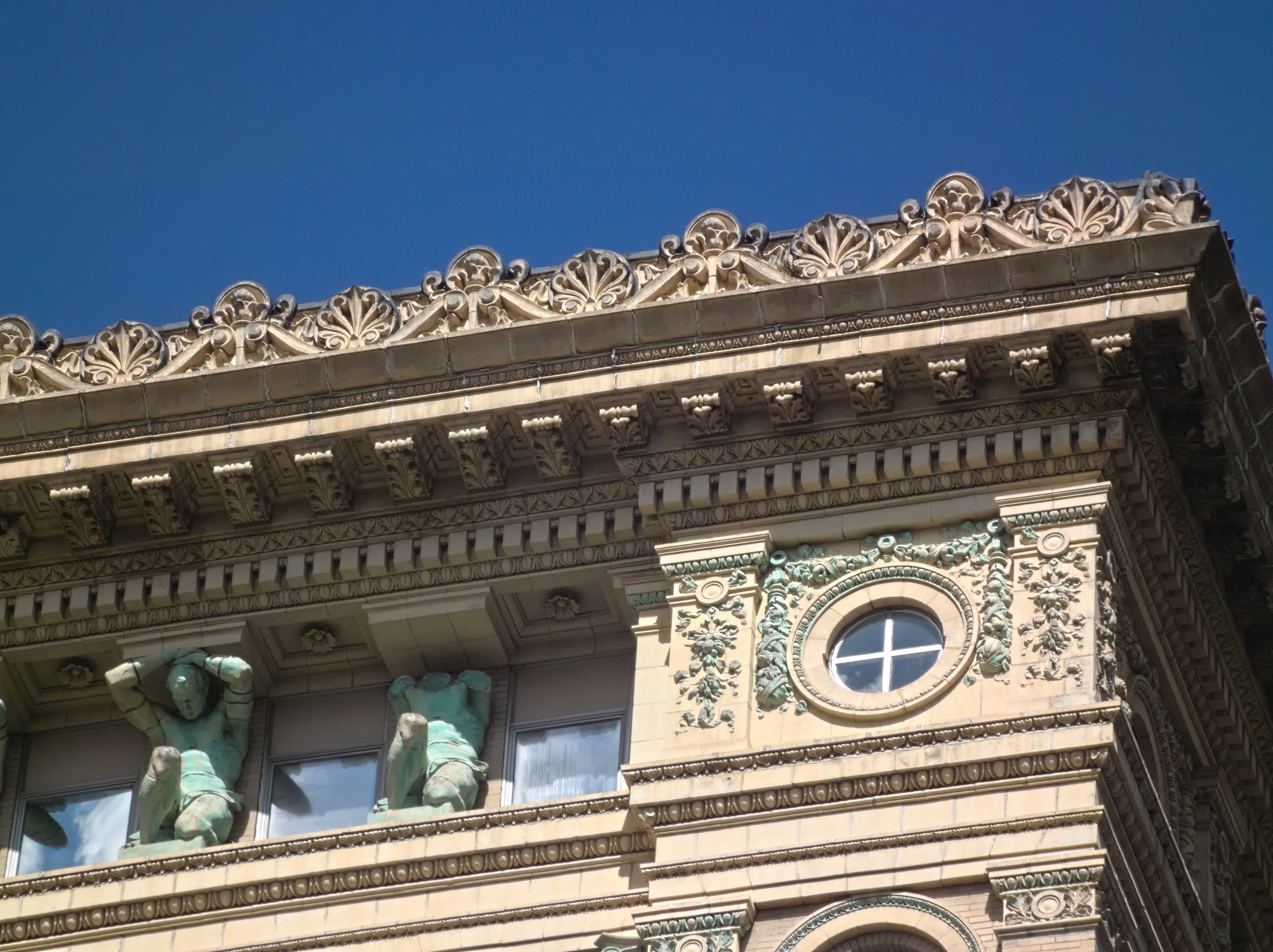
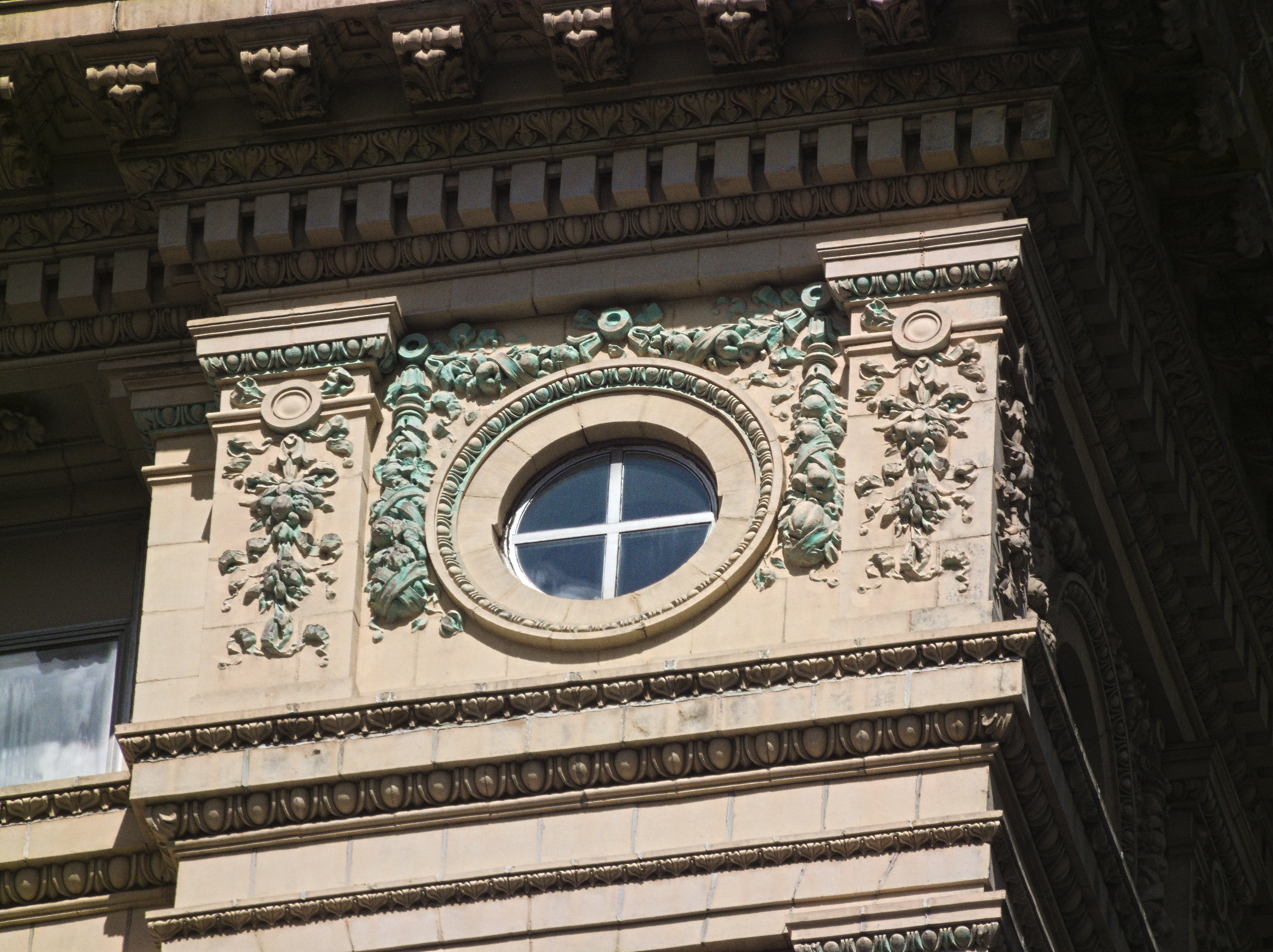
  • Telamones and Other Ornaments on the Park Building

    Telamon on the Park Building

    A “telamon” is a male human figure used as an architectural support. Most architectural references regard the term as interchangeable with “atlas” (of which the plural is “atlantes”), but some working architects seem to have distinguished the two, “telamones” being youthful, beardless figures, and “atlantes” being older bearded figures with pronounced or exaggerated musculature, like the atlantes on the Kaufmann’s clock. At any rate, the 1896 Park Building, which is our oldest standing skyscraper (if we don’t count the seven-storey Consetoga Building as a skyscraper), has thirty of these figures supporting the elaborate cornice. The sculptor seems not to be known, which is a pity, because these are exceptionally fine work. The architect was George B. Post, who also designed the New York Stock Exchange and the Wisconsin state capitol, among many other notable buildings.

    Telamones
    Cornice

    One of these fellows has lost his head, which you might do, too, if you had to hold up a cornice like that for 126 years.

    Garlanded window
    Telamon
    Park Building

    At some point in the middle twentieth century it seemed like a good idea to someone to fill in the shaft of the building with modernistic columns of windows. It was not a good idea.

    October 8, 2022
  • Mellon Hall, Duquesne University

    Mellon Hall

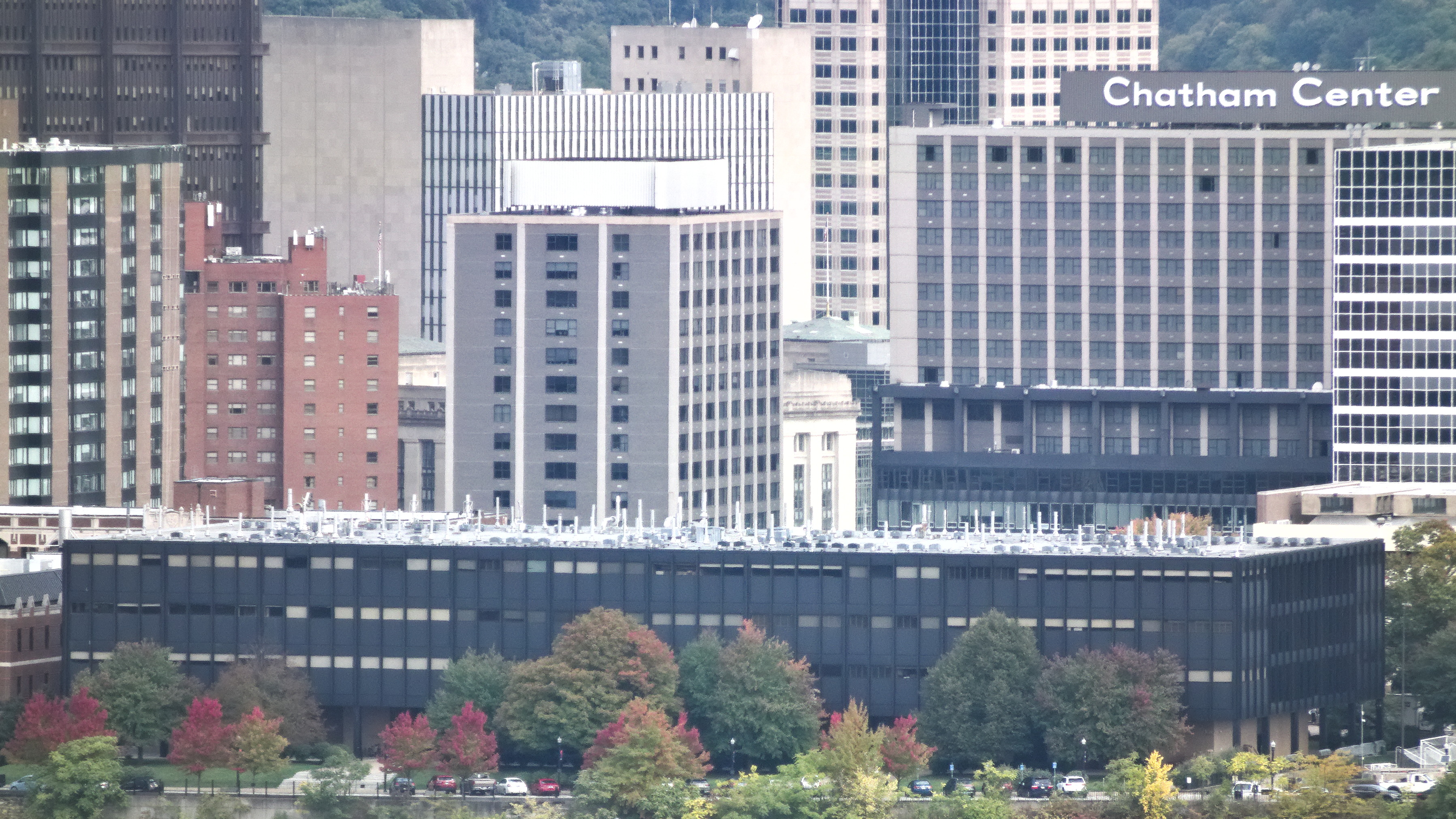
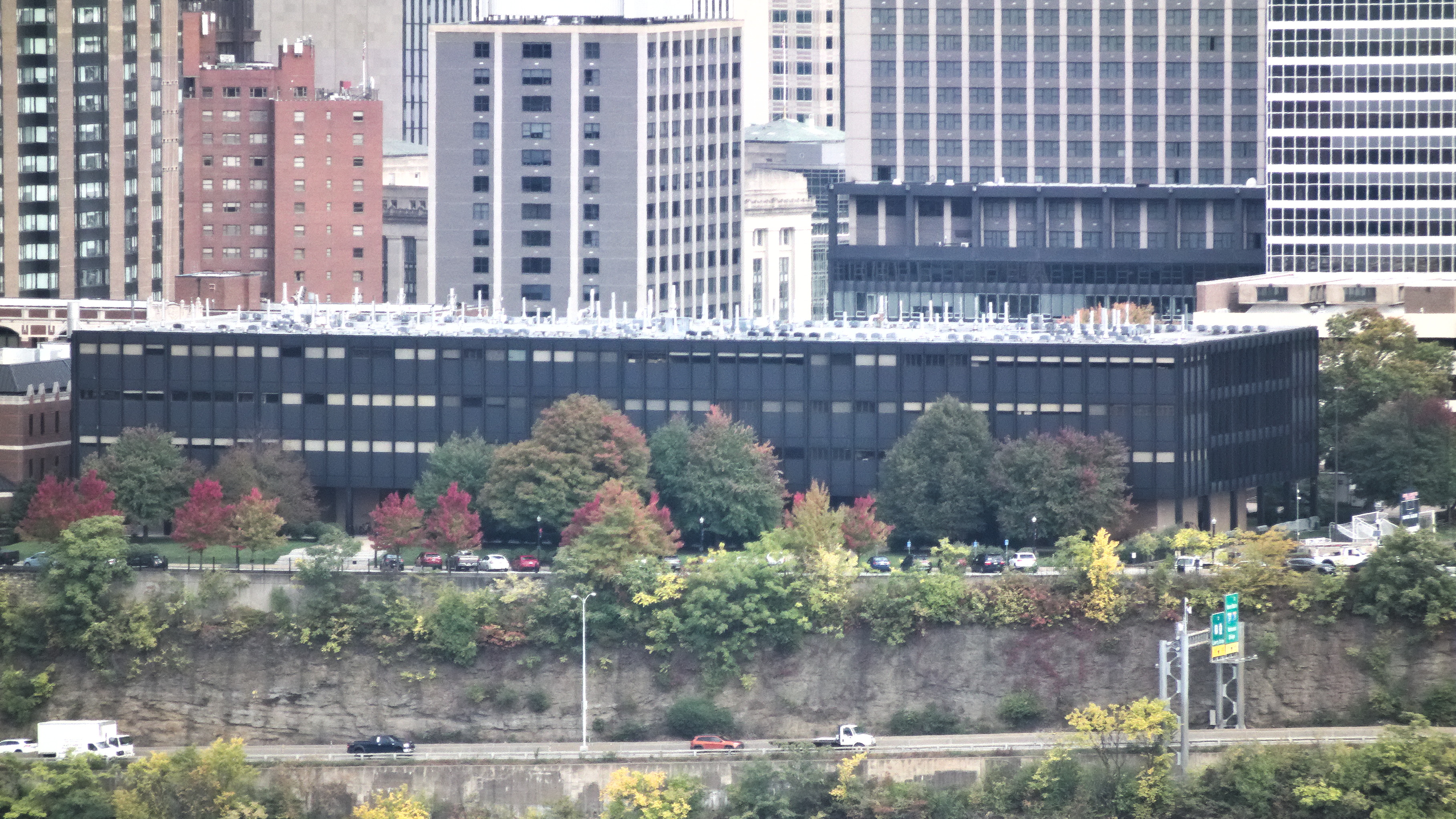
    It is surprising to discover, considering how many of his buildings sprouted in other cities, that this is the only building by Ludwig Mies van der Rohe in Pittsburgh. (The IBM Building in Allegheny Center was by his architectural firm, but the design was actually by one of his minions in his Chicago office.) It is an unusually long and low building by his standards, but it is otherwise a typical Miesian black box on stilts. Here we see it from across the river with a long lens.

    Mellon Hall
    October 8, 2022
  • Sunset Reflected

    Sunset reflected in the windows of the Solof Building, South Side.

    October 7, 2022
  • Power House for the Mount Oliver Incline

    Mount Oliver Incline power house

    Most Pittsburghers with an interest in local history know that there were many inclines operating in the city a hundred years ago. Few know that part of the Mount Oliver Incline is still here. The incline itself closed in 1951, and the stations are gone, but the power house, which was across Warrington Avenue from the upper station, still stands. It has been converted into a shop for a heating and air-conditioning contractor.

    Mount Oliver Street side
    Warrington Avenue end

    Map.

    4 responses
    October 7, 2022
  • Chimney Pots and Moon

    October 6, 2022
  • BNY Mellon Center

    Our second-tallest building opened in 1983 as One Mellon Center. It was actually meant to be the Dravo Building, but Dravo disappeared before the building was finished. There were plans to surround it with matching smaller buildings, but the 1980s boom went bust, and those buildings never happened.

    The architects were Welton Becket and Associates—clearly the Associates in this case, since Mr. Becket himself died in 1969. (He is, however, credited with this and nearly three dozen other posthumous buildings in his Wikipedia article.)

    One response
    October 6, 2022
←Previous Page
1 … 209 210 211 212 213 … 443
Next Page→