Charles Bickel, a good and competent Pittsburgh architect most famous for Kaufmann’s department store, designed this building, but Father Pitt is not quite sure about the rest of its history. A market house was built here in 1893 and burned in 1914; it was rebuilt in 1915, but the exterior walls may have remained from the older building. Old Pa Pitt would love to hear from someone who knows definitely one way or the other. At any rate, it is one of only two original city markets left in Pittsburgh (the other is the East Liberty Market, now Motor Square Garden), neither of which is still used as a market. It sits in the middle of a tight urban square whose southern half is very much like some of the squares of London; the northern half spoils the illusion.
-
South Side Market House
-
South Side Flats
-
Christmas at the SouthSide Works
-
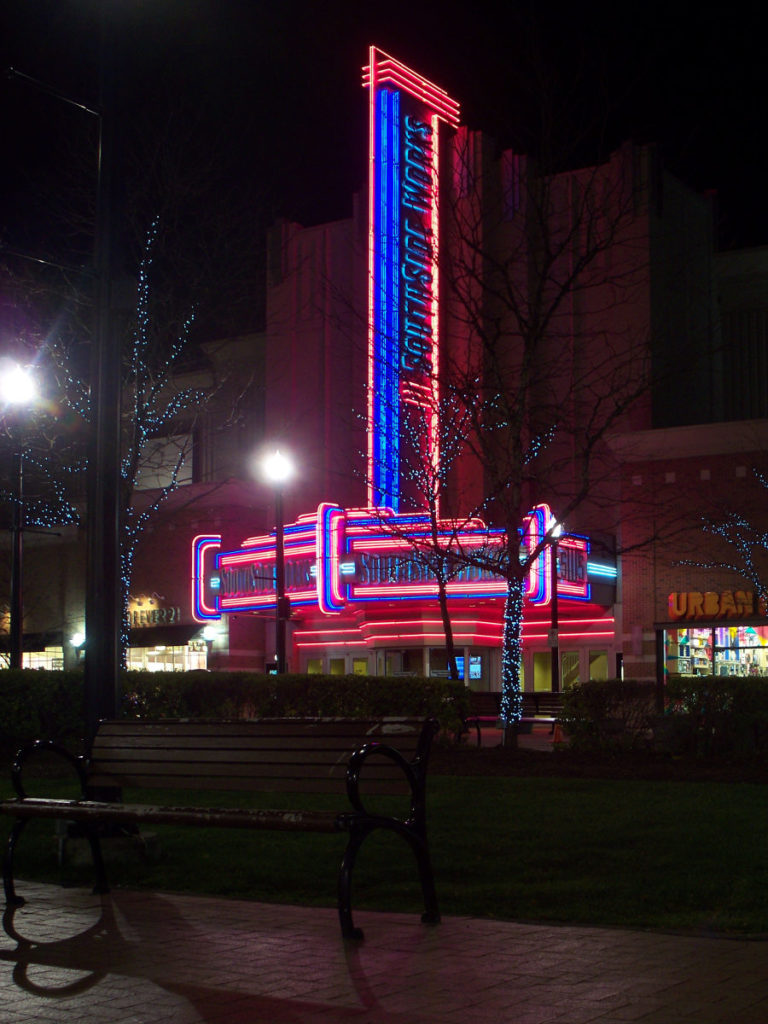
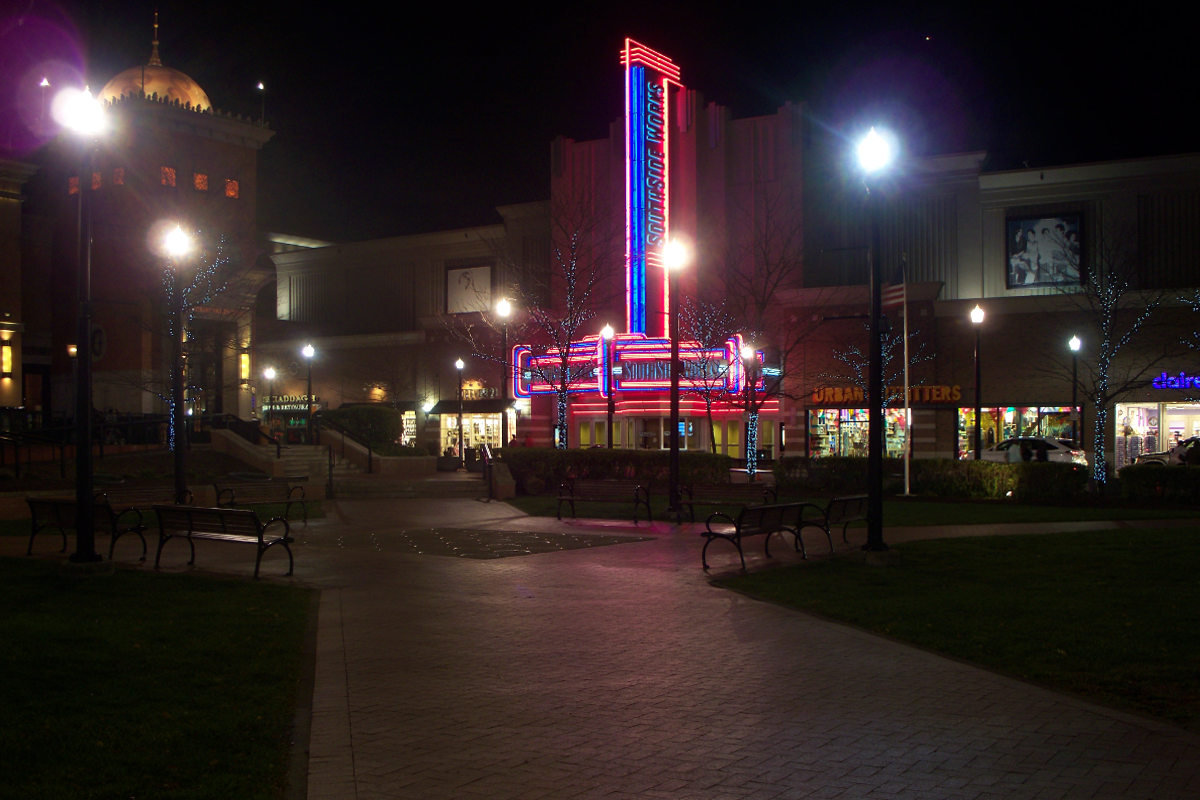
South Side Works Theater
-
Pigeon and Bessemer Converter
A pigeon perches on a Bessemer converter preserved at Station Square.
-
Schiller Glocke Gesang und Turn Verein
On the whole, the South Side Flats were East European and the Slopes were German. But a large neighborhood like the Flats has room for diverse microneighborhoods, and we find this “Schiller’s Bell Singing and Athletic Society” on Jane Street. The building is now turned to other uses, but the inscription remains. Pittsburgh and Allegheny used to be full of German singing societies; the Teutonia Männerchor in Dutchtown is the most prominent remnant.
-
Pittsburgh & Lake Erie Station

The old Pittsburgh and Lake Erie station, now the centerpiece of the Station Square entertainment district, with the Monongahela Incline in the background.

Although the angle is distorted here by a telephoto lens, the building is not rectangular. A satellite view reveals the odd shape.
A view of the interior, now a restaurant called the Grand Concourse, is here.
-
Rainbows and Bessemer Converter
-
Alley at Twilight

A South Side alley, crammed with little houses, in the fading light of a summer evening. In dense neighborhoods like the South Side, alleys were built between the main streets to serve the rear entrances of the rowhouses; but soon the real estate became so valuable that, one by one, the property owners sold off their back yards for smaller rowhouses. Alley houses like these are especially typical of the South Side, Lawrenceville, Bloomfield, and the Mexican War Streets, all of them old rowhouse neighborhoods.
-
Belgian Block on the South Side

Belgian block is a pavement made of brick-shaped stones, more or less uniform, but usually rather less than more. Pittsburghers call it “cobblestone,” having lost the memory of what real cobblestones are like. (A real cobblestone is an irregular smooth, round stone, and cobblestone pavements are quite a bit bumpier than Belgian-block pavements.) Countless Belgian-block pavements still exist in Pittsburgh, and often preparations for repaving an asphalt street reveal the Belgian blocks beneath, still perfectly intact, as they will be when archaeologists dig them up a thousand years from now.
This pavement is on an industrial street near the river on the South Side. Old Pa Pitt admits to not knowing the purpose of what appear to be iron spikes in a more or less straight line.