

A front door with interesting woodwork and curious layers of history: note, for example, the three rows of asphalt shingles above it, which were doubtless somebody’s solution to a water-related problem.
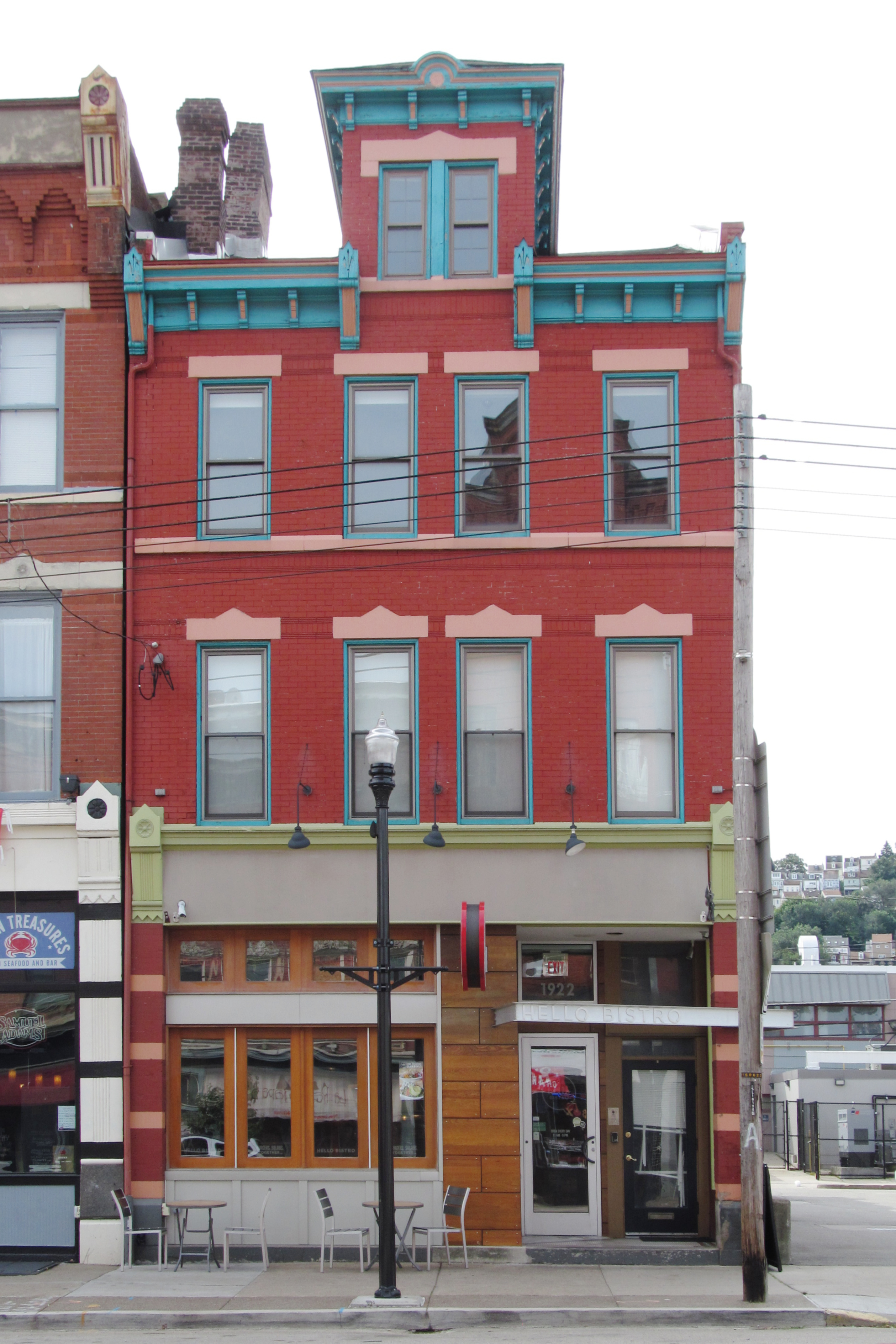
This was the home of a prosperous shopkeeper in East Birmingham, one who had two full floors of living quarters above the shop, with the addition of a couple of comfortable attic rooms. The ground floor has been altered somewhat, but only in the incidentals; on the whole, the building is in a splendid state of preservation.

The Second Empire style, with its dormered mansard roofs, was very popular in Pittsburgh—so much so that we walk by most examples without noticing them. Here’s a quite ordinary building in the back streets of the South Side, but it rewards a closer look at some of the details. Above, one of the lintels over the windows, which all have simple but effective carved decorations.

This roof has so far kept its original shingles, decoratively varied with four rows of a different shape across the middle.

One of the windows on the ground floor. Notice that its lintel decoration is different from the one above.

These star bolts are decorative, too—but they’re not mere decorations. Star bolts like these, which you see in old houses all over the city, are the decorative ends of long bolts that literally hold the building together. They are often installed to stabilize a wall that has begun to sag.

The Art Nouveau style never made much headway in Pittsburgh, but there are a few examples of ornamentation in a style that deserves that name—especially stained glass, which lends itself to the kind of abstraction we associate with Art Nouveau. This window is in a storefront near the Birmingham Bridge.

There are many houses of this age in East Birmingham, the section of the South Side between 17th and 27th Streets that was laid out in the middle 1800s. Most of them are anonymous and unremarked. This one, however, has a specific date and pedigree, according to a sign placed on it when it was renovated thirty years ago:
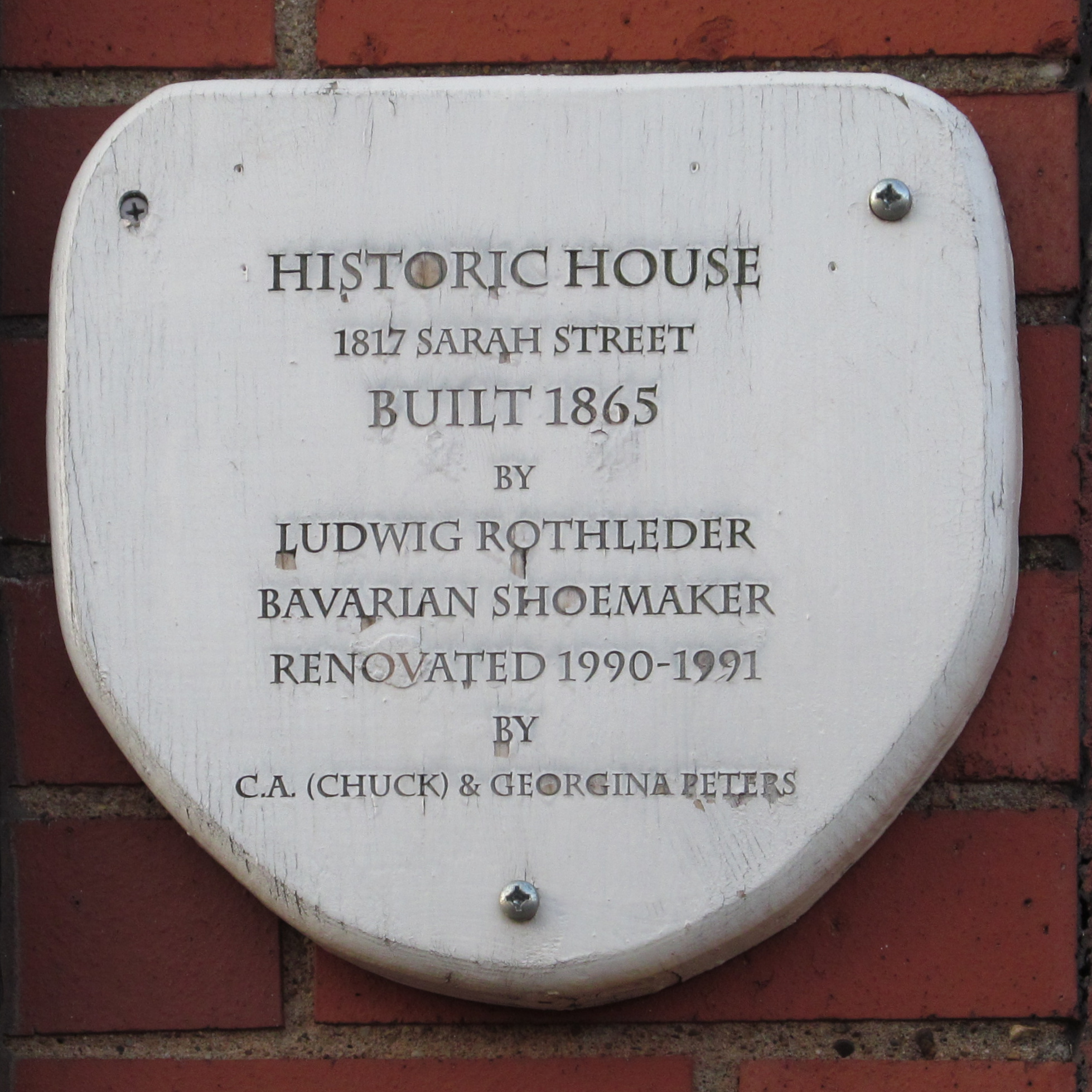
We notice the choice of the word “renovated” rather than “restored,” which is appropriate. The details are a little off for the age of the house, particularly the windows and doorway. Old Pa Pitt suspects that the house had already been altered that way, and the new owners worked with what they had to make the exterior look attractive if not historically correct. At any rate, hundreds of houses on the South Side are in similar shape, but few of them have a known date and history.


