Category: Shadyside

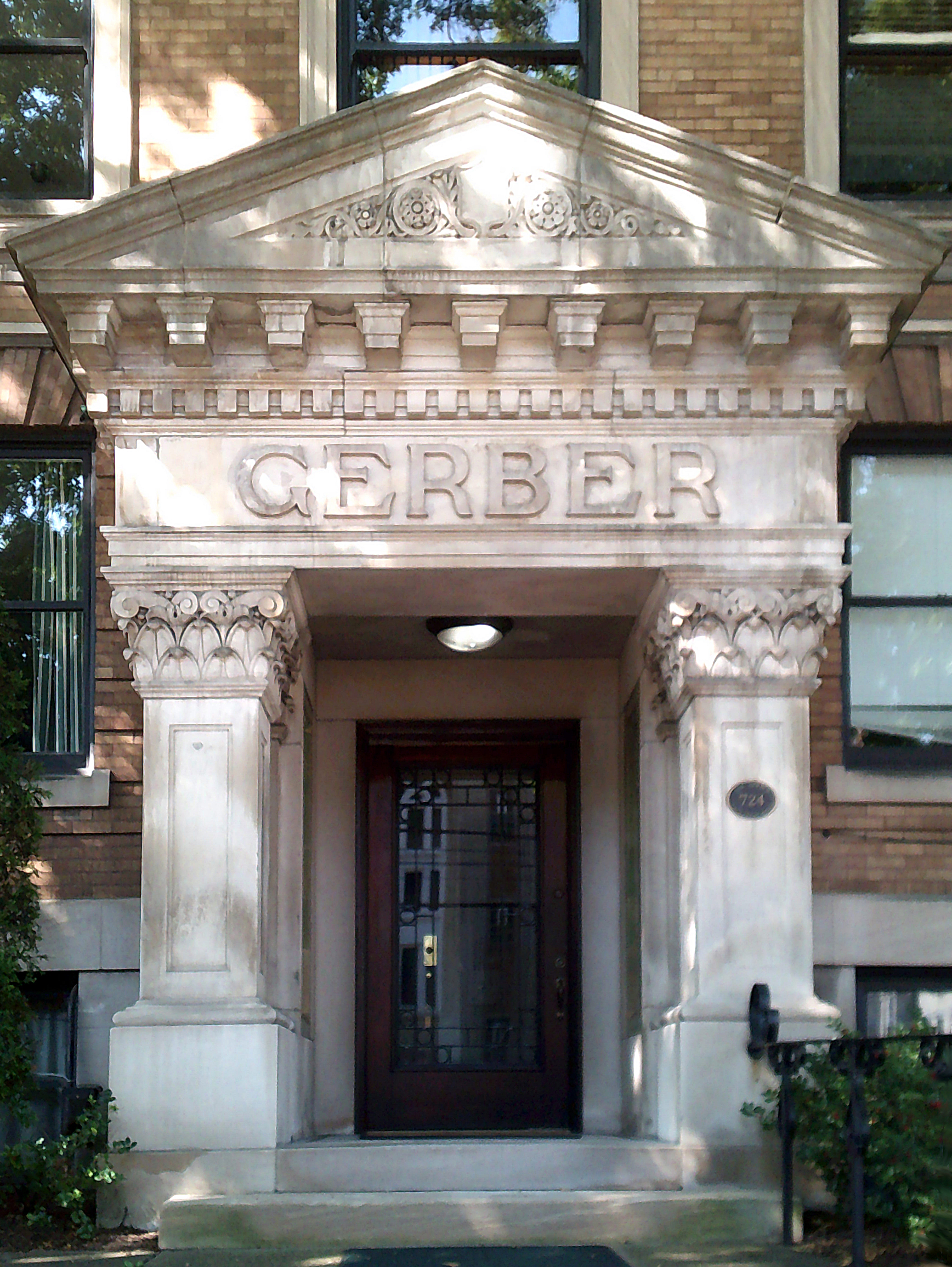
  • Entrance to the Gerber Apartments, Shadyside

    Otherwise not remarkable among the many classically inspired apartment houses in Shadyside, this one has an entrance that certainly stands out. It makes a spectacle of itself, in fact. The capitals on the massive square columns are more or less Corinthian, but Corinthian is usually the lightest and airiest-looking of the classical orders, whereas this construction gives the impression that it outweighs the whole building behind it.

    This picture was taken with what might be called a toy camera. It was a no-name digital camera with stated 18-megapixel resolution, but clearly those 18 megapixels are achieved by multiplying some much smaller number of pixels. It may amuse you to enlarge the picture to full size and examine the results.

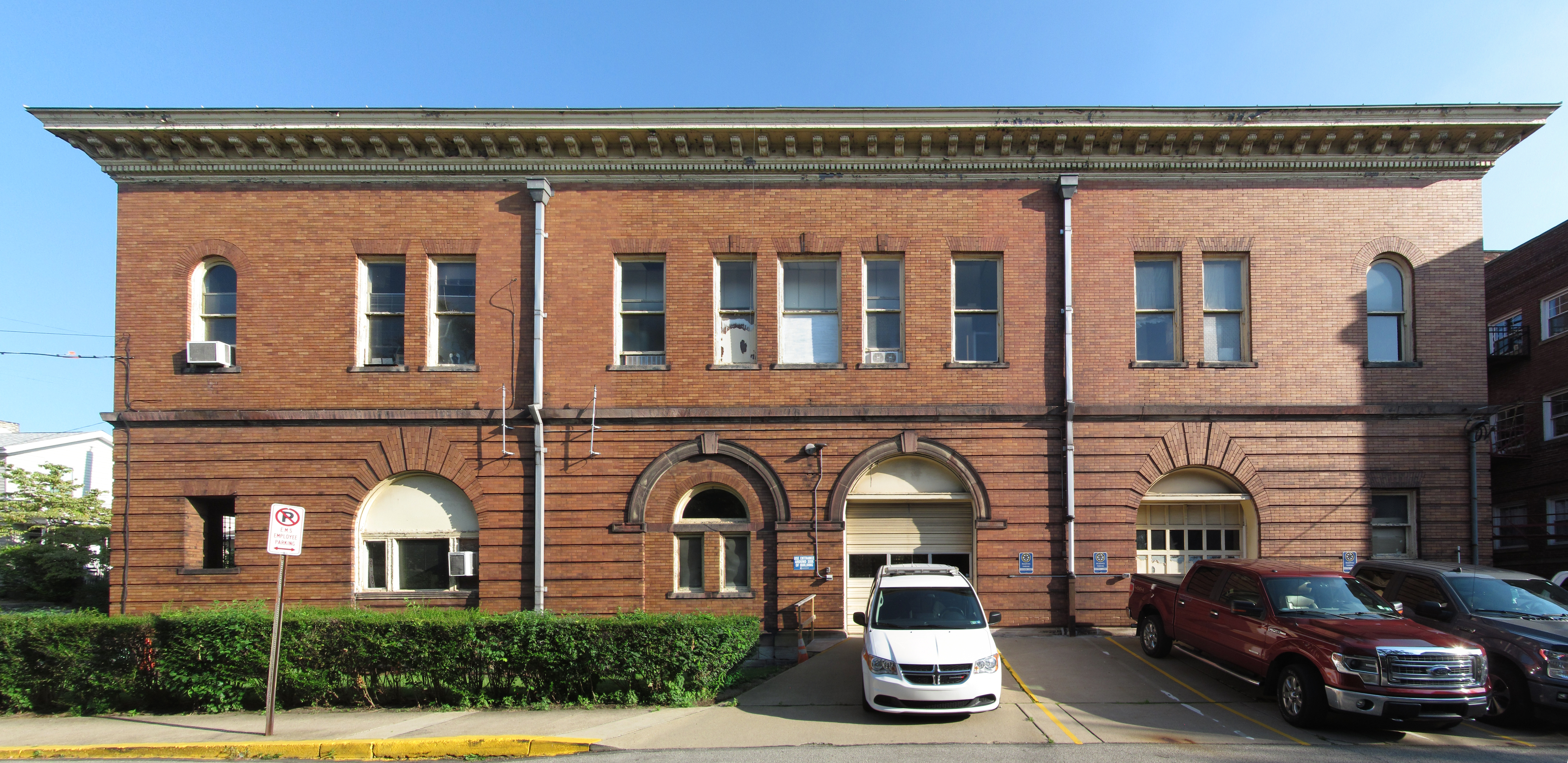
  • Engine Company No. 28, Shadyside

    A large classical firehouse with its front on Filbert Street and a long, well-designed side on Elmer Street.

    The Filbert Street front.

    Arms of the city of Pittsburgh, on the left side of the front.

    Arms of the Commonwealth of Pennsylvania, on the right side of the front.

    The Elmer Street side looks like an Italian Renaissance palace.

  • Minnetonka Building, Shadyside

    Most pedestrians on Walnut Street pass this building without noticing it; at best they may glance at the rounded corners, but otherwise it strikes them as just another modernist building. It is in fact one of the very earliest outbreaks of modernism in Pittsburgh: it was designed by Frederick Scheibler and opened in 1908. It must have been startlingly modern indeed surrounded by Edwardian Shadyside.

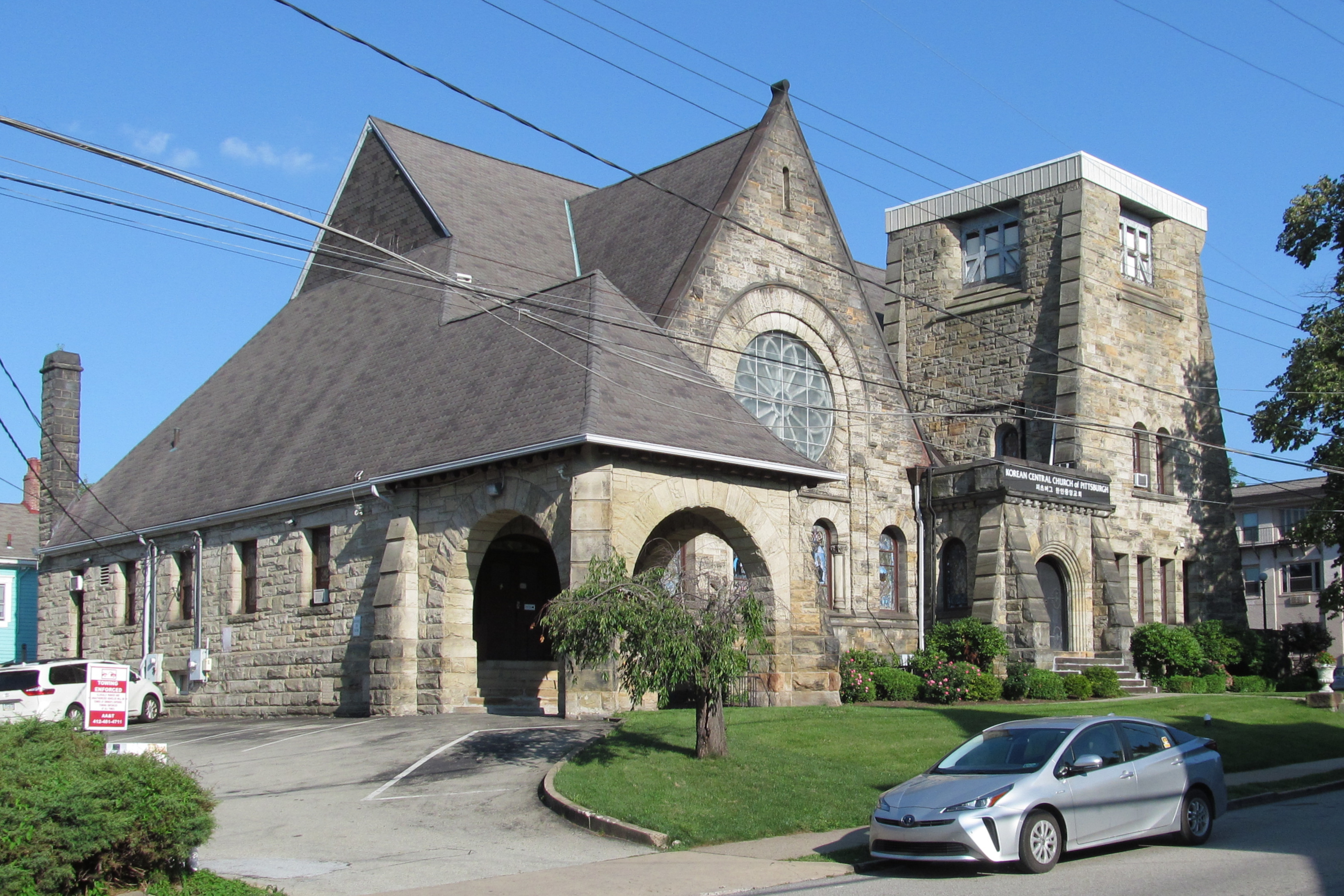
  • Korean Central Church of Pittsburgh, Shadyside

    This building began its life as the First Methodist Protestant Church; it later passed into the hands of the Seventh Day Adventists, and now belongs to a nondenominational Korean congregation. It is a work of Frederick Osterling in his typically florid Romanesque style. Obviously the spire has had a bit of bad luck, but the rest of the exterior is in pretty good shape.

    This modest but tasteful house seems to be the parsonage for the church, and Father Pitt can easily imagine that it was designed by Osterling as well. He would be happy to have his speculation corrected or confirmed. Update: Father Pitt’s speculation was wrong. The architect of the parish house, built in 1914 or so, was H. E. Kennedy.1

    1. Source: The Construction Record, May 2, 1914: “Plans are being prepared by Architect H. E. Kennedy, Home Trust building, tor the erection of a stone parish house on Howe and Aiken streets, for the First Methodist Protestant Congregation. Cost $15,000.” ↩︎
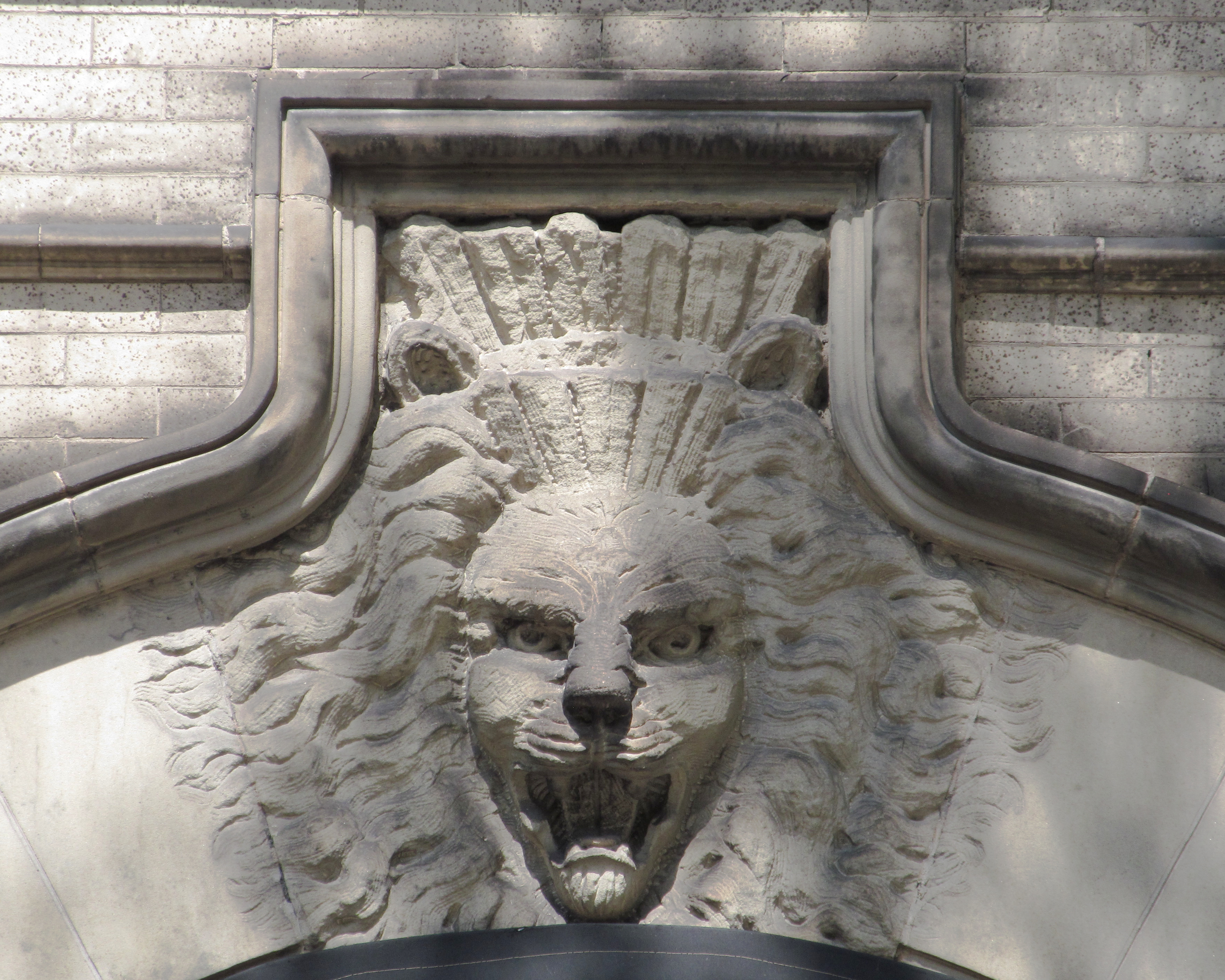
  • The Lionhead, Shadyside

    Twin lion heads guard the entrances to the Lionhead, an apartment building in Shadyside.

  • First Church of Christ, Scientist

    First Church of Christ, Scientist

    Designed by S. S. Beman, a Chicago architect who made Christian Science churches a specialty, this now belongs to the University of Pittsburgh as it slops over from Oakland into Shadyside.

  • Rodef Shalom Temple

    Rodef Shalom Temple

    One of Henry Hornbostel’s most impressive works, Rodef Shalom, built in 1906, is notable for its colored terra-cotta decorations, which—according to the interpretive sign on the temple grounds—were among the earliest uses of polychrome terra cotta in the United States.

    Find it on the map

  • First Trinity Church, Shadyside

    First Trinity Church

    A fine Gothic building with a prominent tower in the west front, this church sits right on the border between Shadyside and Oakland—it would be in Oakland if it were on the other side of the street. The view is marred by utility cables, which is true of most things in most American cities. Europeans put those things under the ground; Americans seldom even notice what an aesthetic blight they are, not to mention how often storms bring them down.

  • Howe Springs

    Thousands of commuters pass the little shelter on Fifth Avenue just east of the Highland Avenue intersection every day, but how many ever give it a second glance? Perhaps it was an especially luxurious trolley shelter, suitable to its rich neighborhood, or just a decoration for the expensive condominiums above it.

    But in fact it was a public spring, of which Pittsburgh has more than one. The water no longer flows from this one, but the little Greek temple remains, and perhaps the nymph of the spring still weeps occasionally for her lost worshipers. The current structure, built in 1912, was designed by W. H. Van Tine; it replaced one by Alden & Harlow that had been destroyed by the city, causing, according to the Wikipedia article, a monumental stink.

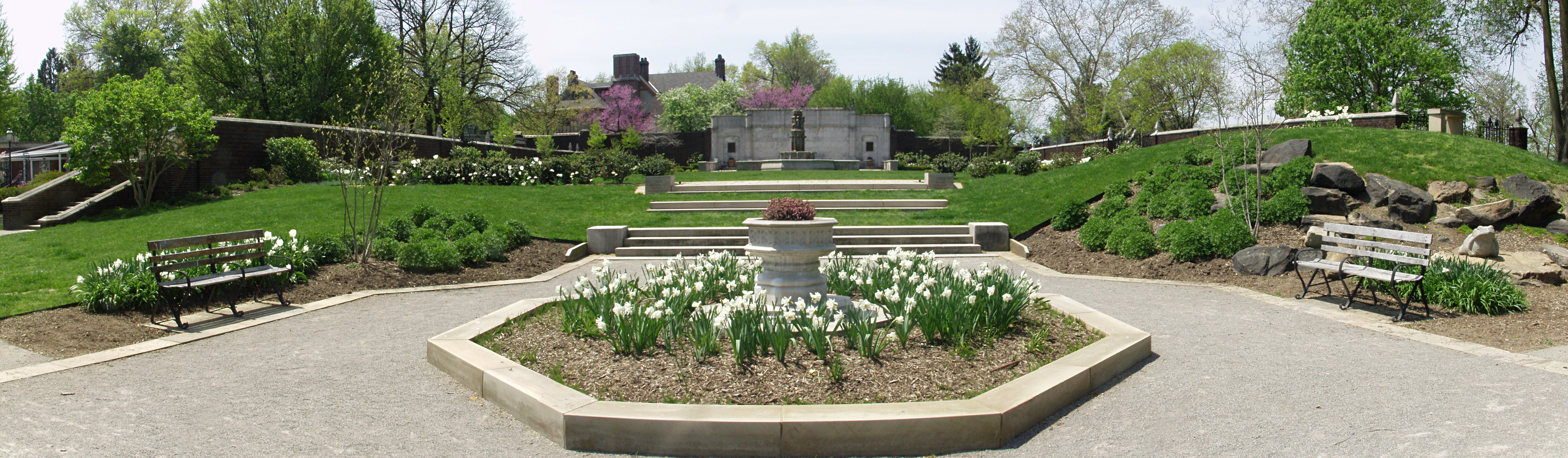
  • The Walled Garden in Mellon Park


    A panoramic view of the Walled Garden. Mellon Park was originally the Mellons’ back yard; the Walled Garden was designed by the landscape architects Vitale and Geiffert.