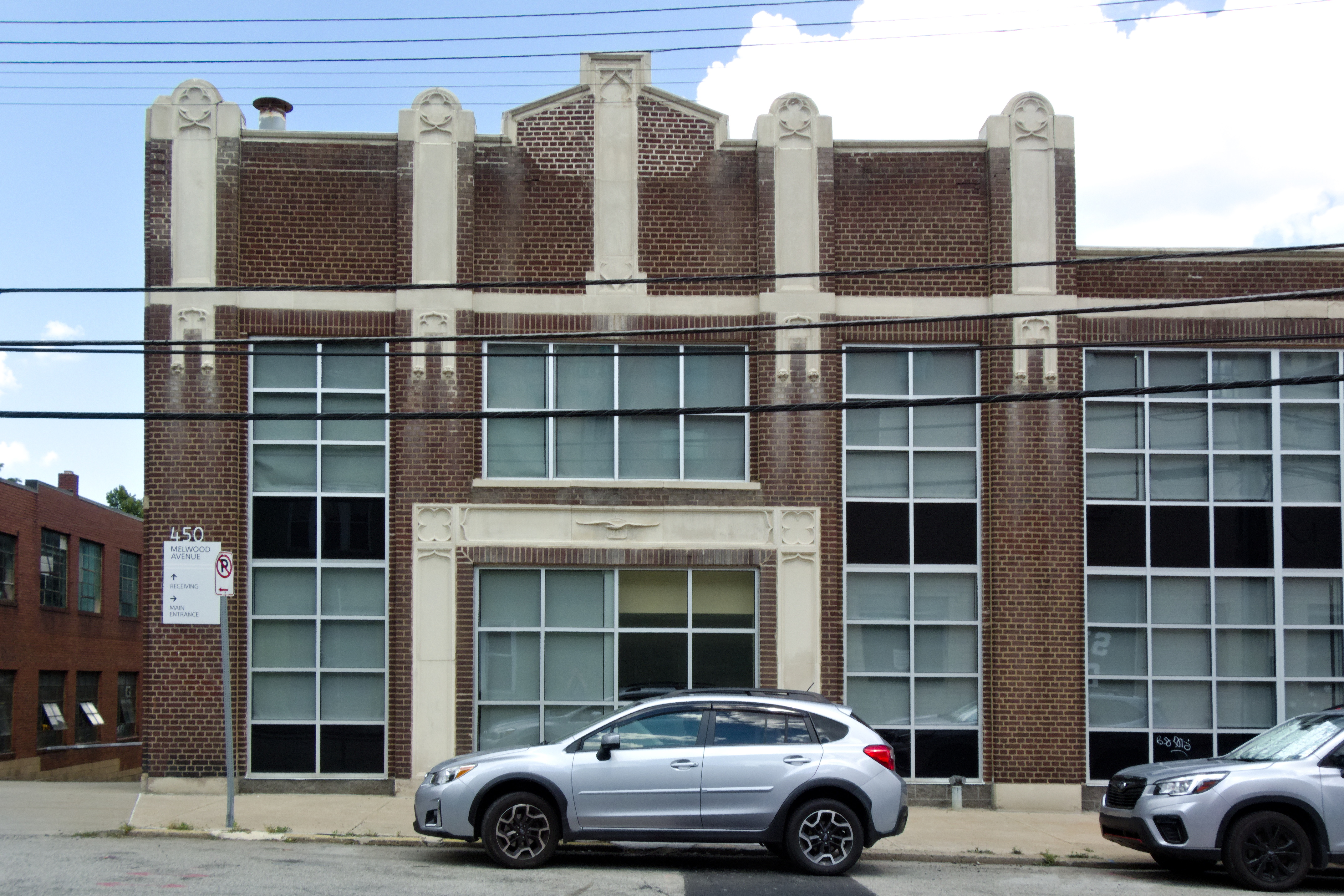
Continuing our visits to car dealers of the past, we visit the White Motor Company dealer on Melwood Avenue, which has fortunately found a new use in the medical-industrial complex.
White started in the automobile business with a successful steamer (more Whites were built than Stanleys), but as gasoline-powered cars took over the market, White abandoned steam and went with the crowd. At some point around World War I or after, White left the car business and concentrated its efforts on trucks and buses. The company was very successful in that business, and remained a manufacturing force until it was bought out by Volvo in 1980.
Correction: We had identified the architect as Edward B. Lee, based on the Construction Record for November 18, 1911: “Architect E. B. Lee, 1307 Peoples Bank building, has completed plans-for a two-story brick and reinforced concrete garage and sales building, to be constructed in the East End, for the White Motor Car Company, 3122 West Twenty-fifth street, Cleveland.” However, it appears that this entry refers to the building at the corner of Craig Street and Baum Boulevard, which later became an Oakland dealership (Oakland automobiles, that is). A picture of that dealership appears in the September 1913 issue of The Builder, with the caption “Garage and Sales Room for the White Motor Company, Pittsburgh, Pa., Edward B. Lee, Architect, Pittsburgh.”
These two matching apartment buildings on Craig Street were built between 1903 and 1910; although they seem to be known only by their numbers today, on our 1923 map they are marked as “Beverly” and “Bayard.” They once stood at the end of a row of similarly sized apartment buildings, but the others have been replaced by bigger apartment blocks. Those bays must make the front apartments very bright and cheerful on a sunny afternoon.
Old Pa Pitt obsessively documented every building in the Craig Street automotive row. But he was even more obsessive than that. The thing that is most impressive about that row is that it is contiguous and intact: not a single one of the buildings, all put up at about the same time in the early years of the automobile, has disappeared or been seriously mutilated. Individual pictures do not show that impressive fact. Therefore, Father Pitt has made this composite view—by hand, he might add, since no automatic software was up to the task.
Click on the picture to make it very big.
The brands these dealers sold, left to right: Nash, Oldsmobile, Jordan, Kelly-Springfield tires, B. F. Goodrich tires, Franklin, and Oakland.
Much of the background had to be filled in with plain blue, and the joints are very obvious if you enlarge the picture. But this is the only way to convey the extraordinary fact that this whole row has survived intact. How long will it last? We can only keep our fingers crossed. But if these buildings disappear, at least this picture can show future generations what this row was like.
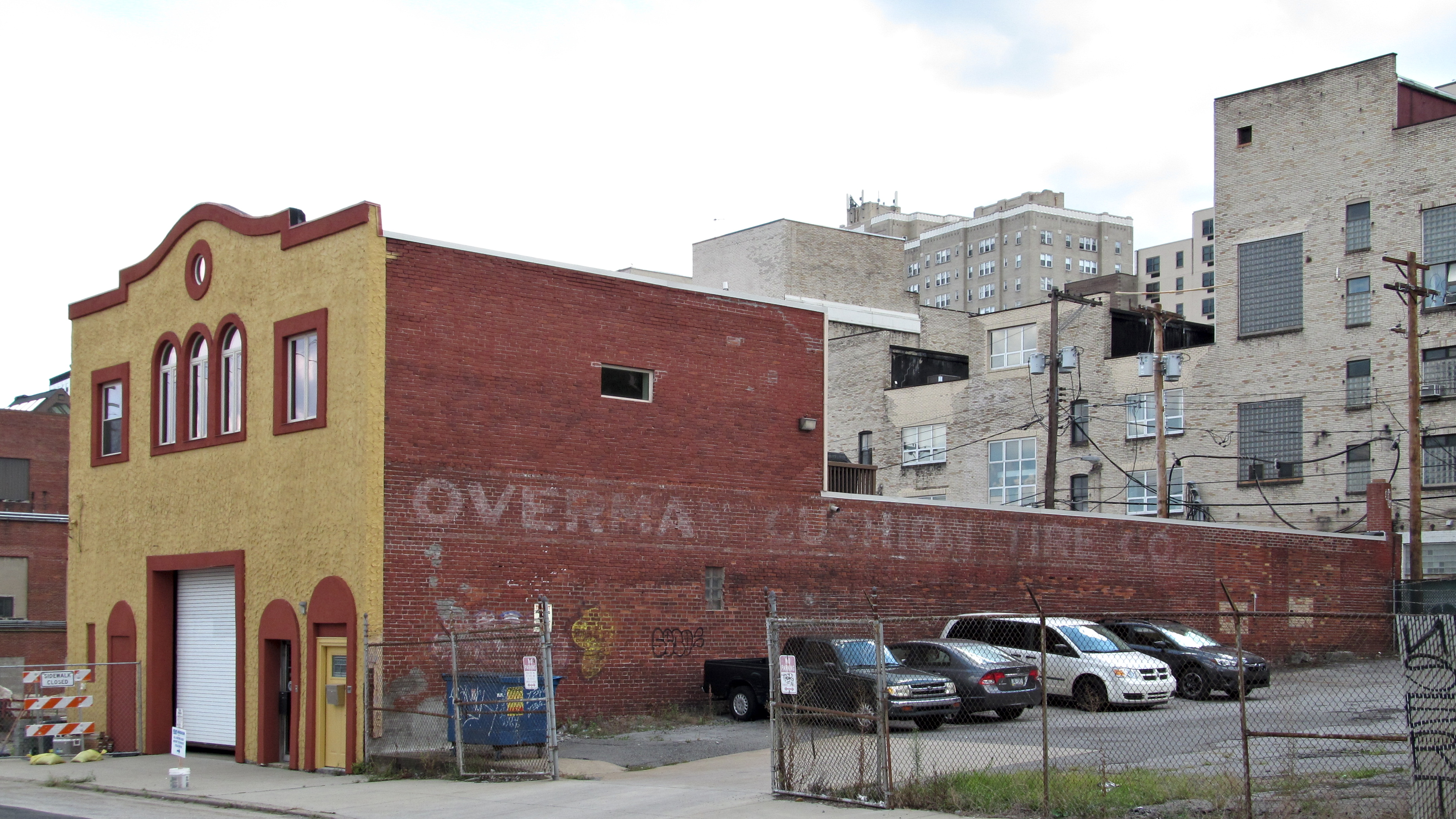
A garage from the early days of the automobile; on a 1923 map it is simply marked “Garage.” The fundamental simplicity of the Spanish Mission style made it popular for garages, and this front on Melwood Avenue looks almost like a cartoon drawing of a Spanish mission. We have already seen the ghost sign on the south side of it revealed by the demolition of the old Chevrolet dealer next door:
On the other side of the building is another ghost sign, probably later, advertising the Overman Cushion Tire Co.—a name that is still, or again, in use today by an Ohio restorer of antique tires.
Old Pa Pitt was not satisfied with the pictures he published of the Craig Street automotive row two weeks ago. The light was wrong: the sun was behind the buildings. We did our best with those pictures, but really the only way to get better ones would be to return at a different time of day. Father Pitt is so thoroughly dedicated to his readers that he did exactly that, so now here is a duplicate of that article, but with better pictures.
If this is not unique in North America, it has to be at least very rare: a complete contiguous row of buildings from the early days of the automotive industry, intact and largely unaltered. They are lined up one after another, without any gaps, along Craig Street from Baum Boulevard northward. It is one of Pittsburgh’s unrecognized treasures. Fortunately only one of the buildings seems to be endangered at the moment: the others have found new uses, and the owners have not made substantial alterations to the façades, several of which have fine terra-cotta details.
In 1905, a splendid amusement park opened on this site: Luna Park, the first of a chain of Luna Parks that spanned the globe.
This one did not last long, however: it closed in 1909—partly as a result of competition from the well-established Kennywood Park, where you can now see a smaller model of the Luna Park entrance.
The closing of the park opened up a broad expanse of cleared land, and the newly rich automobile industry moved in here. By 1923, all these buildings had been constructed in a long row.
We begin at the corner of Baum Boulevard, where the grandest of the lot actually sold low-priced cars. This was a dealer in—coincidentally—Oakland motor cars, which were named for Oakland County, Michigan, where they were made. Oakland was General Motors’ cheap division before GM bought Chevrolet.
Next in the row up Craig Street is a Franklin dealer.
Next come two tire dealers in identical buildings. The one on the left sold Kelly-Springfield; the one on the right sold B. F. Goodrich. These buildings are now the Luna Lofts, which probably sounds better than Kelly-Springfield and B. F. Goodrich Tire Lofts.
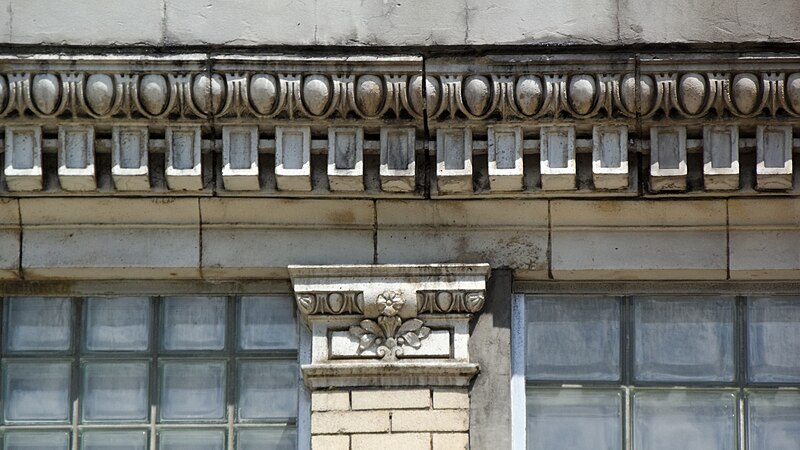
Here is the one building Father Pitt considers endangered, because vacant and ill-kept buildings catch fire mysteriously. It belonged to the Van Kleeck Motor Co., which sold Jordan automobiles. The façade is mostly original, though it has had some curious alterations, especially the door to nowhere with its tiny iron balcony. The terra-cotta decorations are well preserved, and Father Pitt was able to pick some of them out with a long lens:
And finally the Nash dealer, now home to a branch of North Way Christian Community, which has made the front look gorgeous.
This is the whole contiguous row along Craig Street, and it is incredible enough that the entire block of buildings has survived intact. There were also other car dealers in the same immediate area, and even more remarkably they have survived, too. We’ll be seeing more of them soon.
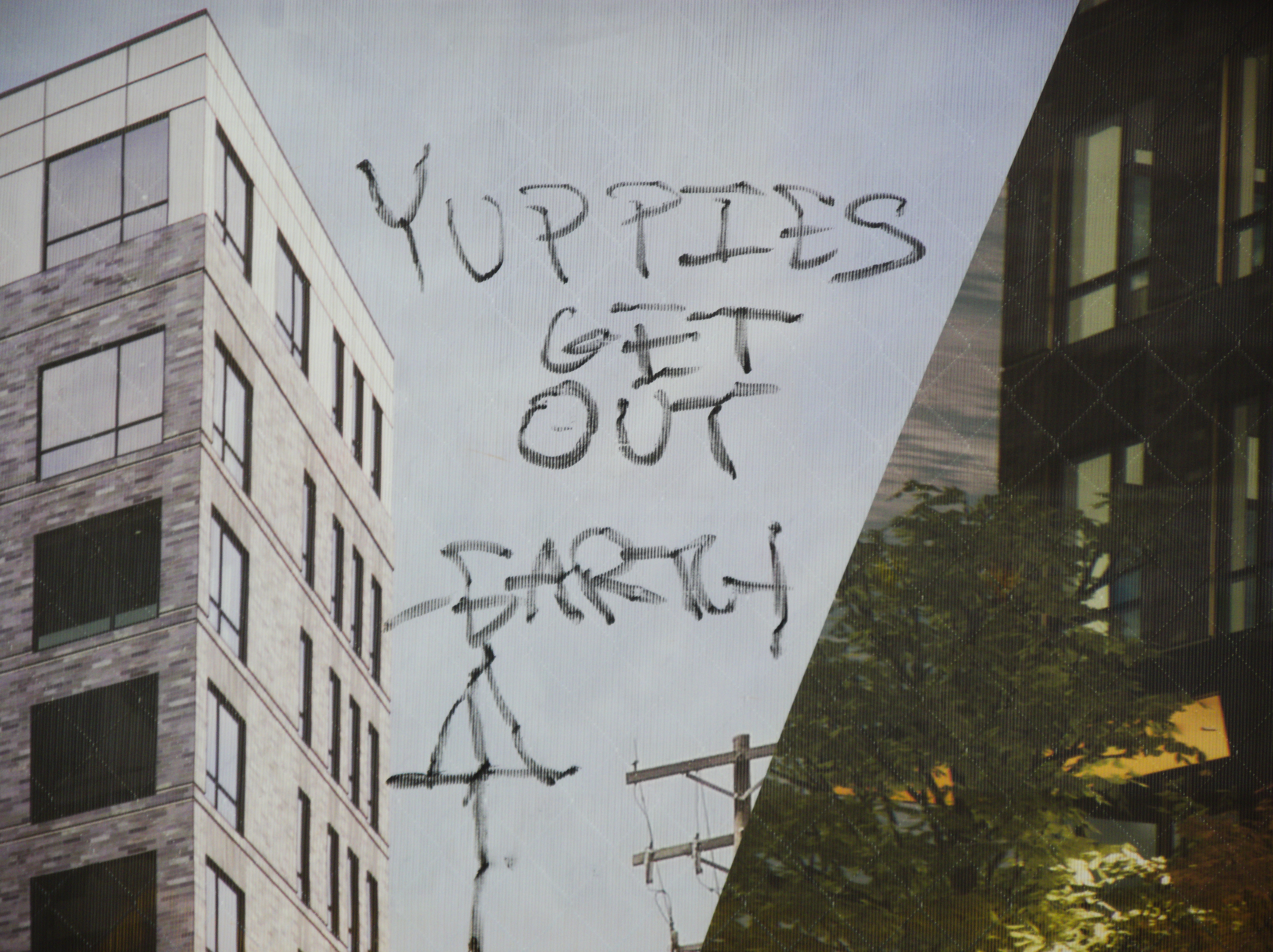
When he published his recent pictures of the Craig Street automotive row, old Pa Pitt promised his readers pictures of some of the other nearby buildings from the early days of the automobile. Yesterday he walked over to Melwood Avenue to get pictures of the old Chevrolet dealer and found that he hadn’t walked fast enough, because this is what it looks like now:
Yes, it has been demolished for another apartment tower. Doubtless this will bring rolling waves of prosperity, though not everyone in the neighborhood is happy about it:
On the bright side, the demolition revealed an old painted sign that probably had not been visible for more than a hundred years:
Father Pitt has not been able to read the names of the two superimposed companies. This wall had been obscured by the Chevrolet dealer since before 1923, so this sign dates from the first decades of the automobile.
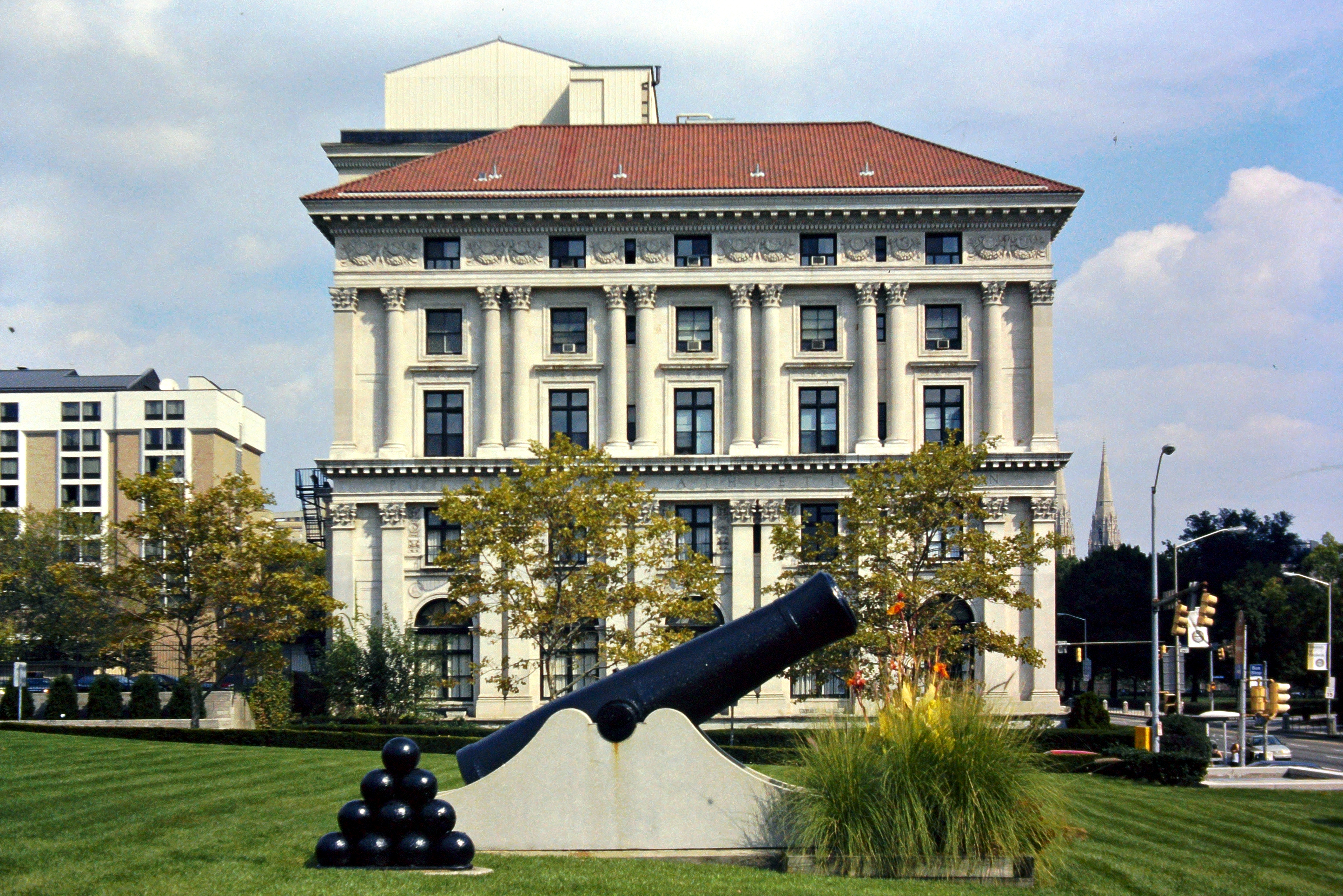
The Pittsburgh Athletic Association, one of the prolific Benno Janssen’s most elaborate designs, as it was in 2000 before the recent renovation. Above, from across Fifth Avenue; below, from the grounds of the Soldiers and Sailors Memorial. Old Pa Pitt took these pictures with a Kodak Retinette, which comes close to his ideal of the perfect 35-millimeter camera.
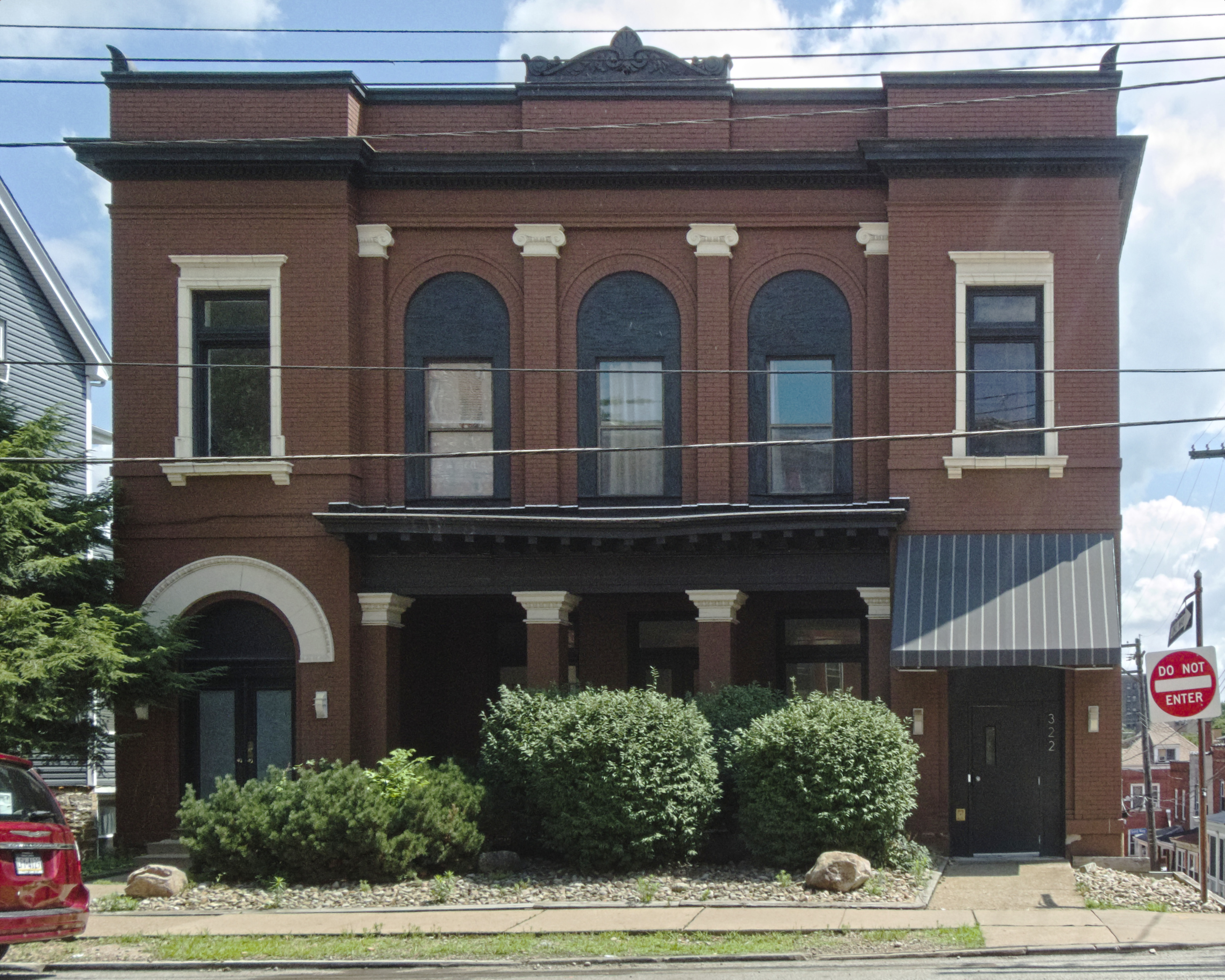
We have mentioned before how thick the air was with clubs in Oakland. Here is one that has been almost forgotten: a small clubhouse by a big architect. The Bellefield Club on Craig Street was designed by James T. Steen, who also gave us the House Building, among many others.
The club opened in 1904; since then the building has had some small alterations. Cheap stock windows have replaced the windows upstairs, with cheap filler to take up the rest of the space. (Father Pitt has not seen a picture of the building in its original state; it is possible that there was a balcony behind those upper arches.) The front has been painted in a gaudy combination of brown and cream; it probably looked better with the original yellow brick. But the alterations are not severe and could be reverted by a sensitive owner.
This building was one of those unexpected discoveries one sometimes makes in the big city. Old Pa Pitt was walking up Craig Street to take pictures of the Craig Street automotive row when this building arrested his attention. He must have gone past it in a car or a bus a hundred times, but this time he noticed it. It seemed like something different from the surrounding buildings. Was it an old theater or some institution? The Pittsburgh Historic Maps site revealed that it had been built as the Bellefield Club, and less than twenty years later in 1923 was inhabited by the Pittsburgh Academy of Medicine. A little more poking around found the architect.