

Autumn colors in Bird Park, a stream-valley park in Mount Lebanon.
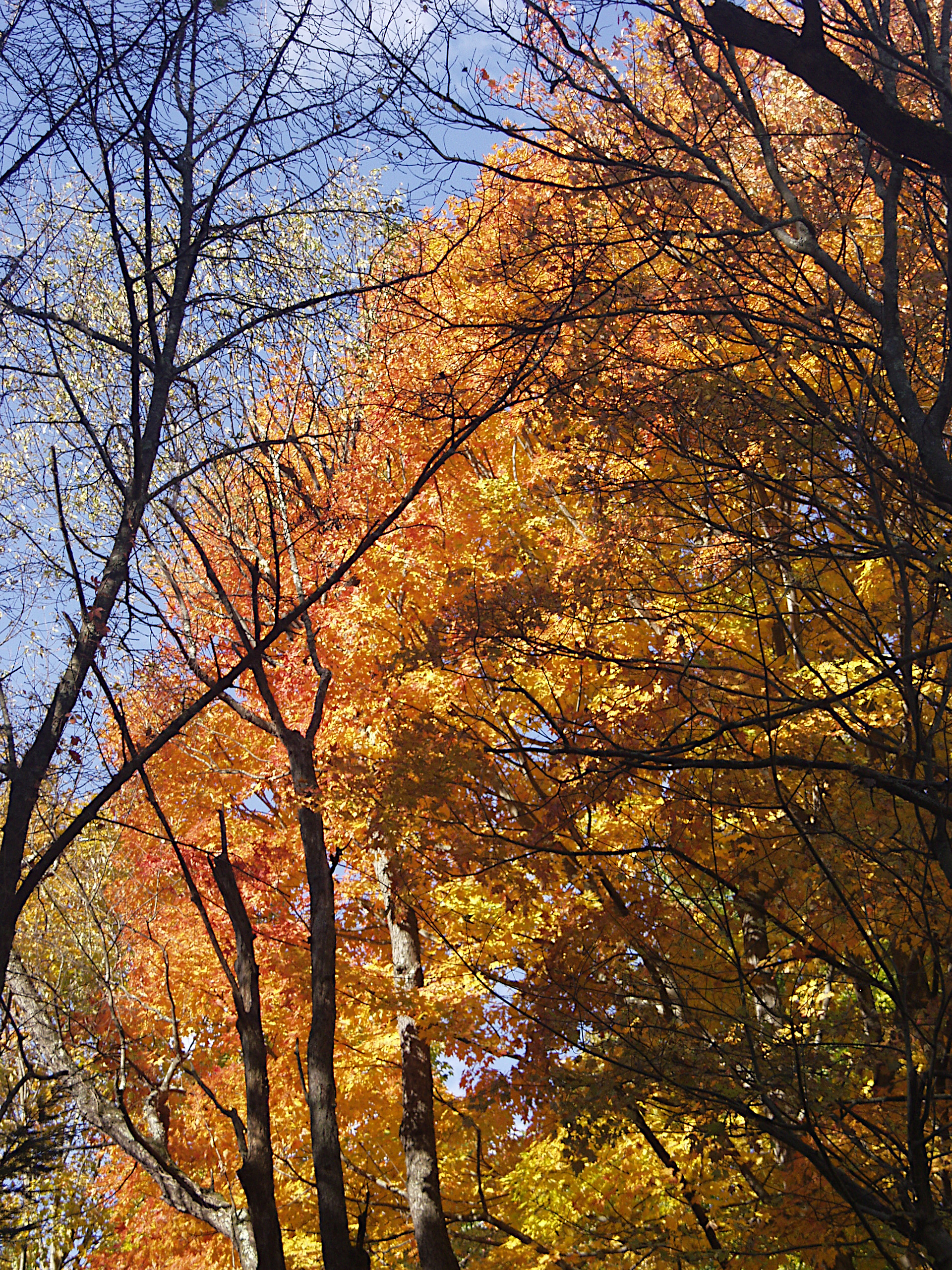


Autumn colors in Bird Park, a stream-valley park in Mount Lebanon.

We’re used to English Ivy, that beautiful and enthusiastically invasive European import, as a solid mass of dark green leaves.

But it is a flowering plant, of course, and therefore it has flowers. After many years, when it has reached a certain height and maturity, it will send forth a multitude of stalks bearing clusters of clusters of little green flowers with a heady scent, something like linden-flower tea, that attracts insects of all sorts to pollinate them. Curiously the flowering stems bear leaves that no longer grow in the familiar lobed ivy shape; instead they are unlobed, rather diamond-shaped, or like an aspen leaf, and larger than the leaves on the rest of the vine.


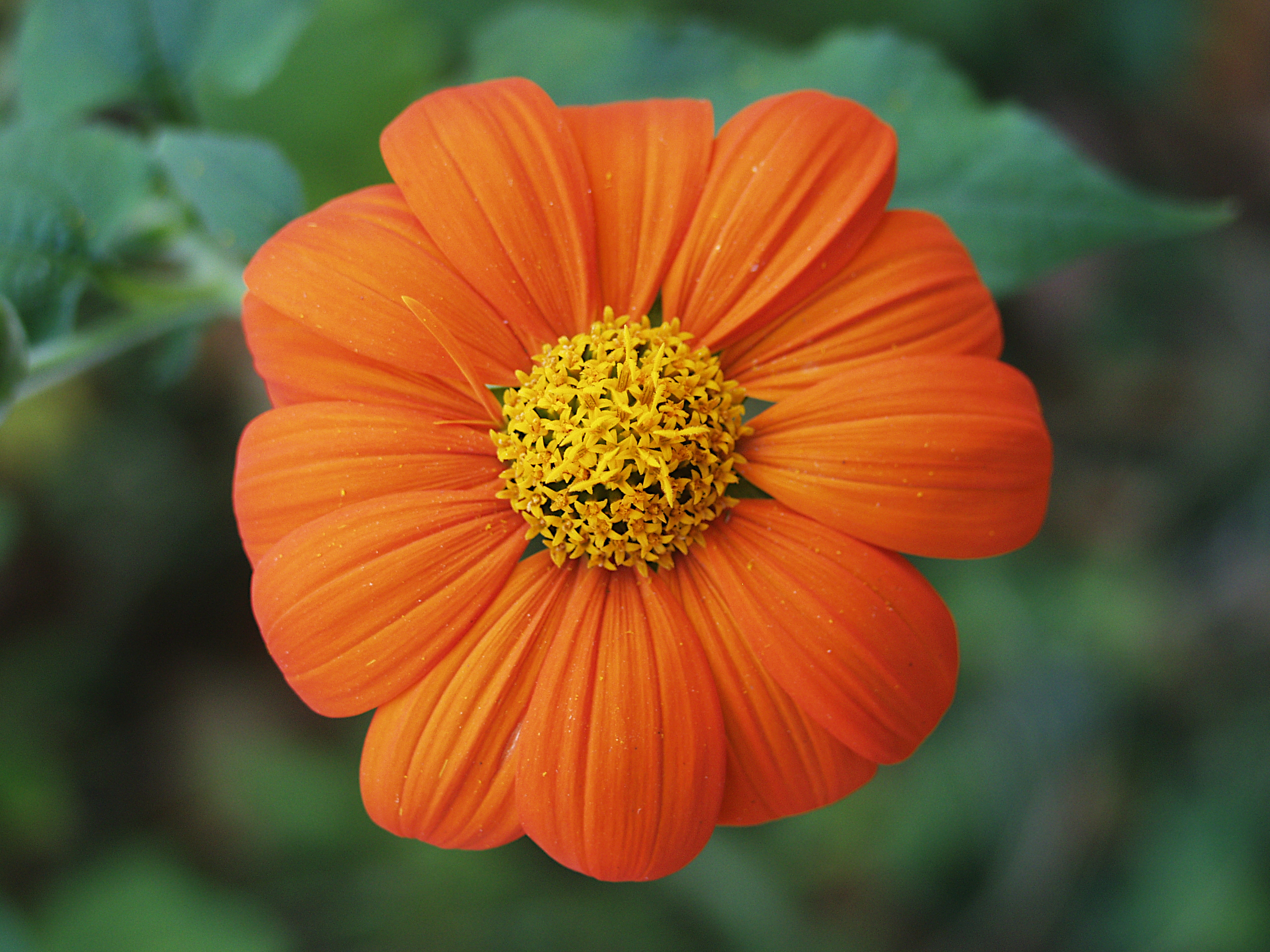
Tithonia rotundifolia, the Mexican Sunflower, is a fine garden flower if you have some room for it: it can grow six feet high and spread just about as wide. Tall flowers in hot colors are fashionable again, but old Pa Pitt never cared for fashions in flowers. He just likes big bright annuals.


Urban weeds are different from suburban or rural ones. Petunias often escape and pop up in cracks of sidewalks. Usually these volunteer seedlings have smaller flowers than their hybrid ancestors, and often in more washed-out colors. This flower was blooming from a concrete stairway on the South Side Slopes.

Butter-and-Eggs or Toadflax (Linaria vulgaris) is a kind of wild snapdragon that came from Europe as an ornamental and made itself weedily at home. These plants were growing out of sidewalk cracks on the South Side Slopes. Note the two different color phases: one with bright orange centers, the other a more uniform primrose yellow.


Love-in-a-Mist, prized for its blue flowers that seem to float in an airy cloud of foliage, grows seedpods that are almost as decorative as the flowers. Children are delighted by the rattling of the seeds in the puffy pods, which make good additions to dried bouquets. The view above is from directly over a pod, showing its hexamerous symmetry.


The ubiquitous Queen Anne’s Lace (Daucus carota) is very decorative in flower, but its seed heads are also picturesque in their way. The umbel of flowers closes up into a something very like a bird’s nest, where hundreds of bristly seeds develop to produce the Queen Anne’s Lace for the year after next (it’s a biennial, so it flowers the second year).
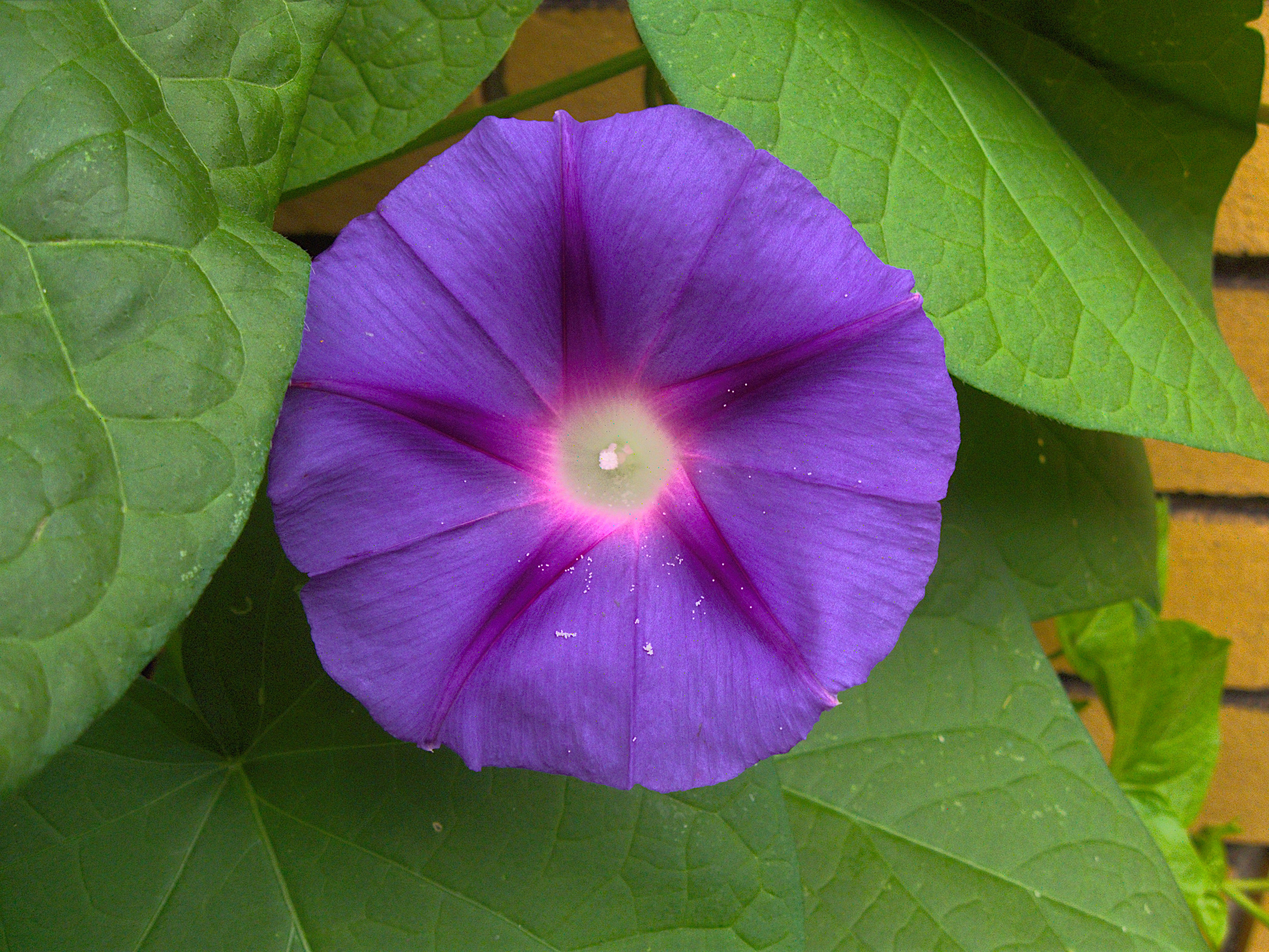
Morning glories (Ipomoea purpurea) came here as ornamental garden flowers and have happily adapted to the life of a weed. They are, however, one of our most beautiful weeds, and not many of us resent them. These were blooming in Beechview at the end of August.


Roses of Sharon are literally weeds in the city, though often planted as ornamentals. The colors are quite variable when they grow from seed. These were all volunteer seedlings that grew into prosperous bushes.


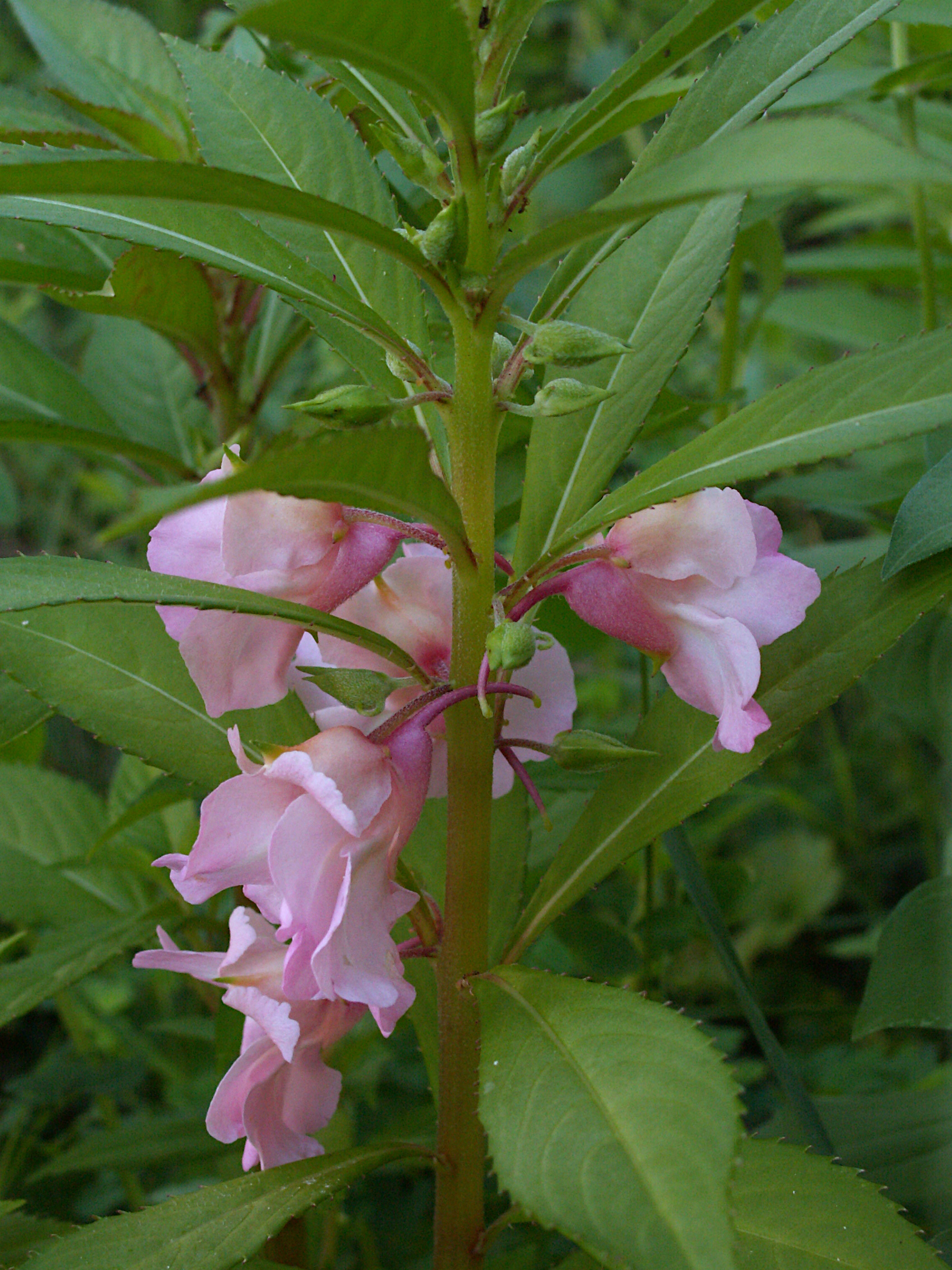
Balsam (Impatiens balsamina) is one of those old-fashioned garden flowers you don’t see too much anymore. Here are some fine examples from a garden in Beechview.

Camera: Konica Minolta DiMAGE Z3.