Father Pitt

Category: Downtown

  • There’s No Such Thing as Correct Exposure

    Old Pa Pitt often tells young photographers that there’s no such thing as correct exposure. He likes to make dogmatic pronouncements like that and watch their reactions. But this is what he means. These two pictures of the skyline at night are taken at quite different exposures (two whole stops apart, in fact). The one above is the kind of exposure you will usually see in a night shot of a city skyline. The one below is much closer to the way the skyline actually appears to the eye of the observer. Which is correct? Neither, of course. It is a matter of taste, and of creating the image you, the photographer, wish to create.

  • Two PNC Plaza and Three PNC Plaza

    Two PNC Plaza (with the PNC logo at the top) and Three PNC Plaza (center, with the notch cut out of it), as seen from Liberty Avenue.

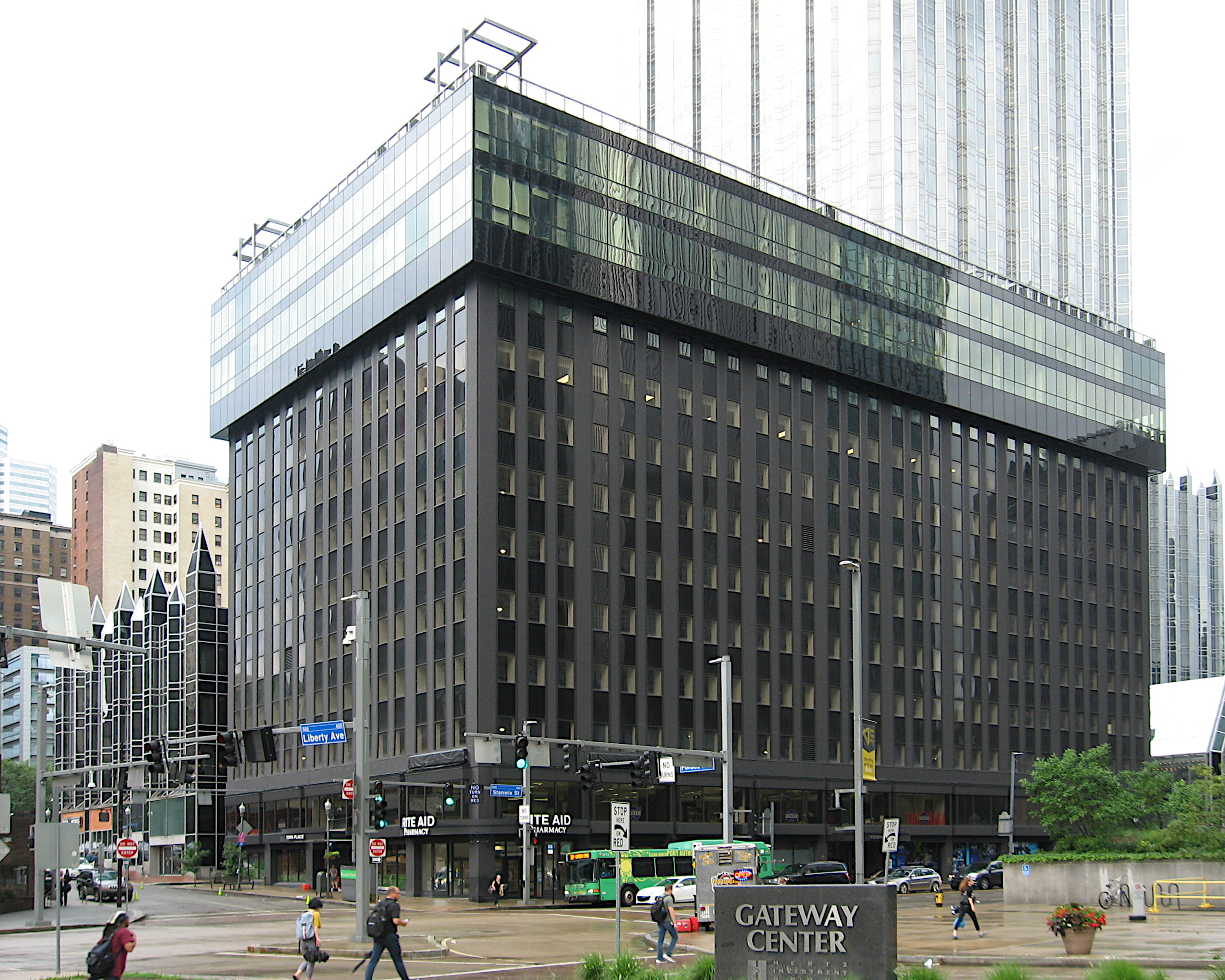
  • Kossman Building (Town Place)

    The old Kossman Building was given a dark makeover for its new identity as “Town Place,” so that it looks a little less like a dated relic of the International Style and a little more like a cool new International Style revival. In fact, old Pa Pitt thinks that, in black, it looks like a Mies van der Rohe building wearing a hat.

    Camera: Canon PowerShot A540.

  • Victorian Storefront on Market Street

    This beautifully restored building on Market Street is one of an identical pair. Note the properly inset entrance. It was once de rigeur for stores to have their entrances inset from the sidewalk like that, so that the door would not smack a passing pedestrian in the face. How did we forget what a good idea that was?

    The picture is a composite of three photographs, which was the only way to get the whole façade across a very narrow street.

  • The Residences at Market at Fifth

    The Residences at Market at Fifth

    This little building on Graeme Street, a tiny alley between the Diamond (or Market Square) and Fifth Avenue, has probably never looked better since it was new, and possibly not even then. Its little corner of downtown is full of good restaurants and expensive shops now, so it looks like an attractive place to live.

    This picture is a composite of two photographs, which is the only way to get the whole building from across an exceedingly narrow street.

    Camera: Canon PowerShot A540

  • Liberty Avenue at Stanwix Street

    If we put some imagination into this picture, we can see Liberty Avenue as it was in the middle 1800s, when it was the center of the wholesale food trade (which later moved out to the Strip). But the old storefronts from that era are dwarfed by the 12-storey Diamond Building at the end of the block, and that in turn is dwarfed by the later skyscrapers behind it.

    Camera: Canon PowerShot A540.

  • The Phipps-McElveen Building

    Phipps-McElveen Building

    Now student housing under the name “Penn Commons.” It was originally built, in 1896, for Henry Phipps, Andrew Carnegie’s close friend and the donor of the Phipps Conservatories for both Pittsburgh and Allegheny (the latter of which, much expanded, is now the National Aviary).

    This is a large composite picture; don’t open the full-size version on a metered connection.

    In a later article we were pleased to discover that the architects were Longfellow, Alden & Harlow.

  • Market Street

    The short stretch of Market Street between Fifth Avenue and the Diamond or Market Square.

    Camera: Canon PowerShot A590 IS.

  • Sixth Street

    Sixth Street in the theater district, seen from the Penn Avenue intersection.

    Camera: Canon PowerShot A590 IS.

  • EQT Plaza (originally the CNG Tower)

    EQT Plaza

    One of old Pa Pitt’s favorites of the 1980s Postmodernist additions to downtown. It presents a different aspect from every angle, but everything is harmonized perfectly. It can be read as a 1980s update of the Beaux-Arts towers of eighty years before.