Category: Braddock

  • Carnegie Library of Braddock

    Inscription with words “Carnegie Library”

    William Halsey Wood was the original architect of this library. It was the second Carnegie Library to be commissioned; but, because the Carnegie Free Library of Allegheny took longer to build, this was the first one to open.

    Carnegie Library of Braddock

    It set the pattern for future Carnegie Libraries in the steel towns: it was a complete cultural center, with a gymnasium, a music hall, and even a bathhouse. A motivated steelworker could come here, wash off the soot and grime, and improve his body and mind.

    Carnegie Library
    Front elevation

    The slow revival of this library is an inspiring story of a community coming together to save a beloved treasure. It closed in 1974, because the building was in such bad shape that it could not be kept open. But the library refused to die: its last librarian organized a community group that bought the building and slowly put it back together. Today it is a lively cultural center again, rebranded as “Carnegie One.”

    Front entrance
    Inscription: “Carnegie Library”
    Carved foliage
    Turret
    Window with wrought iron
    Shield and foliage
    Window
    Capitals
    Capitals
    Light fixture
    Carnegie Library of Braddock
    Fujifilm FinePix HS20EXR; Sony Alpha 3000 with 7Artisans f/1.4 35mm lens.

    Comments
  • Second Presbyterian Church, Braddock

    Second Presbyterian Church

    Built in 1896, this eclectic pile seems not to be in use right now, but it is not in terribly bad shape. It was built as the Second Presbyterian Church of Braddock, but later took the name Calvary Presbyterian. Old Pa Pitt spent some time trying to figure out who designed the building, but none of the newspaper articles he found mentioned an architect.

    Left entrance

    These stubby entrance towers, with their double eyebrowed round windows, trigger a disturbing pareidolia in Father Pitt’s brain.

    Right entrance
    Fan window

    On the other hand, the whole building was worth putting up just to display this fan window.

    Calvary Presbyterian
    Calvary Presbyterian

    The church is separated by less than a yard from its neighbor, the historically Black New Hope Baptist Church. It illustrates an interesting fact of social history: the separation of Black and White residents into different neighborhoods was largely a development of the second half of the twentieth century, and it was largely a conscious decision of the powers that were. In the late nineteenth and early twentieth centuries, our urban neighborhoods were the proverbial melting pots of all nations and races.

    Second Presbyterian and Good Hope Baptist
    Second Presbyterian Church
    Canon PowerShot SX20 IS.

    Comments
  • World War I Memorial, Braddock

    Victory holding up her wreath

    Frank Vittor was the sculptor of this memorial, in which Victory is striding forward with a laurel crown to honor the people of Braddock who served in the First World War. It was installed in front of the Braddock library in 1923, and from this angle it looks almost brand new.

    World War I memorial
    Base with eagles
    Eagle
    Looking up at the statue of Victory
    Dedication panel

    The base of the monument had six bronze panels with the names of all who served, including this dedication panel with the names of the dead.

    Service roll with names Abt to Dixon

    These pictures are very large, so all the names will be legible if you enlarge the photograph.

    Names Dixon to Hurley
    Missing panel

    We suppose the names between Hurley and Marx were melted down into cheap booze. Old Pa Pitt has always wondered what scrap-metal dealers think when a man in a battered pickup truck rolls up with a big chunk of names in bronze. Apparently they think, “Well, he certainly must have come by this honestly.”

    Names from Marx to Scheig
    Names from Schmidt to Zylinski
    World War I memorial
    Sony Alpha 3000 with 7Artisans f/1.5 35mm lens; Fujifilm FinePix HS20EXR; Samsung Galaxy A15.

    Comments
  • A Jewel on Braddock Avenue, Braddock

    1129 Braddock Avenue

    Two doors up the street from St. Michael’s School is this colorful little building, of whose history old Pa Pitt knows nothing. Perhaps someone better informed can reveal it to us in the comments. Father Pitt thought it might have been part of St. Michael’s parish, but old maps do not seem to suggest that it was. Whatever it was, its colorful tile arches and terra-cotta ornaments are worth preserving, and we are happy to see it so well maintained.

    A feast of terra cotta
    Entrance with tile decorations
    Fujifilm FinePix HS20EXR; Sony Alpha 3000 with 7Artisans F/1.4 35mm lens.

    Comments
  • St. Michael’s School, Braddock

    St. Michael’s School

    Titus de Bobula designed this school, built in 1904 for St. Michael’s, a Slovak parish. Although it has been altered here and there, enough remains to show us a very unusual mind at work.

    Front windows

    For example, who else would have given us the ragtime rhythm of these tall and narrow stairwell windows (later bricked in)?

    St. Michael’s School
    St. Michael’s School
    St. Michael’s School
    Pilaster capital

    These abstract pilaster capitals are echoed on the porch columns of the convent next door, also De Bobula’s work.

    Capital of porch column
    St. Michael’s Convent

    This building has also been altered (the roof is newer, and the third-floor dormer appeared only about a decade ago), but we can see that its details were calculated to match the school.

    St. Michael’s Convent
    Sony Alpha 3000 with 7Artisans f/1.4 35mm lens; Fujifilm FinePix HS20EXR.

    Comments
  • SS. Peter and Paul Greek Catholic Church, Braddock

    SS. Peter and Paul Church

    This grand Byzantine church, built in 1923, is set on a steep slope on an implausibly tiny street. Its congregation is still going: for cultural and administrative reasons, Eastern churches tend to continue long after their Western neighbors have thrown in the towel. The church itself was modeled after the Cathedral of the Exaltation of the Holy Cross in Uzhhorod, Ukraine, which also served as the model for St. John the Baptist in Munhall; but the architect of this one, W. Ward Williams,1 took his model more literally than Titus de Bobula did. Curiously enough the church in Ukraine has the same kind of slope to deal with, as we see in this picture by Raimond Spekking:

    Cathedral of the Exaltation of the Holy Cross, by Raimond Spekking
    © Raimond Spekking / CC BY-SA 4.0 (via Wikimedia Commons)
    Cornerstone with dates of 1896 and 1923
    Pediment

    The pediment is strictly classical, Doric rather than the Corinthian of its model, with the inscription “Russian Greek Catholic Church of SS. Peter and Paul.”

    Tower
    SS. Peter and Paul Church

    1. Source: Proposals, Pittsburg Press, May 26, 1922, p. 38. “Proposals are invited from building contractors for the erection of a fireproof church building to be erected for SS. Peter and Paul Greek Catholic church. George st., Braddock, Pa. Bids are to be made on forms as furnished by the Architect, W. Ward Williams…” In the original version of the article, we did not know the architect, but a lucky item buried in a correspondence from David Schwing sent us on a long chase, and we finally cornered Mr. Williams. ↩︎
  • Sacred Heart Convent, Braddock

    Sacred Heart convent

    Father Pitt will admit right away that he is not sure this was the convent, and perhaps a well-informed reader could enlighten us. He arrived at his conclusion by elimination. There was a church, a school, a rectory, and a convent in the old Sacred Heart parish before it moved out of Braddock. The school still stands; the church was demolished; the rectory was a house the church bought on Talbot Avenue; and so we are left with this building facing 6th Street, on the grounds of the church, which was probably the convent.

    Sacred Heart convent

    The style of the building is unusual and interesting, and we suspect it might have been designed by one of the local Mon Valley architects about whom Pa Pitt knows too little.

    Entrance with terra cotta

    The entrance is surrounded by decorative terra cotta in a good state of preservation.

    Cross in terra cotta
    Wrought-iron fence with pilaster in background

    The wrought-iron fence in front of the building is original, and an exceptionally well-preserved example of its type—though probably not for too much longer.

    Sacred Heart convent

    Old Pa Pitt would love to know how that room over the entrance looked before it was glass-blocked.

    Dormer

    The polygonal side and rear dormers are unusual and attractive.

    Convent from the rear
    Canon PowerShot SX20 IS.

    When the church next to the building was demolished, it left a big flat lot that some daring urban pioneer who bought the building could turn into a splendid formal garden.


    Comments
  • Braddock Junior High School

    Braddock Junior High School

    Charles J. Rieger, late in a distinguished career (we first notice him in construction listings nearly forty years earlier), designed this Art Deco palace of education, which was built in 1938. It has been abandoned for years. In a trendy neighborhood, the building would make fine luxury apartments, and it could have a rehabilitation that would make the most of its classy Deco streamlining. This part of Braddock, however, is not likely to require luxury apartments in the near future.

    Braddock Junior High School
    Braddock Junior High School
    Braddock Junior High School
    Braddock Junior High School
    Sony Alpha 3000 with 7Artisans f/1.4 35mm lens; Canon PowerShot SX20 IS.

    Comments
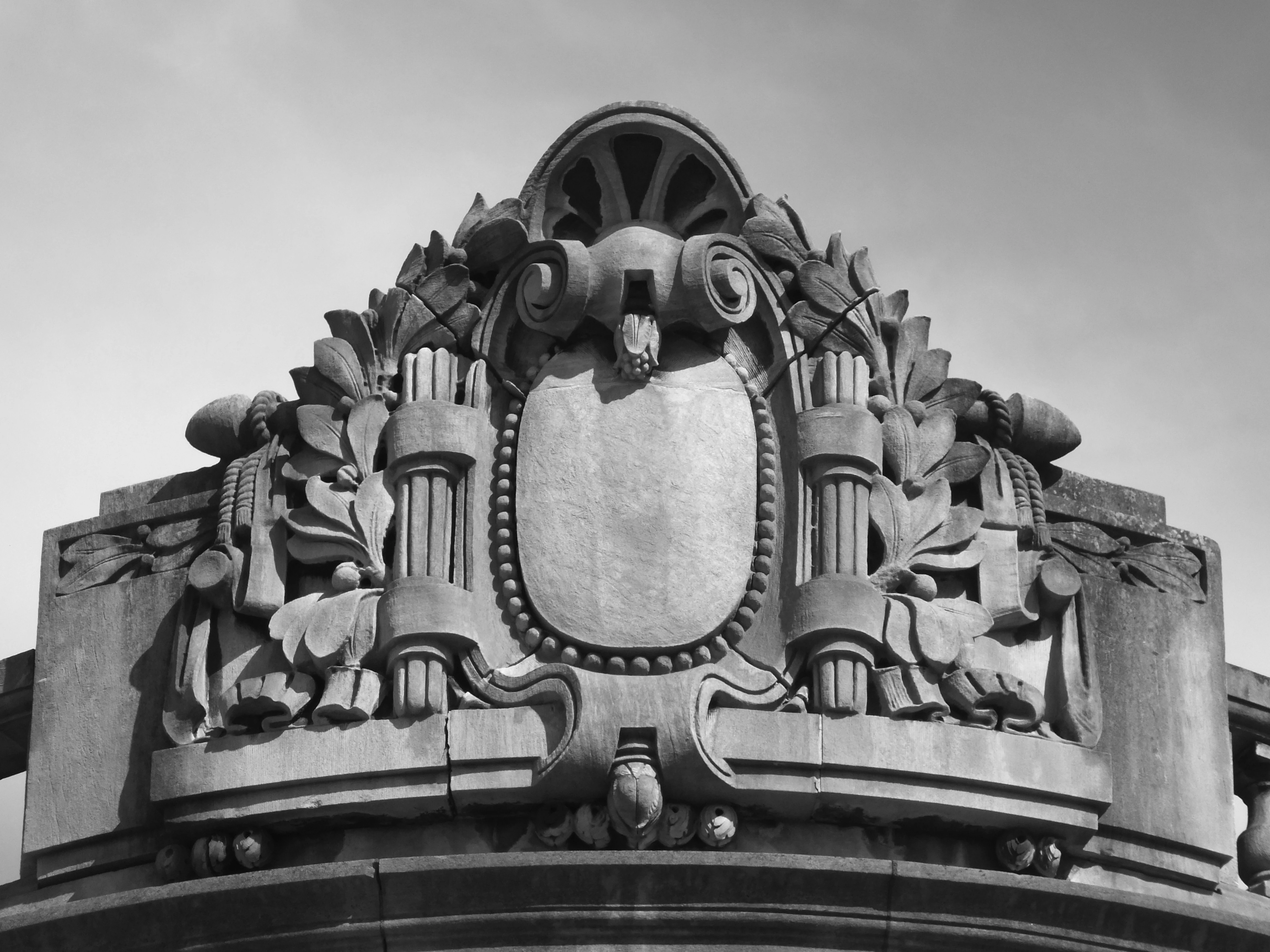
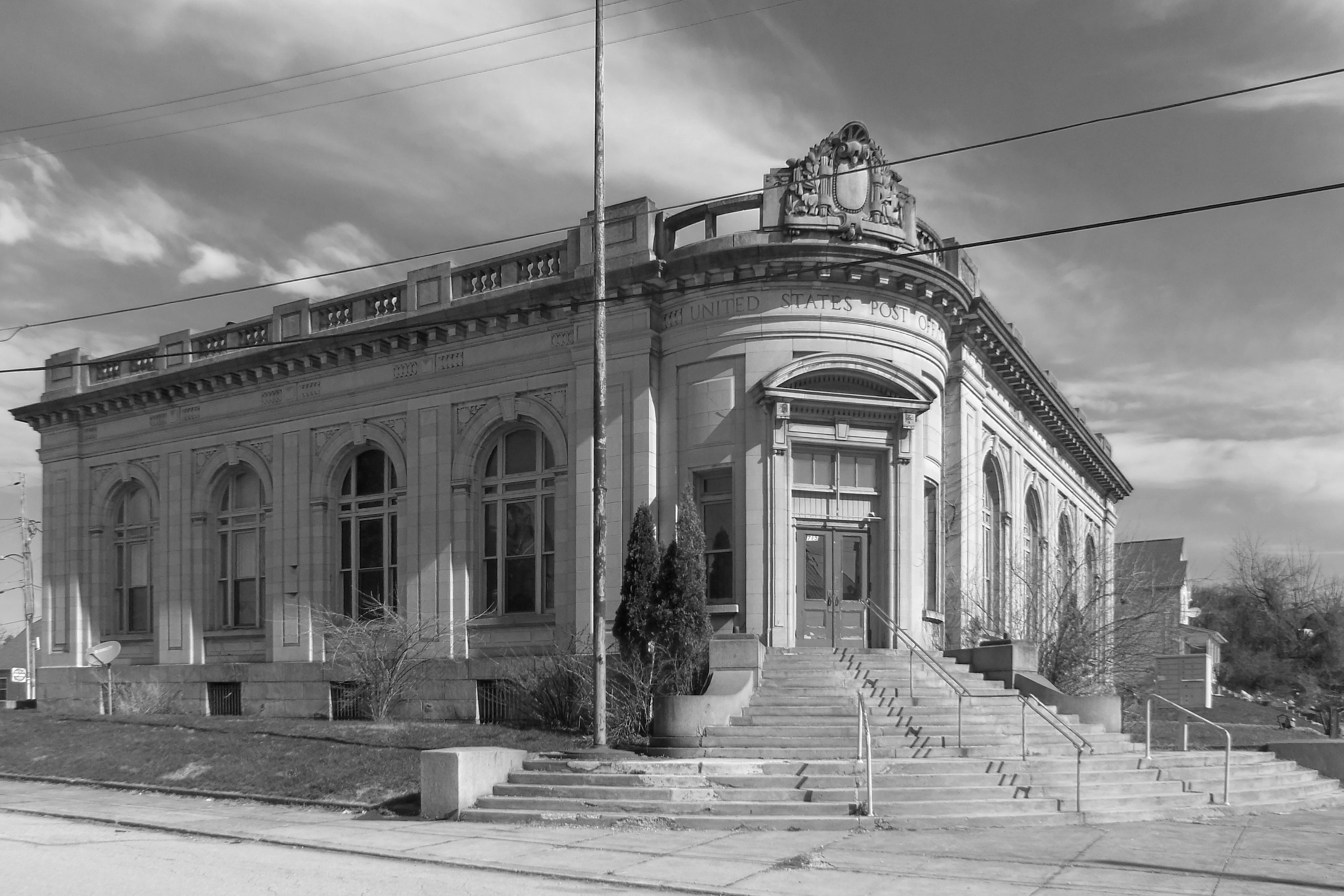
  • Old Braddock Post Office

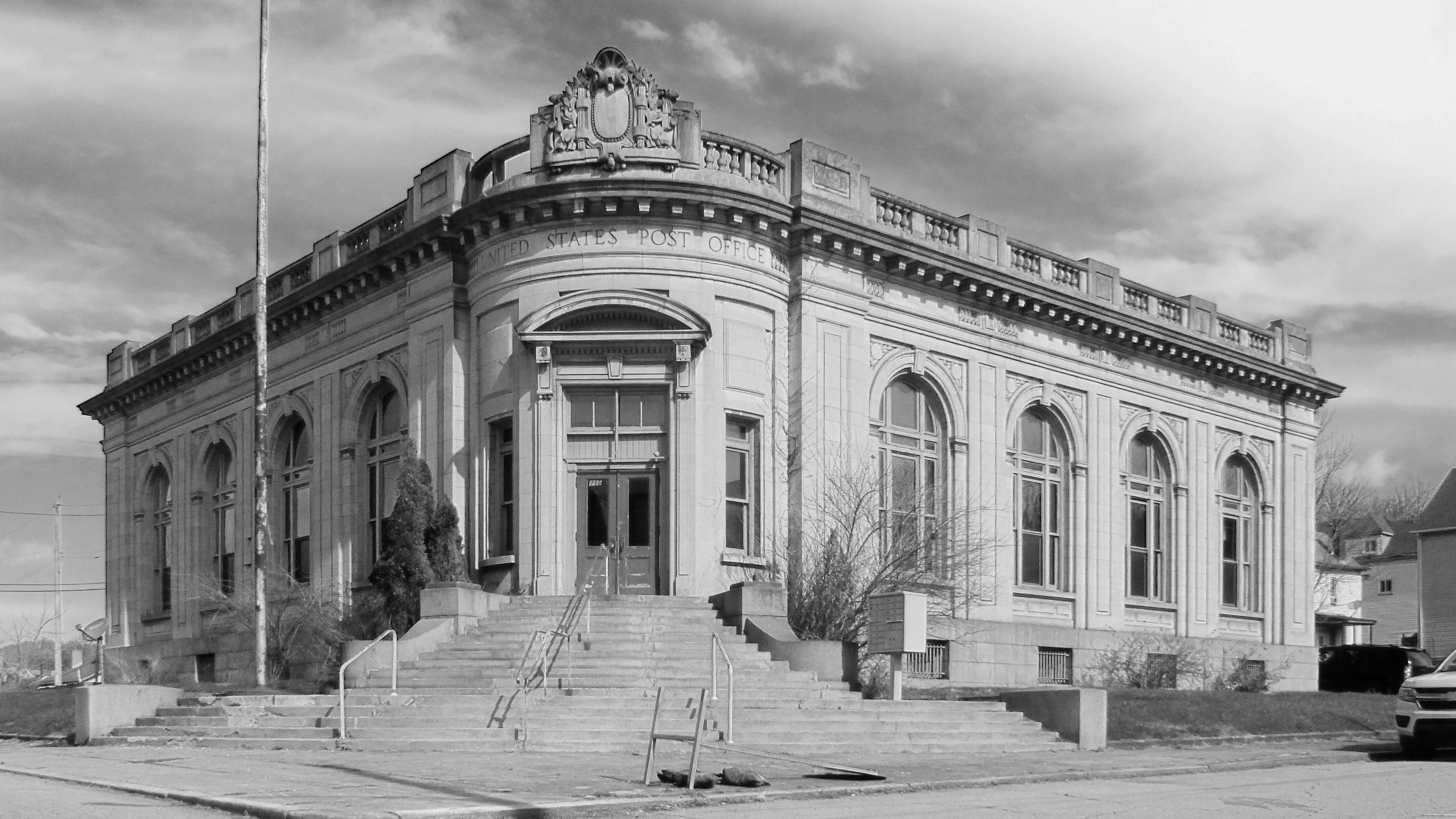
    Old Braddock post office

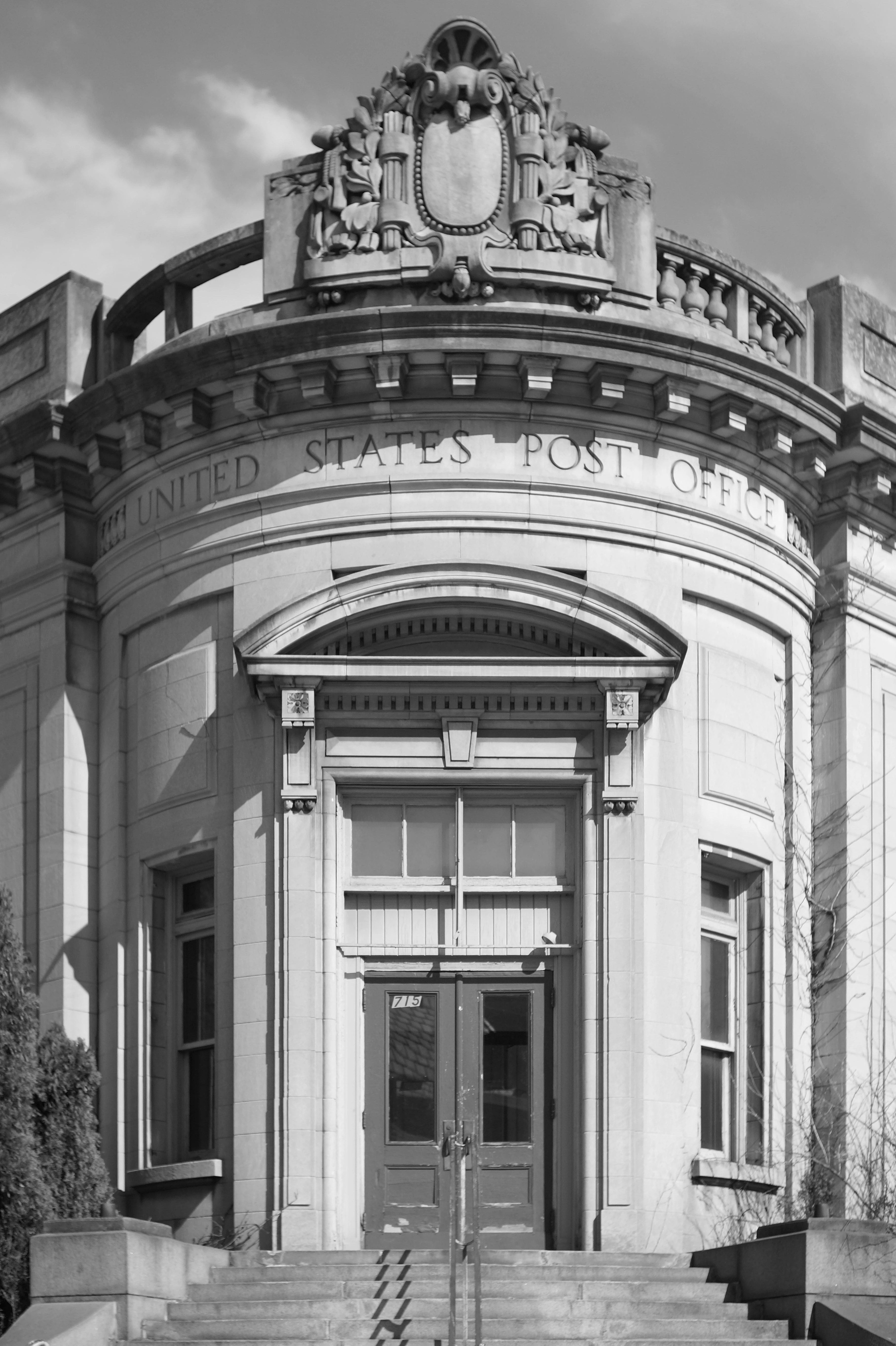
    Though the post office moved a few blocks away to an undistinguished modern building, this extravagant Beaux-Arts palace has fortunately been preserved.

    Entrance to the old Braddock post office
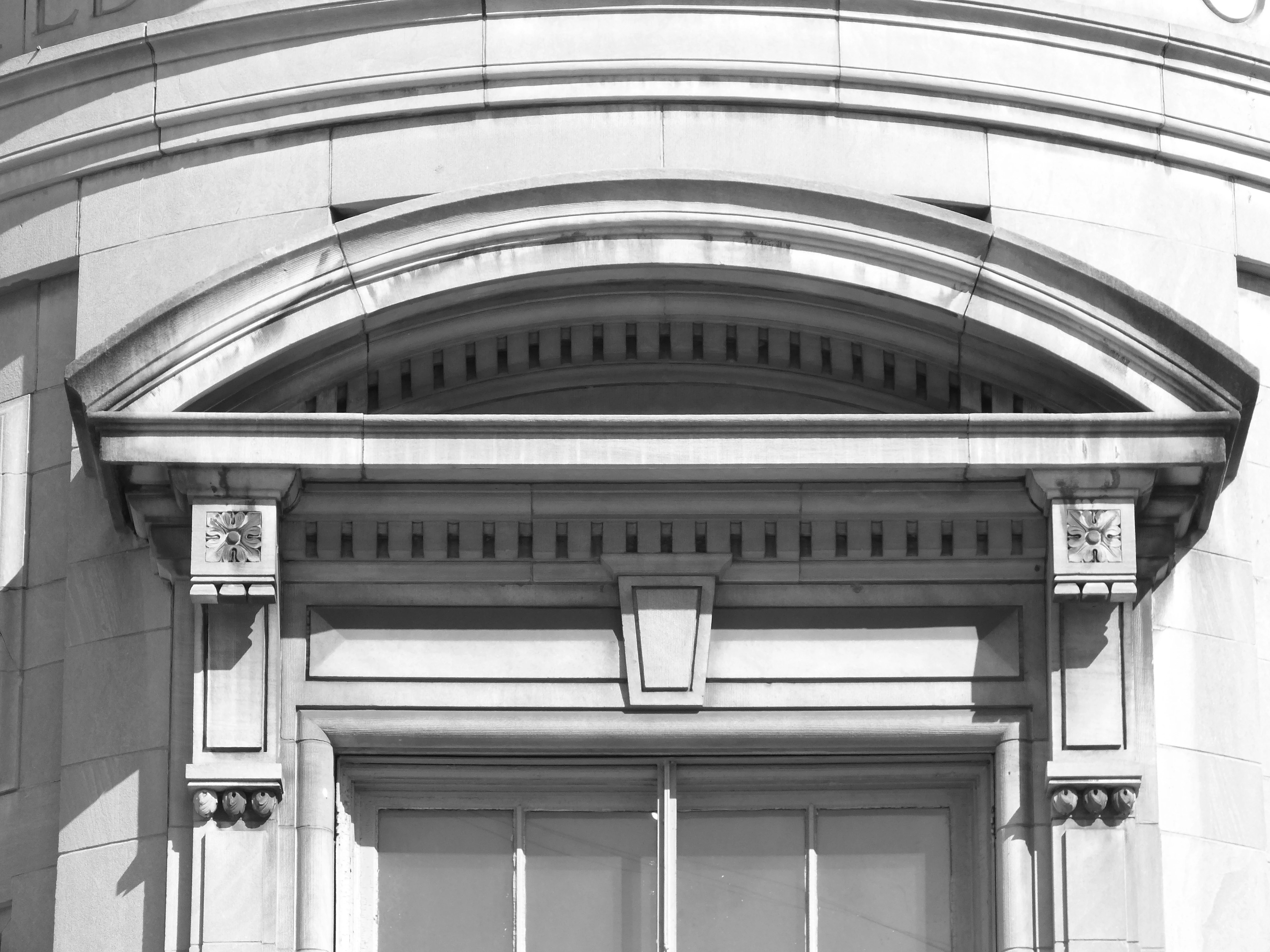
    Segmental pediment
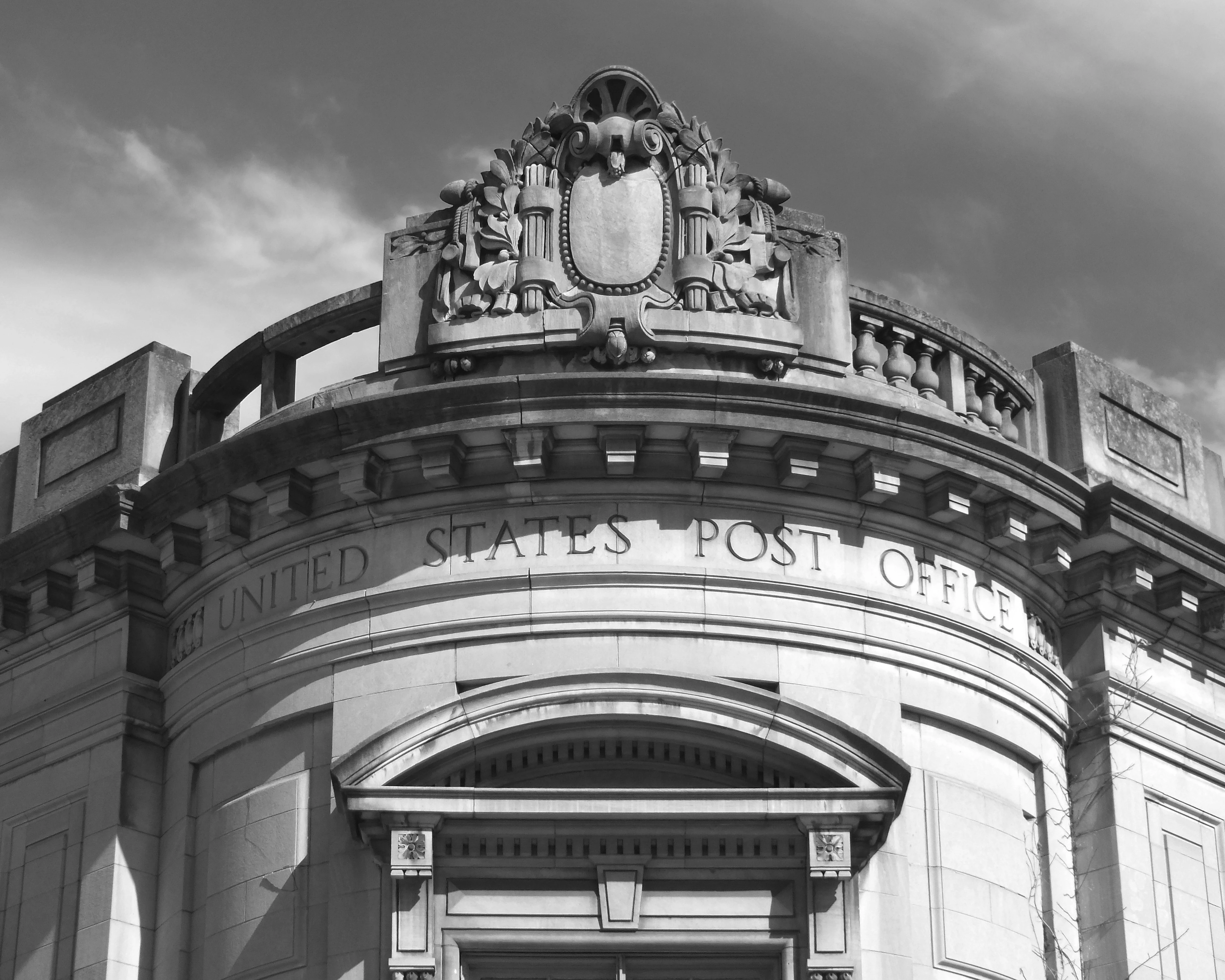
    Inscription and crest
    Crest with cartouche
    Old Braddock post office
  • St. Mary’s All Souls Protestant Episcopal Church, Braddock

    St. Mary’s Episcopal Church

    Even fifteen years ago this church might have been rescued, but now it has become such a picturesque roofless ruin that the best thing might be to stabilize it, as is often done with ruined Gothic churches in Europe, and leave it as a tourist attraction for moody poetic types. According to the Pittsburgh History and Landmarks Foundation, it was built in 1901, and the architect was Charles M. Bartberger, the younger of the two Charles Bartbergers.

    Canon PowerShot SX20 IS.

    Comments