
The grotesque brackets along the sides of the Church of the Assumption run in a repeating series that seems to illustrate various stages of carving.


The grotesque brackets along the sides of the Church of the Assumption run in a repeating series that seems to illustrate various stages of carving.

The gargoyles on the Church of the Assumption capture the true medieval spirit of inspired grotesquerie and goofiness and filter it through a twentieth-century sensibility. This gargoyle is having a bad day.


This one on the side of the building seems to be above a chimney vent. It demonstrates, in a silly way that would have appealed to the medieval sense of humor, one of the torments prepared for the damned.


Looking toward the altar, which is emphasized by a baldacchino and the glorious mural of the Assumption of Mary.


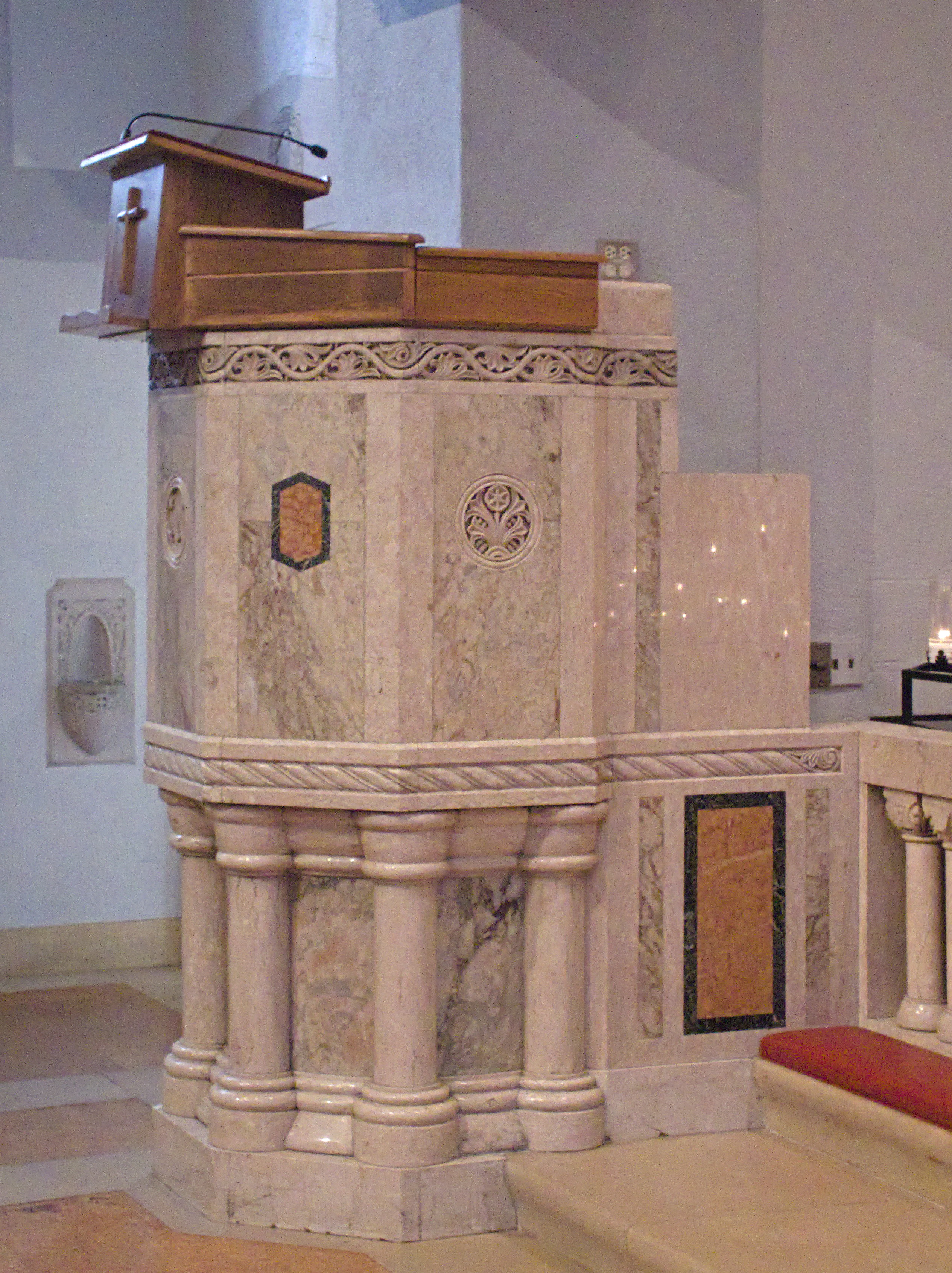
The communion rail, the pulpit, the baldacchino, and many other furnishings are carved from rich peachy marble.


The narthex is not neglected: look at that rich wood ceiling.

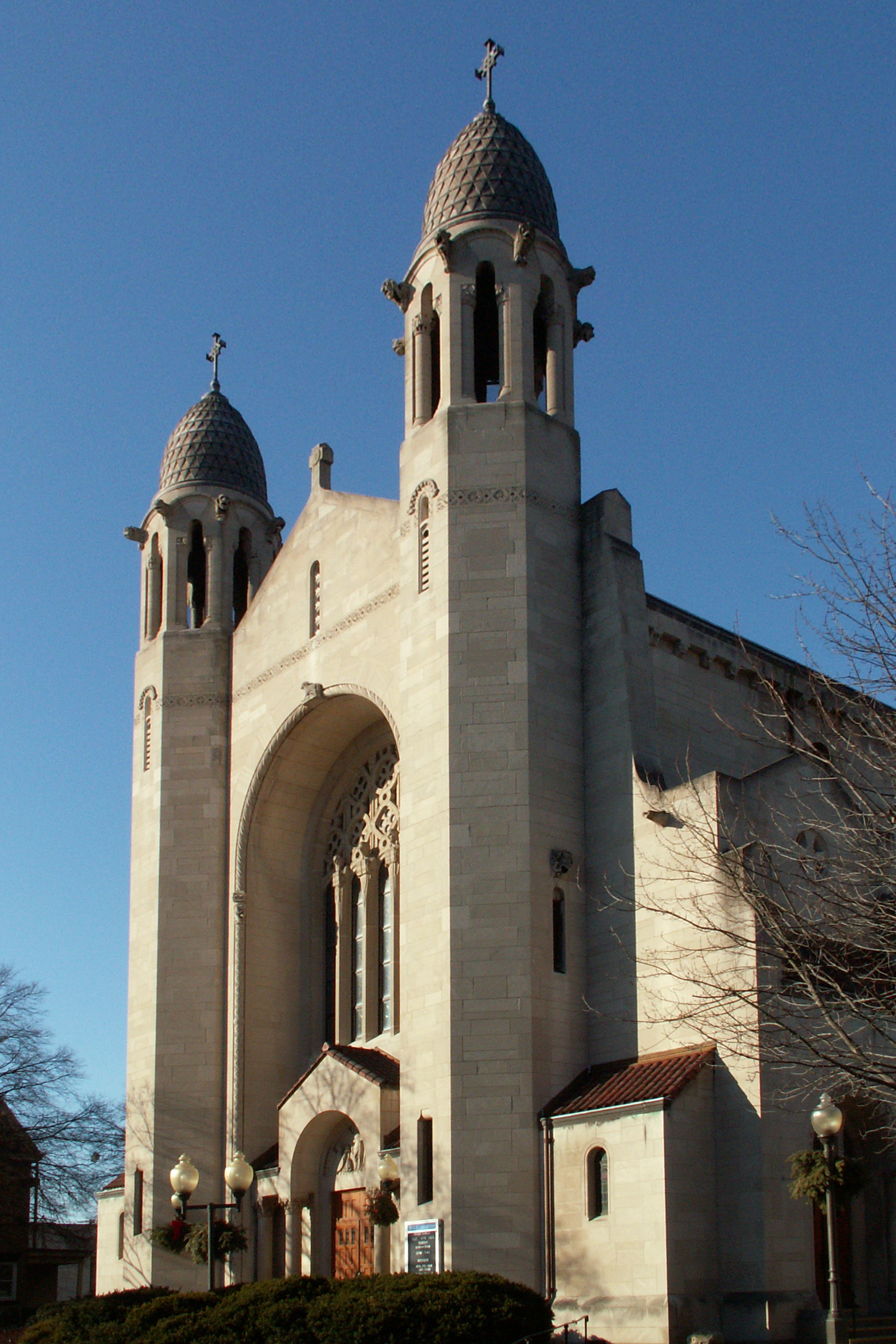
Leo McMullen, a disciple of the great John T. Comès, put his own unique Art Deco spin on traditional Romanesque architecture to give us a remarkably successful melding of medieval and modern sensibilities. McMullen was a native of Bellevue, and it looks as though he decided to put his hometown on the map by giving it a church that would be the envy of any city in the world. He succeeded.
Father Pitt took so many pictures of this glorious church that he is forced to split them up into multiple articles. And even with dozens of pictures, he has hardly begun to catalogue the artistic treasures to be found here. If you appreciate architecture, stained glass, painting, and sculpture, you owe yourself a visit to the Church of the Assumption.


Many more pictures to come.

A beautifully composed picture of the interior of Emmanuel’s taken in February of 1958 by an unknown wedding photographer. The church is now a nondenominational church called Christ the King (which sounds like a very Lutheran name), and the congregation keeps it up beautifully, as we can see in the rest of these pictures. Old Pa Pitt must apologize for the lighting: the sun was from exactly the wrong direction.
This church is obviously the work of an architect of no little skill, and Father Pitt would be delighted if someone could identify who it was. —Update: Father Pitt identifies Allison & Allison as the architects. Source: Philadelphia Real Estate Record and Builders’ Guide, April 22, 1908: “At Pittsburg, architects Allison & Allison, Westinghouse Building, are receiving bids for the erection of a Lutheran church at Bellevue, Pa. The cost will be $15,000. Rev. Hankey is in charge.”


Here is a map with a pointer at the church.

This church sits right across the line from Bellevue in Avalon, but it is often listed as the Church of the Epiphany of Bellevue. It was built in 1912–1913, and the architects were Vrydaugh and Wolfe, who also designed Warwick House and (as Vrydaugh and Shepherd with T. B. Wolfe) Calvary Methodist in Allegheny West. This is one of our increasingly rare black-stone churches; every stone church in Pittsburgh used to look like this.


Though it is no longer active as a church, everything but the sign seems well kept and loved.

Addendum: Just this month (August 2023), this building was awarded a plaque by the Pittsburgh History and Landmarks Foundation.
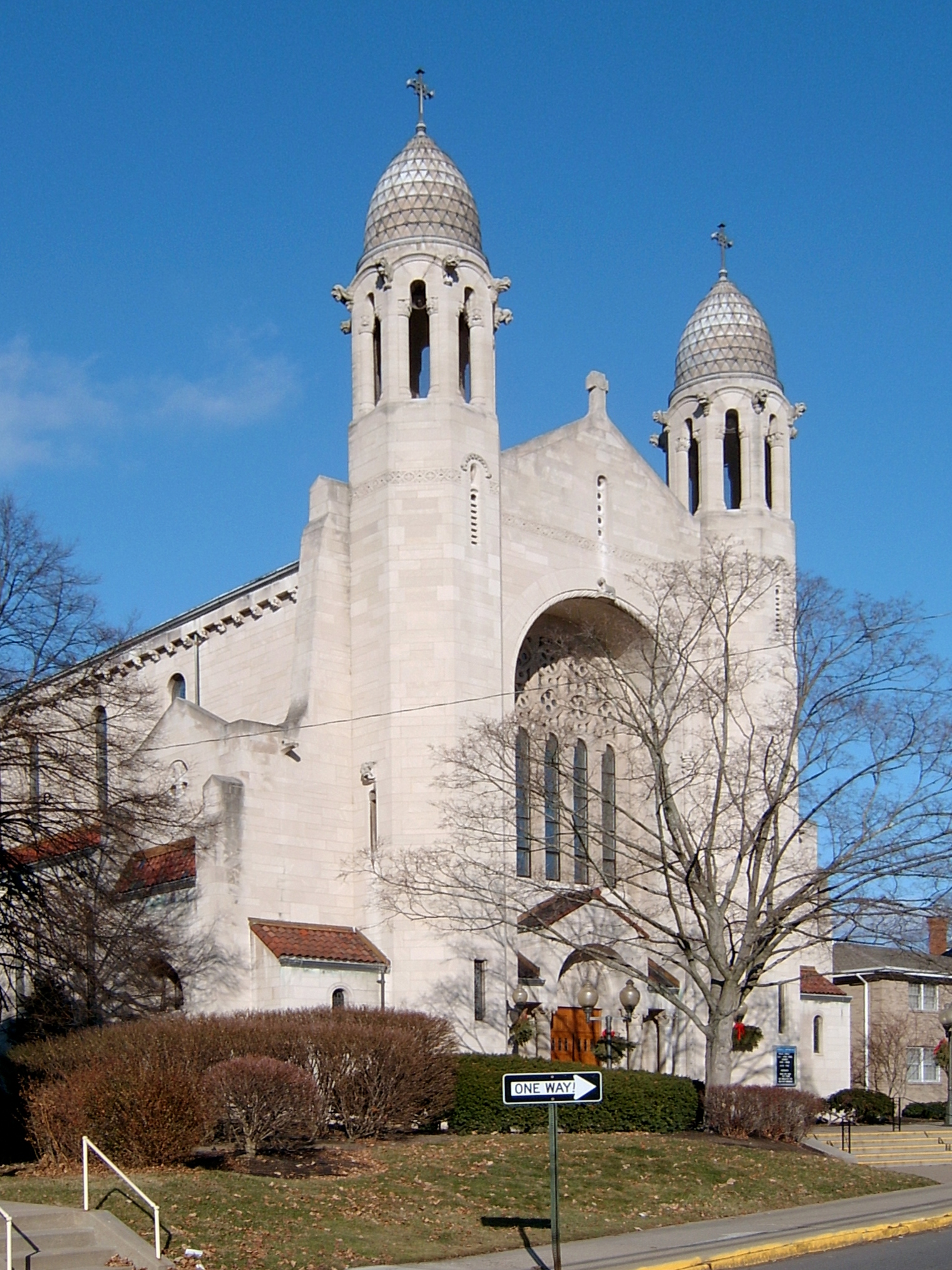
This splendid church was designed by Bellevue’s own Leo A. McMullen, an architect and organist who is almost forgotten today, but whose works were highly regarded in his time. The American Institute of Architects counted him as one of “six architects who shaped Pittsburgh,” according to his obituary in 1963.


The four evangelists—Mark, Matthew, John, and Luke, in that order—are lined up on the façade, each holding open a book that displays the first words of his Gospel.