

This 1980s Postmodernist tower makes a dramatic impression from the middle of Stanwix Street.
Camera: Canon PowerShot A590 IS.
This 1980s Postmodernist tower makes a dramatic impression from the middle of Stanwix Street.
Camera: Canon PowerShot A590 IS.
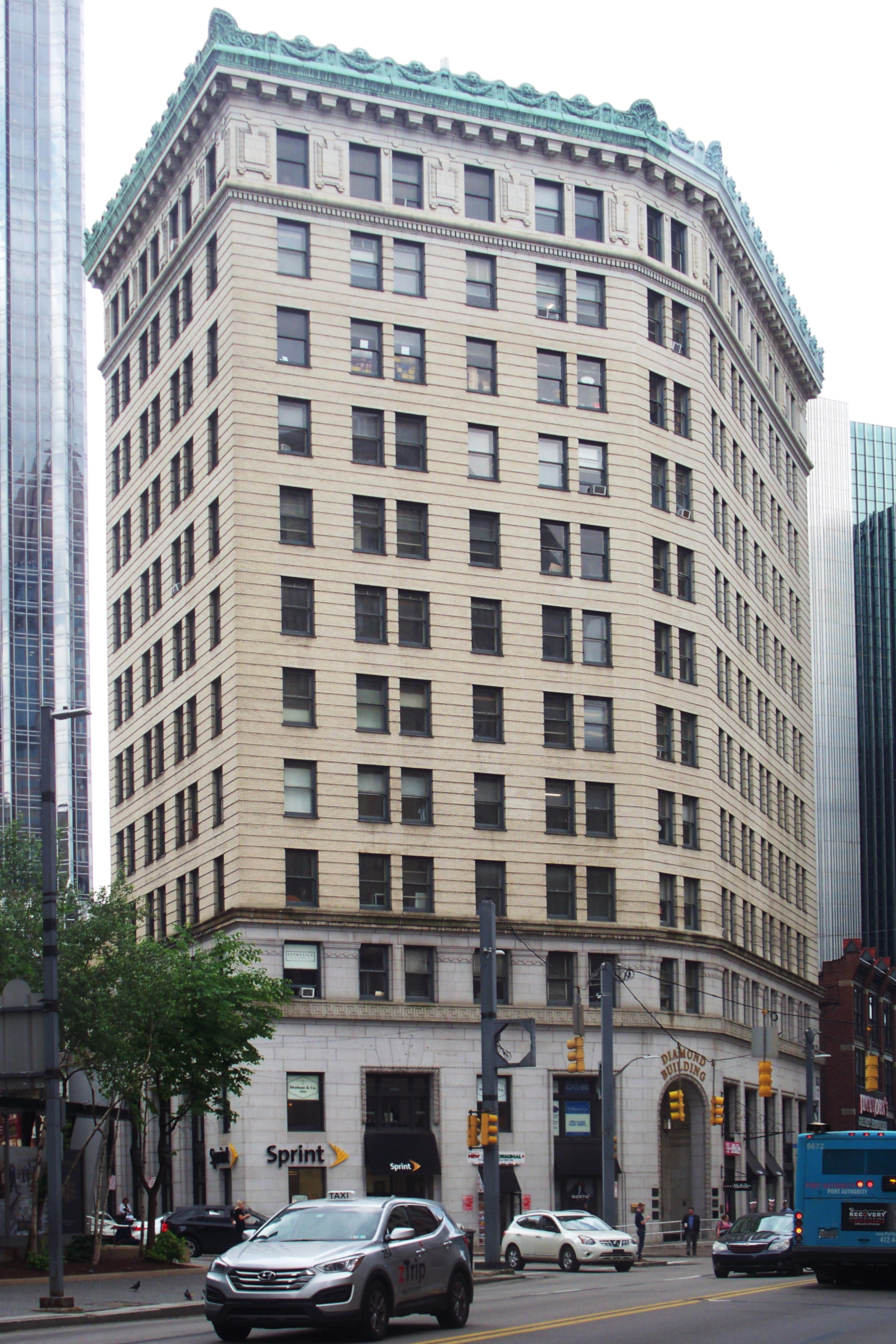
The Diamond Building is by MacClure and Spahr, who skillfully met the challenge of a dauntingly irregular site by filling it with a building that looks as if it’s meant to be this shape. It was originally the headquarters of the Diamond Bank, whose logo can still be seen in metal grates at ground level.

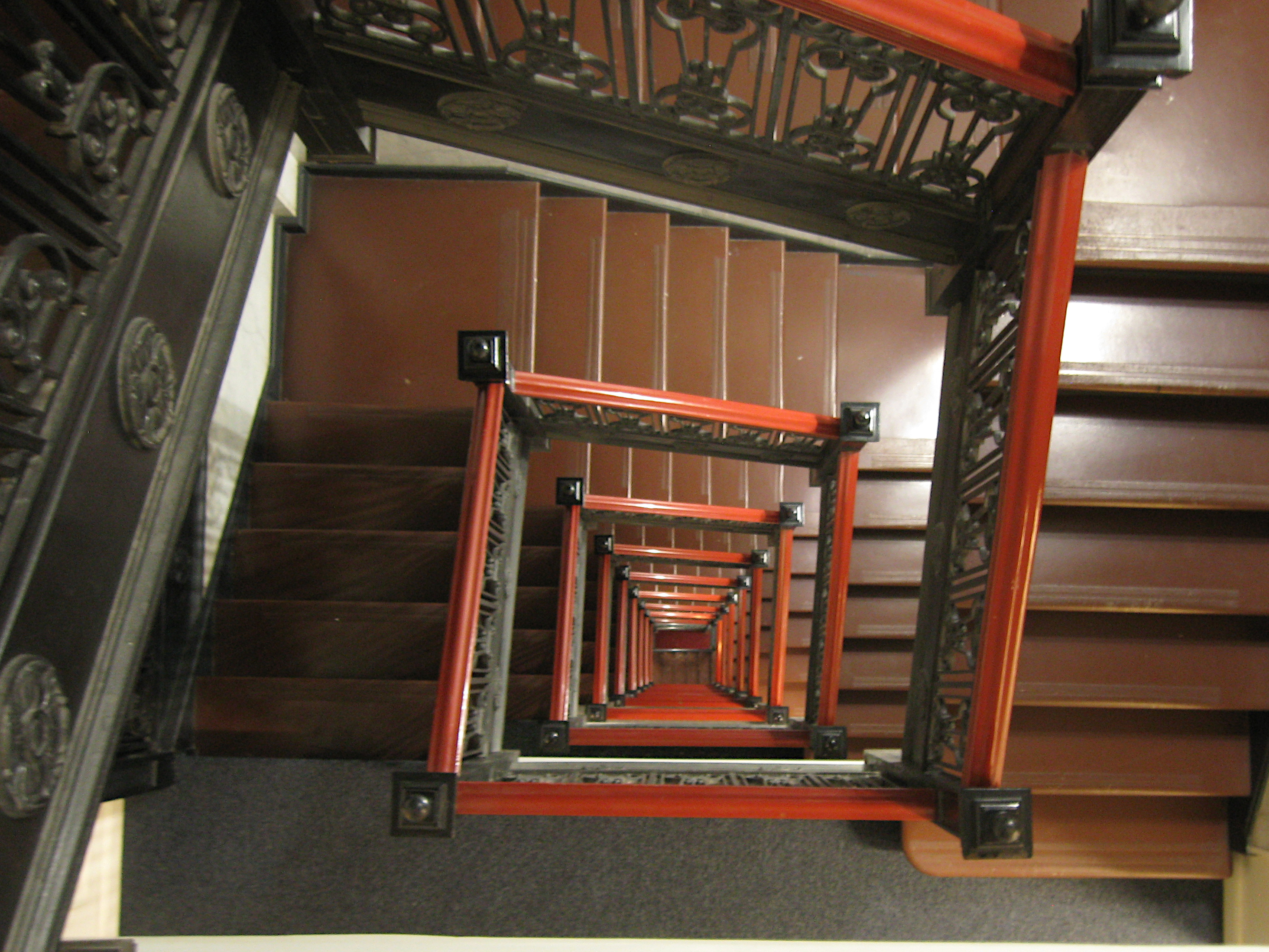
Many of the interior details are preserved inside the Diamond Building. Here we look down the stairwell with its ornate railings.

Tower Two-Sixty in downtown Pittsburgh, seen from the Diamond or Market Square on a Thursday, when the farmer’s market is in session.

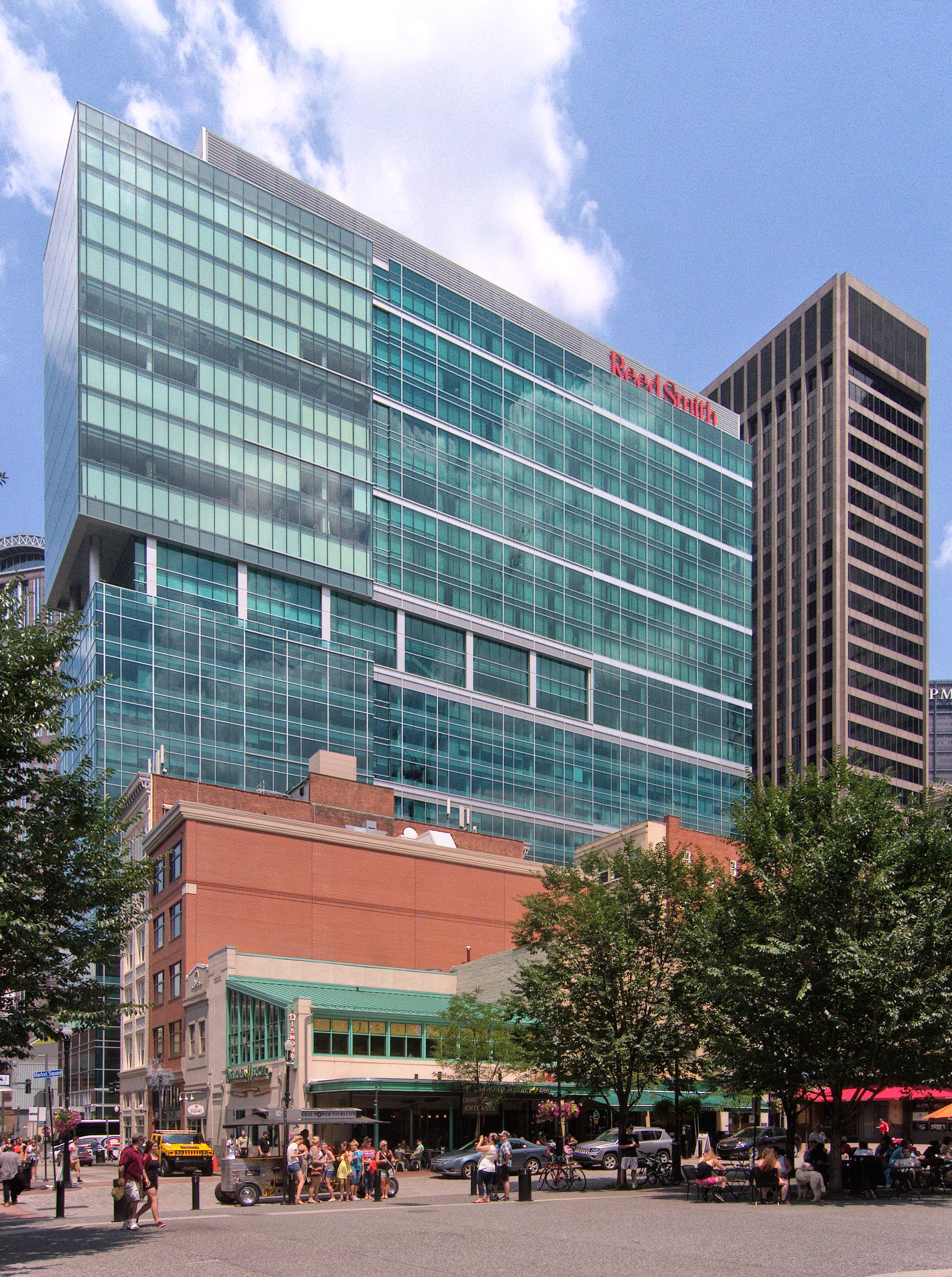
An architectural rendering of the first of the new wave of “green” skyscrapers in Pittsburgh. In spite of its modest dimensions, it was the largest building put up downtown in many years, and kicked off what will probably be remembered as the third downtown Renaissance.

Built in 1909, this is a typical small Beaux-Arts skyscraper. Its base has been unsympathetically modernized, and perhaps at the same time it grew an ugly parasitic infestation in the rear; but the basic shape of the building is still intact.

Our two most splendid Art Deco skyscrapers, as seen from Crawford Street in the Hill. This view is made possible by the demolition of the old Civic Arena, and will disappear when the currently vacant lot is filled again.
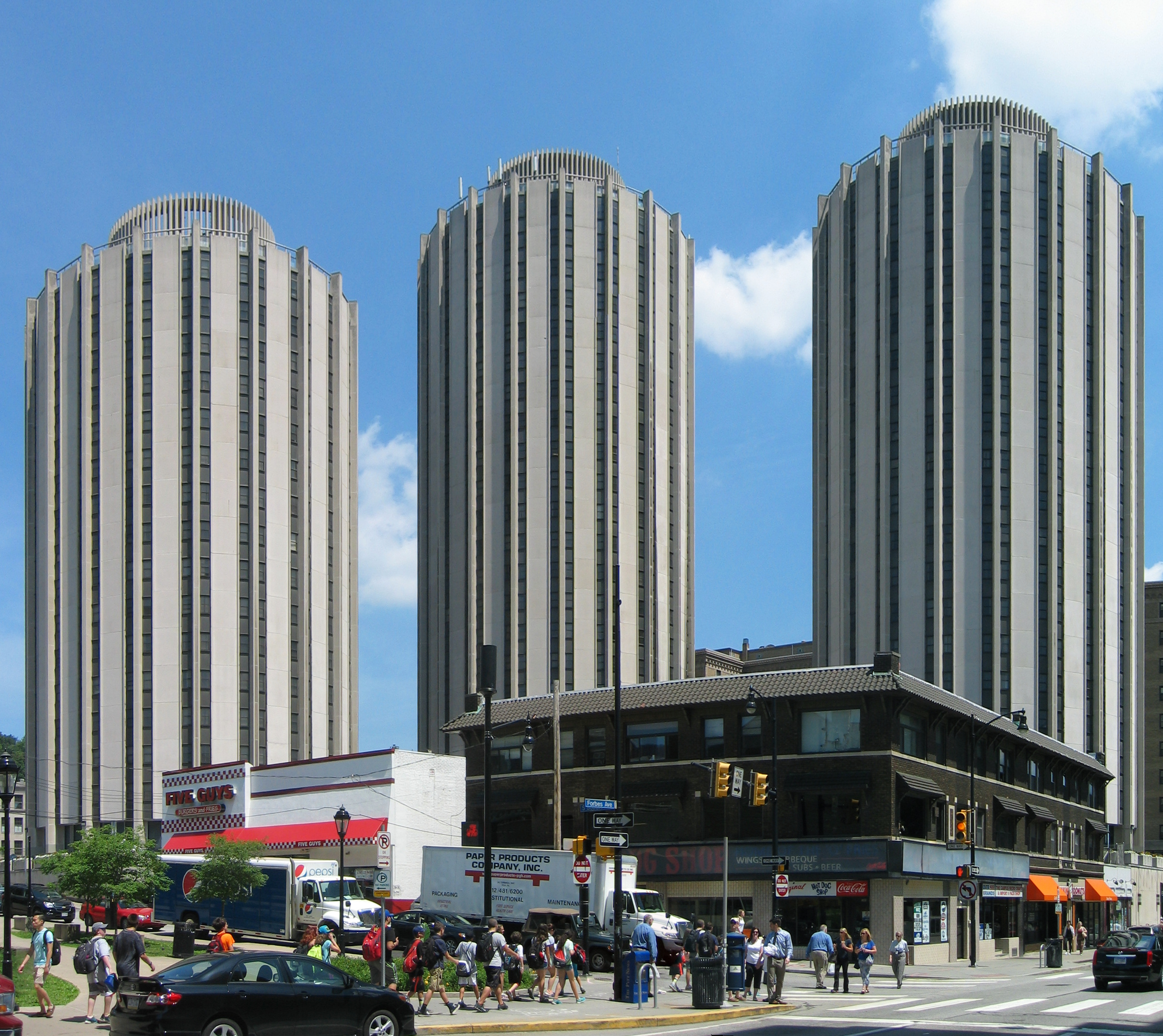
“Distinctive” is a good neutral term for these skyscraper dormitories that loom over the Oakland business district. The architect was Dahlen Ritchey, who designed three cylinders of unequal heights that he designated A, B, and C. Students quickly named them Ajax, Bab-O, and Comet.

U. S. Steel is actually moving out of this tower to a new building to be constructed in its shadow, where the Civic Arena used to be. But this will always be the building that says “steel” on the skyline, or (depending on your opinion of the architecture) the building that says 2001: A Space Odyssey. When it opened in 1971, it was the tallest building outside New York and Chicago. Though there are many taller buildings now, it is still record-breakingly massive. There is no other building with a roof that big that high. All taller skyscrapers are narrower at the top; the U. S. Steel Tower is an acre on each floor and an acre on the roof. There is a good bit more office space in here than in the Empire State Building.
The architects were Harrison & Abramowitz, who also gave us the noticeably similar Westinghouse Building (now called 11 Stanwix) and the Alcoa Building (Regional Enterprise Tower for a while, but seems to be called something else now).

Not one of our most famous or most distinguished buildings, but big: this is the thirteenth-tallest building in Pittsburgh—the twelfth-tallest downtown (leaving out the Cathedral of Learning in Oakland). It opened in 1976 as Equibank Plaza, and ended up in the hands of PNC after many mergers and acquisitions. Since PNC calls this “Two PNC Plaza,” its own current headquarters “One PNC Plaza,” the mixed-use skyscraper at the foot of Fifth Avenue “Three PNC Plaza,” and its new signature skyscraper “The Tower at PNC Plaza,” old Pa Pitt is forced to conclude that PNC thinks of the whole Golden Triangle as “PNC Plaza.”