Tag: Rowland (George M.)

  • Larimer School

    Larimer School

    For forty years this school stood abandoned and rotting. The main building, put up in 1896, was designed by Ulysses J. Lincoln Peoples, who also designed an addition in 1904 for the rapidly growing neighborhood. An auditorium-gymnasium addition was designed by George M. Rowland in 1931. The school closed in 1980, and then it just sat while the neighborhood crumbled around it.

    Photo by Lee Paxton, 2011
    Photo by Leepaxton at en.wikipedia, CC BY-SA 4.0, via Wikimedia Commons.

    This is how the school looked in 2011, when the indefatigable Lee Paxton, who photographed nearly every Pittsburgh landmark for Wikipedia, stopped to snap its picture. But look at that same Larimer Avenue façade today:

    Larimer Avenue façade

    Doesn’t that make you happy?

    Sign for Ora Lee Carroll House at Cornerstone Village

    The restoration was done as part of the huge Cornerstone Village housing development, a mixed-housing community that has brought attractive new housing to long-neglected Larimer. All the beautiful details that Mr. Peoples, Mr. Rowland, and dozens of nameless craftsmen left for us have been scrupulously preserved, cleaned, and made to look almost new.

    Larimer Avenue end

    This is the Larimer Avenue end of the building, which has a grand entrance—but not the grandest entrance.

    Larimer Avenue entrance
    Larimer Avenue entrance
    Larimer Avenue façade

    Around the corner on Winslow Street is the original main entrance to the 1896 building.

    Winslow Street entrance
    Winslow Street entrance

    But even this is not the grandest entrance.

    1904 addition

    In 1904, an addition was built to the southeast of the main building. A new entrance was built linking the main building to the addition, and this is the grandest entrance.

    Entrance
    Entrance
    Balcony above the entrance

    When he was heading for Larimer, old Pa Pitt somehow walked out of the house without any long lenses. He will have to return soon to pick out those very amusing bracket heads, which he suspects were done by the same sculptor who did the whimsical decorations for the Western Theological Seminary. But the picture above is 20 megapixels, so if you enlarge it you will see a fair amount of detail. You will also see raindrops, because it was raining by the time Father Pitt got to the school, but he was not going to let mere weather deter him.

    Tympanum

    The child on the right is regrettably not the first or last to have lost his head when he went to school.

    Auditorium

    In 1931, an auditorium and gymnasium addition was designed by George M. Rowland. By that time styles had changed considerably. Rowland stuck to the classical idiom, but chose the simpler Doric order rather than the more florid Ionic and Corinthian of the original school and addition, and flavored the front with a dash of Art Deco.

    Front of the auditorium
    Sony Alpha 3000, Sony Cyber-shot DSC-S9.

    Comments
  • Presbyterian Church of Mount Washington

    Presbyterian Church of Mount Washington

    Now the Vintage Church. This church on Bailey Avenue is a fine example of what happens when streamlined Art Deco meets Tudor Gothic.

    Peak
    Entrance
    Vintage Church

    Addendum: The church was built in 1927 or shortly after; the architect was George M. Rowland. Source: The Charette, July, 1927: 310. “Architect: Geo. M. Rowland, Bakewell Building. Title: Mt. Washington U. P. Church and Parsonage. Location: Bailey Avenue. List of Bidders: Golden & Crick; Lash & Bailey; Edw. Wehr; Ross K. Sefton; Rose & Fisher; J. F. Haldeman; A. & S. Wilson Company. Bids close June 22. Brick and stone trimming; wood construction interior; steel stairs. Plumbing, Heating and Electric reserved, also equipment, leaded glass, hardware and landscape.”

  • The Roberts Building and Its Neighbor

    The Roberts Building was put up for a jeweler, and its gem-like attention to detail seems appropriate.

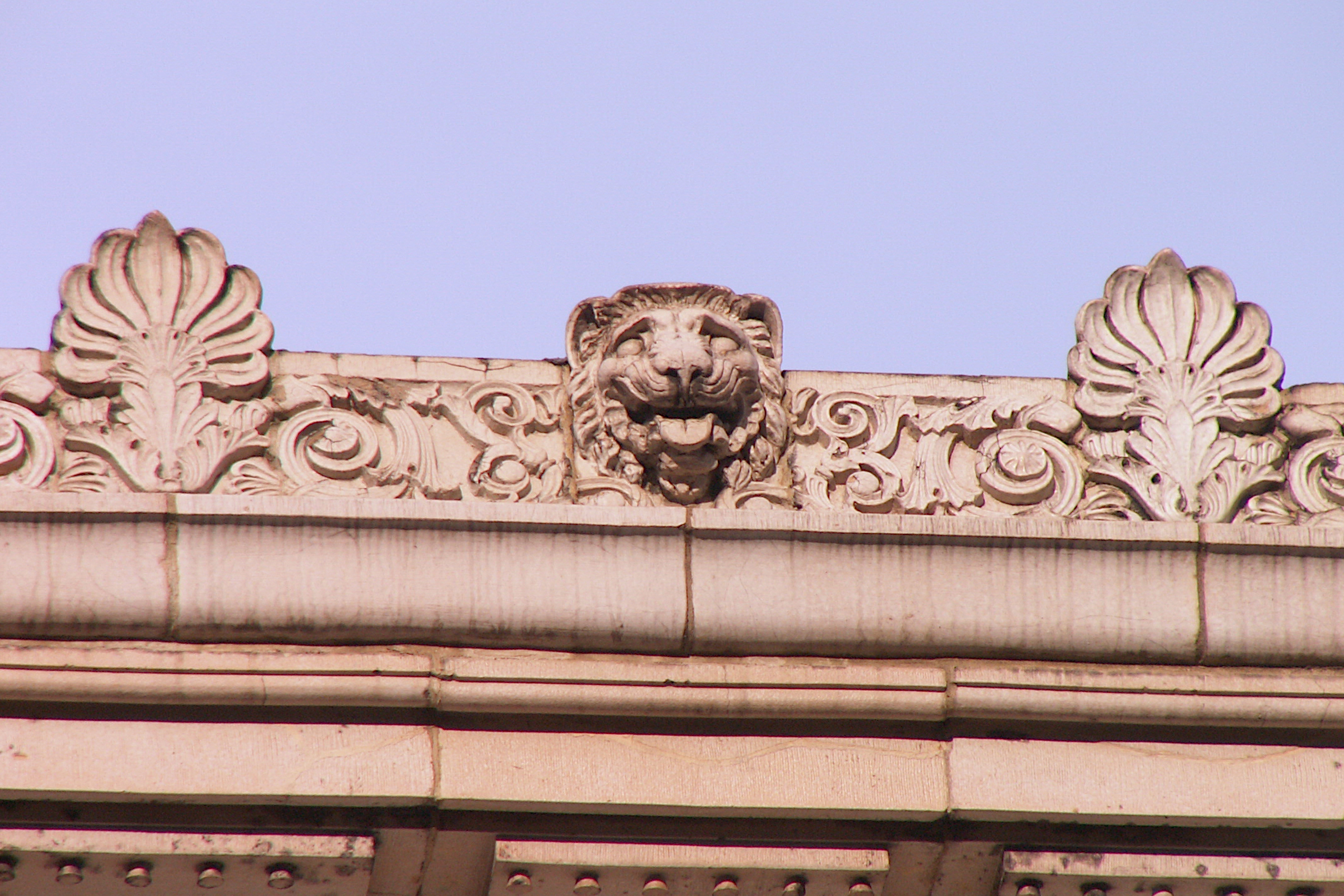
    Some of the happiest carved lions in Pittsburgh adorn the cornice.

    These decorative tiles suggest the jeweler’s art.

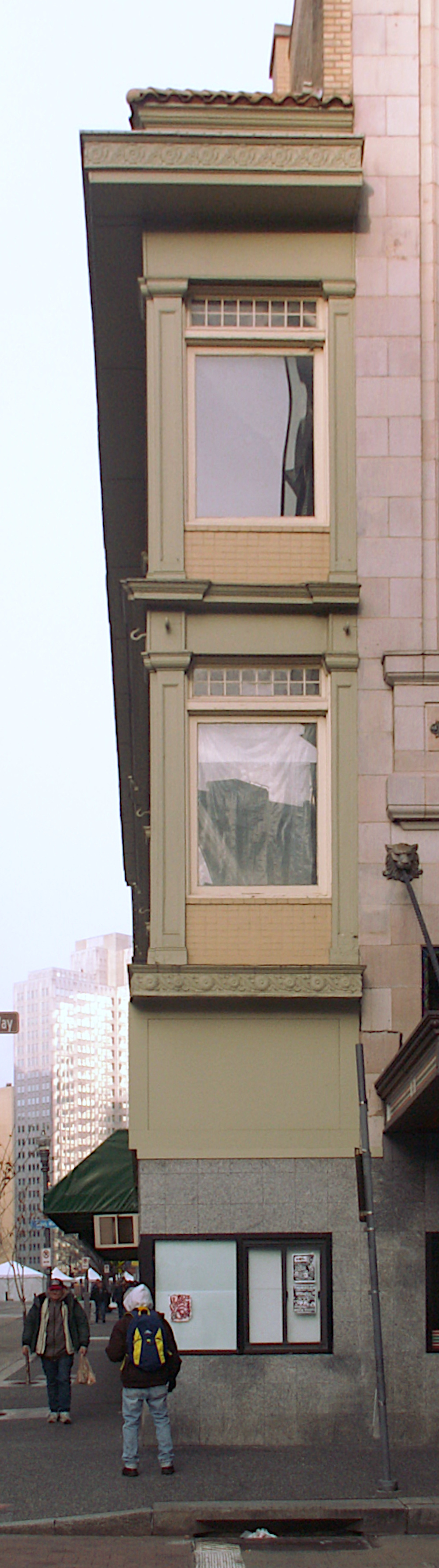
    An amusing game to play with out-of-town visitors is to offer to show them an invisible building. Explain that you will make an invisible building visible before their eyes; then take them to the northeast corner of Wood Street and Forbes Avenue. Ask your visitors to describe the building on the opposite corner. They will almost invariably describe the Roberts Building. Then explain that they have described, not the building on the corner, but the building next to it. The building on the corner is invisible to them, because their brains have no category for a building that is five feet two inches wide.

    This is the Skinny Building, and once it has revealed itself to you, you will see that it is indeed a completely different building. It was built as an act of spite by a property owner whose property was rendered apparently worthless by street widening. The ground floor usually sells T-shirts and Pittsburgh souvenirs; various attempts are made at various times to find a use for the upper floors.

    Addendum: The architect of the Roberts Building was George M. Rowland; it was built in 1925.1

    1. Our source is the Pittsburgh History and Landmarks Foundation’s walking tour of the Market Square area (PDF). ↩︎