Tag: Nordic Flight

  • The Last Italian Shop in Larimer

    Henry Grasso Co. Inc.

    Larimer, like Bloomfield, was a German neighborhood that turned into an Italian neighborhood. The German residents mostly left as the Italian residents moved in; then, later, the Italian residents mostly left as the Black residents moved in. “White flight” is the usual term for the latter migration; Father Pitt has coined the term “Nordic flight” to describe the earlier evacuation of Northern European residents as “undesirable” Southern and Eastern Europeans moved in. If we look at a 1923 plat map of a block near this building, the names tell the story: Giordano, Romano, Bastone, Labriola, Ross, Boccella, Giaccia, Ferrara, Costa, Neff, Junker, Barni, Dettrich, Terenzio… Mostly Italian, with a few German stragglers; and it would not be surprising to find that those houses were being rented by Italian families.

    Henry Grasso Company, fromt elevation
    Sony Alpha 3000.

    This one Italian business remained in Larimer until just a few years ago. It had a convenient location at the end of the Larimer Avenue bridge, and as a restaurant supplier it did not depend on the walk-in trade, so there was no reason to move. Like many another shop in down-on-their-luck neighborhoods, it simply locked its door one day and pickled the shop as a gradually fading time capsule.


    Comments
  • Welsh Congregational Church, South Side

    Welsh Congregational Church, South Side

    We are going to use our imaginations here to bring the East Birmingham of a century and a half ago back to life.

    Take a good look at this VFW hall. Now erase the belligerently patriotic mural. Then strip away the improvised vestibule at the end. Then take away the side entrance. Then unblock the windows along the side (old Pa Pitt does not know what demonic secret rituals the veterans practice that would be spoiled by natural light, but they seem to have an aversion to it).

    What you will have left is a little old church building, probably from just after the Civil War. It appears on an 1872 map as “Welsh Cong. Ch.,” and so for many years after; but by 1923 it had been transferred to another congregation, and appears as a “Polish M. E. Ch.” (M. E. for Methodist Episcopal). At least half a dozen churches on the South Side were bought by East Europeans around the turn of the twentieth century. We might call it Nordic flight: people of northwestern European ancestry fled the South Side as undesirable East Europeans poured in.

    Methodists were never a large segment of the Polish population, and at some point the church changed hands again, going out of the religion business entirely. But not much has really changed about the exterior. The outlines of a typical small middle-1800s church are clearly visible. It would be fairly easy and inexpensive to restore it to something like its original appearance, and—unlike large churches—small churches like this have many uses. If the Veterans of Foreign Wars are ever interested in selling, they should ask Father Pitt first.

  • Lithuanian Hall

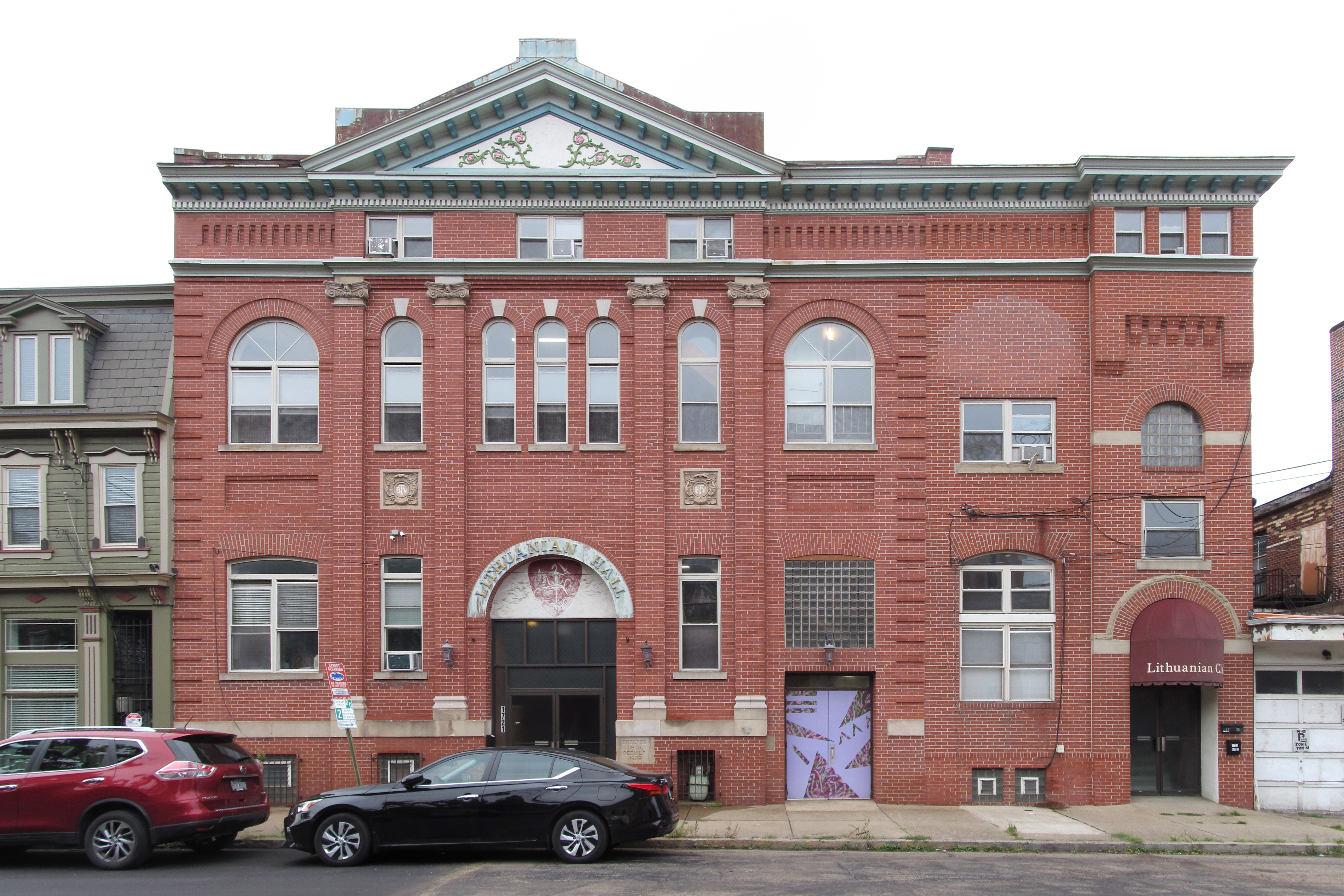
    A building whose design brings a little bit of the Baltics to the South Side. The decorated pediment is unusual or unique here, but would be right at home in Vilnius. The original symmetry is undone by additions on the right-hand side, but this is still a valuable monument of ethnic Pittsburgh that ought to be preserved.

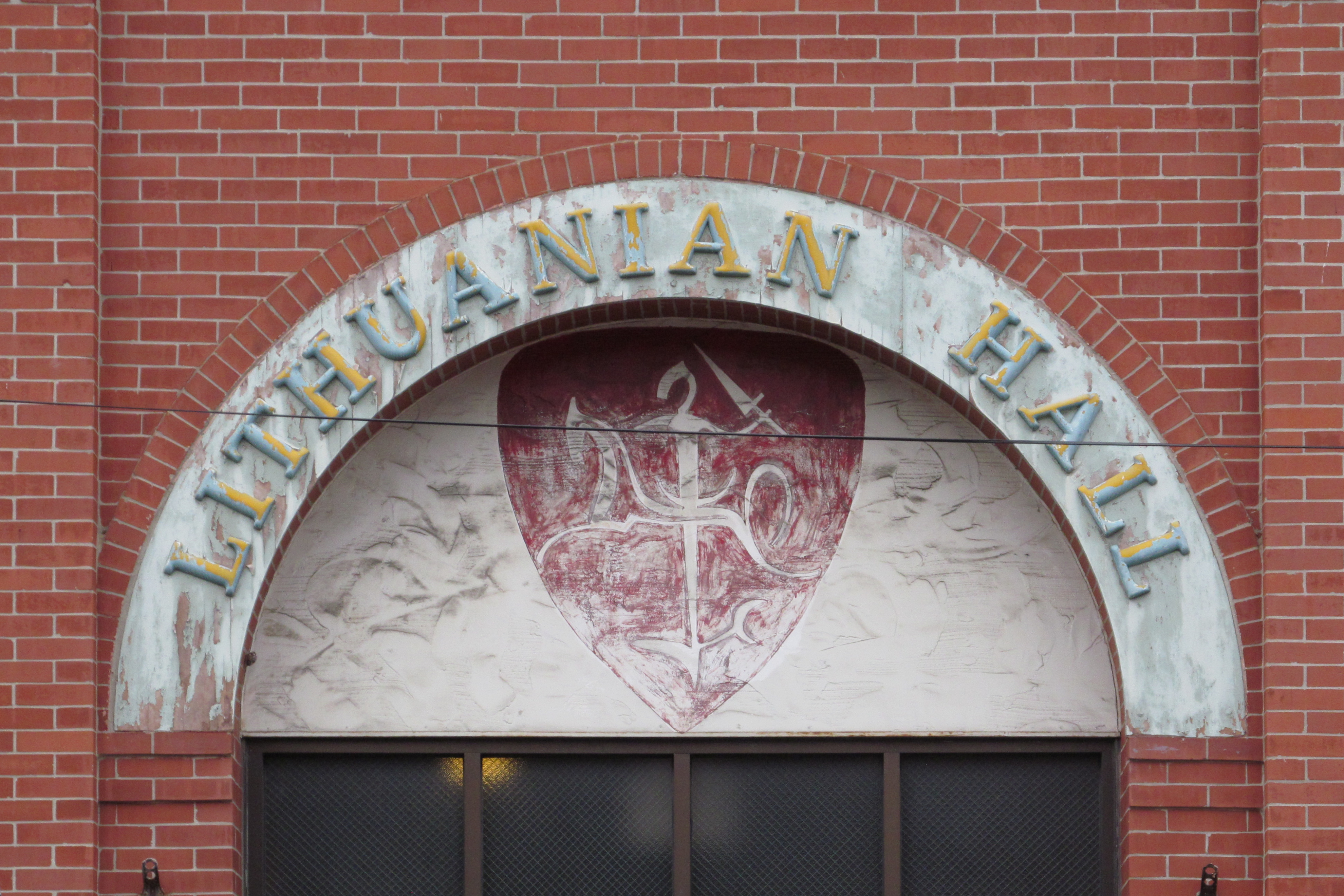
    The faded decoration over the main entrance seems to be a stylized version of the arms of Lithuania, but old Pa Pitt would be delighted to be corrected.

    An update: In spite of what old Pa Pitt took as its Baltic appearance, this was built as a German Turnhalle, or athletic club: the Birmingham Turnverein. The arms of Lithuania (if that is what the faded emblem is) and perhaps the decorations in the pediment would have been added by the later owners. This is yet another example of the Nordic flight that happened as the East Europeans settled on the South Side: one after another, churches and institutions that had been built by Western Europeans passed into the hands of East European immigrants.