Father Pitt

Tag: Morewood Avenue

  • First Unitarian Church, Shadyside

    First Unitarian Church

    Neal & Rowland (Joseph Ladd Neal and George M. Rowland) designed this church in the Norman Gothic style, as they described it, and it succeeds in creating the impression of a medieval parish church that grew organically out of the soil.

    First Unitarian Church

    A sketch of the design was published in the Pittsburgh Gazette for September 22, 1902, and the church as it stands today is just about the same, except for a few small details that seem to have changed before construction began.
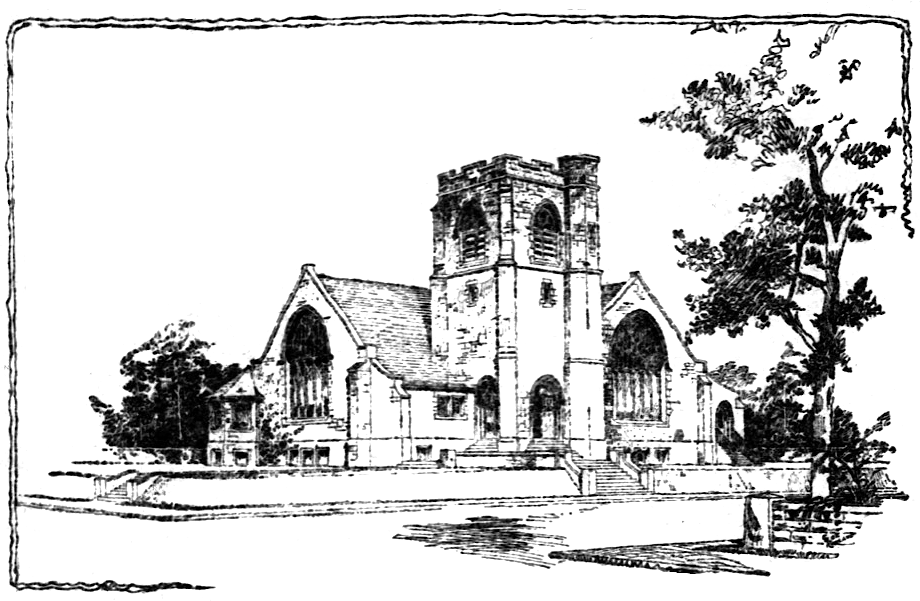
    As the Gazette article explains, the Gothic design was a change of heart on the part of the congregation—an about-face that must have caused the architects no little consternation, and one that makes their accomplishment all the more praiseworthy.

    The congregation of the First Unitarian church, now worshiping in the frame chapel in Craig street, opposite the Duquesne garden, will soon lay the cornerstone of their new church at the southeast corner of Ellsworth and Morewood avenues. This site was bought for $35,000 shortly after the present church property was sold as an addition to the new Catholic cathedral site. The new site faces 170 feet in Morewood avenue and 181 feet in Ellsworth avenue. It is opposite the Shadyside academy and adjoins the costly residence properties of Attorney General P. C. Knox and of Col. J. M. Schoonmaker.

    The original plan of the trustees was to build a church of white Georgia marble after the Greek Doric Temple style, a decided innovation in Pittsburgh architecture. Later this plan was abandoned and the architects, Neal & Rowland, were instructed to make the design after the Norman Gothic model. The walls of the church will be of stone. It will have four gables and the conventional Norman tower at the corner. The audience room will sent 400 and the Sunday school rooms, which are separated from it by folding doors, will accommodate 150 more. The interior of the church is to be handsomely finished in hard wood with stained and art glass windows. On the outside an elaborate scheme of landscape work will make the site very attractive. The church will be set back 44 feet from Ellsworth avenue and the carriage entrance will be from Morewood avenue.

    The First Unitarian congregation was organized in 1889 by the Rev. J. G. Townsend and was under the charge of the Rev. Charles E. St. John from 1891 to 1900. The Rev. L. Walter Mason, the present pastor, came to the charge in November, 1900, since which time the number of communicants has increased to 460. The congregation will continue to hold services in the present building until June 1, when it is expected the new edifice will be completed, at a cost of about $35,000.
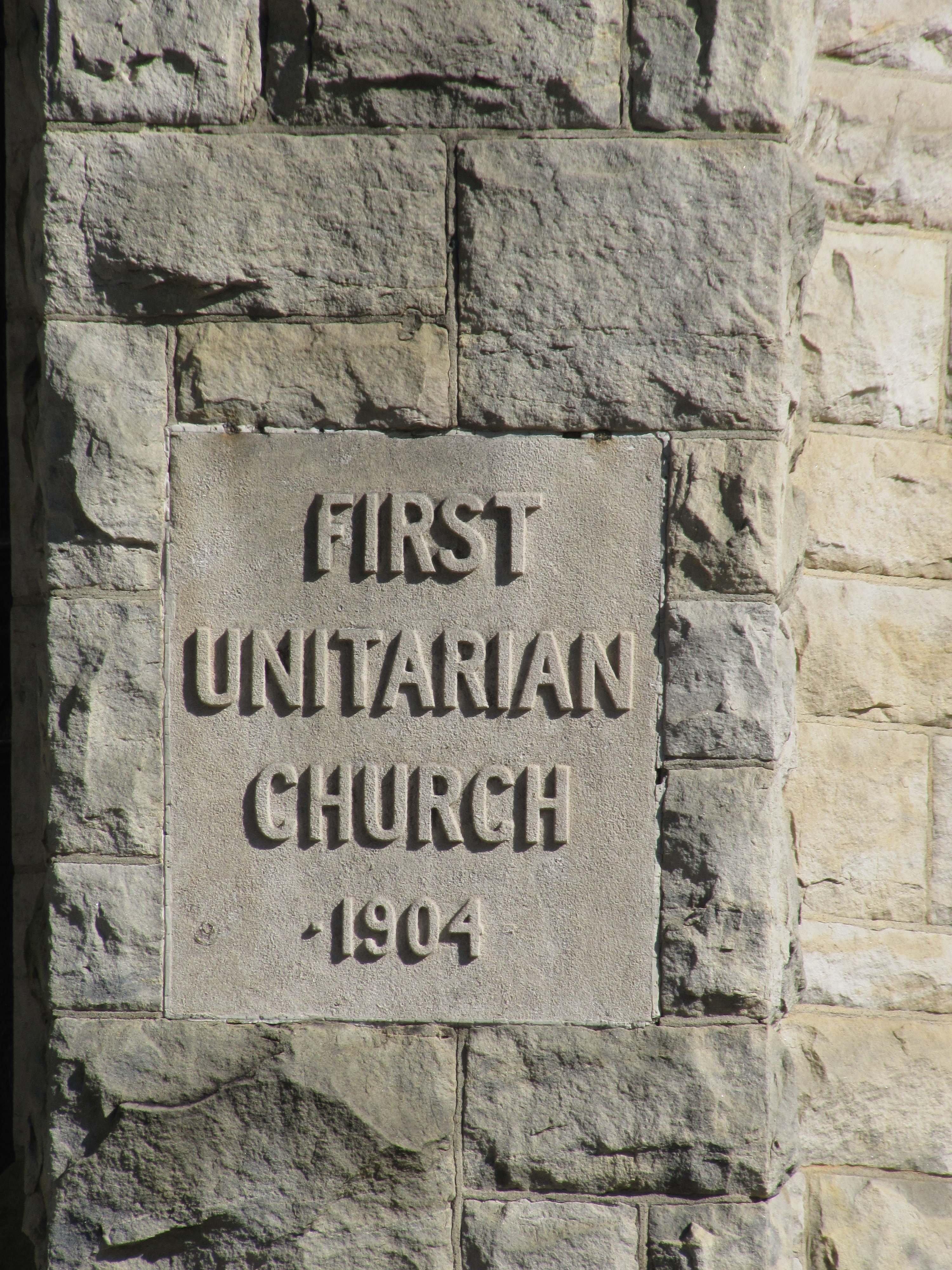
    Date stone with date of 1904

    In spite of the overoptimistic estimate in the article that the building would be completed in June of 1903, there were some delays: the cornerstone was laid in 1904.

    First Unitarian Church
    First Unitarian Church
    First Unitarian Church
    Canon PowerShot SX20 IS.

    Comments
  • Ford Motor Plant, Bloomfield

    Ford Motor Company plant

    This assembly plant was built in 1915; the architect, according to a draft National Register nomination form, was John H. Graham, Sr. It has been restored to look more beautiful than it ever did when it was a grubby manufacturing facility.

    Corner detail
    Tile ornament
    Morewood Avenue side
    Corner view

    The acute angle of the intersection of Baum Boulevard and Morewood Avenue is handled by blunting the corner a bit.


  • John S. Dickson House, Shadyside

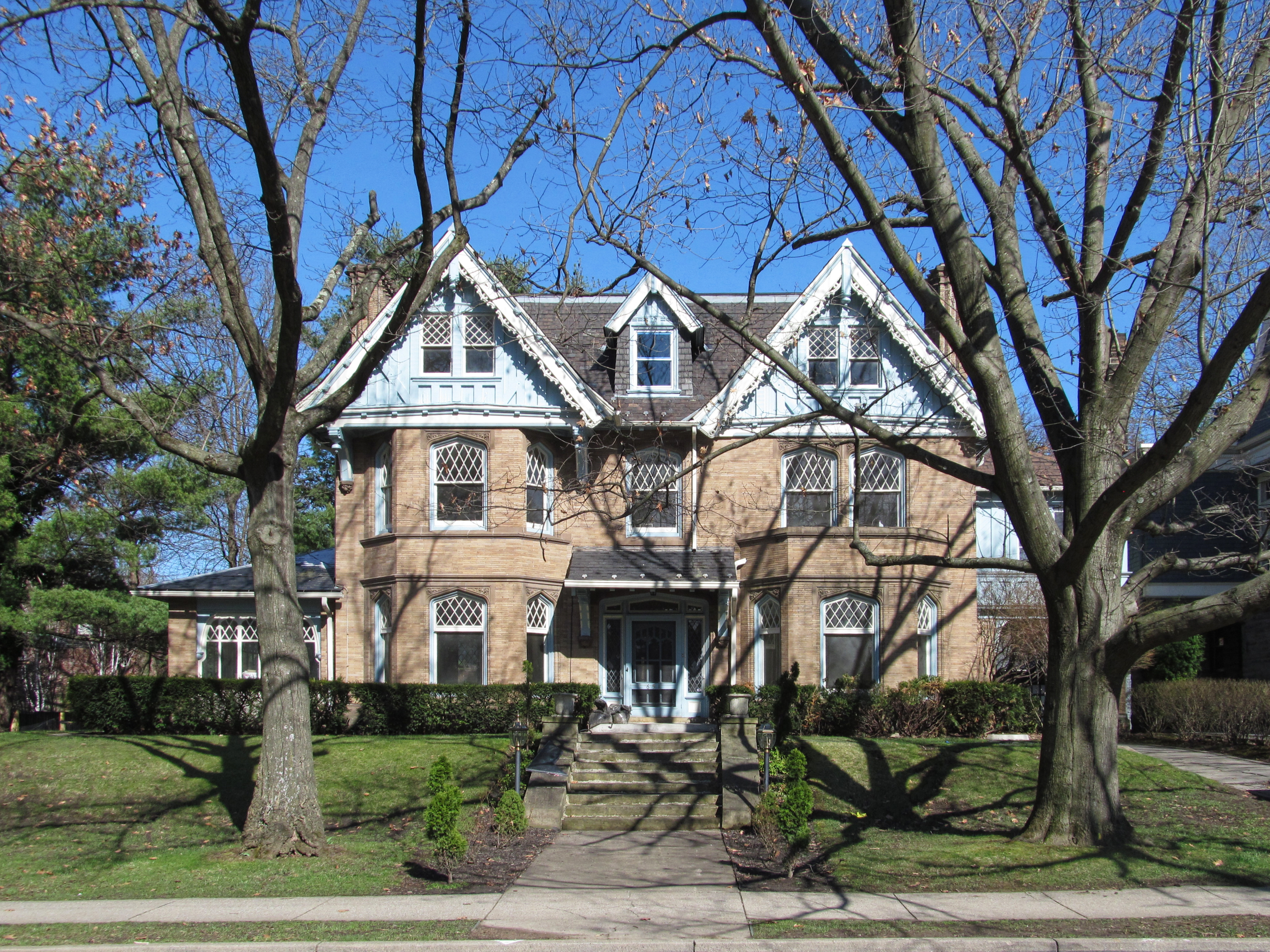
    John S. Dickson house

    Peabody & Stearns were a Boston firm that kept a branch office in Pittsburgh to handle the many jobs they picked up in this city. They were responsible for rebuilding the Horne’s department store, and they designed the Liberty Market, later Motor Square Garden. But they also had a thriving business in Tudor mansions for the well-to-do in Pittsburgh’s East End. This one was built in 1902.

    John S. Dickson house newly built

    This picture from The Brickbuilder shows the house newly built. We can see that, except for filling in the side porch, very little has been done to change the house. Even the original diamond-paned upper sashes, or identical replacements, are still in the windows, and the windows in the sunroom that was made from the porch were matched to the rest of the windows in the house.

    The gables were treated in a dark color scheme; the pastel blue of the current paint, along with the lacy wood trim, gives them a more feminine look than they would have had originally.

    Gable
    Woodwork in the gable
    Front door
    John S. Dickson house
    Fujifilm FinePix HS20EXR.

    Comments
  • Miller House, Shadyside

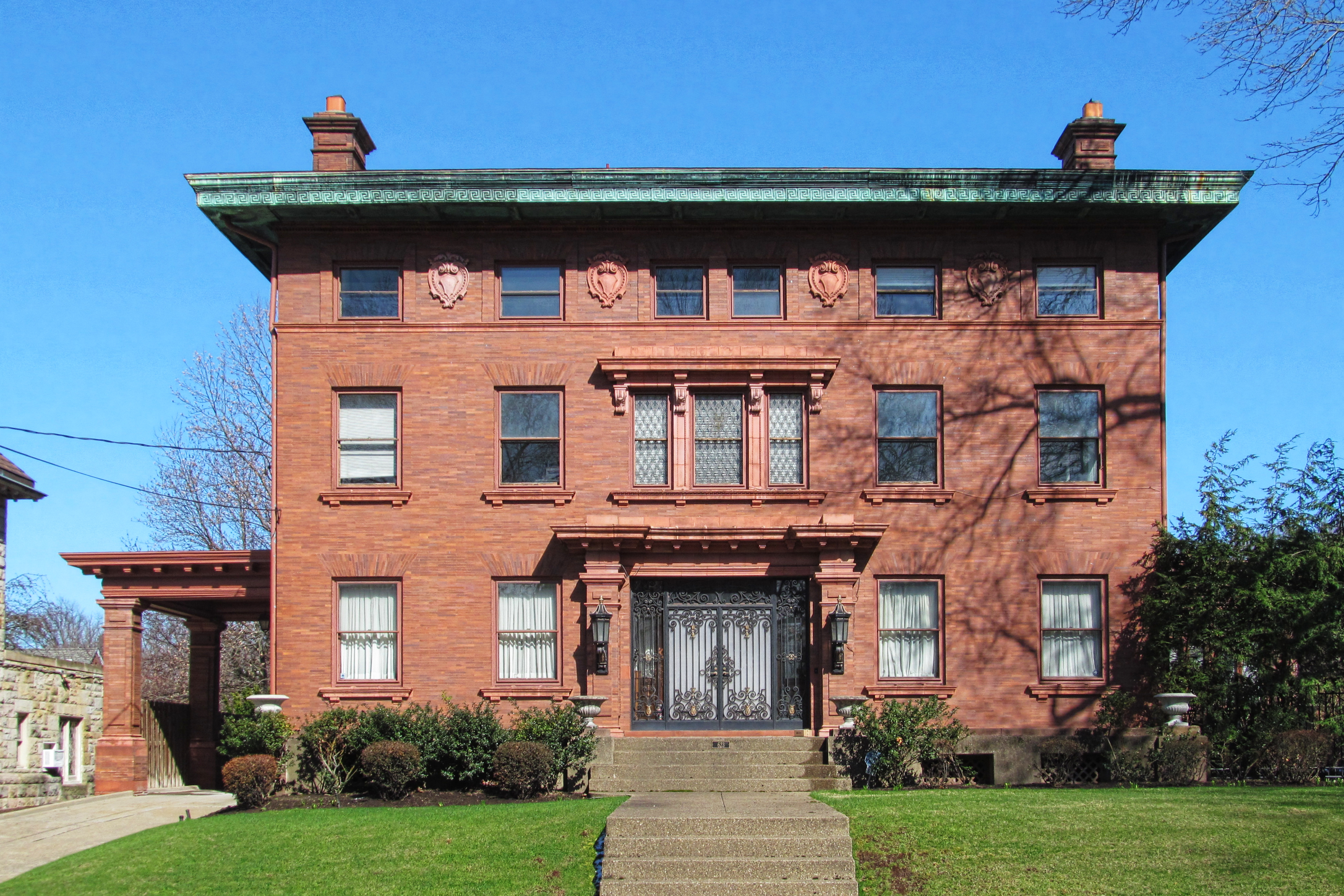
    Miller house

    This Renaissance palace was designed for Rachel and Mortimer Miller by Maximilian Nirdlinger, whose name is at the top of old Pa Pitt’s list of architects whose names are the most fun to say.1 It was built in 1904, when Nirdlinger was still young; with eye-catching but respectable designs like this one, he established himself as a favorite house designer among the Social Register set.

    Miller house
    Miller house
    Miller house
    Miller house
    Front entrance to the Miller house
    Copper cornice with Greek key
    Terra-cotta shield on the Miller house
    Windows with terra-cotta ornaments
    Terra cotta
    Canon PowerShot SX20 IS; Fujifilm FinePix HS20EXR.
    1. Pittsburg Press, February 2, 1904, p. 12. “A $30,000 residence will be erected on Morewood avenue, Twentieth ward. The plans for it have just been completed by Architect M. Nirdlinger for Mortimer C. Miller. The structure will be three stories high of ornamental brick with terra cotta trimmings.” The land is shown on plat maps as owned by Rachel McM. Miller. ↩︎

    Comments
  • Gothic House in Shadyside

    House on Morewood Avenue

    Old Pa Pitt is not quite sure how to classify this house. It is a sort of Jacobean or Tudor Gothic, but with very Victorian woodwork on the gables. We shall call it “Jacobean with gingerbread.”

    Addendum: This is the Remsen V. Messler house; the architects were Peabody & Stearns, who designed several other Tudorish mansions around here, as well as the Liberty Market (now Motor Square Garden) and the Horne’s department store.

  • Renaissance Palace in Shadyside

    Renaissance house

    A fine example of Pittsburgh’s interpretation of the Italian Renaissance. The extremely simple form is varied by a few well-chosen details. Enlarge the picture and note the Greek-key pattern along the gutter.