This church, built in 1955, belonged to a Slovenian parish in the little Slovenian enclave in Upper Lawrenceville. Father Pitt was not able to find the name of the architect, but he would be almost flabbergasted if it were not Ermes Brunettini, whose St. Ignatius de Loyola Church in Glendale shares so many very individual quirks that it seems almost like the same design adapted to a different site.
Although the parish was suppressed, the church has found other uses, and neighbors told old Pa Pitt that they were happy to see it kept up well.
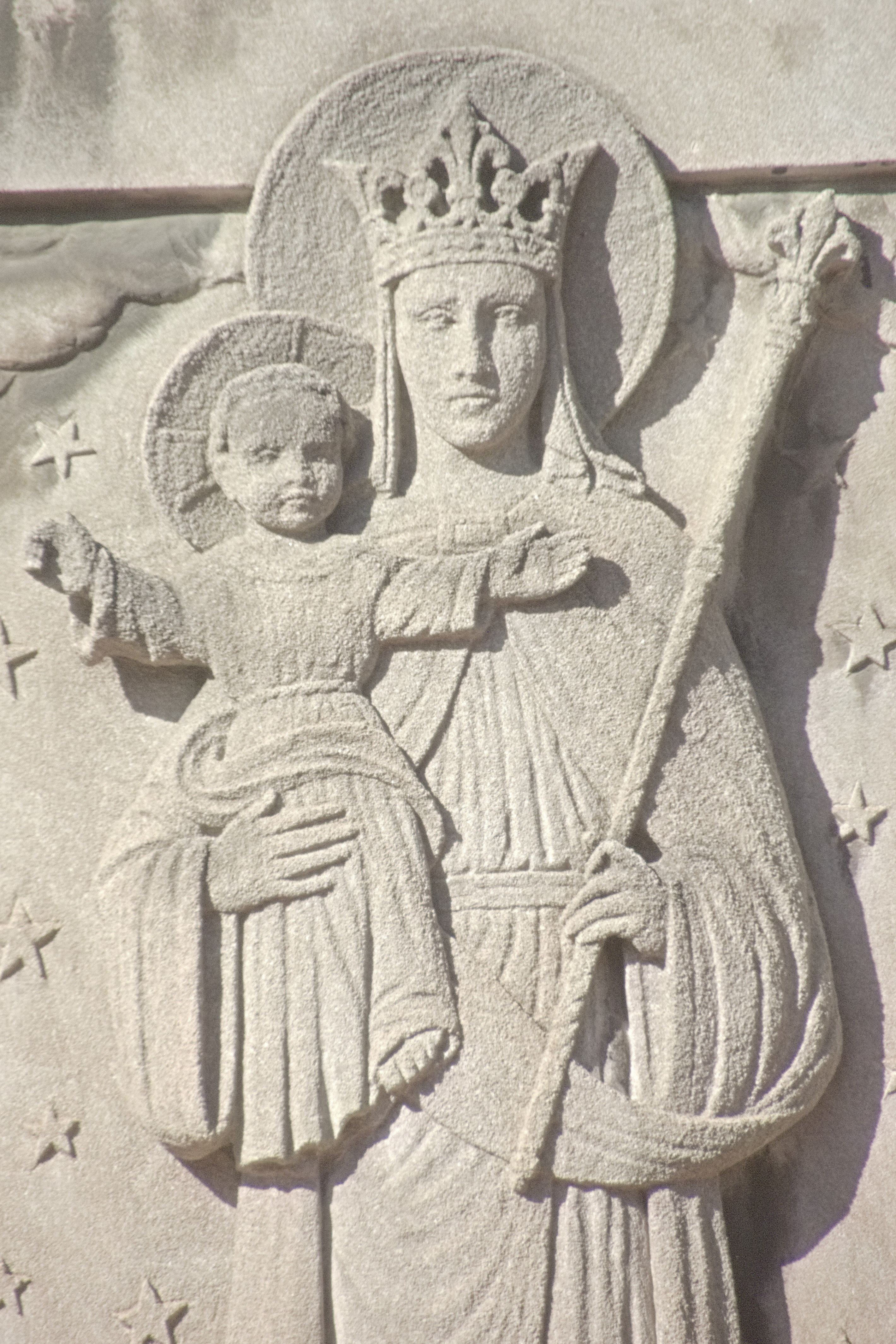
If Father Pitt’s guess about the architect is right, then he might as well guess that the carvings were done by the Oakmont sculptor Louis Vergobbi, who decorated St. Ignatius in a similar style.
The parish school once stood between this rectory and the church, but it was demolished years ago and replaced with a parking lot.
Glendale is a semi-urban neighborhood of Scott Township, just outside Carnegie, that was heavily Polish. The center of social life was St. Ignatius de Loyola parish, which until 1952 was housed in a combined school and church building. In that year the school burned. Fortunately the parish had the resources to build on a much larger scale. The result was a beautiful late-Gothic church and a separate school building. Although the Catholic parish is gone now, the buildings are still in use as the Red Balloon Early Learning Center.
The church was designed by Ermes Brunettini, whose simple but traditional church bridges the gap between Gothicism and modernism.1
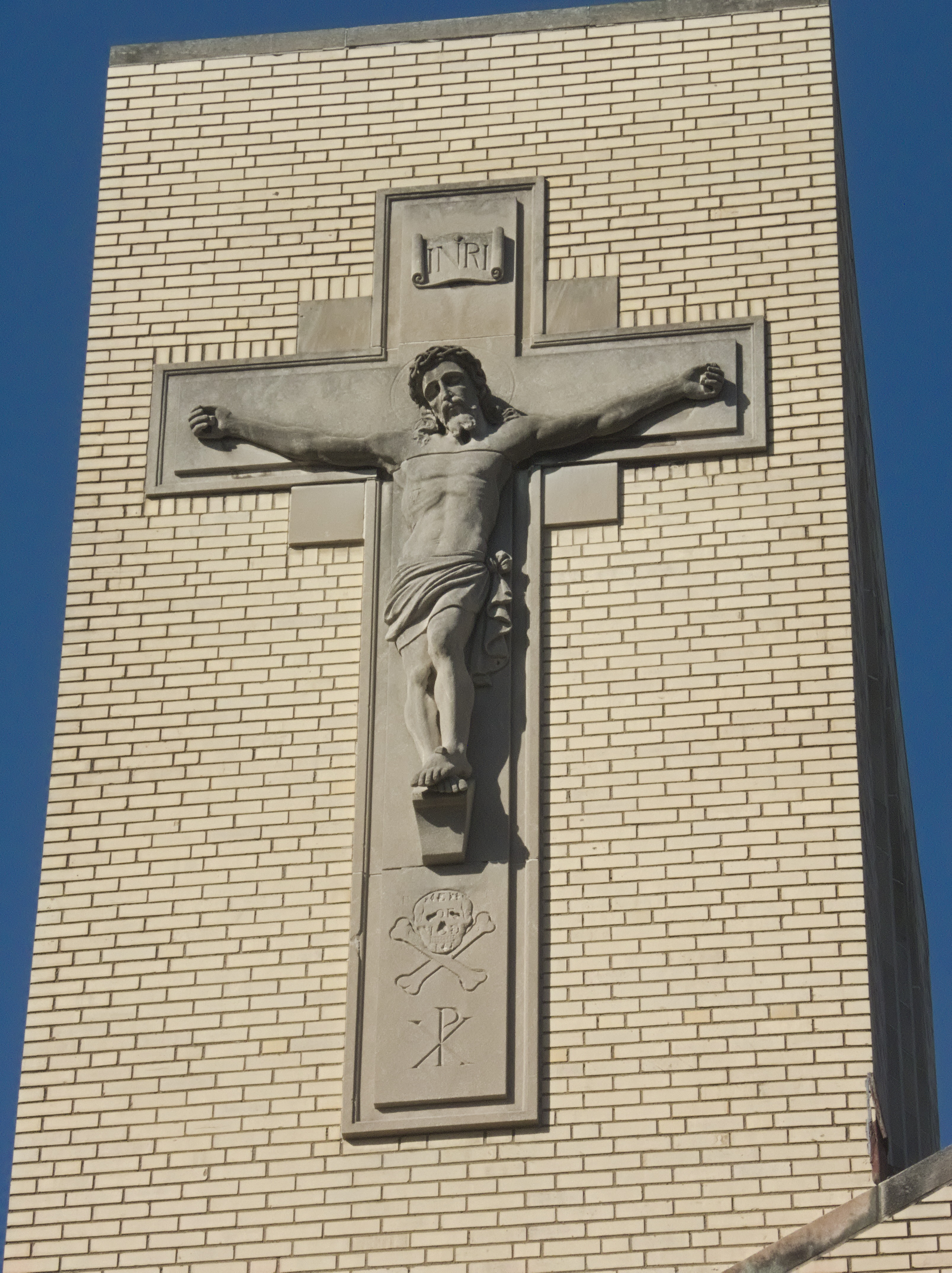
The front of the church was once adorned with a crucifix by Oakmont sculptor Louis Vergobbi, but it was taken away, along with most of the stained glass by the Henry Hunt studio, when the Catholic congregation moved out. All that remains is the cherub that served as the base.
Angels by Vergobbi still guard the two towers.
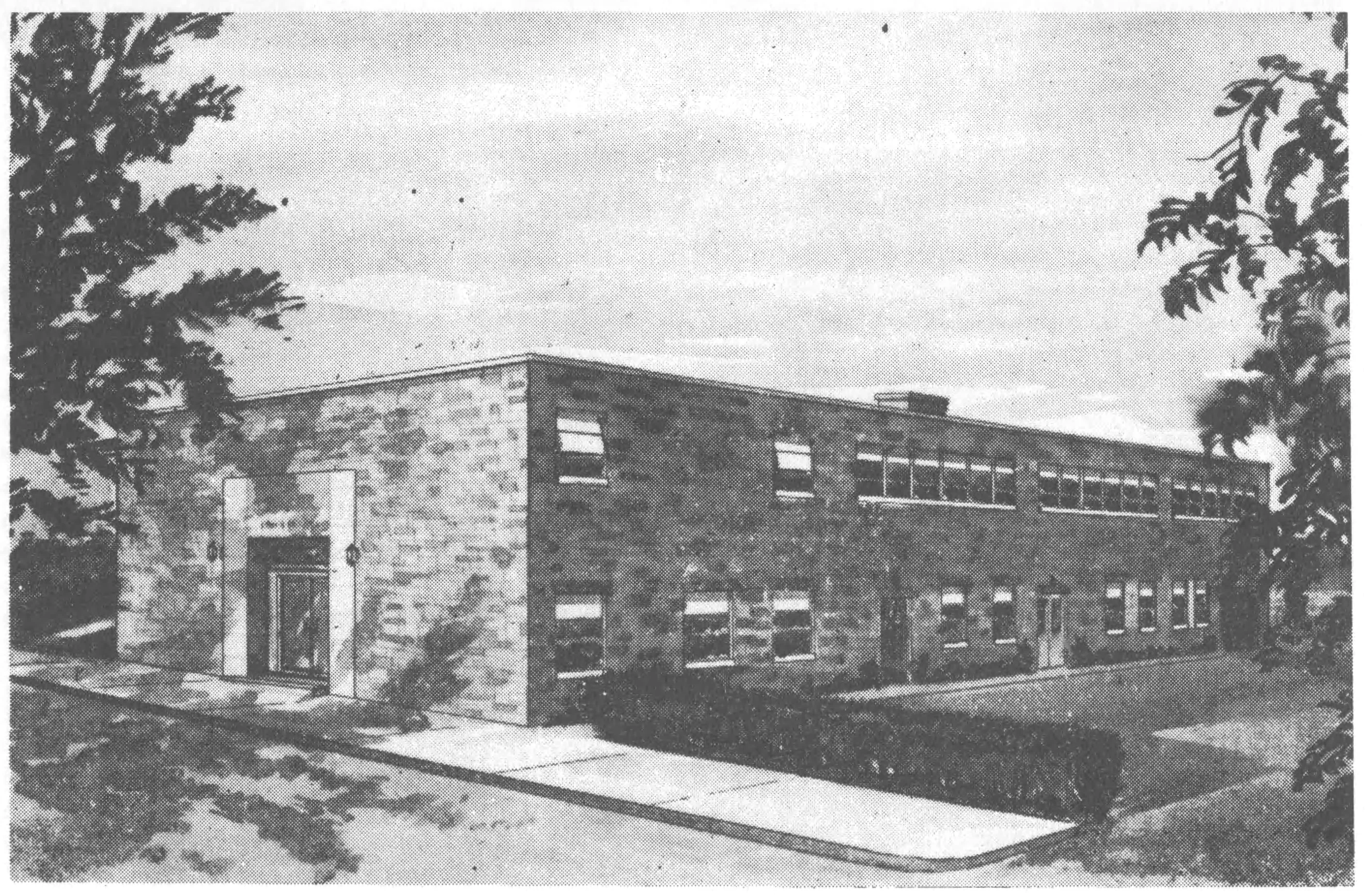
The school is in a more straightforwardly modernist idiom, but the stone matches the stone of the church. Since it was built at the same time as the church, it is very probable that Brunettini was the architect of the school as well, along with the additions to the convent. The architect’s drawing shows that, except for new tinted windows, very little about the outside of the school has changed.
The convent was originally a splendid Queen Anne mansion, the Dr. Henry House. It was expanded with additions that match the architecture of the church (and fight noisily with the architecture of the house), including a chapel with a round apse.
The roofline of the original house still sticks up behind the large additions in front, including the tower with balcony and a Richardsonian eyebrow dormer.
Now the New Zion Baptist Church in what may be Pittsburgh’s only clot of three different Baptist churches in the same spot, this former Italian parish church is a good example of the modernist interpretation of Gothic that was popular briefly after the Second World War. The fine reliefs are in a style that filters medieval religious art through a slightly Art Deco lens.
There seems to have been an inscription over the skull and crossbones (representing conquered Death), but it is no longer legible.
Sinite parvulos, et nolite eos prohibere ad me venire: talium est enim regnum caelorum. (Matt. 19:14.)