

The Roberts Building was put up for a jeweler, and its gem-like attention to detail seems appropriate.
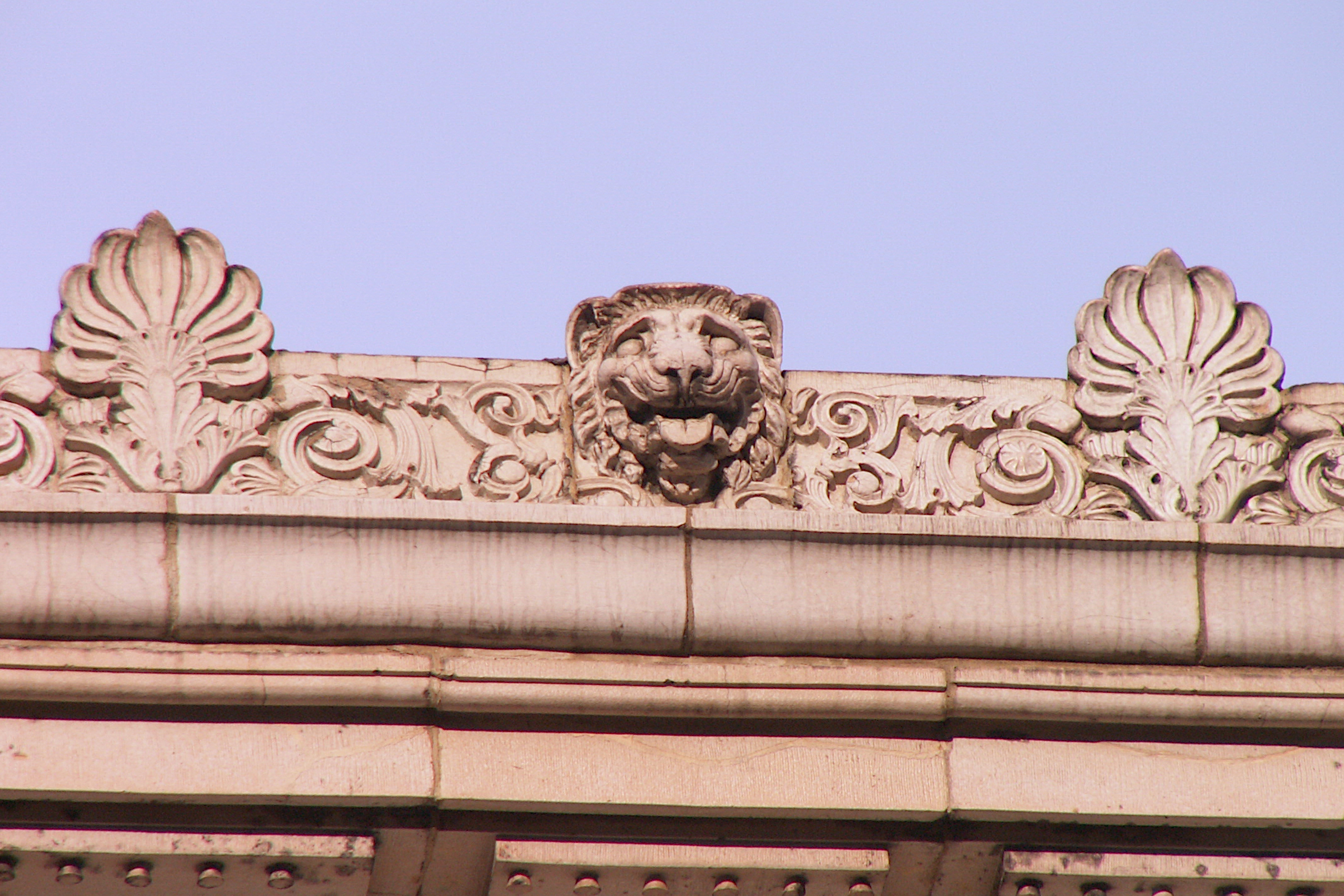
Some of the happiest carved lions in Pittsburgh adorn the cornice.

These decorative tiles suggest the jeweler’s art.
An amusing game to play with out-of-town visitors is to offer to show them an invisible building. Explain that you will make an invisible building visible before their eyes; then take them to the northeast corner of Wood Street and Forbes Avenue. Ask your visitors to describe the building on the opposite corner. They will almost invariably describe the Roberts Building. Then explain that they have described, not the building on the corner, but the building next to it. The building on the corner is invisible to them, because their brains have no category for a building that is five feet two inches wide.
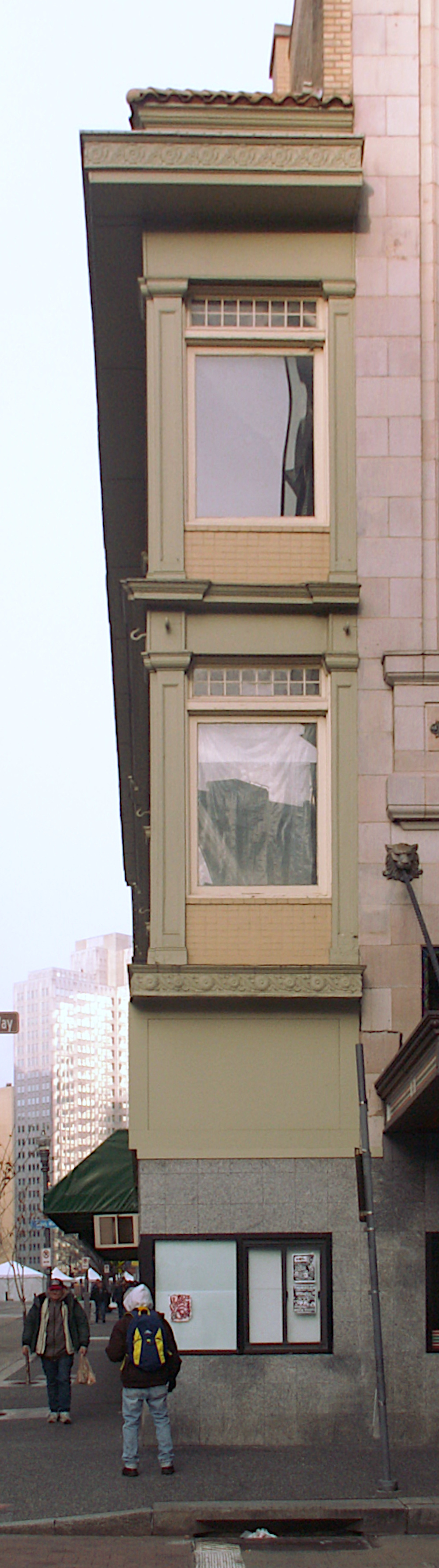
This is the Skinny Building, and once it has revealed itself to you, you will see that it is indeed a completely different building. It was built as an act of spite by a property owner whose property was rendered apparently worthless by street widening. The ground floor usually sells T-shirts and Pittsburgh souvenirs; various attempts are made at various times to find a use for the upper floors.
Addendum: The architect of the Roberts Building was George M. Rowland; it was built in 1925.1


